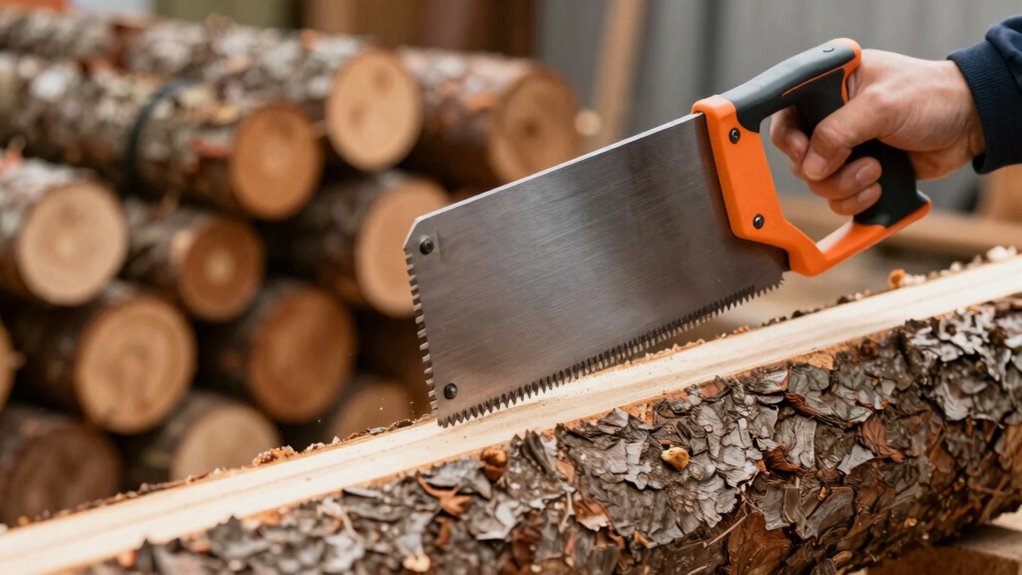

To cut stove-length logs efficiently without measuring each one, mark a single log at your desired length and stack all logs in a stable, aligned pile. Then, cut through the entire stack at the marked point using a guide or sled to keep the logs secure. This method saves time, ensures uniform size, and reduces measurement errors. If you want to learn how to do this safely and quickly, keep exploring these helpful tips.
Key Takeaways
- Mark all logs at your desired stove length using a single reference point.
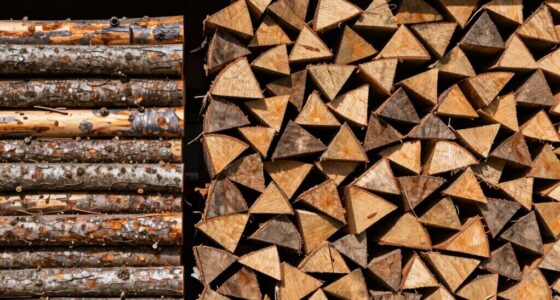
- Stack logs securely in a stable pile aligned at the marked point.
- Cut through the entire stack at once to ensure uniform length.
- Use guides or sleds to stabilize logs and improve cutting accuracy.
- Finish with minor trims if necessary, saving time and ensuring consistency.
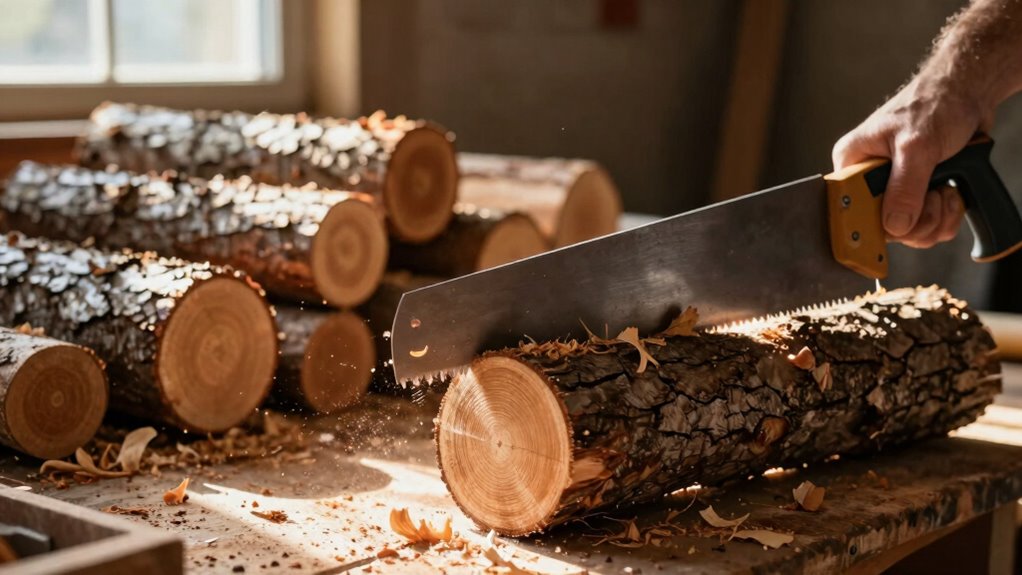
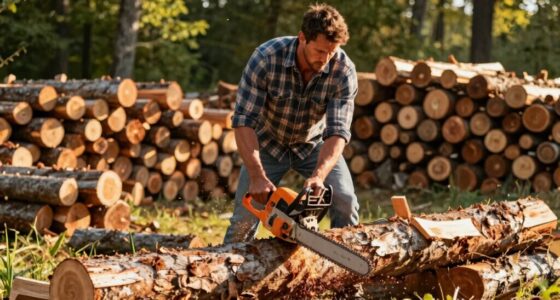
If you’re tired of measuring each log before cutting it to stove length, there’s a simple way to save time and effort. Instead of wasting time with measuring tapes or rulers every time, you can develop a consistent method that guarantees uniform logs, making your firewood preparation faster and more efficient. The key is to use a reliable reference point and proper log stacking techniques to create a streamlined process. By stacking your logs in a specific way, you can cut multiple logs to the same length without measuring each one individually. For example, once you determine the desired stove length, mark a single log at that length, then stack the logs in a stable pile, aligning all the marked points. When you cut through the stack, every log will roughly be the same length, saving you from measuring each piece separately. Additionally, understanding free floating log cutting techniques can help you optimize your process and ensure safety. However, safety tips are essential to keep in mind during this process. Always wear protective gear, including gloves and safety goggles, when handling saws and cutting tools. Make sure your work area is clear of any obstacles, and keep bystanders at a safe distance. When stacking logs for cutting, ensure the pile is stable and secure; an unstable stack could shift or collapse, leading to injury. Use a sturdy base for your log stack, and avoid stacking logs too high, which can cause imbalance. When cutting through a stack, be mindful of kickback or the saw catching on uneven logs. Keep your hands away from the blade’s path and maintain control over your saw at all times.
To make the process even safer and more precise, consider using a guide or a sled that holds the logs in place during cutting. This not only speeds up the process but also reduces the risk of slips or accidents. Once you’ve cut through the stack, you’ll find that most logs are already close to your desired stove length, and any slight variation can be trimmed with a quick pass if needed. This method also minimizes the need for repeated measurements, saving you time during busy firewood days. Just remember, safety should always come first. Proper log stacking, combined with safety tips, guarantees your work is both efficient and safe. With a little practice, you’ll be able to prepare stove-length logs quickly and confidently, leaving more time to enjoy your cozy fire.
Frequently Asked Questions
Can I Use a Specific Tool to Cut Logs Uniformly?
Yes, you can use specific tools like wooden jigs and spacing guides to cut logs uniformly. These tools help guarantee consistent length without measuring each log individually. Wooden jigs hold the logs securely and guide your saw straight, while spacing guides maintain even gaps between cuts. Using these tools saves time, improves accuracy, and makes it easier to get uniform stove lengths, especially when working with large quantities of logs.
How Do I Prevent Uneven Cuts Without Measuring?
To prevent uneven cuts without measuring, use measuring tools like a ruler or a tape measure as your guide. You can also employ cutting guides or jigs that secure logs at a consistent height, ensuring uniform cuts. Position the logs against these guides, keeping your cuts straight and even. This method minimizes guesswork, saves time, and results in neatly cut logs every time.
What Safety Precautions Are Recommended During Cutting?
You should always wear personal protective equipment like safety goggles, gloves, and ear protection to stay safe while cutting. Follow safe cutting techniques by securing the logs properly and using sharp, well-maintained tools. Keep your hands away from the blade, work on a stable surface, and never rush the process. Staying alert and cautious helps prevent accidents and guarantees safe, effective cutting every time.
Is There an Alternative Method for Quick Log Length Adjustments?
Think of your logs as a puzzle, and your goal is to fit them perfectly without measuring each piece. You can use log length templates or quick cutting techniques, like stacking logs and marking where they need to be cut. This method lets you make swift adjustments, saving time and effort. With these tools, you become a master craftsman, shaping your woodpile with precision and speed—no measuring tape required.
How Do I Handle Irregularly Shaped Logs?
When handling irregularly shaped logs, prioritize safety gear like gloves and eye protection. Secure the log firmly to guarantee stability before cutting. Use a chainsaw or hand saw suited for uneven edges, making controlled cuts to avoid kickback. Adjust your technique based on the log’s shape, and always work on a stable surface. Staying alert and maintaining proper log stability helps prevent accidents and ensures precise cuts.
Conclusion
Now that you’ve uncovered a simple trick to save time, you can focus on enjoying the warmth instead of fussing over every measurement. With a little practice, your logs will find their perfect fit effortlessly, freeing you up for more cozy moments. Remember, sometimes a gentle touch and a keen eye are all you need to keep everything running smoothly. Happy chopping, and here’s to many warm fires ahead!