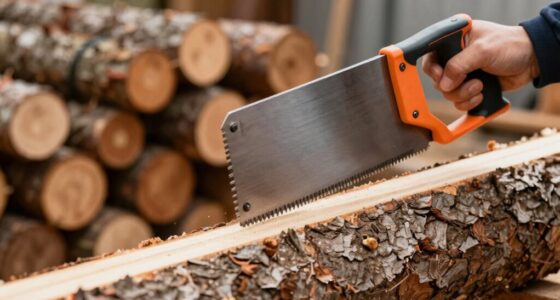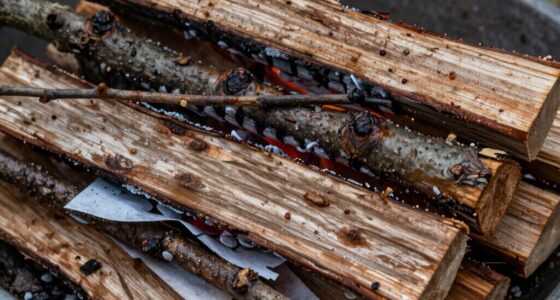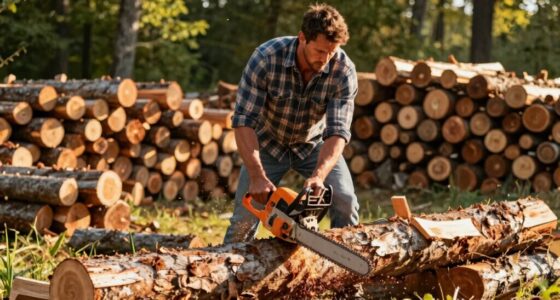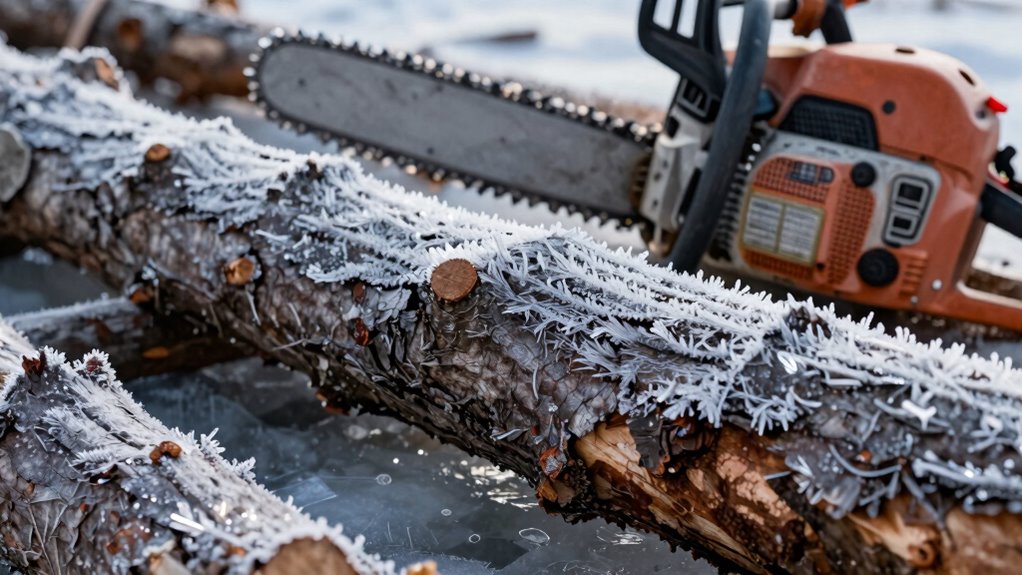

To save your chains and avoid damage, thaw frozen logs gradually in a cool, dry area away from direct heat or sunlight. Avoid rushing the process or using sudden temperature changes, which can cause cracks or warping. Inspect the logs for splits before processing, and handle them carefully. Proper thawing makes cutting easier and prevents tool dulling. If you keep these tips in mind, you’ll learn more ways to handle frozen logs effectively.

Get business pricing on tools and workshop supplies
- Business-only prices and quantity discounts
- Tax-exempt purchasing
- Multiple users, one account, clear invoices
Key Takeaways
- Allow logs to thaw gradually in a dry, cool area to prevent cracking and preserve their integrity.
- Avoid rushing the process; slowly bringing logs indoors or to warmer spots reduces damage.
- Inspect logs for cracks before cutting; cut around damaged areas to prevent further splitting.
- Use proper tools and avoid rapid heating methods to maintain chain sharpness and prevent accidents.
- Store logs off the ground with breathable covers during thawing to keep them dry and prevent mold or warping.
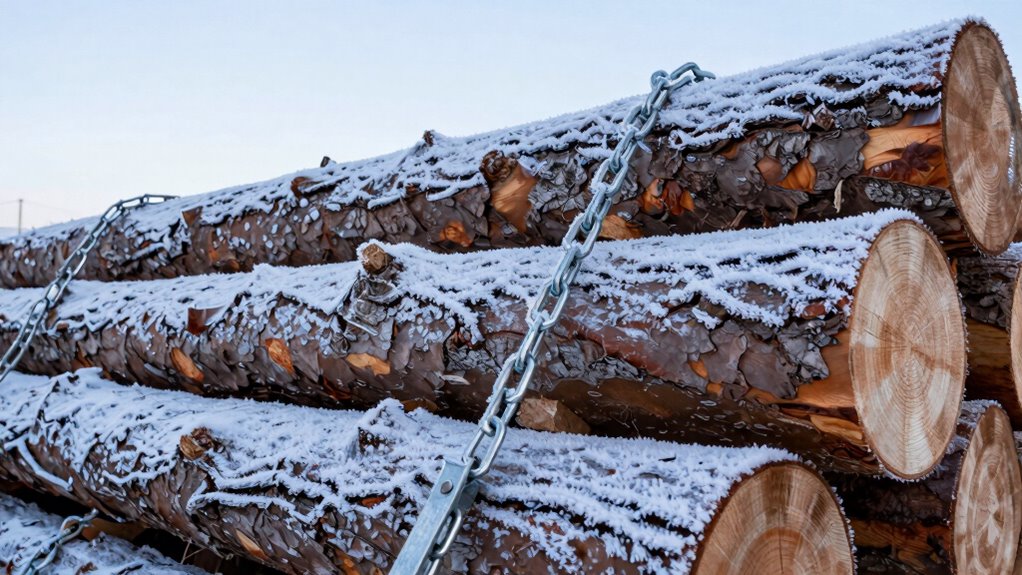
Processing frozen logs can be challenging, but with the right techniques, you can efficiently prepare them for burning or woodworking. When dealing with frozen logs, understanding how to preserve them properly and manage temperature effects is essential. Log preservation becomes important because frozen wood can be more brittle and prone to cracking if not handled correctly. The key is to allow the logs to thaw gradually, avoiding sudden temperature shifts that might cause splitting or damage. You don’t want to rush the process, as rapid thawing can lead to issues like warping or mold development. Instead, store your logs in a dry, cool area and let them thaw naturally over time, which helps maintain their integrity. Proper storage techniques, such as keeping logs covered with a breathable tarp or off the ground, are also critical to prevent moisture loss and damage. Moisture management during thawing is crucial to avoid mold growth or rot once the logs are processed. Temperature effects play a significant role in how well frozen logs can be processed. When logs are frozen, the moisture inside is trapped in ice form, which can complicate cutting and burning. If you attempt to cut or split logs while they’re still frozen, you risk dulling your tools or causing uneven splits. Conversely, if you wait until they’re fully thawed, the wood becomes easier to work with, and you can achieve cleaner cuts and more efficient burning. To expedite thawing without damaging the logs, you can bring them indoors or to a warmer environment gradually, ensuring the temperature increases slowly. Rapid temperature changes, especially exposing frozen logs to direct heat or sunlight, can cause the wood to crack or split unevenly. Inspect the logs carefully for any cracks or splits caused by freezing before processing. If you notice any damage, cut around those areas to prevent further cracking during cutting or burning.
As an affiliate, we earn on qualifying purchases.
Frequently Asked Questions
Can Frozen Logs Be Safely Stored for Later Processing?
Yes, you can safely store frozen logs for later processing. To maintain quality, use proper storage methods like keeping logs in a consistently cold, dry place, preferably in sealed containers to prevent moisture damage. When you’re ready to process them, employ effective thawing techniques such as slow thawing in a cool environment or gradual warming, avoiding rapid heat which can cause cracking or warping. This approach guarantees safe, efficient handling.
What Tools Are Best for Handling Frozen Logs?
Think of handling frozen logs as taming icy giants—you’ll need the right tools to conquer them. Use sturdy wedges and chainsaw blades designed for cold, making moisture management easier. Proper storage techniques, like keeping logs in a dry, ventilated area, prevent further freezing. With these tools and methods, you’ll turn frozen chaos into manageable wood, saving your chains and energy for the task ahead.
How Does Freezing Affect the Quality of the Wood?
Freezing temporarily preserves the wood’s quality by stabilizing moisture content and minimizing shrinkage or warping. The cold slows moisture loss, helping maintain the natural wood grain and preventing cracking. When you thaw frozen logs, you’ll find the wood retains its original texture and structural integrity. This process guarantees your lumber stays in good condition, making it easier to work with and reducing waste caused by moisture-related issues.
Are There Environmental Concerns When Processing Frozen Logs?
Yes, processing frozen logs raises environmental concerns. You should consider the environmental impact, such as increased energy use for thawing and processing. This can lead to higher emissions and resource consumption. To promote sustainability, use energy-efficient methods and minimize waste. By doing so, you help guarantee responsible forestry practices, reducing your ecological footprint while maintaining productive log processing even in cold conditions.
Can Processing Frozen Logs Damage Chains or Equipment?
Processing frozen logs can indeed pose a risk of chain damage if you’re not careful, but with proper techniques, equipment safety remains intact. The key is to use the right cutting tools and adjust your approach to avoid excessive strain on your chains. Regularly inspecting your equipment and applying the trick of thawing logs or using specialized blades helps prevent damage, ensuring safe and efficient processing without compromising your chains or machinery.
Conclusion
By mastering the art of processing frozen logs, you can save time and avoid costly delays. Imagine a chain retailer who faced inventory issues during winter. By quickly thawing and analyzing their logs, they identified a supply chain bottleneck before it grew worse. You can do the same—turn frozen challenges into opportunities for insight. With this trick, you’ll keep your operations smooth, even in the coldest conditions.
Fall Picks
fall essentials
As an affiliate, we earn on qualifying purchases.