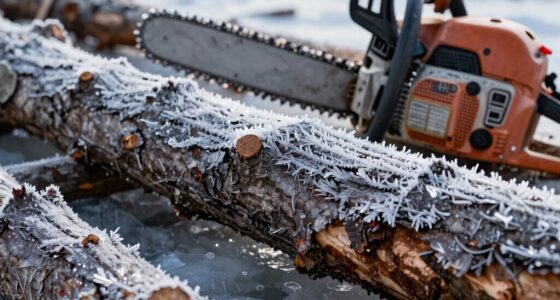
To maximize firewood efficiency, organize logs beforehand in one central location, then buck them into uniform lengths, working in a consistent direction to avoid backtracking. Move directly to splitting with tools at hand, splitting logs into manageable pieces quickly and safely. Stack the split wood immediately in a level, protected area, keeping movement minimal. Stick to this workflow for safer, faster results—continue exploring to master every step.
Key Takeaways
- Organize logs beforehand to minimize movement and quickly access them during bucking.
- Buck logs into uniform lengths in a consistent direction to streamline the workflow.
- Move directly from bucking to splitting without unnecessary backtracking.
- Keep splitting tools within reach and split logs immediately after bucking for efficiency.
- Stack split wood in a neat, level, and protected area immediately to avoid rehandling.

When you need firewood quickly and efficiently, having a streamlined workflow can make all the difference. The key is to minimize unnecessary movement and backtracking, which saves you time and energy. Start by gathering your logs into a central pile, making it easy to access the wood you need for bucking. When you’re ready to cut, work in a consistent direction—bucking the logs into manageable lengths first. This way, you avoid repeatedly moving around, which can slow you down and create safety hazards. As you cut, focus on maintaining proper technique to prevent accidents and ensure clean cuts, which make splitting easier later on.
Once the logs are bucked into uniform pieces, move directly to splitting. Keep your splitting area organized, with your axe or maul always at hand. Splitting firewood into smaller, more manageable pieces not only speeds up the process but also prepares the wood for seasoning and storage. Remember, seasonal storage requires stacking your split wood correctly, with plenty of airflow to promote drying. Proper stacking prevents mold and rot, ensuring your firewood remains dry and ready when you need it most. When stacking, choose a location that’s level and protected from the elements, and keep the pile off the ground to prevent moisture absorption. This approach makes your firewood last longer and reduces the need for frequent re-splitting.
Organize your splitting area, stack wood properly, and protect it to ensure long-lasting, dry firewood.
Safety precautions are paramount throughout this process. Always wear protective gear—gloves, safety glasses, and sturdy boots—to guard against flying debris and accidental cuts. When working with sharp tools, maintain focus and use proper technique to prevent injuries. Additionally, be mindful of your surroundings, ensuring no one is in the way during cutting or splitting. As you finish splitting, move directly to stacking, which naturally follows the workflow without backtracking. Keep your stacks neat and accessible, making future retrieval easier and more efficient. Incorporating organization strategies into your workflow can further enhance efficiency and safety.
Finally, consider your seasonal storage plan during stacking. Properly stored firewood ensures it remains dry and ready for use, saving you time when the cold weather hits. By following this workflow—buck, split, stack—you avoid unnecessary movements, enhance safety, and prepare your firewood in a way that lasts. The key is to stay organized, work systematically, and always prioritize safety, so your firewood is ready whenever you need it.
Frequently Asked Questions
What Safety Gear Is Recommended During Firewood Processing?
You should always wear protective gloves and eye protection during firewood processing. Gloves protect your hands from splinters, cuts, and blisters, while eye protection shields you from flying debris when bucking, splitting, or stacking. Safety glasses or goggles are ideal. Don’t forget to check your gear regularly for damage. Staying protected helps prevent injuries, so prioritize safety gear every step of the way.
How Do Weather Conditions Affect the Workflow Efficiency?
Weather impact can hinder your firewood workflow, especially during seasonal challenges like rain or snow. Wet conditions make wood harder to split and stack, increasing effort and time. Cold weather can also reduce your stamina and safety. To stay efficient, plan work around weather forecasts, dry your wood thoroughly, and wear appropriate gear. Adapting to seasonal challenges ensures your workflow remains fast and safe, no matter the weather.
What Tools Can Speed up the Splitting Process?
Using a hydraulic log splitter speeds up your splitting process, reducing physical strain and increasing safety. Pair it with proper splitting techniques, like aiming for the right spot and using a sharp wedge, to maximize efficiency. Always prioritize chainsaw safety by wearing protective gear and following safe handling practices. These tools and techniques help you split firewood faster, making your workflow smoother and more efficient.
How Should Firewood Be Stored to Maximize Drying?
Think of your firewood as a thirsty traveler craving dry ground—store it in a well-ventilated space to promote moisture control. Stack your wood off the ground, leaving gaps for air to circulate like a gentle breeze. Use storage containers or racks that allow airflow, preventing mold and rot. This way, your firewood dries faster, stays fresher, and burns cleaner, turning damp wood into your cozy flame’s best friend.
Are There Eco-Friendly Firewood Cutting Practices?
Yes, you can practice eco-conscious chopping by focusing on sustainable harvesting methods, like selecting dead or fallen trees instead of live ones, and avoiding overharvesting. Use eco-friendly tools, such as axe or saw with minimal environmental impact. This approach guarantees you reduce your ecological footprint, promote forest health, and support sustainable firewood production. Always prioritize responsible harvesting to balance your firewood needs with environmental conservation.
Conclusion
By following the buck, split, and stack method without backtracking, you’ll maximize efficiency and save time. Imagine you’re in a busy weekend, quickly processing firewood for cozy nights ahead. For example, John streamlined his firewood prep, completing his stack in half the usual time by sticking to this workflow. Stick to this proven order, stay focused, and watch your firewood chores become faster and more organized—so you can enjoy your fire without the hassle.