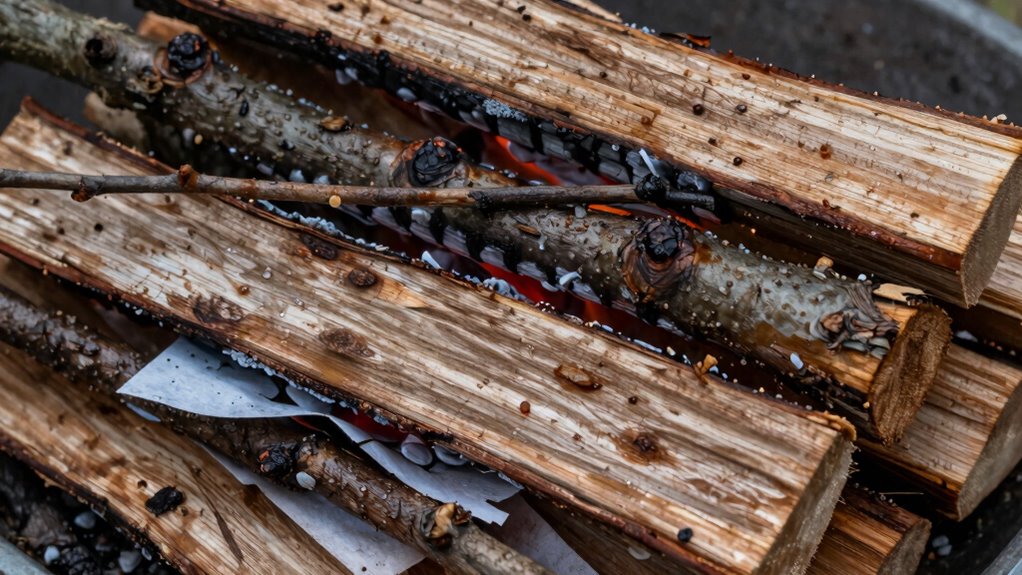

Your kindling likely won’t catch because it’s too damp, improperly arranged, or lacks enough airflow. If the wood feels clammy or moist, it won’t ignite easily. Make sure your kindling is dry and well-ventilated to let air flow freely around it. Proper stacking, like a teepee or lean-to, helps airflow and ignition. If these issues sound familiar, continue exploring to learn the best tips for a successful fire.
Key Takeaways
- The kindling is likely damp or not properly dried, preventing reliable ignition.
- Insufficient airflow due to poor stacking or arrangement hampers fire spread.
- Fire starters are damp, old, or of poor quality, making ignition difficult.
- Larger logs are added too early, smothering the initial flame before it catches.
- The fire is started with wet or clammy wood, which resists catching and sustaining a flame.
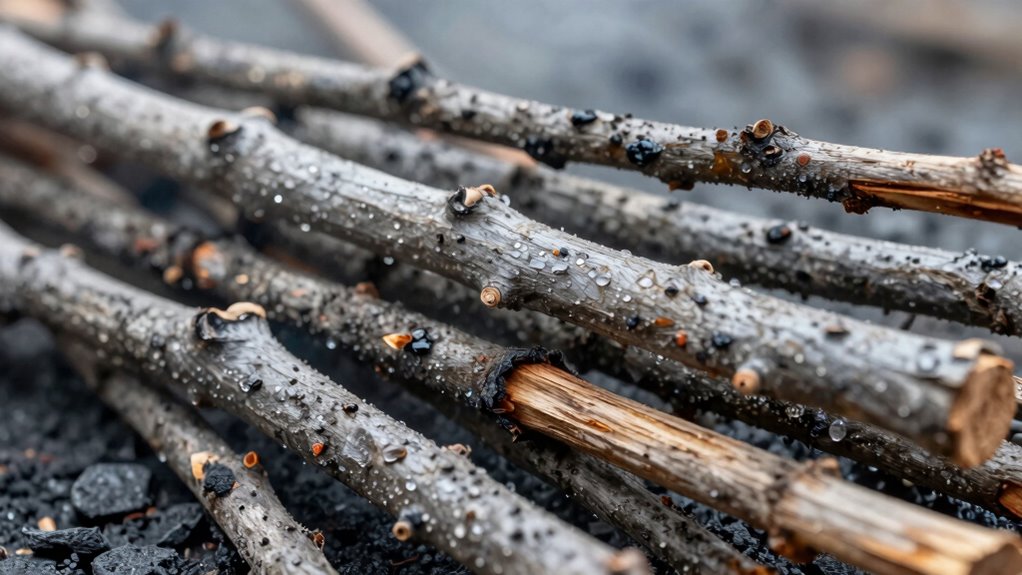
Starting a fire can be frustrating when your kindling refuses to catch, and often the problem isn’t with the wood itself but with how you’re preparing or stacking it. One of the most common issues is not using proper fire starting techniques, which can make all the difference in getting your fire going. First, you need to ensure that the wood has the right moisture levels. Freshly cut or green wood contains high moisture content, making it difficult to ignite and sustain a flame. If your kindling is damp or wet, it’s unlikely to catch fire, no matter how good your technique is. To check this, hold a piece of wood up to your cheek or lips; it should feel dry, not clammy. If it’s wet, you’ll need to dry it out before attempting to start your fire. Properly seasoned wood with low moisture content ignites more easily and burns more efficiently, giving your fire the best chance to get established.
Beyond moisture levels, how you arrange your kindling and firewood is vital. If you’re stacking the wood too tightly or in a way that restricts airflow, your fire will struggle to catch and breathe. A well-ventilated setup, like a teepee or lean-to shape, allows air to circulate, which is essential for combustion. Use small, dry pieces of kindling at the core, and gradually add larger pieces as the fire grows stronger. Remember, fire starting techniques such as using crumpled newspaper or natural fire starters can help ignite the kindling more reliably, especially if your wood is slightly damp. Never underestimate the power of a good airflow; it’s what feeds the flame and helps it spread from the kindling to the larger logs.
Another factor often overlooked is the condition of your fire starter materials. Damp or aged materials won’t ignite easily, so always use fresh, dry tinder. Additionally, lighting your fire from the bottom up—placing your lighter or match near the base of the kindling—is more effective than trying to light the top. This way, the flame can rise naturally through the kindling and ignite the larger logs.
Frequently Asked Questions
Can Using Wet or Damp Kindling Prevent Ignition?
Yes, using wet or damp kindling can prevent ignition because water damage and high moisture content make it hard to catch fire. When your kindling is damp, it absorbs moisture, reducing its ability to produce the necessary heat for ignition. To guarantee your fire starts easily, always use dry, well-seasoned kindling with low moisture content. This helps it catch fire quickly and burn efficiently.
Does the Type of Wood Affect How Easily It Catches Fire?
Think of wood as a dance partner—some are quick to spark, others slow and stubborn. The type of wood influences how easily it catches fire because of its density and moisture content. Light, softwoods with low moisture heat up and ignite faster, while dense hardwoods with high moisture resist ignition, smoldering longer. So, choosing the right wood makes your fire dance effortlessly from spark to blaze.
How Does the Size of the Kindling Impact Burning Success?
The size of your kindling greatly impacts burning success because smaller pieces ignite more easily, reaching ignition temperature faster. Larger kindling takes longer to catch fire and may need better airflow or more seasoned firewood. Proper firewood seasoning reduces moisture, helping it reach ignition temperature quickly. When your kindling is appropriately sized, it ignites efficiently, making your fire-building process smoother and ensuring a strong, sustained flame.
Is It Necessary to Pre-Dry My Kindling Before Use?
Yes, you should pre-dry your kindling before use. Proper drying methods reduce moisture content, making the wood easier to ignite and burn efficiently. If your kindling is damp, it’ll struggle to catch fire and produce more smoke. To dry your kindling effectively, store it in a dry, well-ventilated area or use a dehydrator. Drying it properly guarantees it ignites quickly and burns hot, saving you time and frustration.
Can Improper Stacking Hinder the Fire From Catching?
Improper stacking can definitely hinder your fire from catching. When you stack your kindling too tightly or with improper placement, airflow obstruction occurs, preventing enough oxygen from reaching the flames. This lack of airflow makes it harder for the fire to ignite and burn efficiently. To fix this, guarantee your kindling is loosely stacked with good gaps, allowing air to circulate freely and helping your fire catch quickly and burn strong.
Conclusion
If your kindling refuses to catch, it’s like trying to light a fire with wet matches—you’re just fighting an uphill battle. Check your wood’s dryness, guarantee proper airflow, and avoid overcrowding the fire. With patience and the right tweaks, your flames will dance happily, turning your effort into a roaring blaze. Remember, a successful fire starts with the right spark, so keep your kindling dry and your patience steady—soon enough, you’ll have a warm, crackling fire to enjoy.