
To tell if a log has tension before you cut, tap it gently and listen for a sharp, ringing sound—dull thuds suggest less tension. Look for surface cracks, deformities, or irregular grain patterns indicating internal stress. You can also test flexibility by gently bending the log; if it cracks or splinters, tension is present. Learning more about these signs keeps your woodworking safer and results more stable.
Key Takeaways
- Listen for a sharp, ringing sound when tapping the log; dull sounds indicate less tension.
- Look for surface cracks, deformities, or irregular grain patterns that signal internal stress.
- Gently bend or apply pressure to see if the wood splinters or cracks, indicating tension presence.
- Check for uniform color, minimal sap, and absence of excessive moisture, suggesting proper drying.
- Observe the grain pattern for irregularities or warping, which can reveal internal tension.
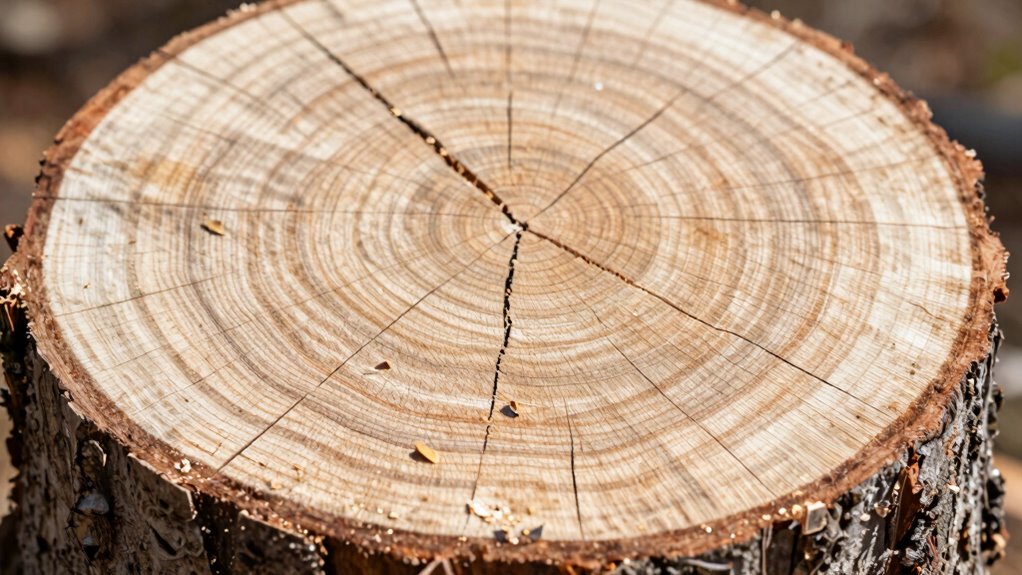
Wondering how to tell if a log has tension? It’s a common concern, especially when you’re preparing to work with wood for projects like crafting wooden furniture. Tension in a log can cause unpredictable splitting or warping once you start cutting, which can ruin your project or even pose safety hazards. Recognizing tension early on is vital to avoid costly mistakes and to guarantee your work proceeds smoothly. One key indicator is how the log responds when you strike it—if it produces a sharp, ringing sound, it’s a sign that the wood is under tension, whereas a dull thud suggests more stable, relaxed wood. You can also look for visible cracks or check the grain pattern; tension often causes small, internal stresses that might manifest as cracks or deformities on the surface. Proper drying techniques, including seasoning and kiln drying, are essential because they help reduce internal stresses and tension, making the wood safer and easier to work with. If you’re sourcing logs for projects like furniture making, it’s best to start with properly dried wood. Freshly cut logs, or green wood, tend to have high moisture content, which can contribute to tension as the wood dries. This is why seasoned or kiln-dried lumber is preferred for woodworking—these methods help minimize tension and reduce the risk of warping or splitting after cutting. When selecting logs, check for uniform color and absence of excessive moisture or sap, as these are signs that the wood has been dried correctly and tension has been alleviated. Additionally, understanding the importance of lumber drying techniques can help you identify logs that are less likely to develop tension issues later on. You can also perform a simple test by gently bending the log or applying slight pressure to see if it flexes or feels brittle. If it snaps or splinters easily, it might still be under tension or too dry. Conversely, if it bends smoothly without cracking, it’s more likely to be stable. Before making any cuts, especially for fine woodworking like making furniture, it’s wise to observe these signs and, if possible, consult with suppliers about their lumber drying techniques. Properly dried and tension-free logs will yield better results, reduce waste, and guarantee your finished wooden furniture is durable and stable.
Frequently Asked Questions
Can Tension in a Log Cause It to Snap Unexpectedly?
Yes, tension in a log can cause it to snap unexpectedly. Wood movement creates internal stress, and when you cut into the log, that stress releases suddenly, making the wood snap or shift. To avoid accidents, always check for visible cracks or warping, and consider making small cuts first to release tension gradually. Understanding these signs helps you work safely and prevents unexpected breaks during your project.
Are There Tools to Detect Internal Tension in Logs?
Think of tension detection tools as your log’s X-ray vision, revealing hidden stress points. Yes, there are specialized tension detection tools you can use to assess internal log tension. These tools help you spot areas where stress builds up, reducing the risk of unexpected snaps. Using them is like having a secret weapon, giving you confidence and safety before you make your cut.
Does the Type of Wood Affect Tension Levels?
Yes, the type of wood influences tension levels because of species differences and wood density. Denser woods like oak or hard maple tend to develop more internal tension, while softer woods like cedar or pine usually have less. Understanding these differences helps you anticipate potential hazards when cutting, so you can take precautions, especially with species known for higher tension, to avoid accidents and ensure safe, clean cuts.
How Often Do Logs Have Dangerous Tension?
Logs often have dangerous tension, especially if they’ve undergone a rapid drying process or have high wood density. You should regularly check for tension, as it varies with wood type and drying methods. Tension builds up when moisture evaporates unevenly, making some logs more prone to springback or splitting. Always inspect logs carefully, especially after seasoning, to guarantee safe cutting and avoid accidents caused by hidden tension.
Can Tension Be Relieved Before Cutting?
Yes, tension can be relieved before cutting by observing wood behavior and applying tension release techniques. You should carefully make small cuts or pries to gradually ease the stress, avoiding sudden movements. Use wedges or controlled cuts to release built-up tension safely. This proactive approach helps prevent dangerous machinery or unpredictable log movement, ensuring your safety while working with the wood.
Conclusion
Remember, a tree’s best defense is often hiding its tension, so always stay cautious. Before you cut, look for cracks, leaning, or a sudden sap flow—these are clues that tension is present. Trust your instincts and take your time. As the saying goes, “Better safe than sorry.” By paying attention and respecting the signs, you can prevent accidents and handle logs safely. Stay alert, and your work will be much smoother.