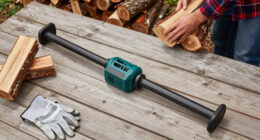
Ignoring proper calibration, probe placement, and temperature effects can lead your moisture meter to give inaccurate, misleading results. If you don’t calibrate regularly or fail to insert the probe fully into the material, you risk false readings. Temperature variations and poor contact also skew data, causing costly mistakes. To get reliable measurements, you need to follow correct procedures. Keep reading to discover key tips that will help you avoid these common mistakes and guarantee accurate results.

Get business pricing on tools and workshop supplies
- Business-only prices and quantity discounts
- Tax-exempt purchasing
- Multiple users, one account, clear invoices
Key Takeaways
- Failing to calibrate the moisture meter regularly can result in inaccurate readings.
- Improper probe placement, such as only testing surface areas, skews moisture level results.
- Not testing the interior or full depth of the material leads to misleading moisture data.
- Temperature fluctuations affect readings; ignoring temperature compensation causes errors.
- Poor contact or inconsistent pressure during testing can produce unreliable or false moisture measurements.
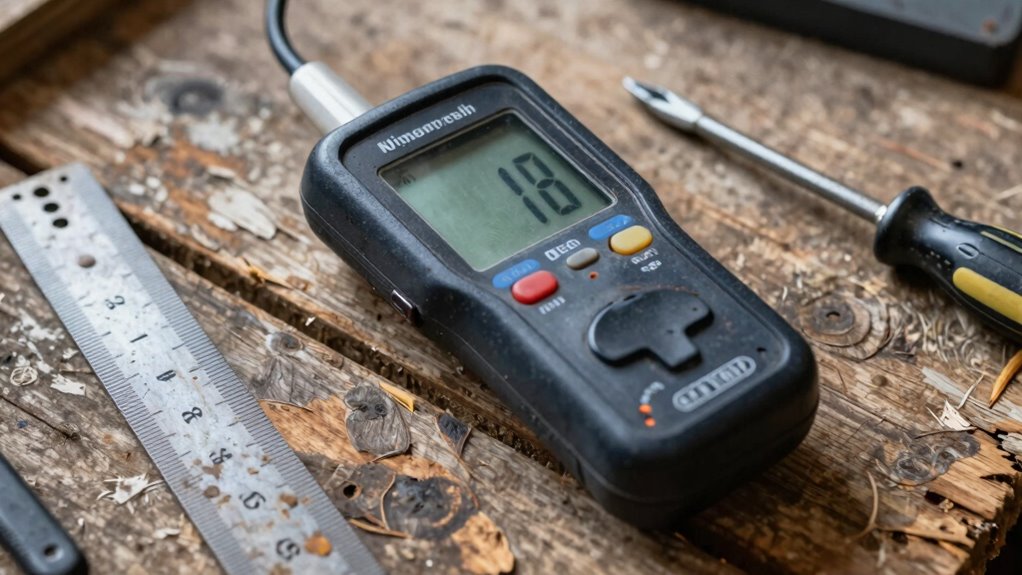
Using a moisture meter might seem straightforward, but making common mistakes can lead to inaccurate readings and costly errors. One of the biggest pitfalls is calibration errors. If your device isn’t properly calibrated, all the readings it provides will be off. This can happen if the meter was knocked out of calibration during transport or storage, or if it’s just been a while since you last calibrated it. Failing to regularly check and adjust calibration can cause you to trust false moisture levels, which could lead to improper drying, over- or under-watering, or even damage to the material you’re testing. To avoid this, always verify calibration with a standard or reference sample before starting work, and recalibrate periodically, especially if you notice inconsistent readings or after dropping the device.
Another common mistake involves improper probe placement. Many users don’t realize how critical the positioning of the probe is to obtaining an accurate measurement. If you don’t insert the probe fully into the material or test the surface instead of the interior, your readings won’t reflect the true moisture content. For porous or uneven surfaces, it’s essential to insert the probe into a consistent depth to get a representative sample. Skipping this step can result in falsely low or high readings, which might cause you to make incorrect decisions about drying times or the safety of the material. Also, ensure that the probe makes good contact with the material—poor contact can introduce significant errors. Don’t just place the probe on the surface; press it firmly and consistently, and avoid testing in areas with surface coatings or finishes that might affect the moisture reading. Proper probe placement is especially important when working with piercings, as surface conditions can vary greatly.
Additionally, temperature variations can influence readings if your moisture meter isn’t temperature-compensated. Many models have built-in compensation features, but if yours doesn’t, you need to be aware of ambient temperature changes. Testing in a cold or hot environment can skew results, making the material appear drier or wetter than it actually is. To get accurate readings, allow the material and device to reach room temperature before testing, or use a meter with temperature compensation.
digital moisture meter calibration
As an affiliate, we earn on qualifying purchases.
As an affiliate, we earn on qualifying purchases.
Frequently Asked Questions
Can Environmental Conditions Affect Moisture Meter Accuracy?
Yes, environmental conditions can impact your moisture meter’s accuracy. High humidity levels cause interference, making your readings unreliable. Surface contamination, like dirt or oil, can also skew results by blocking proper contact with the material. To get accurate measurements, guarantee the environment is stable, keep surfaces clean, and avoid testing in overly humid conditions. Proper calibration and careful testing help minimize these environmental influences.
Are Digital Moisture Meters More Reliable Than Analog?
Digital moisture meters are generally more reliable than analog because they offer better digital accuracy and consistent readings. You’ll find that digital devices are easier to read and less prone to user error, while analog meters rely on needle positions that can be misinterpreted. However, analog meters can still be dependable if properly maintained, but for precise, quick results, digital moisture meters are usually the better choice for you.
How Often Should I Calibrate My Moisture Meter?
You should calibrate your moisture meter regularly, ideally before each major project or monthly as part of your maintenance routines. Frequent calibration guarantees accurate readings and helps prevent bad numbers caused by wear or environmental factors. Keep a record of calibration dates, and follow the manufacturer’s recommendations for calibration frequency. Consistent maintenance routines keep your moisture meter functioning reliably and provide you with precise moisture levels.
Do Different Materials Require Different Moisture Meter Settings?
Yes, different materials need specific moisture meter settings. You should perform material-specific calibration to guarantee accuracy, as each material’s properties affect readings. Surface absorption effects can also influence results, so testing on the actual material or similar samples helps. Adjusting your meter’s settings for each material type helps you get reliable moisture content readings, preventing errors caused by variations in surface texture or absorption rates.
Can Moisture Meters Detect Hidden Moisture Behind Surfaces?
Yes, moisture meters can detect hidden moisture behind surfaces, but their effectiveness depends on the device type and settings. For surface moisture, they work directly on the material’s exterior. For hidden detection, you may need a pin-type or specialized moisture meter that penetrates or scans beneath surfaces. Keep in mind, some surfaces may obstruct accurate readings, so use proper techniques and calibration for reliable results.
Conclusion
To get accurate readings, avoid common moisture meter mistakes. Check your calibration, test the right spots, and interpret the numbers carefully. Don’t rush, don’t guess, and don’t overlook details. Precision matters, because your project depends on it. When you take your time, double-check your work, and stay attentive, you ensure success. Trust the process, trust your tools, and trust yourself—because every accurate reading brings you closer to perfection.
Fall Picks
fall essentials
As an affiliate, we earn on qualifying purchases.