To deal with ants, termites, and beetles, keep your home clean, dry, and clutter-free to make it less inviting. Seal entry points, install screens, and eliminate standing water to block pests. Use natural remedies like vinegar sprays, diatomaceous earth, and essential oils to deter insects without harsh chemicals. Regularly inspect and maintain your home, and act quickly at signs of infestation. If you continue, you’ll discover more effective strategies to protect your home long-term.
Key Takeaways
- Seal entry points and eliminate food sources to prevent ants, termites, and beetles from invading your home.
- Use natural remedies like vinegar sprays, diatomaceous earth, and essential oils to disrupt pest trails and repel insects.
- Maintain a clean, dry environment by regularly cleaning surfaces, vacuuming, and removing standing water to reduce pest habitats.
- Store food in airtight containers and dispose of garbage promptly to deny pests access to nourishment.
- Combine sealing, cleaning, and natural repellents consistently for effective, chemical-free pest management.
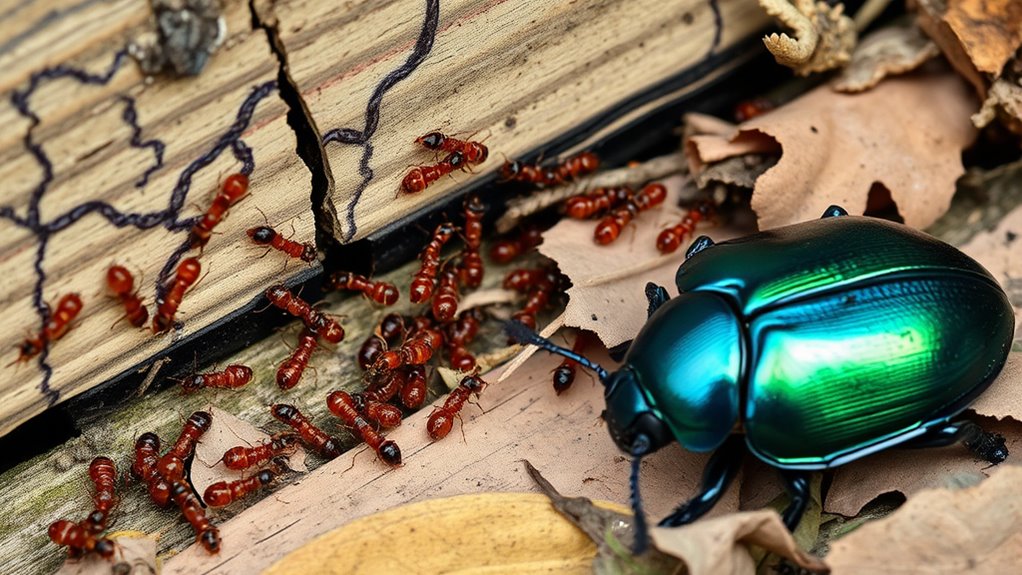
If you’ve noticed unwanted insects like ants, termites, or beetles in your home, it’s important to address the problem quickly. These pests can cause damage and become a persistent annoyance if left unchecked. The first step is focusing on indoor pest prevention. Keeping your home clean and dry is essential because many pests thrive in cluttered, moist environments. Regularly vacuum carpets, sweep floors, and wipe down surfaces to eliminate food crumbs and spills that attract insects. Seal cracks and crevices around windows, doors, and foundations to block entry points. Installing screens on windows and doors also creates a barrier against pests trying to get inside. Eliminating standing water around your home reduces the chances of attracting insects like ants and beetles that need moisture to survive.
When it comes to natural pest remedies, you aim for safe, eco-friendly solutions that don’t involve harsh chemicals. For ants, a mixture of white vinegar and water sprayed along door thresholds, window sills, and ant trails can disrupt their scent paths and discourage them from entering. Diatomaceous earth, sprinkled around entry points and along baseboards, is a natural abrasive that damages insect exoskeletons, causing dehydration and death. For termites, you might consider orange oil treatments or nematodes—beneficial worms that naturally target soil-dwelling termites. Beetles can often be deterred with essential oils like eucalyptus or peppermint; spraying these oils in affected areas can repel them without harming your family or pets. Understanding the different types of pest control tools available can help you choose the most effective method for your situation.
Maintaining a clutter-free environment is key to indoor pest prevention. Store food in airtight containers, clean up pet food spills promptly, and dispose of garbage regularly. These steps deny pests easy access to sustenance and nesting sites. Natural pest remedies are most effective when used as part of a broader prevention strategy. For example, combining sealing entry points with regular cleaning and natural repellents creates a hostile environment for pests. When you notice signs of infestation, acting swiftly with these preventative measures and remedies can save you time, money, and frustration. Remember, consistent effort makes a significant difference in keeping your home pest-free. By staying proactive and using natural methods, you reduce reliance on chemicals and protect your household’s health while effectively managing unwanted insects.
Frequently Asked Questions
How Can I Prevent These Pests From Returning After Treatment?
To prevent these pests from returning, you should implement preventative measures like sealing cracks and crevices, keeping your space clean, and removing food sources. Ongoing maintenance is key—regularly inspect your property, trim vegetation away from your home, and use barrier treatments if needed. Staying vigilant and proactive helps guarantee pests don’t come back, maintaining a pest-free environment over time.
Are There Eco-Friendly Methods to Control Ants, Termites, and Beetles?
Like Athena’s wisdom guiding you, eco-friendly pest control is achievable. You can use natural repellents such as neem oil, citrus peels, or cinnamon to deter ants, termites, and beetles. Introduce beneficial insects like ladybugs and predatory beetles to naturally reduce pest populations. These methods respect the environment, safeguard your home, and promote a balanced ecosystem, ensuring pests stay at bay without harmful chemicals.
What Signs Indicate a Severe Infestation of These Pests?
You’ll notice signs of infestation like visible pest activity indicators, such as swarms, mud tubes, damaged wood, or piles of wings. You might also see frass, droppings, or unusual holes in walls and furniture. If these signs appear or you spot an increase in pest movement, it indicates a severe infestation. Act quickly to prevent further damage and consider professional inspection to confirm the extent of the problem.
How Long Does It Typically Take to Eliminate an Infestation?
The treatment timeline for pest elimination typically takes a few days to a few weeks, depending on the severity of the infestation. You’ll see faster results with professional treatments, which usually show noticeable improvements within a week. Pest elimination duration varies based on the pest type and extent of the problem, but consistent follow-up treatments can guarantee complete eradication. Stay patient and follow your pest control provider’s advice for the best results.
Can DIY Solutions Effectively Manage These Pests or Should I Hire Professionals?
DIY solutions can sometimes manage pests effectively, especially for small infestations, but their effectiveness varies. You might see quick results, but for persistent or large infestations, professional expertise is often necessary to guarantee complete eradication. Professionals use specialized tools and treatments that DIY methods can’t match. So, if you’re unsure or dealing with a severe problem, hiring experts is the safest way to effectively eliminate pests and prevent future issues.
Conclusion
Now that you know how to identify and tackle ants, termites, and beetles, you’re better prepared to protect your home. Regular inspections and prompt action can save you from bigger problems down the line. Remember, a pest-free home isn’t just about peace of mind — it’s about enjoying your space without worry. So, aren’t you ready to take charge and keep those pests at bay? Your home deserves the best defense — starting today!