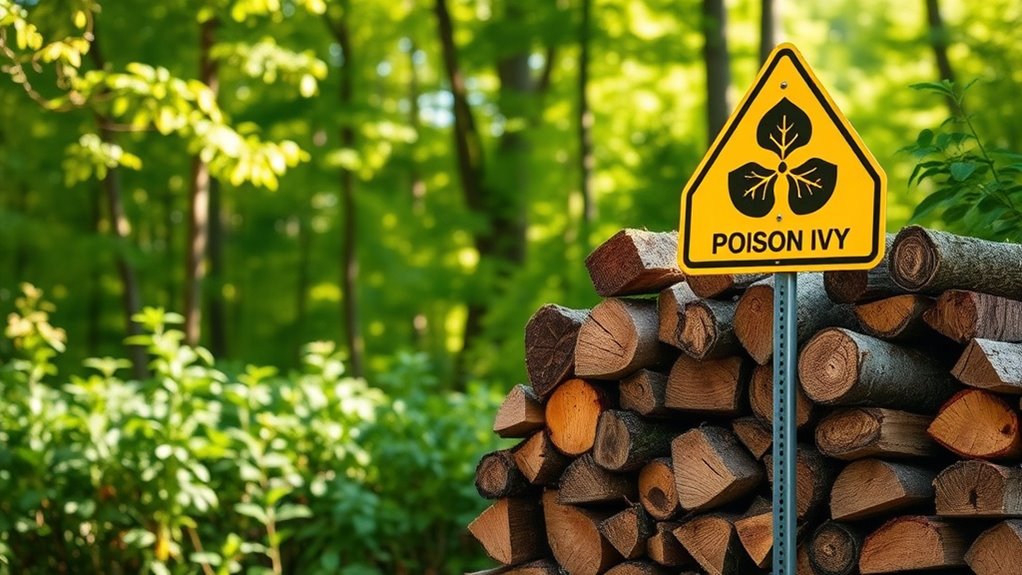

To avoid poison ivy and other allergens in woodpiles, carefully inspect your firewood for greenish or reddish patches before handling. Always wear protective clothing like long sleeves, pants, gloves, and eye protection to create a barrier against urushiol oils. Use tools or tongs to move wood instead of bare hands, and wash yourself and your gear thoroughly afterward. Staying vigilant and taking these precautions can greatly reduce allergen exposure—learn more to stay safe.
Key Takeaways
- Inspect woodpiles carefully for green or reddish patches indicating potential urushiol contamination before handling.
- Wear protective clothing such as long sleeves, gloves, and eye protection to create a barrier against allergens.
- Use tools like tongs or a hook to move wood, minimizing direct skin contact with potentially contaminated materials.
- Wash hands, skin, and clothing thoroughly after handling outdoor wood to remove residual urushiol oils.
- Store firewood indoors or cover outdoor piles to reduce exposure to poison ivy, oak, or sumac.
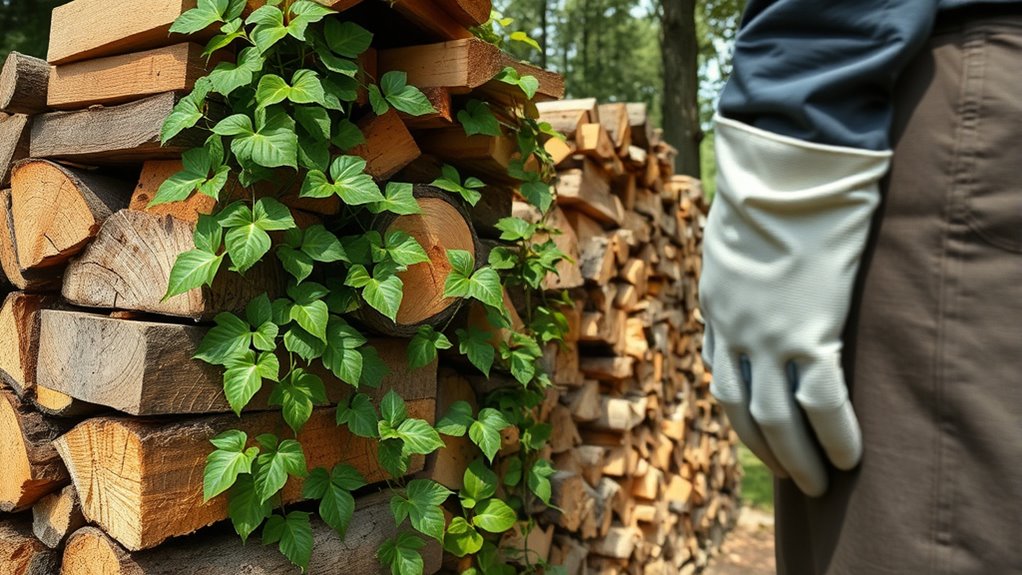
Poison ivy and other outdoor allergens can cause uncomfortable skin reactions and respiratory issues if you’re not careful. When you’re working around woodpiles, it’s essential to prioritize safe handling to prevent exposure. Poison ivy, along with other irritants like oak and sumac, can cling to wood, leaves, and debris, making even simple tasks risky if you’re not prepared. Wearing protective clothing is your best defense. Long sleeves, pants, gloves, and eye protection create a physical barrier that minimizes skin contact. Thick, washable gloves are especially important because poison ivy oils, called urushiol, can linger on surfaces and transfer easily. If you handle wood with bare hands or expose your skin, you risk developing an itchy, blistering rash that can take days or weeks to heal.
Before you start working, inspect the woodpile carefully. If it’s stored outdoors for a long time or has been in contact with plants, there’s a good chance it could be contaminated. When handling firewood or lumber, consider wearing a long-sleeved shirt and sturdy pants to protect your arms and legs from accidental contact. Tucking your shirt into your gloves or pants adds an extra layer of defense. If you notice any greenish or reddish patches on the wood or surrounding debris, treat those areas as potential hazards and handle them with extra caution. After finishing your work, wash your hands and any exposed skin thoroughly with soap and water to remove any lingering urushiol. This simple step can drastically reduce your chances of developing a reaction.
Using protective clothing doesn’t mean you have to be overly cautious or uncomfortable; it’s about creating a barrier that keeps allergens away from your skin. When working around woodpiles, avoid leaning directly on logs or stacking wood with bare hands. Instead, use tools like gloves or tongs to move pieces safely. Always remember to wash your clothing separately from other laundry to prevent any residual oils from spreading. If you’re concerned about contamination, consider cleaning your work gear with a specialized ivy wash or degreasing soap designed to remove urushiol. Additionally, choosing smart cleaning products that are effective against oils like urushiol can enhance your safety. By taking these precautions, you considerably lower your risk of an allergic reaction and make outdoor chores safer and more manageable. Staying vigilant, wearing proper protective gear, and practicing safe handling are your best strategies for enjoying your outdoor space without the discomfort of poison ivy or other allergens.
Frequently Asked Questions
Can Poison Ivy Grow on Treated or Painted Wood?
Poison ivy generally doesn’t grow on treated or painted wood because the chemicals in wood treatment and paint create a barrier that prevents ivy growth. However, if the treatment isn’t fully applied or if paint is chipped, ivy can sometimes find a foothold. To minimize ivy growth, make certain your wood is properly treated or painted and regularly check for any signs of ivy or related allergens.
Are There Natural Remedies to Remove Poison Ivy From Woodpiles?
Think of poison ivy as a stubborn weed trying to cling to your woodpile. Natural remedies like horticultural vinegar or a mix of soap and water can help loosen its grip. For poison ivy removal, apply these solutions directly to the plants, then scrub gently. Repeating this process over time weakens the plant’s hold, gradually erasing its presence without harsh chemicals, keeping your woodpile safe and allergen-free.
How Often Should I Inspect My Woodpile for Allergens?
You should inspect your woodpile regularly, ideally once a month, to catch any allergen buildup early. Regular inspections allow you to monitor for poison ivy or other allergens and remove contaminated wood promptly. During each check, look closely for any plant growth or suspicious vines. Consistent allergen monitoring helps prevent allergic reactions and keeps your woodpile safe, especially during peak poison ivy season.
What Clothing Is Safest When Handling Wood to Avoid Allergens?
Imagine armor shielding you from hidden dangers—your safest clothing includes long sleeves, gloves, and eye protection, forming allergen barriers that block poison ivy’s sneaky oils. Wear thick, tightly woven fabrics that trap allergens before they reach your skin. Cover your entire body, especially arms and legs, to keep allergens out of sight and out of mind. Proper protective clothing is your first line of defense against allergic reactions during wood handling.
Does Storing Firewood Indoors Reduce Exposure to Allergens?
Storing firewood indoors can reduce your exposure to outdoor allergens like pollen and mold spores. Indoor storage limits contact with airborne allergens and keeps the wood dry, which helps prevent mold growth. However, it’s essential to regularly inspect and clean the storage area to avoid introducing new allergens or pests. By choosing indoor storage, you actively minimize allergen exposure, making it a safer option for allergy sufferers.
Conclusion
Remember, an ounce of prevention is worth a pound of cure. By wearing protective clothing, inspecting your woodpile regularly, and learning to identify poison ivy and other allergens, you can enjoy your outdoor chores safely. Keep the area tidy and avoid unnecessary contact. When you stay vigilant, you’ll minimize exposure and keep your skin happy. After all, a little caution today saves a lot of discomfort tomorrow. Stay safe and enjoy your woodpile responsibly!