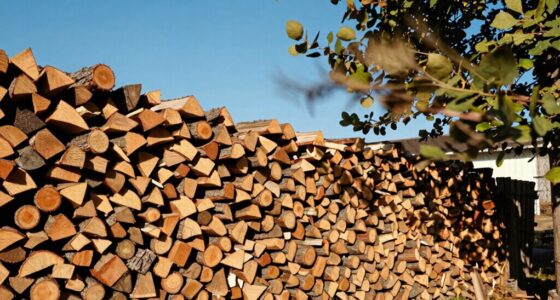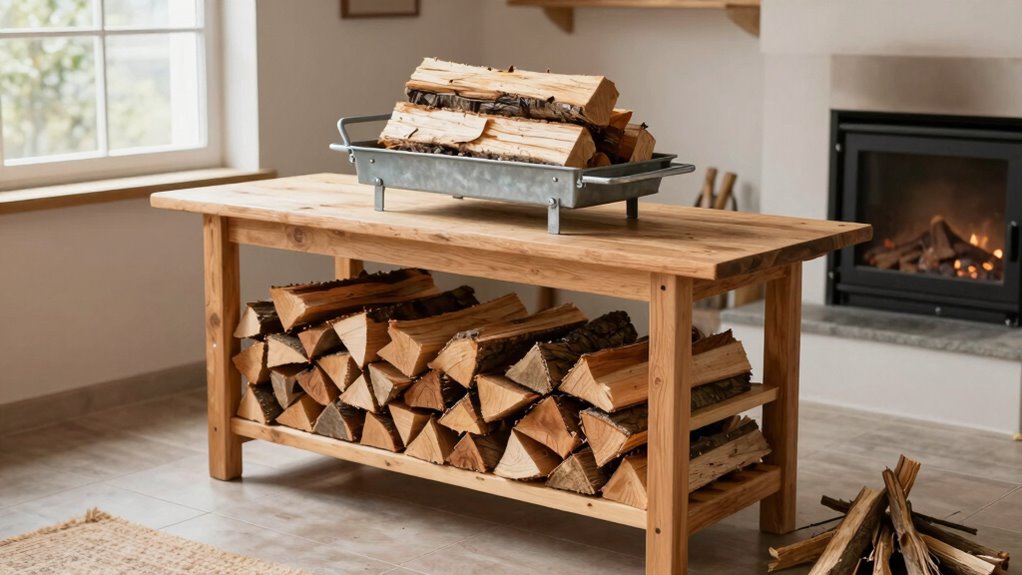
Set up a dedicated outdoor storage area that’s covered, well-ventilated, and organized to keep firewood dry and pest-free. Use sturdy containers or racks to transport logs, and keep pathways clear of debris. Inside, designate a space near your fireplace with a firewood rack or tarp to catch sawdust. Wear gloves and use carts for easy transfer. Regular maintenance, good airflow, and safety measures will help keep the process cleaner and safer—so there’s more to explore here.

Get business pricing on tools and workshop supplies
- Business-only prices and quantity discounts
- Tax-exempt purchasing
- Multiple users, one account, clear invoices
Key Takeaways
- Designate a dedicated, organized indoor stacking area near the fireplace, away from high-traffic zones.
- Use firewood racks or sturdy containers to contain logs and minimize clutter.
- Place tarps or mats beneath storage to catch sawdust, bark, and debris during transfer.
- Handle logs with gloves and use carts or wheelbarrows for controlled, safe movement.
- Regularly clean the transfer area to remove sawdust, debris, and reduce fire hazards.
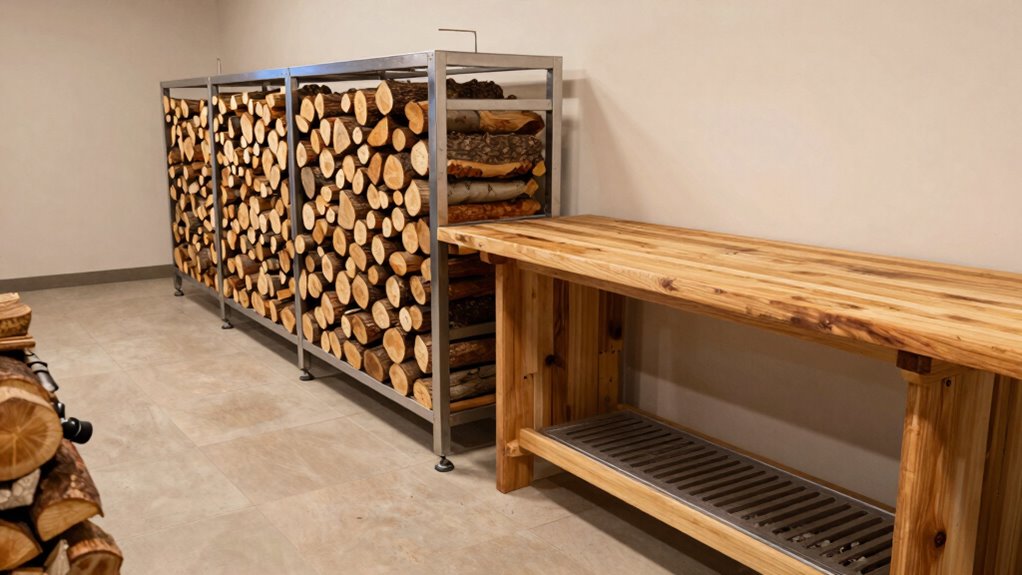
Bringing firewood indoors can quickly become messy and inconvenient if you’re not prepared. To keep your space tidy and maintain safety, you need a reliable setup that streamlines the transfer process. Start by selecting appropriate firewood storage outside your home, ideally a covered, well-ventilated area that keeps your firewood dry and free from pests. This initial step prevents excess dirt and debris from being carried inside, making the transfer cleaner. When you’re ready to bring in the wood, gather a small, sturdy container or a dedicated firewood carrier to transport the logs. This minimizes the chances of dropping pieces or spilling bark and sawdust on your floors.
Organize outdoor storage, use sturdy carriers, and keep the transfer process clean and safe.
Once inside, position a designated area for stacking firewood, preferably near your fireplace or stove but away from high-traffic zones. Using a firewood rack or a sturdy container helps contain the logs and keeps them organized. This reduces clutter and prevents logs from rolling around or falling onto the floor, which could create a tripping hazard. To enhance indoor safety, lay down a mat or tarp beneath the storage area. This catch-all prevents sawdust, bark, and small debris from scattering across your flooring, making cleanup easier and protecting your surfaces. Maintaining proper firewood storage can also help prevent pests from entering your home through the wood. Selecting sustainable firewood can further help in reducing environmental impact and promoting biodiversity. Incorporating fire safety measures such as keeping extinguishers nearby can also provide peace of mind.
When transferring firewood, wear gloves to protect your hands from splinters and dirt. Be mindful of the weight you carry—overloading a single arm can lead to accidents or dropped logs. Keep the path from your outdoor storage to the indoor stacking area clear of obstacles to avoid trips or spills. If you’re handling a large quantity of wood, consider using a wheelbarrow or a cart for easier transport and better control. It also helps prevent back strain and keeps your movements controlled. Regularly inspecting your firewood storage area for pests or moisture can further ensure your indoor environment remains safe and healthy.
Maintaining indoor safety also involves ensuring proper ventilation. If you’re bringing in a significant amount of firewood regularly, make sure your home has good airflow, especially near the storage area. This reduces the buildup of moisture, mold, or pests that could compromise indoor air quality. Incorporating biodiversity-friendly practices such as selecting sustainably sourced firewood can help minimize environmental impact. Keep fire extinguishers nearby, particularly if you’re stacking firewood close to your fireplace or stove, to be prepared for any accidents. Additionally, consider setting a routine to clean the area frequently. Sweeping up sawdust and debris prevents accumulation that could become a fire hazard or cause slips and falls.
A well-thought-out firewood transfer routine and proper firewood storage not only keep your home cleaner but also promote indoor safety. By organizing your process, using the right tools, and maintaining cleanliness, you ensure a safer, more efficient way to enjoy your cozy fires while keeping your environment safe and tidy.
Products Worth Considering

Levoit Vital 100S-P Air Purifier with Washable Pre-Filter

Hisense 43-Inch E6 Cinema Series Hi-QLED 4K UHD Smart Fire TV (43E6QF)

Dyson Gen5 Outsize Cordless Vacuum
As an affiliate, we earn on qualifying purchases.
Frequently Asked Questions
How Often Should I Clean My Firewood Transfer Area?
You should clean your firewood transfer area at least once a month to prevent dirt, debris, and pests from accumulating. During cleaning, inspect your firewood storage for mold or insects that could affect the transfer process. Regular upkeep guarantees a smoother, cleaner transfer routine, reducing mess and potential hazards. Maintaining a routine keeps your indoor firewood handling efficient and safe, making sure your firewood stays dry and ready for use.
What Safety Precautions Are Essential During Indoor Firewood Transfer?
Think of yourself as a guardian of indoor air quality. When transferring firewood, wear gloves and a dust mask to protect against firewood moisture and dust particles. Keep the area well-ventilated to prevent indoor air quality from deteriorating. Use a stable, clean surface, and avoid overloading your transfer container. Always wash your hands afterward to minimize the spread of dirt and moisture, ensuring a safe, clean environment.
Can I Use Any Type of Wood for Indoor Fires?
You can’t use any type of wood for indoor fires. Always choose well-seasoned firewood with low moisture content, which burns cleaner and produces less smoke. Proper firewood seasoning helps reduce smoke and creosote buildup, making your indoor fires safer and more efficient. Avoid green or wet wood, as high moisture levels cause inefficient burning and increase indoor air pollution. Select seasoned firewood to guarantee a safer, cleaner indoor fire experience.
How Do I Prevent Pests When Bringing in Firewood?
To prevent pests when bringing in firewood, start with a thorough firewood inspection, checking for insects, larvae, or signs of pests. Use pest prevention techniques like shaking the wood outdoors to dislodge critters and avoiding bringing in wood from unknown sources. Store firewood away from your home’s foundation, and consider using a covered container or rack. Regularly inspect stored wood for pests to keep your indoor space pest-free.
What Tools Are Best for Transferring Firewood Indoors?
For transferring firewood indoors, you need sturdy transfer containers, a wheelbarrow, and gloves. These tools help you move firewood efficiently, protect your hands, and keep your space tidy. Use transfer containers for small loads, a wheelbarrow for larger batches, and gloves to prevent splinters. This setup streamlines firewood storage, minimizes mess, and reduces pests, ensuring a cleaner, safer indoor transfer routine.
Conclusion
So, there you have it—your foolproof, squeaky-clean plan to transfer firewood indoors without turning your home into a winter wonderland of splinters and dirt. Just follow the setup, stay vigilant, and remember: a tidy routine keeps the chaos at bay… or so they say. Because nothing says “cozy fireplace” like a spotless floor and perfectly stacked logs, right? Happy burning—and even happier cleaning!