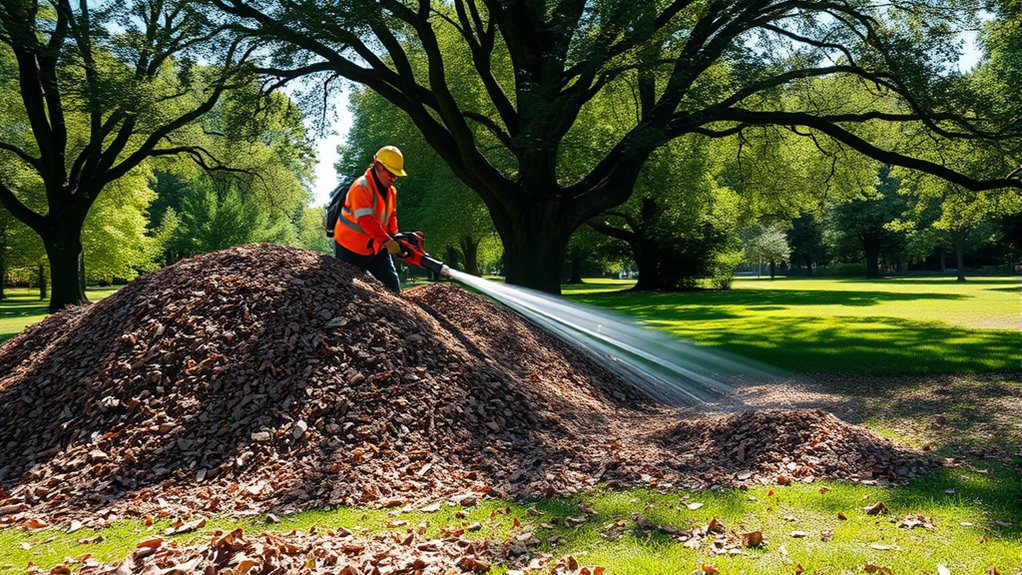

To clean up bark and debris efficiently, start by removing larger pieces by hand to avoid damaging plants. Use a rake to gather smaller debris and apply mulch evenly around your plants at a 2-3 inch thickness to suppress weeds and retain moisture. Compost organic waste like bark chips and leaves, and dispose of non-organic debris according to local guidelines. Wearing gloves and using the right tools will keep you safe and organized—keep going to discover even more tips.
Key Takeaways
- Remove large debris manually with gloves and tools to prevent damage and injuries.
- Use rakes and shovels to gather fine debris into manageable piles for easier collection.
- Apply mulch evenly around plants at a 2-3 inch depth to suppress weeds and retain moisture.
- Compost organic debris like bark chips and leaves to enrich soil and reduce waste.
- Organize cleanup with safety gear and separate waste types to streamline disposal and protect yourself.
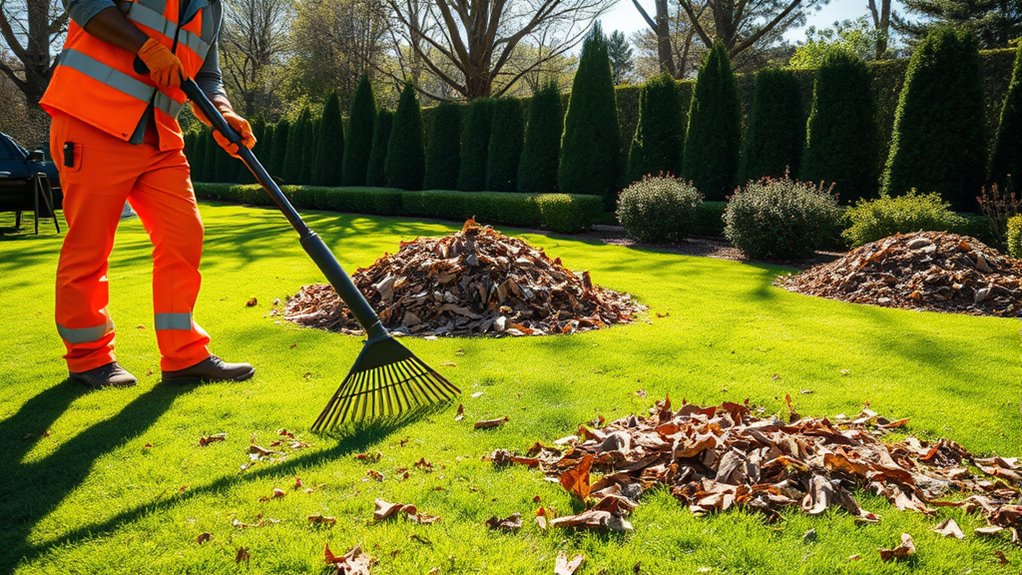
Have you noticed an accumulation of bark and debris cluttering your yard or garden? When debris starts piling up, it can make your outdoor space look untidy and even hinder plant growth. Tackling this mess involves understanding effective mulching techniques and debris disposal methods, so you can clean up efficiently without unnecessary effort. Mulching techniques are key because they help manage bark and debris while improving your soil. Start by removing larger pieces by hand, ensuring you don’t damage nearby plants. For finer debris, use a rake to gather everything into manageable piles. When applying mulch, spread it evenly, about two to three inches thick, around your plants and flower beds. This not only suppresses weeds but also retains moisture and adds a tidy appearance. Mulching techniques can vary based on your garden’s needs, but the goal remains the same: create a clean, healthy environment for your plants while controlling debris.
Additionally, choosing the right debris disposal methods can make the process more efficient and environmentally friendly. Once your mulch is in place, it’s time to focus on debris disposal methods. Proper disposal is essential to prevent clutter from returning and to keep your yard safe. If you have organic debris like bark chips and fallen leaves, composting is an excellent option. You can add these materials to your compost bin or pile, where they will break down and enrich your soil. If the debris is too coarse or contaminated, consider recycling or disposing of it at your local waste facility. Many communities have curbside pickup services for yard waste, which simplifies debris disposal methods. Be sure to follow local regulations—some areas require bags or specific containers for yard debris. For larger bark chunks or branches, using a wood chipper can reduce bulky waste into smaller pieces that are easier to handle or reuse as mulch elsewhere in your garden.
Throughout the process, always prioritize safety. Wear gloves to protect your hands from splinters and sharp edges. Use tools like rakes, shovels, or a wheelbarrow to move debris efficiently, avoiding unnecessary strain. Staying organized helps too—separate organic waste from non-organic debris to streamline disposal. By integrating mulching techniques effectively and choosing appropriate debris disposal methods, you’ll keep your yard looking pristine with minimal effort. Regular maintenance not only prevents the buildup of bark and debris but also promotes healthier plants and a more inviting outdoor space. With these strategies, you turn what could be a tedious chore into a manageable task, leaving your garden clean, attractive, and thriving.
Frequently Asked Questions
What Safety Gear Is Recommended for Debris Cleanup?
You should wear safety gloves to protect your hands from splinters and sharp debris. Protective eyewear is essential to shield your eyes from dust, flying particles, or bark fragments. Consider using a dust mask if you’re working in a dusty environment. Additionally, sturdy footwear and long sleeves help prevent injuries. Always prioritize safety by using the right gear, ensuring you stay protected while cleaning up bark and debris efficiently.
How Often Should Bark and Debris Be Removed?
Think of your garden like a painting; regular touch-ups keep it vibrant. You should remove bark and debris every 4 to 6 weeks to prevent mold and pests. Using proper mulching techniques helps maintain bark color and health. If you notice bark fading or accumulating debris, it’s time for a clean-up. Consistent maintenance preserves your landscape’s beauty and ensures your plants flourish, much like a well-kept masterpiece.
Can I Compost Bark and Organic Debris?
Yes, you can compost bark and organic debris. As they decompose, they turn into valuable mulch types that enrich your soil. Organic decay is a natural process, so adding bark and debris to your compost pile helps speed up this cycle. Make sure to balance green and brown materials, keep it moist, and turn it regularly. This way, you’ll produce nutrient-rich compost to nourish your garden.
What Tools Are Best for Heavy Debris Removal?
You’ll want heavy duty tools for debris disposal, especially when tackling stubborn bark and large debris. A sturdy wheelbarrow helps transport heavy loads, while a robust rake or a power leaf blower speeds up gathering. For truly tough debris, consider a chainsaw or a power chipper to break down larger pieces quickly. These tools save you time and effort, making heavy debris removal more manageable and efficient.
How to Prevent Future Bark and Debris Buildup?
To prevent future bark and debris buildup, you should use proper planting techniques that minimize loose bark shedding, like selecting appropriate mulch and maintaining healthy plants. Mulching benefits include reducing debris accumulation and protecting roots. Regularly check your garden, prune dead branches, and replace mulch as needed. These practices keep your landscape tidy, promote plant health, and reduce the need for frequent cleanup.
Conclusion
Remember, a tidy yard is a happy yard. By staying consistent and using the right tools, you’ll keep your space clean and inviting. Don’t let bark and debris pile up—tackle them regularly to save time and effort. As the saying goes, “A stitch in time saves nine.” So, stay proactive, clean up efficiently, and enjoy a beautiful, clutter-free outdoor area all year round. Your efforts will truly pay off!