When covering firewood, a top cover is often better because it protects against rain and snow while allowing air circulation around the rest of the pile. Full covers provide complete protection but can trap moisture if ventilation isn’t good enough, leading to mold and decay. Consider your climate and storage duration to choose the best option. If you want to learn more about optimizing your firewood storage, keep exploring the details below.

Get business pricing on tools and workshop supplies
- Business-only prices and quantity discounts
- Tax-exempt purchasing
- Multiple users, one account, clear invoices
Key Takeaways
- Top-covers protect firewood from falling rain and snow while allowing air circulation, aiding quick drying.
- Full-covers offer comprehensive moisture protection but may trap humidity if ventilation isn’t adequate.
- Proper covering balances moisture protection with airflow to prevent mold, rot, and creosote buildup.
- Top-covers are generally preferred for short-term storage and well-ventilated areas.
- Full-covers suit long-term storage or humid climates but require careful design to avoid trapping excess moisture.
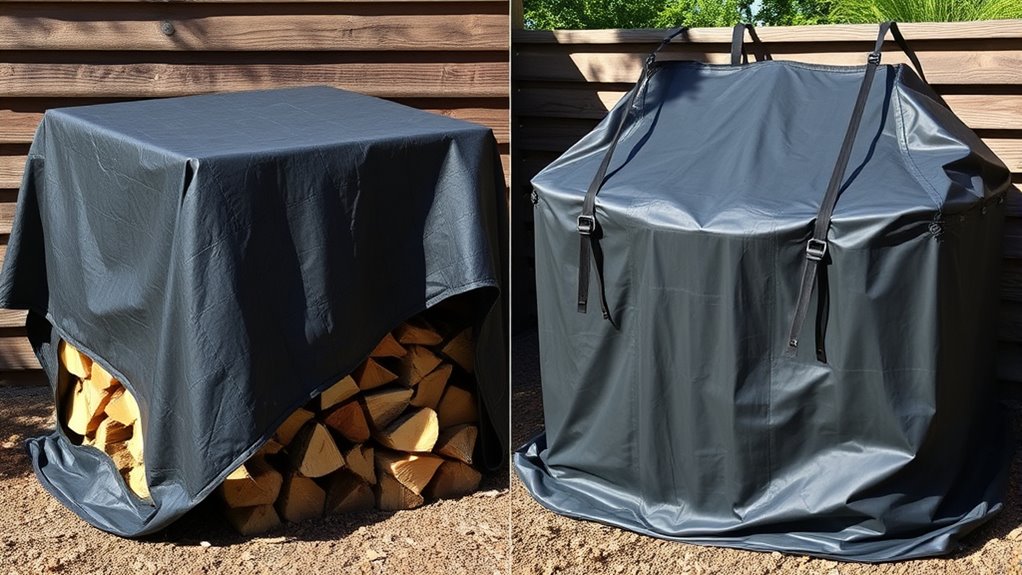
Have you ever wondered why covering firewood is vital? When you’re storing firewood, proper covering isn’t just about keeping it clean—it’s about guaranteeing that your wood stays dry and ready when you need it most. Firewood is at its best for burning when it’s properly seasoned and kept dry. If moisture seeps into the logs, it can make ignition difficult and produce more smoke and creosote, which isn’t good for your stove or chimney. That’s why moisture prevention is essential, especially during seasonal storage where the wood sits outside for weeks or even months. Covering your firewood properly helps shield it from rain, snow, and dew, preventing water absorption that can compromise its quality and usability.
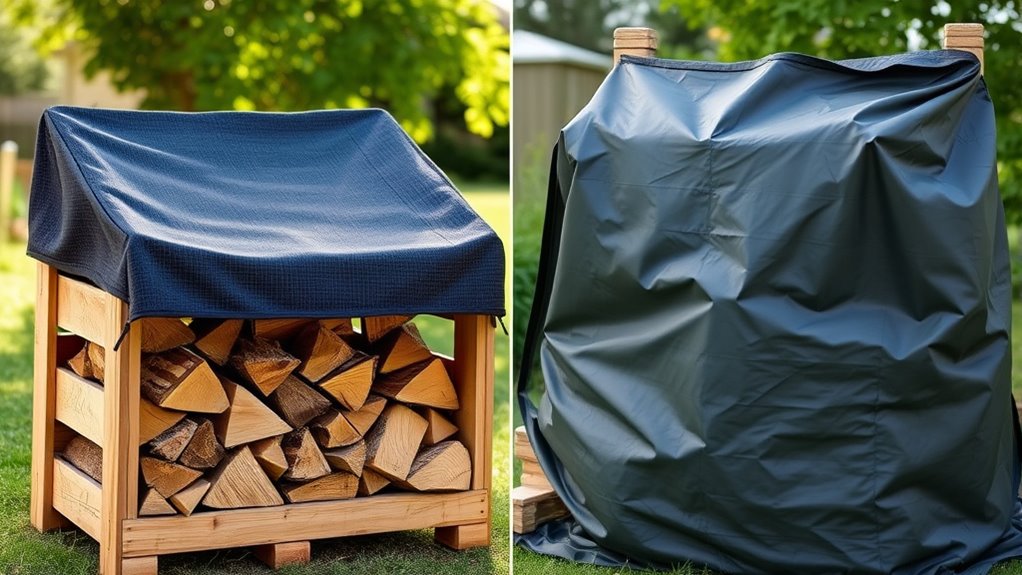
Now, understanding the difference between a top-cover and a full-cover can make a big impact on your firewood’s condition. A top-cover is a simple, often flat cover placed over the pile’s top. It’s designed to protect the logs from direct rain and snow falling from above, while still allowing air to circulate around the sides. This method effectively prevents moisture buildup from above, which is the primary source of water intrusion during storms or heavy weather. Because air can flow around the sides, a top-cover helps keep the wood relatively dry while avoiding excess moisture that can get trapped underneath. This balance is key for seasonal storage, as it ensures your firewood remains dry without trapping humidity that could lead to mold or rot.
On the other hand, a full-cover wraps the entire pile, shielding it from all angles. While this might seem like the best way to keep your firewood dry, it can sometimes backfire. If you don’t leave enough ventilation, moisture can become trapped inside the cover, creating a damp environment that promotes mold and decay. Full-covers are ideal when you’re storing wood for an extended period or living in an area with high humidity. However, if you’re after quick-seasoned firewood, a full-cover might hinder the drying process by limiting airflow. The key is to find a cover that balances moisture prevention with proper ventilation, which is why many firewood enthusiasts prefer a top-cover with some space for air to circulate.
As an affiliate, we earn on qualifying purchases.
Frequently Asked Questions
Which Cover Type Is More Cost-Effective Long-Term?
A full-cover is more cost-effective long-term because it offers better firewood storage and cover durability. While the initial expense might be higher, it safeguards your firewood from rain, snow, and moisture, preventing decay and mold. This reduces the need for frequent replacements and maintains the quality of your firewood, ultimately saving you money. Investing in a full-cover ensures your firewood stays dry and ready, making it the smarter long-term choice.
How Do Weather Conditions Influence Cover Choice?
Weather conditions heavily influence your cover choice. If you face frequent rain or snow, a full cover offers better moisture retention and wind resistance, keeping your firewood dry and protected. In windy areas, a top-cover might suffice, but make certain it’s secured well to prevent blowing off. Consider your climate’s severity to select a cover that maximizes moisture control and withstands harsh winds, prolonging your firewood’s usability.
Can Covers Prevent Pests and Critters From Reaching Firewood?
Think covers are just for rain? Think again! They can actually help with pest prevention by acting as critter barriers, keeping unwanted critters like rodents and insects away from your firewood. A well-designed cover doesn’t just shed water; it creates a physical barrier that deters pests from sneaking in. So, yes, your cover can double as a critter shield, ensuring your firewood stays critter-free and ready to burn.
Are There Eco-Friendly Cover Options Available?
Yes, eco-friendly cover options are available. You can choose biodegradable covers made from natural materials that break down over time. Alternatively, look for covers made from recycled materials, which reduce waste and lessen environmental impact. These options not only protect your firewood effectively but also support sustainability. By opting for biodegradable or recycled covers, you contribute to environmental conservation while keeping your firewood dry and protected.
How Often Should Firewood Covers Be Replaced or Maintained?
You probably don’t think about firewood cover maintenance until it’s too late, but it’s simple—check your cover material and durability annually. If it’s torn or faded, replace it to keep your wood dry. Ironically, a good cover lasts longer when you preserve it, saving you money and hassle in the long run. Regular care ensures your cover provides reliable protection, especially during harsh weather.
Conclusion
Now that you know the difference between top-cover and full-cover, the choice isn’t as simple as it seems. Will you risk your firewood getting damp or opt for complete protection? The right decision could mean the difference between a warm, crackling fire or a soggy mess. The secret lies in understanding what’s truly at stake—and whether you’re willing to leave your firewood vulnerable. Are you ready to make the call that could change your fire-starting game forever?
Halloween Picks
halloween
As an affiliate, we earn on qualifying purchases.