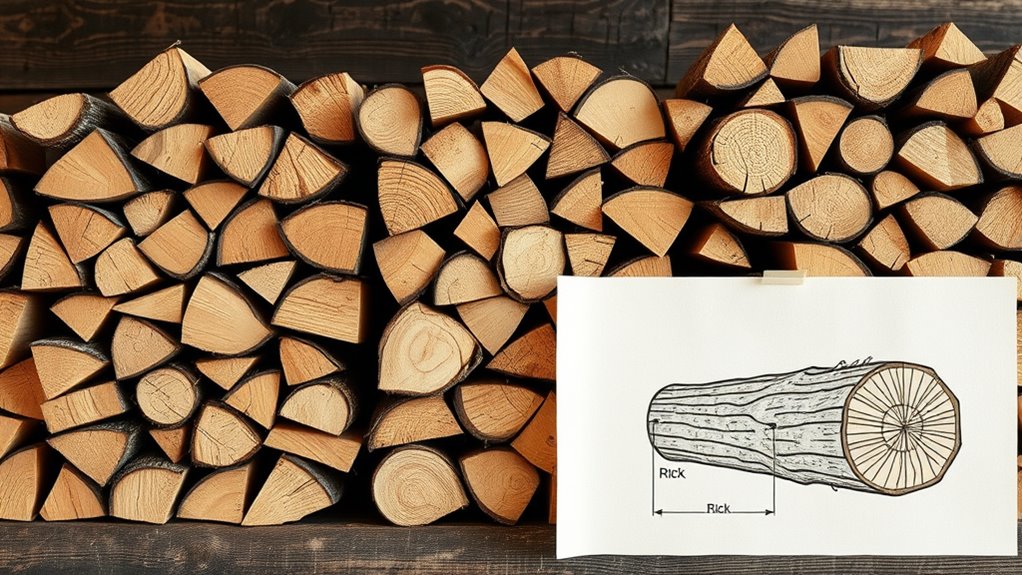

A face cord is about one-third of a full cord, measuring roughly 4 feet high, 8 feet wide, and 16 inches deep, making it convenient for limited storage or occasional use. A full cord is 4 feet high, 8 feet wide, and 4 feet deep, providing a large, reliable supply for frequent burning. A rick varies in size, often 4 feet high and 8 feet long, but depths differ widely. To understand how these measurements compare, keep exploring the details.
Key Takeaways
- A face cord measures about 1/3 of a full cord, typically 4 ft high, 8 ft wide, and 16 inches deep.
- A full cord equals 128 cubic feet, measuring 4 ft high, 8 ft wide, and 4 ft deep, suitable for heavy, long-term use.
- A rick’s size varies widely, often 4 ft high and 8 ft long, but depth can differ from 16 to over 24 inches.
- Face cords are manageable for occasional use, while full cords provide a large, reliable supply for frequent burning.
- Always verify dimensions of a rick, as its size and volume can vary significantly depending on how it’s stacked.
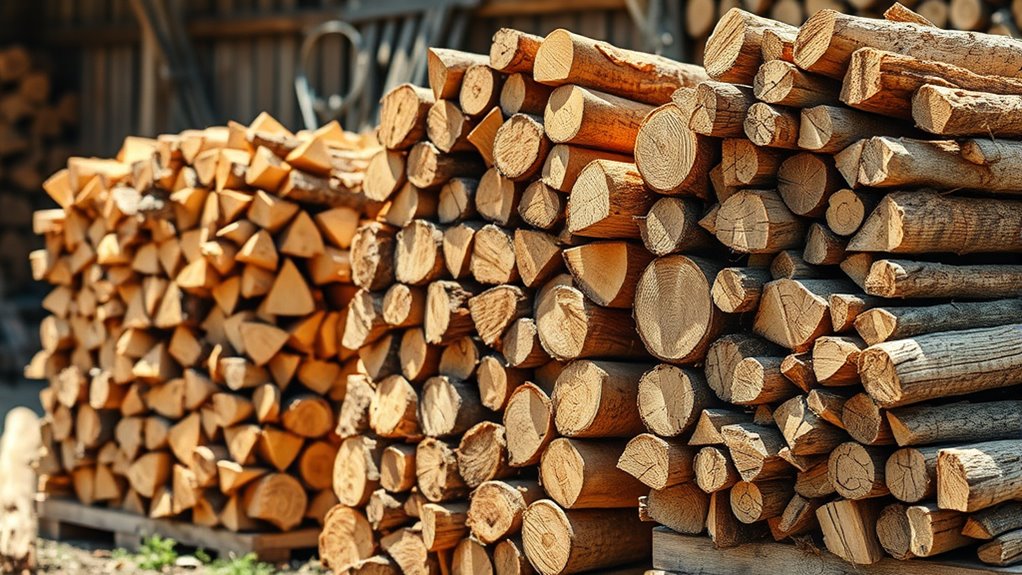
When buying firewood, understanding the differences between a face cord, a full cord, and a rick is essential to make sure you’re getting the right amount for your needs. Knowing these measurements helps you plan your firewood storage properly and can impact your wood burning efficiency. A face cord is a smaller, more manageable stack of firewood—typically 4 feet long, 8 feet wide, and 16 inches high, which is the standard length of most firewood pieces. It usually contains about 1/3 of a full cord, making it ideal if you only burn occasionally or have limited storage space. Since face cords are easier to handle, they often lead to better wood burning efficiency because you’re less likely to stack unevenly or leave gaps that hinder airflow.
Understanding face cords, full cords, and ricks helps you buy the right amount of firewood efficiently.
A full cord, on the other hand, is a much larger quantity—measuring 4 feet high, 8 feet wide, and 4 feet deep, totaling 128 cubic feet of neatly stacked firewood. When you buy a full cord, you’re getting enough wood to last through a cold season, especially if you burn regularly. Proper firewood storage becomes essential here to keep your wood dry and seasoned, which directly affects your wood burning efficiency. Well-stored firewood stays dry and allows air to circulate, making it burn hotter and longer, reducing waste and smoke. Additionally, understanding firewood measurements helps you accurately compare prices and quantities when purchasing.
A rick is a less precise measurement, often used informally. It typically refers to a stack of firewood that’s about 4 feet high and 8 feet long, but the depth can vary widely—anywhere from 16 inches to 24 inches or more. Because of this variability, a rick’s actual volume can be quite different, which can make it tricky to estimate how much firewood you’re getting. If you’re buying or selling firewood by the rick, always clarify the dimensions to make sure you get a fair amount. Proper firewood storage is imperative here as well; stacking wood properly in a dry, ventilated space maximizes wood burning efficiency and ensures the wood remains seasoned.
In essence, understanding these measurements helps you buy the right amount of firewood, manage your firewood storage effectively, and optimize your wood burning efficiency. Whether you’re stocking up for winter or just need a small load, knowing the differences ensures you won’t overbuy or underbuy, saving you money and hassle while keeping your fire burning clean and efficient.
Frequently Asked Questions
How Is a Face Cord Measured Differently From a Full Cord?
A face cord is measured by stacking firewood 4 feet high and 8 feet long, with varying depths depending on firewood density, but usually 16 inches deep. A full cord, however, is a complete stack measuring 4 feet high, 8 feet long, and 4 feet deep, totaling 128 cubic feet. The key difference lies in the measurement units and depth, affecting the total volume and firewood quantity you’re purchasing.
What Is the Significance of a “Rick” in Firewood Measurements?
A “rick” is like a building block in firewood measurements, representing a stack that’s typically 4 feet high, 8 feet long, and 16 inches deep. Its significance lies in its role within measurement standards, especially considering wood density varies by species. This makes a rick a handy, informal way to estimate firewood volume, though it’s less precise than a full cord or face cord.
Can the Volume of Firewood Vary by Wood Type?
Yes, the volume of firewood can vary by wood type due to differences in firewood density. Hardwoods like oak are denser, so a given volume provides more heat, while softwoods like pine are less dense. Seasonal variation also affects firewood volume, as wood stored during wetter seasons may be less dried and therefore slightly heavier or more compact. Understanding these factors helps you estimate your firewood needs more accurately.
Are Face Cords and Ricks Universally Standardized?
Imagine stacking firewood like a layered puzzle; now, picture it varying across different regions. Face cords and ricks aren’t universally standardized, leading to measurement discrepancies. In some areas, a face cord might be a neatly stacked stack, while elsewhere, it could be slightly larger or smaller. Regional standards influence these measurements, so always clarify what’s meant when someone mentions a face cord or rick to avoid confusion.
How Does Moisture Content Affect Firewood Measurements?
Moisture content considerably impacts firewood measurements because it affects the weight and energy output. Higher moisture levels mean more water, which adds weight but reduces burning efficiency, known as moisture implications. During firewood drying, moisture decreases, making the wood lighter and more efficient to burn. Properly seasoned firewood has low moisture content, ensuring accurate measurements and ideal fire performance. Always check moisture levels for better firewood quality and safety.
Conclusion
Now you’re armed with the knowledge to choose between a face cord, full cord, or rick. Imagine your woodpile as a towering fortress—knowing the difference helps you avoid a mountain of unnecessary wood or a tiny pile that leaves you shivering. Whether you’re stacking for warmth or just curious, understanding these measurements saves you from wasting time and money. So, pick wisely, and keep your fire burning bright—because a well-measured wood supply is your secret weapon against winter’s chill.