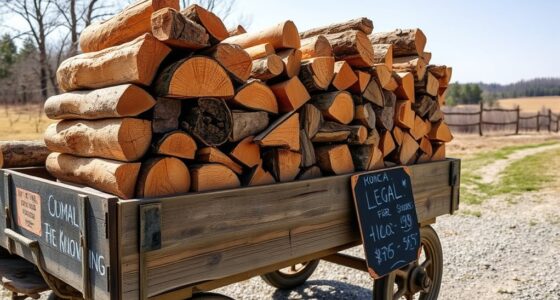
To handle extra-long firewood without waste, plan your storage and cutting methods carefully. Use proper tools and work with a partner if needed to move heavy logs safely. Cut logs into manageable sizes to fit your storage space and prevent accidents. Protect yourself with gloves and eye gear, and always lift with your legs. Adjust your handling and storage techniques based on log length to minimize waste and maximize usage. Keep learning more tips to make handling even easier.

Get business pricing on tools and workshop supplies
- Business-only prices and quantity discounts
- Tax-exempt purchasing
- Multiple users, one account, clear invoices
Key Takeaways
- Modify storage arrangements to safely accommodate extra-long logs and prevent clutter or accidents.
- Use proper handling techniques and tools, working with a partner for heavy or unwieldy logs.
- Plan cuts strategically to manage length, reducing waste and maximizing usable firewood.
- Reconsider cutting logs if storage or handling becomes unsafe or inefficient.
- Incorporate firewood conservation principles by utilizing and storing logs effectively.
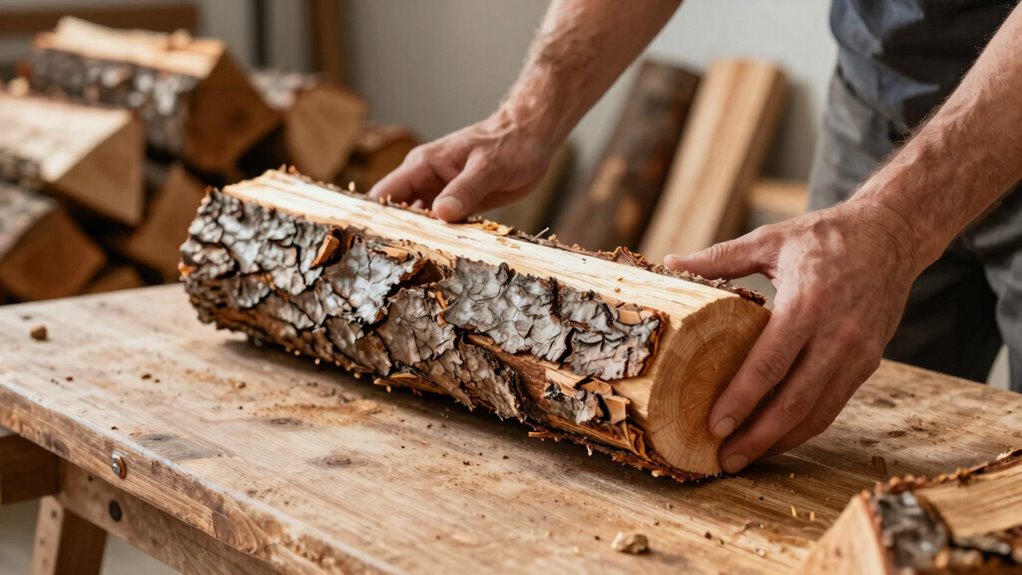
Handling extra-long firewood pieces can be challenging, but with the right techniques, you can safely and efficiently manage them. When dealing with unusually long logs, it’s important to contemplate how you’ll store and handle them to prevent accidents and waste. Proper firewood storage is essential, as it keeps your firewood organized and reduces clutter, making it easier to access the pieces you need. If your logs are too long for your storage area, you might need to cut them down to a manageable length, but this isn’t always necessary. Instead, you can adapt your storage solutions and handling methods to accommodate the extra length safely. Considering firewood conservation can help you make the most of your stored logs without unnecessary waste.
Adapt storage and handling methods to safely manage extra-long firewood pieces without unnecessary cutting.
Before you start working with long firewood pieces, make sure you follow safety precautions. Wear sturdy gloves to protect your hands from splinters, and use eye protection when cutting or handling logs. Always lift with your legs, not your back, to avoid injury. If you’re cutting the logs yourself, ensure your tools are sharp and in good condition, and work in a clear, stable area. Never attempt to lift or move extremely long or heavy logs alone; having a partner can help you manage the load safely. Additionally, understanding firewood handling techniques can further improve safety and efficiency during this process. Properly planning the storage setup beforehand can also prevent unnecessary strain and accidents when dealing with longer logs.
As an affiliate, we earn on qualifying purchases.
Frequently Asked Questions
Can Extra-Long Firewood Be Safely Stored Indoors?
Yes, extra-long firewood can be stored indoors safely if you follow proper firewood safety practices. Use a well-ventilated, dry area to prevent mold and moisture buildup, which can cause safety hazards. Make certain the firewood is stacked securely to prevent accidents. Keep the storage away from heat sources and open flames. Proper indoor storage prolongs the firewood’s quality, making it easy to access while maintaining safety for your home and family.
What Tools Are Best for Trimming Long Firewood Pieces?
You should use a sharp ax or a hatchet for trimming long firewood pieces, ensuring precise cuts. A handsaw or chainsaw also work well for larger or tougher logs. Always prioritize cutting safety by wearing gloves and eye protection. When stacking firewood, cut pieces to fit your space, making handling easier. These tools help you trim efficiently, prevent waste, and keep your firewood organized and safe for use.
How Do I Prevent Splitting or Cracking When Cutting Long Logs?
To prevent splitting or cracking when cutting long logs, use the correct splitting technique, like scoring the wood first or making controlled, steady cuts. Always prioritize cutting safety by wearing protective gear and using sharp tools. Keep the log stable and supported, and avoid forcing the saw or axe through the wood. This careful approach minimizes stress on the wood, reducing the risk of splitting or cracking during cutting.
Are There Specific Firewood Types Better Suited for Long Pieces?
Certain firewood types, like oak and hickory, are better suited for long pieces because they season well and maintain their integrity. When handling these, make sure you properly season your firewood by stacking it with good airflow, which helps prevent cracking. Longer pieces should be stacked carefully, allowing space for air circulation, so they dry evenly. This way, you maximize their burn quality without wasting any part of the wood.
How Can I Transport Extra-Long Firewood Safely?
To transport extra-long firewood safely, you should secure the pieces with sturdy straps or ropes, ensuring they don’t shift during transit. When stacking, keep the firewood off the ground and lean the long pieces against a stable surface for balance. Proper firewood seasoning helps reduce moisture, making handling easier. Always check local regulations for firewood transportation rules, and consider using a trailer or pickup for added stability and safety.
Conclusion
Remember, mastering the art of managing long logs means more than just handling; it’s about harmony, safety, and smart solutions. By cutting, stacking, or leaning long firewood with care, you prevent potential problems and promote proper preservation. Keep your techniques tidy and your tools tuned. When you tackle tricky timber with patience and precision, you turn a tough task into a triumphant triumph. Stay sharp, stay safe, and enjoy your fiery fires!
Fall Picks
fall essentials
As an affiliate, we earn on qualifying purchases.