
To handle crotches, knots, and stringy wood effectively, start by carefully pruning crotches at the branch collar to promote healthy healing. For knots, decide whether to cut around or through them based on your project, removing loose or large knots to maintain strength. When working with stringy fibers, use sharp tools and small controlled cuts to prevent fraying, and consider sanding or applying stabilizing agents for a smooth finish. Keep these techniques in mind to produce durable, high-quality results, and explore more tips to perfect your craft.
Key Takeaways
- Prune crotches with clean, angled cuts just outside the branch collar to promote healthy healing.
- Remove or stabilize large, loose knots to prevent structural weakness in finished wood.
- For stringy fibers, use sharp tools and controlled cuts to reduce fraying and improve shaping.
- Consider sanding or applying bonding agents to smooth rough areas caused by fibers.
- Tailor handling techniques based on wood type and defect size to ensure durable, high-quality results.
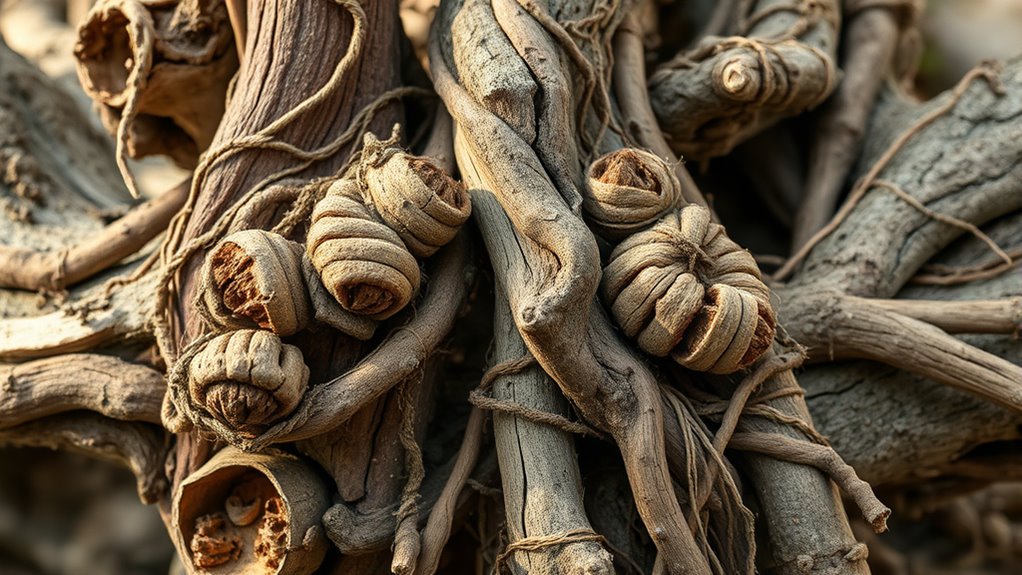
When working with wood, dealing with crotches, knots, and stringy fibers can be challenging, but understanding how to handle these features is essential for a successful project. Recognizing the different types of wood and applying proper pruning techniques can make a significant difference in how you work with these irregularities. Wood classification plays a crucial role here, as it helps you determine the best approach for each piece. For example, softwoods tend to have larger knots and more stringy fibers, while hardwoods generally have tighter grain and fewer defects. Knowing this allows you to plan your cuts and handling strategies effectively.
Understanding wood types helps tailor pruning and handling for better results.
Pruning techniques are your primary tools for managing crotches and knots. When you encounter a crotch, which is the junction where two branches meet, you should prune carefully to avoid creating weak points that could lead to splitting or cracking. Make clean, angled cuts just outside the branch collar to encourage healthy healing. This reduces the risk of rot and ensures the integrity of the wood remains intact. For knots, you need to decide whether to cut through or around them, depending on the project’s purpose. Small, tight knots are often acceptable in many applications, but large or loose knots may weaken the structure and should be removed or stabilized. When removing knots, cut close to the surrounding wood, but avoid leaving large, jagged surfaces that might trap moisture or compromise strength.
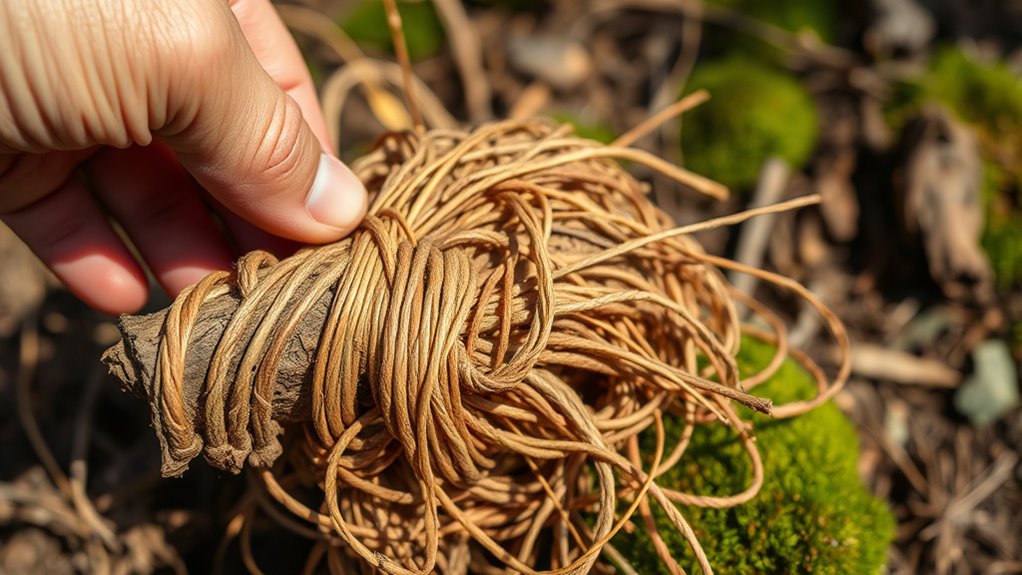
Stringy fibers are common in certain types of wood, especially in softer species or in areas of the trunk where growth is rapid. These fibers can make shaping and finishing difficult, as they tend to fray or break apart. To handle stringy wood, use sharp tools and take small, controlled cuts. Sanding can help smooth out rough areas, but be cautious not to over-sand and weaken the wood. Sometimes, applying a wood conditioner or using a bonding agent can help stabilize the fibers before further processing. Additionally, understanding the differences in fiber composition between hardwoods and softwoods can guide your selection of tools and techniques for optimal results.
Ultimately, understanding wood classification enables you to select the right techniques for each piece. Knowing whether you’re working with hardwood or softwood guides your pruning and handling strategies. Combining this knowledge with proper pruning techniques ensures you minimize damage and maximize the strength and aesthetic appeal of your finished project. Whether you’re shaping a piece for furniture or preparing wood for construction, mastering these skills will help you work more efficiently and produce higher-quality results. The key lies in careful observation, precise cuts, and applying the appropriate methods to the specific characteristics of your wood.
Frequently Asked Questions
How Can I Prevent Crotches From Splitting Further?
To prevent crotches from splitting further, you should apply crotch reinforcement, which strengthens the area and reduces stress. Use wood glue and clamps to bond any cracks, then wrap the crotch with a strong, flexible material like fiberglass tape for split prevention. Regularly inspect for signs of stress or cracks, and avoid overloading branches, as this can cause additional splitting. Proper reinforcement guarantees durability and safety.
What Tools Are Best for Removing Stubborn Knots?
You can effectively remove stubborn knots using twist removal tools like bar picks or specialized knot removers. Pry bars are also handy for gently prying and loosening the knot without damaging surrounding wood. Apply steady pressure with these tools, and twist or lift the knot out carefully. This method minimizes wood damage and makes knot removal easier, especially when combined with patience and gentle force.
How Do I Identify Rot in Stringy Wood?
You notice something’s off when your wood feels soft or crumbly—this is a sign of wood decay. To detect rot, look for discoloration, fungal growth, or areas that give under pressure. Tap the wood; hollow sounds indicate compromised integrity. Stay alert for musty smells or visible mold. Recognizing these signs early helps you prevent further damage, ensuring you catch rot before it spreads and weakens your project.
Can Treatment Oils Improve Wood Durability at Crotches?
Yes, treatment oils can improve wood durability at crotches. Regular wood treatment with oil application helps protect against moisture, fungi, and pests that can cause rot. By penetrating deep into the wood, oils strengthen the fibers and create a barrier against water damage. Consistent oil application is essential for maintaining the health of crotches and preventing decay, ensuring the wood remains strong and resilient over time.
What Are Safe Techniques for Working With Fragile, Stringy Wood?
You should gently work with fragile, stringy wood by first investigating if wood conditioning enhances its strength. Use light, controlled cuts with sharp tools to prevent splintering, and always wear safety gear like gloves and eye protection. Keep your tools sharp and avoid forcing cuts, as this minimizes stress on the wood. Patience and precision are key to safely handling delicate, stringy wood, ensuring both your safety and a quality result.
Conclusion
So, next time you wrestle with crotches or tame stubborn knots, remember you’re basically conducting a symphony of chaos. Picture yourself as a heroic wood whisperer, battling wild, stringy wood like a knight facing a dragon—minus the armor, of course. With patience and a little humor, you’ll tame that unruly timber, turning a tangled mess into a masterpiece. After all, if you can handle knotty problems and stringy woods, you can handle anything life throws your way.