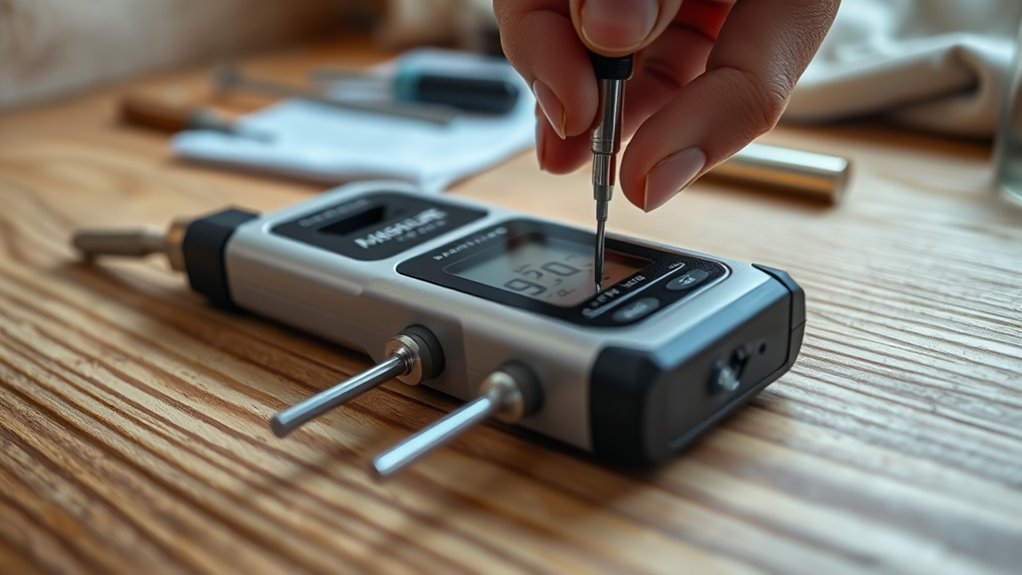

To guarantee your moisture meter stays accurate, you should regularly calibrate it using standard reference materials and follow the manufacturer’s instructions carefully. Always clean the probes before calibration and store your device in a dry, protected environment. Check its accuracy periodically with known samples, and replace any damaged parts promptly. Proper care and calibration help maintain reliable measurements over time. Keep reading to discover additional tips for ideal moisture meter maintenance.
Key Takeaways
- Regularly calibrate your moisture meter using certified reference standards matching your material type.
- Clean probes thoroughly before calibration to ensure accurate readings.
- Store the device in a dry, stable environment away from extreme temperatures and humidity.
- Verify accuracy periodically with known moisture samples or standard references.
- Inspect and maintain probes and components regularly to prevent damage and ensure consistent performance.
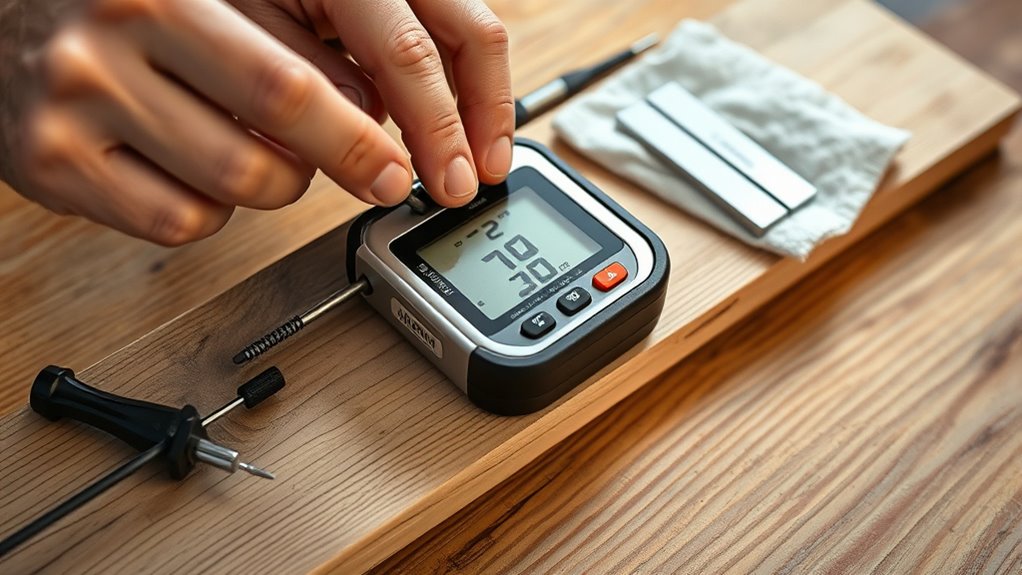
A properly calibrated moisture meter is essential for obtaining accurate moisture readings in wood, soil, or other materials. Without correct calibration, the measurements you rely on could be misleading, leading to errors in your work or decision-making. To guarantee your device provides reliable data, you need to understand and follow proper calibration procedures. These procedures typically involve using standard reference materials with known moisture contents. You’ll want to start by cleaning the meter’s probes thoroughly to remove any debris or residue that could affect readings. Next, you’ll select a calibration standard that closely matches the material you plan to measure, such as a specific type of wood or soil. Many moisture meters come with calibration blocks or solutions; if not, you can purchase certified standards. Follow the manufacturer’s instructions carefully, inserting the probes into the standard, and then adjusting the device’s calibration settings until the reading aligns with the known moisture level. Performing this process regularly helps guarantee your moisture meter remains accurate over time. Regular calibration also helps maintain the reliability of measurements, which is crucial for making informed decisions.
Accuracy verification is a critical part of maintaining your moisture meter’s reliability. Once calibrated, you should periodically verify the accuracy by testing the device against fresh standards or samples with established moisture contents. For example, if you’re measuring wood, you might compare the meter’s readings with those obtained from a oven-drying method or a certified reference sample. If discrepancies arise, it’s a clear sign that recalibration is needed. Consistent accuracy verification helps you catch any drift in readings early, preventing costly mistakes or subpar results. It’s a good practice to schedule regular checks—especially after dropping or rough handling—since impacts can shift internal calibration settings. When verifying accuracy, record your results to track any trends over time, which can alert you to potential calibration issues before they become problematic.
In addition to calibration procedures and accuracy verification, it’s important to store your moisture meter properly. Keep it in a dry, protected environment when not in use, and avoid exposing it to extreme temperatures or humidity. Regularly inspect the probes and other components for damage or corrosion, replacing parts as needed to maintain consistent performance. Proper care and routine calibration checks will extend the lifespan of your moisture meter and ensure that every reading you take is trustworthy. Ultimately, staying diligent about calibration and accuracy verification keeps your measurements precise, helping you make informed decisions whether you’re assessing building materials, agricultural products, or other materials sensitive to moisture levels.
Frequently Asked Questions
How Often Should I Calibrate My Moisture Meter?
You should calibrate your moisture meter regularly to guarantee accurate readings. Typically, calibration frequency depends on how often you use it and the environment, but a good rule of thumb is to calibrate before each use or weekly. This practice maintains moisture accuracy and prevents errors. If you notice inconsistent readings, recalibrate sooner. Regular calibration helps you trust your measurements and makes your work more precise.
Can I Calibrate a Moisture Meter Myself?
Yes, you can do DIY calibration of your moisture meter using calibration tools. First, gather the necessary calibration standards, like known moisture content samples, and follow the manufacturer’s instructions. Regularly calibrating guarantees accuracy, so check your device periodically. Use calibration tools to adjust the meter as needed, making sure your readings stay reliable. Always handle calibration carefully to maintain your meter’s precision and extend its lifespan.
What Are Signs of a Poorly Calibrated Moisture Meter?
Imagine your moisture meter as a finely tuned instrument—if it’s off, it’s like a dull blade. Signs of poor calibration include inconsistent readings, values that don’t match known moisture levels, or sudden fluctuations. To verify calibration accuracy, perform user troubleshooting by testing on standards or known samples. If readings are unreliable or erratic, it’s time to recalibrate or seek professional help to keep your measurements precise and trustworthy.
Does Temperature Affect Moisture Meter Accuracy?
Yes, temperature impact can affect your moisture meter’s accuracy. As temperatures fluctuate, they can influence the meter’s readings, making calibration consistency difficult. When you use the meter in different environments, it might give inconsistent results if not properly adjusted for temperature variations. To guarantee accurate readings, always consider ambient temperature and, if necessary, calibrate your device regularly to account for temperature changes.
Are There Different Calibration Standards for Different Materials?
Think of calibration standards as custom-tailored suits for your moisture meter; they fit different materials perfectly. Yes, there are distinct calibration standards for various materials, ensuring accurate readings. Material-specific calibration adjusts your device to the unique properties of each substance, like wood or drywall, so it doesn’t misread moisture levels. By following these standards, you keep your meter sharp and reliable across diverse projects.
Conclusion
Regularly calibrating your moisture meter guarantees accurate readings, helping you prevent costly mistakes. Did you know that improper calibration can lead to errors of up to 15%? That’s a significant difference when evaluating wood or crops. By taking a few minutes to calibrate and care for your device, you’ll improve its longevity and reliability. Stay diligent with your maintenance, and you’ll always have precise moisture measurements to make informed decisions.