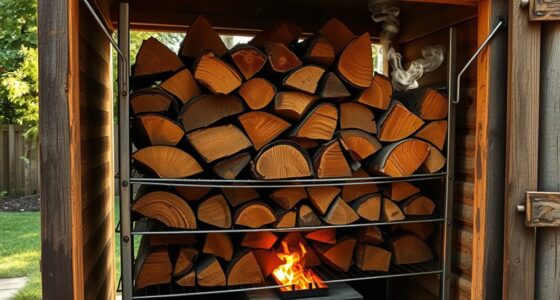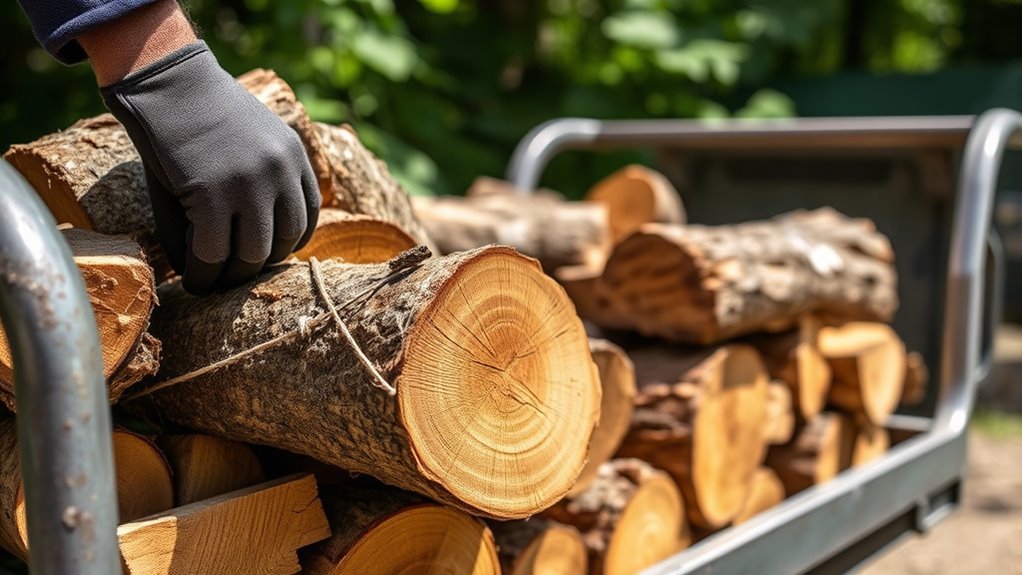

To move firewood without spreading pests, always inspect it for signs of infestation such as exit holes, sawdust, or pests. Use firewood that has been heat-treated or kiln-dried, and avoid transporting wood from distant areas. Keep firewood off the ground and covered during transport, and clean your tools afterward. Following these steps helps protect local forests from invasive species, and if you want to learn more about safe practices, there’s helpful information ahead.
Key Takeaways
- Only move firewood locally or from certified sources to reduce pest spread risks.
- Ensure firewood is properly heat-treated, kiln-dried, or frozen before transport.
- Inspect firewood for signs of pests, such as exit holes or sawdust, before moving.
- Avoid stacking firewood directly on the ground and keep it covered to prevent pest infestation.
- Clean tools and equipment after handling firewood to prevent transferring pests to new areas.

Moving firewood from one location to another might seem harmless, but it can unintentionally spread dangerous pests and diseases to new areas. These pests, such as bark beetles, woodboring insects, and fungi, often hide within the wood and are easily transported long distances. If you’re not careful, you could unknowingly introduce invasive species that threaten local forests and ecosystems. That’s why understanding pest identification is vital before moving firewood. Recognizing signs of pest infestation — like small exit holes, sawdust, or unusual frass — helps you determine whether the wood is safe to transport. If you notice any of these indicators, it’s best to avoid moving that firewood altogether.
Unknowingly transporting pests with firewood can threaten forests—learn to identify signs of infestation before moving wood.
To reduce the risk of spreading pests, firewood treatment becomes essential. Properly treating firewood involves methods like heat treatment or kiln drying, which can kill pests and their eggs. For outdoor use, you can also consider options like solarization, where you expose the wood to high temperatures in sealed plastic bags, or freezing the wood for several days if possible. These treatments are effective in ensuring that pests are eliminated before moving the wood. Always check local regulations and guidelines for firewood treatment requirements, as some areas have strict rules to prevent the spread of invasive species. Utilizing certified treated firewood ensures compliance and reduces ecological risks.
When transporting firewood, try to limit its movement to local areas whenever possible. If you need to move it over longer distances, opt for firewood that has been properly treated or purchased from a reputable source that adheres to pest management standards. Never bring firewood from outside your region without confirming it’s pest-free; this is a common way pests are introduced into new environments. Additionally, avoid stacking firewood directly on the ground or leaving it exposed to the elements, as these conditions can encourage pest infestation.
Finally, always clean your tools and equipment after handling firewood, since pests can cling to surfaces and transfer to other wood or plants. By following pest identification protocols and ensuring firewood treatment, you greatly reduce the chance of spreading harmful pests. Your actions help protect forests, preserve local biodiversity, and keep outdoor spaces safe and healthy for everyone. Moving firewood responsibly isn’t just about convenience; it’s about safeguarding the environment from invasive threats that can cause lasting damage.
Frequently Asked Questions
Are There Specific Regulations for Moving Firewood Across State Lines?
Yes, you need to follow state regulations and quarantine rules when moving firewood across state lines. Many states have restrictions to prevent pest spread, so check with local authorities before transporting firewood. You might be required to buy firewood locally or use certified pest-free wood. Ignoring these regulations can lead to fines or fines, and it helps protect forests from invasive pests. Always verify rules before your move.
How Can I Identify Signs of Pest Infestation in Firewood?
You can identify pest infestations in firewood by looking for wood borer signs like small exit holes, sawdust, or tunnels. Check for fungal growth indicators such as mold, discoloration, or fuzzy patches. If you notice these signs, avoid moving the wood to prevent spreading pests and fungi. Regularly inspect your firewood before transport, and choose seasoned, well-dried wood to minimize the risk of infestation.
What Types of Firewood Are Safest to Transport?
The safest transport options include seasoned hardwoods like oak, maple, and hickory, which are less likely to harbor pests. Avoid softwoods or freshly cut firewood, as they tend to attract insects and pests more easily. Always inspect your firewood for signs of infestation before moving, and make certain it’s properly dried. Using these types of firewood and following best practices helps prevent the spread of pests during transport.
Can Burning Firewood in Different Locations Spread Pests?
Burning firewood in different locations can spread pests if the wood isn’t properly stored and treated. To prevent this, follow pest prevention methods like inspecting and debarking the wood before use, and avoid transporting infested firewood. Proper firewood storage helps reduce pest risks, ensuring pests don’t hitchhike to new areas. Always burn locally sourced, pest-free firewood to protect your environment and prevent pest spread.
Are There Approved Quarantine Zones for Firewood Movement?
You’ll find that quarantine zones are established for effective pest management, and yes, there are approved zones where you can move firewood legally. These zones help prevent pest spread by restricting firewood movement between areas. Always check local regulations before transporting firewood, and stick to designated quarantine zones. Doing so protects forests and guarantees you’re following the rules, making your firewood use both safe and responsible.
Conclusion
To keep your woods wild and your landscape safe, always avoid accidental animal arrivals. Carefully check, chock, and chug along, guaranteeing pests stay put and pests stay out. By boldly banning bark-borne bugs from your belongings, you protect plants, pests, and peace of mind. Remember, responsible hauling helps habitats thrive and pests stay parked. Stay smart, stay safe, and safeguard your surroundings with simple, savvy steps. Your efforts ensure a pest-free, pristine paradise for all to enjoy.