To reduce moldy smells around your stored firewood, make sure your wood is properly dried with moisture content below 20%, and always use a moisture meter to check. Improve airflow by stacking logs with gaps and covering the top with a waterproof tarp, but leave sides open for ventilation. Keep the storage environment dry and well-ventilated, and regularly inspect for mold or dampness. If you want to learn more, keep exploring effective firewood storage tips.

Get business pricing on tools and workshop supplies
- Business-only prices and quantity discounts
- Tax-exempt purchasing
- Multiple users, one account, clear invoices
Key Takeaways
- Ensure firewood is properly dried with moisture content below 20% before storage.
- Improve ventilation around the storage area to reduce humidity buildup.
- Use moisture barriers and raised racks to keep firewood dry and prevent mold growth.
- Regularly inspect firewood for mold or dampness and address issues promptly.
- Cover the top of stacked firewood with a waterproof tarp, but avoid enclosing sides for airflow.

If you store firewood improperly, moldy smells can quickly become a problem. These odors often develop when moisture gets trapped in the wood or the storage area remains damp. To prevent this, you need to focus on effective mold prevention techniques that keep your firewood dry and well-ventilated. Proper firewood storage tips are essential to avoid mold growth, which not only causes unpleasant smells but can also degrade the quality of your firewood and pose health risks.
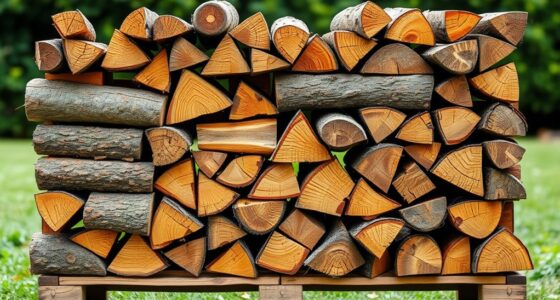
First, ensure your firewood is thoroughly dried before stacking it for storage. Freshly cut wood contains high moisture levels, and if stored too soon, it’s more susceptible to mold. Aim for seasoned firewood, which typically has a moisture content below 20%. You can check this with a moisture meter or by observing if the wood splits easily and has cracks at the ends. Once properly seasoned, organize your firewood in a way that promotes airflow. Use a raised rack or pallets to keep the wood off the ground, preventing exposure to soil moisture and reducing the chances of mold development.
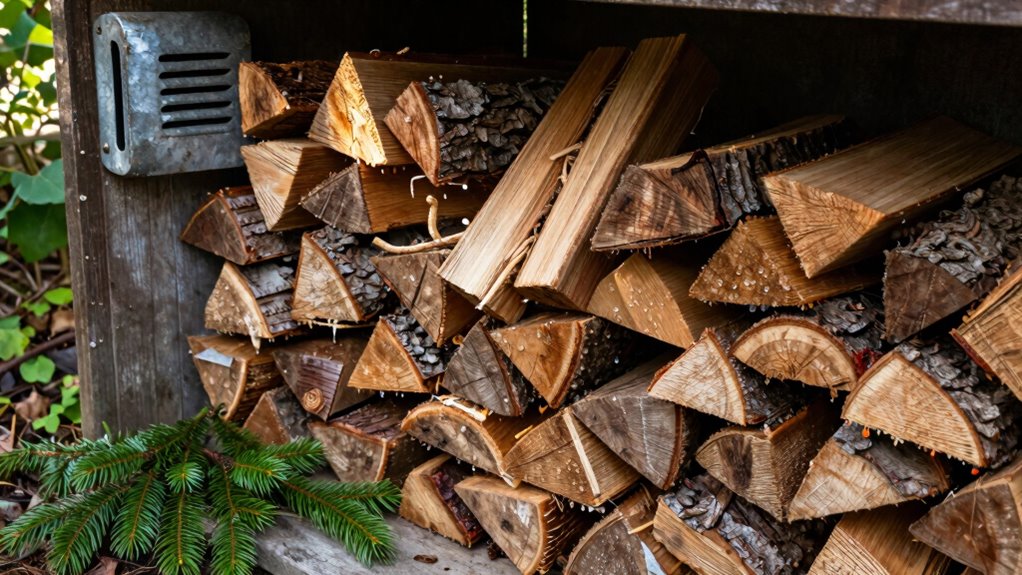
When stacking your firewood, leave gaps between the logs to allow air to circulate freely around each piece. Good ventilation is key to drying out the wood and keeping moisture levels low. Cover the top of the stack with a waterproof tarp, but don’t completely enclose it. Leaving the sides exposed ensures air can flow through, helping to prevent dampness from accumulating. Avoid storing firewood indoors or in enclosed spaces where humidity levels tend to be higher, as this environment fosters mold growth. Ensuring proper ventilation in your storage area is crucial to maintaining dry conditions and preventing mold. Additionally, maintaining proper humidity levels in your storage environment can significantly reduce the risk of mold development. Regularly checking and controlling the environment can further help in preventing mold from forming on your firewood. Also, consider using moisture barriers to help keep the storage area dry and discourage mold growth. Proper storage conditions are essential to keep your firewood mold-free and fresh.
As an affiliate, we earn on qualifying purchases.
Frequently Asked Questions
Can Moldy Smells Make Firewood Unsafe to Burn?
Moldy smells can make firewood unsafe to burn because mold spores may release toxins that pose health risks when burned. To guarantee safety, you should use firewood treatment and mold prevention methods, like drying wood thoroughly and storing it in a dry, well-ventilated area. Properly treated and mold-free firewood burns cleaner and reduces the risk of inhaling harmful spores, keeping your home safer.
How Long Does It Take for Mold to Develop on Firewood?
It’s funny how mold can sneak up on your firewood seemingly overnight, but generally, mold develops within a few days to two weeks if moisture levels stay high. To slow this process, you should focus on wood treatment and moisture control. Properly treating your wood and ensuring good airflow and dryness can considerably delay mold growth, keeping your firewood safer and fresher for longer.
Are Certain Types of Wood More Prone to Mold?
Certain types of wood are more prone to mold, especially softwoods like pine and cedar, because they absorb moisture more easily. To prevent mold, you should consider wood treatment options that reduce moisture absorption. Also, controlling storage humidity is essential; keep your firewood in a dry, well-ventilated area. Properly treated wood and ideal humidity levels greatly lower mold growth, keeping your firewood fresh and mold-free longer.
Does Indoor Storage Increase Mold Risk Compared to Outdoor?
Storing firewood indoors is like bringing a dragon’s hoard into your castle—more prone to mold, unfortunately. You increase mold risk if indoor humidity remains high and ventilation isn’t improved, trapping moisture around your firewood. To prevent this, keep humidity low, ideally below 60%, and enhance ventilation with fans or open windows. Proper airflow helps dry the wood, reducing mold growth and preventing that musty smell from taking hold.
Can Mold Spores Affect Indoor Air Quality?
Yes, mold spores can affect indoor air quality, making it essential to take mold prevention steps. You should use air purification systems to filter out airborne spores and reduce mold-related health risks. Proper ventilation and controlling humidity levels help prevent mold growth, protecting your indoor environment. Regularly inspecting and cleaning areas prone to moisture buildup also supports better air quality and minimizes mold spores circulating in your home.
Conclusion
By keeping your firewood dry, well-ventilated, and properly stored, you can markedly reduce moldy odors. Regularly inspecting and rotating your woodpile also helps prevent mold growth. Did you know that mold spores can become airborne within 24 hours of moisture exposure? Staying proactive not only keeps your firewood smelling fresh but also promotes healthier indoor air quality. With these simple steps, you’ll enjoy cleaner, odor-free firewood all season long.
Fall yard work Picks
leaf blowers
As an affiliate, we earn on qualifying purchases.