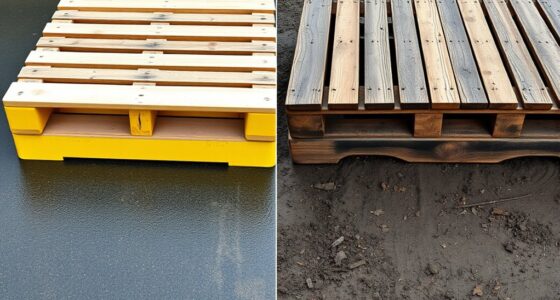
To rodent-proof your woodpile, store wood at least 12 inches off the ground using a rack or pallets and keep it tightly stacked with proper ventilation. Place the pile at least 30 feet away from your home and regularly clear debris or nesting materials nearby. Use natural repellents like peppermint oil or cayenne pepper around the area for added protection. Leaning on these tips helps guarantee you’ll keep pests at bay; discover more ways to protect your woodpile effectively.
Key Takeaways
- Elevate and cover your woodpile to prevent rodent access and promote airflow.
- Use natural repellents like peppermint oil, cayenne pepper, or garlic around the woodpile.
- Keep the area at least 30 feet away from buildings and clear debris regularly.
- Stack wood tightly and avoid gaps to minimize entry points for rodents.
- Inspect frequently and promptly address any signs of rodent activity.

If you keep a woodpile outside, rodents will often find their way in, causing damage and spreading disease. To prevent this, you need to be proactive with your wood storage practices. One effective approach is to incorporate natural repellents, which can deter mice and rats without relying on harmful chemicals. Certain plants and substances, like peppermint oil, cayenne pepper, or garlic, act as natural deterrents. You can sprinkle these around your woodpile or soak cotton balls in peppermint oil and place them in crevices to discourage rodents from making your woodpile their home. These natural repellents are safe, eco-friendly, and easy to use, providing a non-toxic barrier that rodents tend to avoid.
Use natural repellents like peppermint oil, cayenne pepper, or garlic to keep rodents away from your outdoor woodpile safely and effectively.
Alongside using repellents, applying proper wood storage tips will considerably reduce the chances of rodent intrusion. First, always elevate your woodpile off the ground. Use a sturdy rack or pallets to lift the wood at least 12 inches above soil, preventing rodents from burrowing underneath or nesting in the debris beneath. Ensure your wood is stacked tightly and neatly, with no gaps or loose ends that rodents can exploit to squeeze inside. Cover your woodpile with a tight-fitting tarp or weather-resistant cover, but leave some ventilation to prevent moisture buildup. Proper airflow discourages mold and decay, keeping your firewood in better condition and less attractive to pests.
Another key tip involves choosing the right location for your woodpile. Place it at least 30 feet away from your home or any other structures, reducing the risk of rodents migrating indoors. Avoid stacking wood directly against walls or fences, as these can serve as easy pathways for rodents to access your home. Regularly inspect and clean around your woodpile, removing any debris, fallen leaves, or other nesting materials that could attract pests. If you notice signs of rodent activity, acting quickly by repositioning or adding natural repellents can prevent an infestation from taking hold.
Finally, consider combining these tips with routine maintenance. Rotating your wood so older pieces are used first prevents clutter buildup and discourages rodents from settling in. Using natural repellents in conjunction with good wood storage practices creates a layered defense, making it much less likely that rodents will invade your outdoor storage. Additionally, understanding commercial seed production techniques can help you explore sustainable options for managing your outdoor spaces more effectively. By staying vigilant and implementing these wood storage tips, you’ll protect your firewood and your home from potential rodent problems, ensuring a cleaner, safer environment for everyone.
Frequently Asked Questions
How Do I Identify Signs of Rodent Infestation in My Woodpile?
To identify signs of infestation in your woodpile, look for rodent droppings, which are usually small, dark, and pellet-shaped. You might also notice gnaw marks on the wood or nearby structures, and shredded nesting material. Listen for scratching sounds or scurrying noises, especially at night. These signs indicate rodents are active, so inspect your woodpile regularly and take action to prevent a full-blown infestation.
Are There Natural Repellents Effective for Deterring Rodents From Wood Storage?
Think of natural repellents as a gentle but firm guard at your woodpile’s gate. You can try scents like peppermint oil, cayenne pepper, or garlic, which rodents find unpleasant. These effective deterrents create an invisible barrier, making your woodpile less inviting. Regularly applying these natural repellents keeps rodents at bay, ensuring your firewood stays rodent-free without harsh chemicals. Keep your storage area clean and well-maintained for extra protection.
Can Rodents Damage My Home or Other Property Through the Woodpile?
Rodents can damage your home or property by gnawing through electrical wires, insulation, or wood, especially if your woodpile is near your house. They often use rodent entry points like gaps or holes to access your home. Proper woodpile placement, away from your house and on a raised, clear surface, helps reduce the risk. Regularly inspecting for signs of rodents and sealing entry points also keeps your property safe.
What Are the Best Maintenance Tips to Prevent Future Rodent Issues?
To keep your woodpile a cozy, rodent-free haven, focus on proper sanitation and regular inspections. Clear away debris and old wood, and avoid stacking wood directly on the ground. Check your pile often for signs of pests, and replenish any disturbed areas promptly. By maintaining a tidy, well-monitored space, you create a less inviting environment for rodents, ensuring your property stays protected and your wood remains in top shape.
How Often Should I Inspect My Woodpile for Signs of Rodents?
You should inspect your woodpile at least once a season to catch signs of rodent activity early. During each seasonal inspection, look for gnawed wood, droppings, nests, or unusual sounds. Increase your inspection frequency if you notice rodent activity or after adverse weather, as these can attract pests. Regular checks help you identify problems before they become a bigger infestation, keeping your woodpile rodent-free and your home protected.
Conclusion
By rodent-proofing your woodpile, you’re building a fortress that keeps unwelcome guests at bay. Think of your woodpile as a peaceful village, where no tiny invaders can sneak in and disrupt the harmony. With just a few simple steps, you create a sturdy barrier, ensuring your firewood stays safe and your home remains cozy. Remember, a well-protected woodpile is the key to a pest-free winter—turn your efforts into a shield of security.