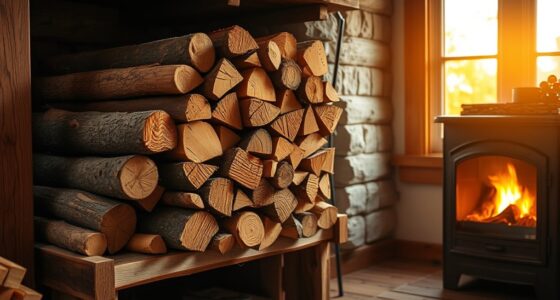

When splits are too big for the seasoning window, they stay damp and take much longer to dry out completely. This moisture causes inefficient burning, producing less heat and more smoke. You’ll also face increased creosote buildup in your chimney, which is a fire hazard. Using unseasoned, large splits can lead to poor combustion and higher fuel costs. If you want to discover how to tackle this problem effectively, there’s more to take into account.

Get business pricing on tools and workshop supplies
- Business-only prices and quantity discounts
- Tax-exempt purchasing
- Multiple users, one account, clear invoices
Key Takeaways
- Larger splits retain more moisture, delaying proper seasoning and drying time.
- They produce more smoke and creosote when burned due to incomplete combustion.
- Insufficiently seasoned big splits result in inefficient fires and reduced heat output.
- Damp large pieces are harder to ignite and sustain, leading to inconsistent burning.
- Overly big splits increase fire hazards and chimney buildup from excess creosote.
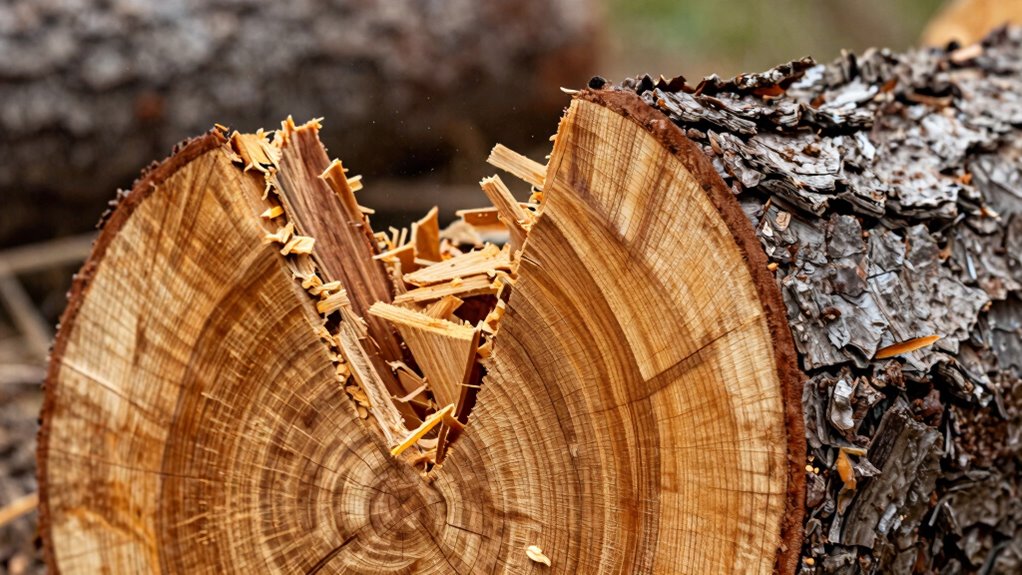
Understanding the timing of splits and seasoning windows is essential for ensuring your wood burns efficiently and safely. When your splits are too big for the seasoning window, it impacts both your cooking techniques and storage methods, leading to potential problems down the line. Larger pieces of wood take longer to dry, which means they might still be moist when you’re ready to use them. If you try to burn unseasoned or inadequately dried wood, it can produce more smoke, creosote buildup, and inefficient heat. This affects your cooking techniques, especially if you rely on wood for grilling or outdoor cooking, because wet wood doesn’t burn hot or clean. Instead, it smolders and creates undesirable smoke that can taint your food or clog your chimney.
When your wood isn’t properly seasoned, even if it’s stored in a good place, the size of the splits matters. Larger logs or thick splits contain more moisture inside, which takes longer to evaporate. If you cut your wood into big chunks and don’t give it enough time to dry, you risk having damp, heavy pieces that are difficult to ignite and sustain burning. Proper seasoning also depends on factors like air circulation, which helps moisture escape more effectively. Poor seasoning can also lead to increased creosote buildup, which is a fire hazard in your chimney or stove. This is why understanding the importance of appropriate storage methods—such as stacking wood in a dry, well-ventilated space—is critical. Properly stored wood allows moisture to escape, but size still plays a role; big pieces need more time to reach optimal dryness. Additionally, seasoning window helps determine when the wood is ready to burn, emphasizing the importance of timing in the drying process. Ignoring these factors can lead to inefficient combustion and higher fuel costs over time.
Using the right size splits also helps improve wood drying efficiency, which is crucial for effective seasoning. You might be tempted to use large splits for convenience, but doing so can compromise your overall efficiency. To avoid this, you should split the wood into smaller, manageable pieces that dry more quickly within the seasoning window. Smaller splits dry faster and are easier to handle, making your cooking techniques more effective because you can start fires sooner and maintain consistent heat. Plus, they’re easier to store properly, reducing moisture retention and preventing mold or rot. Properly seasoned wood also produces less smoke and creosote, which benefits both your health and home maintenance. If you ignore these aspects, you’ll likely end up with wood that’s only partially seasoned, leading to inefficient burns, more smoke, and increased maintenance.
Frequently Asked Questions
How Do I Prevent Splits From Becoming Too Large Initially?
To prevent splits from becoming too large initially, focus on proper splitting techniques and managing seasoning duration. Use controlled, even splits to avoid excessive size, ensuring you don’t rush the process. Limit seasoning duration to prevent splits from expanding too much over time. Regularly check the splits during seasoning, and adjust your techniques as needed to keep them manageable, promoting better seasoning results and avoiding overly large splits.
Can Seasoning Windows Be Extended for Bigger Splits?
Yes, seasoning windows can sometimes be extended for bigger splits through careful split maintenance and advanced seasoning techniques. But beware—pushing the limits may risk uneven seasoning or damage. You need to monitor the split’s progress closely, applying targeted treatments and adjustments to keep the seasoning process on track. With patience and precision, you can stretch those windows and guarantee your splits develop properly, even when they’re larger than usual.
What Tools Are Best for Managing Large Splits?
When managing large splits, you’ll want effective tools for split repair and wood treatment. Use a chisel or a pry bar to carefully open and align the split, then apply wood glue or wood filler for repair. Clamps help hold everything in place during drying. For added strength, consider sealing the split with wood treatment products that prevent future damage. These tools guarantee your repair is sturdy and long-lasting.
How Does Split Size Affect Seasoning Quality?
When splits are too big, they can compromise split stability, leading to uneven seasoning distribution. Larger splits tend to retain moisture longer, which hampers seasoning consistency because the seasoning may not penetrate evenly. This results in inconsistent flavor and texture, making it harder to achieve a uniform product. To maintain quality, keep splits manageable in size, ensuring better control over seasoning application and a more stable, flavorful outcome.
Are There Specific Materials Better Suited for Large Splits?
For large splits, you should choose dense, slow-burning woods like oak or hickory, which stand up well to prolonged seasoning and provide consistent heat. Using proper seasoning techniques, such as air-drying in a well-ventilated area, helps prevent moisture buildup. Wood selection is key—avoid softwoods like pine that can trap moisture. These strategies guarantee your large splits dry evenly and burn efficiently, enhancing your grilling or heating experience.
Conclusion
When splits grow too big for the seasoning window, it’s like trying to squeeze a tidal wave into a teacup — chaos floods the process, and flavor risks drowning in the excess. You might find yourself battling uneven seasoning and missed opportunities for that perfect balance. So, keep your splits within the window, like a gardener pruning to let sunlight in, ensuring your flavor blooms beautifully. Don’t let the big splits sabotage your masterpiece—manage them wisely, and let your seasoning sing.
Fall yard work Picks
leaf blowers
As an affiliate, we earn on qualifying purchases.