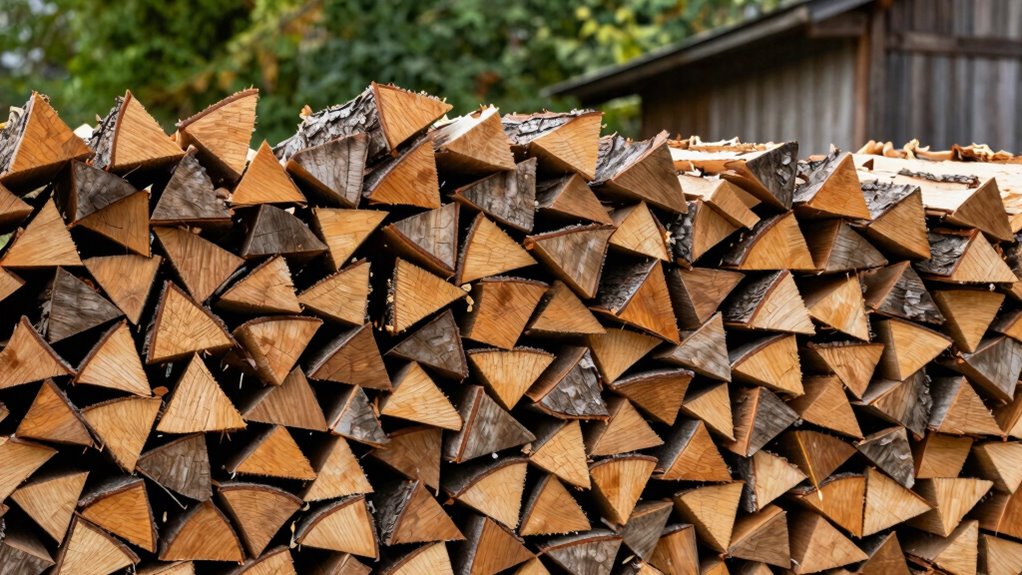
To keep firewood stacks straighter all year, guarantee your logs are properly seasoned and dry before stacking. Use tools like levels or straight edges to maintain even, horizontal rows, and stack larger logs at the bottom for stability. Leave small gaps for airflow and cover only the top with a tarp, leaving sides open. Regularly check and adjust the stack to prevent shifting. If you follow these tips, you’ll discover more ways to keep your firewood neat and stable year-round.

Get business pricing on tools and workshop supplies
- Business-only prices and quantity discounts
- Tax-exempt purchasing
- Multiple users, one account, clear invoices
Key Takeaways
- Use level tools and supports to keep each row even and stable during stacking.
- Place larger, heavier logs at the bottom to create a solid, balanced foundation.
- Leave small gaps between logs to promote airflow and prevent moisture buildup.
- Alternate stacking directions between layers to enhance overall stability.
- Regularly inspect and adjust the stack to maintain alignment and prevent shifting.
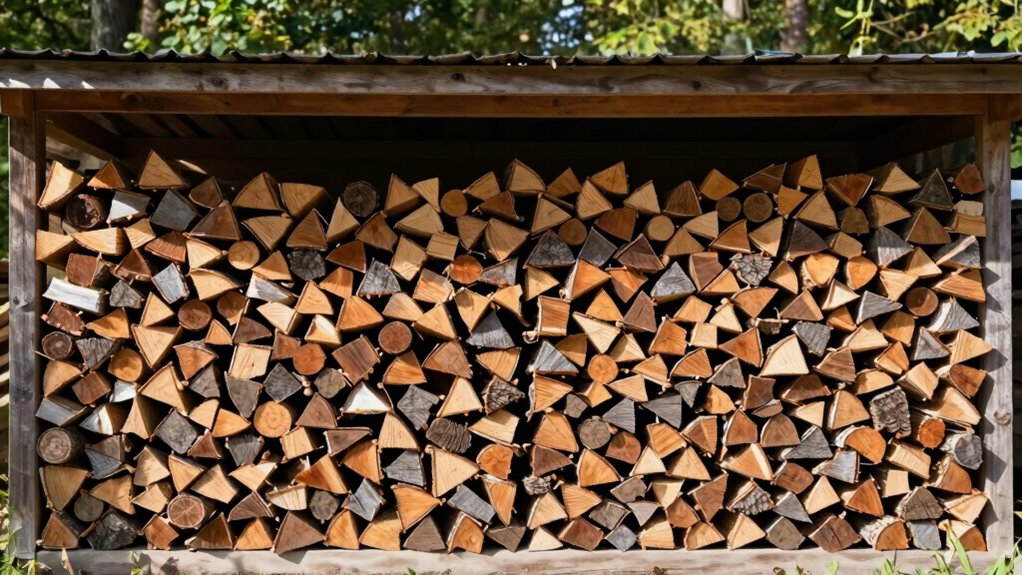
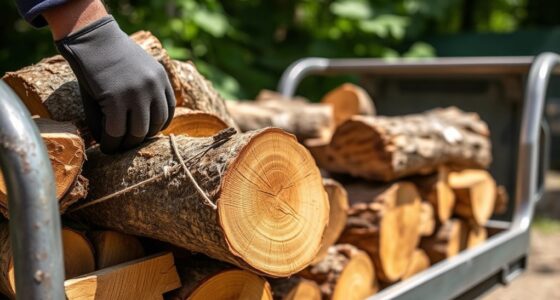
Stacking firewood properly is essential if you want it to stay straight and neat throughout the year. When you take the time to do it right, your firewood will not only look better but also dry more evenly, which improves its burning efficiency. To achieve this, start with understanding firewood seasoning. Freshly cut logs contain a lot of moisture, making them heavy and difficult to stack neatly. Allow the wood to season properly by stacking it in a well-ventilated area, ideally off the ground, for at least six months. Proper seasoning reduces moisture content, making the wood lighter and easier to handle, which helps in maintaining a straight, stable stack. Ensuring your stack is stable and straight is also influenced by proper stacking techniques, which promote better structural integrity. Using stacking tools can make the process easier and more precise. For example, a level or a straight edge helps you keep the rows even, preventing the stack from leaning. You might consider investing in firewood racks or supports, which act as guides to keep the logs aligned. These tools not only make stacking faster but also ensure each row remains straight and compact. As you build your stack, place larger, heavier logs at the bottom to create a stable foundation. Layer the wood tightly but avoid forcing pieces in, which could cause the stack to become uneven or unstable. Consistency in stacking pattern—alternating the direction of the logs between layers—also helps improve stability and keeps the stack straight. When stacking, pay attention to airflow. Leave small gaps between logs to promote proper drying and prevent moisture buildup. Proper airflow is key to maintaining the quality of your firewood over time and avoiding warping or leaning. Regularly check your stack from different angles, making small adjustments if you notice any leaning or unevenness. Using stacking tools like a level or spacers can help you make these adjustments more easily. Additionally, understanding the importance of moisture content in firewood can guide you in selecting logs that will dry efficiently and stay straight over time. Properly seasoned wood is less likely to warp or bow under weight. To further improve the longevity of your stack, consider the location where you place it, choosing a spot that minimizes exposure to excessive moisture or wind. Ensuring good air circulation around the stack helps prevent mold and decay, extending the life of your firewood. Properly seasoned wood is less likely to warp or bow under weight. As the stack grows, keep it compact but not overly tight; this prevents logs from shifting or bowing under their weight. Cover the top of your stack with a tarp or a roof to protect it from rain and snow, but allow the sides to remain open for airflow.
Frequently Asked Questions
What Is the Best Type of Wood for Stacking?
The best type of wood for stacking is seasonal wood, like oak or maple, because they have lower moisture content, which helps it dry faster and stay stable. When choosing wood, look for pieces with minimal moisture, as high moisture increases warping and uneven stacking. Properly drying and selecting seasoned wood guarantees your stack remains straighter and more durable throughout the year, making your firewood last longer and burn cleaner.
How Often Should I Check the Firewood Stack?
Think of your firewood stack as a living garden needing regular care. You should check it every few weeks, especially during seasoning, to guarantee it stays straight and dry. Look for signs of pests or excess moisture, and rearrange if needed to prevent pests from taking hold. Frequent inspections keep your firewood healthy, ensuring it’s well-seasoned and pest-free when you’re ready to burn, making your winter fires safer and more efficient.
Can I Stack Firewood Indoors Safely?
You can stack firewood indoors safely if you guarantee proper indoor ventilation and use fireproof storage containers or racks. Keep the firewood away from heat sources, vents, and open flames to prevent fire hazards. Adequate ventilation helps reduce moisture and mold buildup, while fireproof storage minimizes risk. Regularly check your indoor stack for pests, mold, or deterioration, and never store large quantities of firewood in enclosed indoor spaces.
What Tools Are Essential for Stacking Firewood?
Think of your tools as the architects of your firewood storage masterpiece. A sturdy level guarantees your stacking techniques stay true and straight, while a good mallet or hammer helps secure the wood without shifting. A handsaw or axe is essential for trimming uneven pieces, and gloves protect your hands. With these tools, you craft a stable, efficient pile that lasts through the seasons, keeping your firewood organized and accessible.
How Do Weather Conditions Affect Firewood Stacking?
Weather conditions considerably impact your firewood stacking. High humidity and rain increase moisture absorption, causing wood to warp or rot over time. Strong winds can disrupt your carefully stacked wood, knocking it over or shifting the logs out of alignment. To keep your firewood straight and dry, cover your stack with a tarp during wet weather and choose a sheltered, well-ventilated spot that minimizes wind exposure.
Conclusion
Storing your firewood properly is like tending to a garden—each carefully placed piece represents your patience and foresight. When you stack it straight and secure, you’re not just organizing wood; you’re cultivating resilience and stability. Over time, your neatly stacked firewood becomes a symbol of preparedness, standing tall through seasons of change. Remember, a well-stacked firewood pile reflects your commitment to harmony and strength in the face of life’s unpredictable weather.
Fall Picks
fall essentials
As an affiliate, we earn on qualifying purchases.