
To prevent insects from becoming an indoor firewood problem, always inspect each piece before bringing it inside. Shake off and look for small holes, sawdust, or visible insects. Store firewood outdoors on racks away from your home, keeping it dry and well-ventilated. Consider heat-treating the wood or using insecticidal solutions outdoors if needed. Proper storage and early detection can save you trouble later—keep exploring for more effective tips.

Get business pricing on tools and workshop supplies
- Business-only prices and quantity discounts
- Tax-exempt purchasing
- Multiple users, one account, clear invoices
Key Takeaways
- Store firewood outdoors on racks or pallets to improve ventilation and reduce insect migration indoors.
- Inspect and shake each piece of firewood before bringing it inside to check for signs of insects.
- Use heat treatment (around 140°F for 30 minutes) to kill pests and larvae before bringing firewood indoors.
- Keep firewood away from your home and cover it with a tarp to prevent insect entry and moisture buildup.
- Regularly monitor stored firewood for signs of infestation and treat or remove infested pieces promptly.
Have you ever noticed tiny insects hitching a ride into your home on firewood? If so, you’re not alone. Many homeowners unknowingly bring pests like beetles, termites, or woodboring insects inside, mistaking them for harmless debris. Recognizing these pests through insect identification is your first step toward preventing an indoor firewood problem. Different insects have distinct signs—some leave small holes or sawdust, while others may be visible crawling or flying around. Knowing what to look for can help you catch an infestation early and take the right measures before it becomes a bigger issue.
Spot tiny insects on firewood early to prevent indoor pest problems. Recognize signs and act swiftly.
To keep insects from turning your firewood into an indoor pest problem, you need to be proactive with firewood treatment. The goal is to eliminate or reduce any insects or eggs present before bringing the wood inside. Start by inspecting your firewood carefully. Look for signs of insect activity, such as small holes, frass (wood dust), or live insects. If you find any suspect pieces, consider treating the firewood before it enters your home. One effective method is to store your firewood outdoors, away from your house, for at least two weeks. During this time, the heat and dryness can help kill many pests and their eggs naturally.
For added assurance, you can also treat your firewood with heat or chemical solutions. Heating firewood to around 140°F for at least 30 minutes can effectively kill most insects and their larvae. If you prefer chemical options, use insecticidal sprays labeled for wood pests, but be sure to apply them outdoors and follow safety instructions carefully. This firewood treatment not only reduces the risk of bringing pests in but also minimizes the chance of an infestation taking hold inside. Proper firewood storage** is essential in maintaining pest-free firewood. Additionally, understanding the role of biodiversity** can help you foster a balanced environment that naturally controls pest populations around your home.
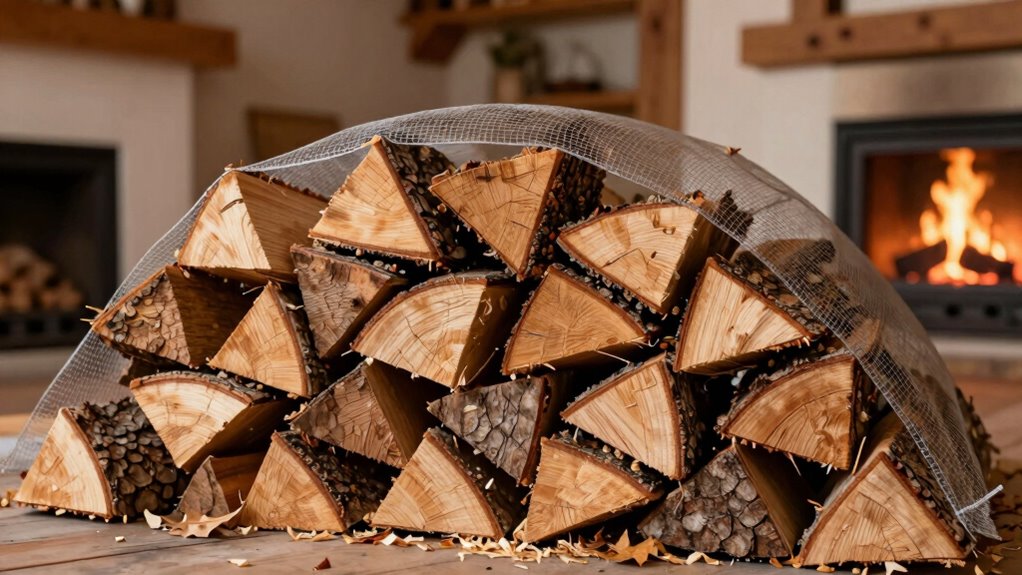
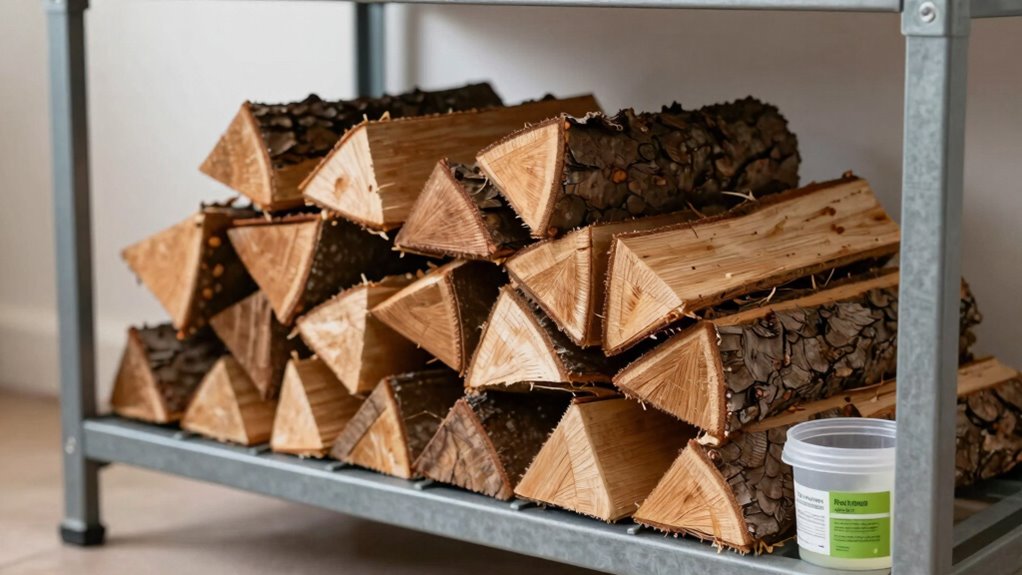
Once your firewood is inspected and treated, store it properly. Keep it off the ground using racks or pallets to improve airflow and prevent moisture buildup, which can attract pests. Cover the top with a tarp to shield it from rain but leave the sides open for ventilation. This setup discourages insects and helps keep your firewood dry and pest-free.
Finally, when you’re ready to bring the firewood inside, do a quick check once again. Shake or inspect each piece for any remaining insects or signs of infestation. By combining insect identification, proper firewood treatment, and thoughtful storage, you can significantly reduce the chances of pests making your home their new habitat. It’s all about staying vigilant and taking preventive steps before pests have a chance to settle in.
Products Worth Considering

Philips Hue Festavia Permanent Outdoor String Lights, 80 Lights, 150 ft

Blueair Signature SP1i Smart Air Purifier

TCL 85-Inch QM64L QD-Mini LED 4K Smart Fire TV
As an affiliate, we earn on qualifying purchases.
Frequently Asked Questions
What Are the Most Common Insects Found in Firewood?
The most common insects in firewood are beetles, termites, and woodboring insects. They thrive in the insect habitat created by damp, decaying wood stored in firewood storage areas. To prevent infestations, make sure your firewood is dry and well-ventilated, and don’t store it indoors for too long. Regularly inspect your firewood, and remove any infested pieces to keep insects from migrating into your home.
How Can I Identify an Insect Infestation in Firewood?
Identifying an insect infestation in firewood is like spotting tiny clues that reveal their presence. Look for small holes, sawdust, or frass—like wood shavings or powder—around your firewood storage area. Live insects or larvae might be visible, especially when you split logs. Regularly inspecting your firewood and practicing pest prevention helps catch infestations early, preventing them from spreading indoors and causing further problems.
Are There Natural Ways to Repel Firewood Insects?
Yes, you can use natural repellents for pest prevention. Spritzing your firewood with a mixture of cedar oil or neem oil acts as a natural deterrent for insects. Additionally, storing firewood away from your home and keeping it dry reduces pest attraction. Regularly inspecting and rotating your firewood also helps. These natural methods keep insects at bay without harsh chemicals, ensuring your firewood stays pest-free indoors.
How Often Should I Check Stored Firewood for Pests?
You should check your stored firewood at least once a month to catch pests early. Use proper storage techniques like keeping wood off the ground and away from your home’s foundation, and guarantee good airflow. Regular inspections and pest prevention methods, such as removing any infested pieces and using natural repellents, help prevent insects from becoming a problem indoors. Consistent maintenance keeps your firewood pest-free and your home safe.
Can Indoor Heating Affect Firewood Insect Activity?
Indoor heating acts like a warm, inviting blanket for firewood insects, stirring them into activity. This can negatively impact indoor air quality by releasing pests or mold spores. To prevent this, use pest prevention methods like sealing firewood tightly and avoiding excessive warmth near stored wood. Keep the environment cool and dry, so insects stay dormant, safeguarding your home’s air quality and keeping pests at bay.
Conclusion
To keep insects from turning your firewood into a medieval pest hub, stay vigilant and follow these steps. Store wood away from your home, inspect it before bringing inside, and keep your fireplace area clean. Think of it like guarding the crown jewels—protect what’s valuable and prevent unwanted invaders. With a little effort, you can enjoy cozy fires without turning your living room into a bug-infested castle. Stay proactive and keep those pests at bay!