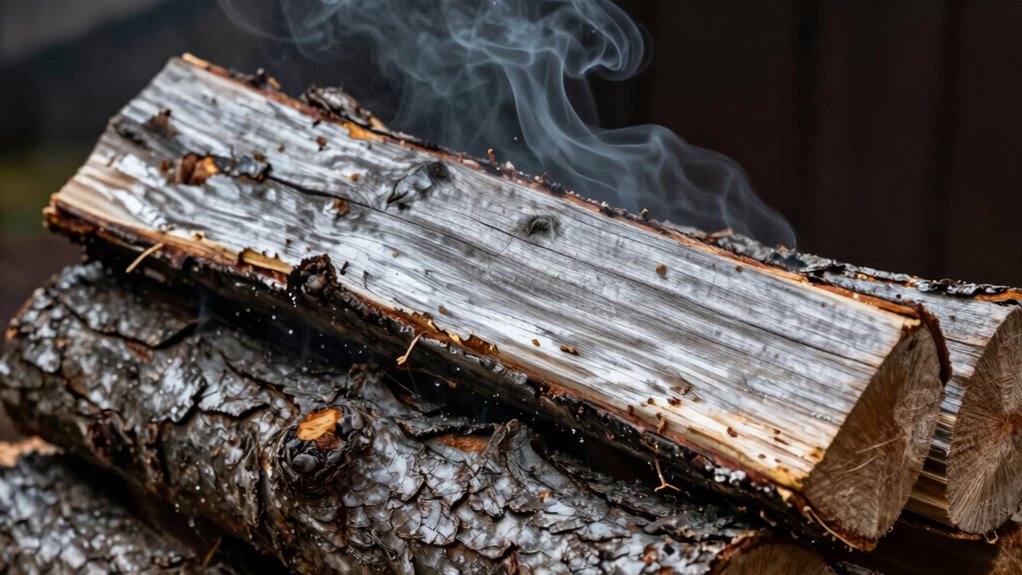
Even if your firewood is seasoned, it can still smoke if internal moisture remains or if it’s been stored in damp conditions. Dense woods like oak or hickory take longer to dry completely, and improper storage can reabsorb moisture, causing more smoke. Good air circulation helps keep wood dry by releasing trapped moisture. To reduce smoke, make certain your wood is fully seasoned and stored properly, and you’ll discover more about how to improve your fire’s performance.
Key Takeaways
- Internal moisture may remain in seasoned wood, causing steam during burning and increasing smoke production.
- Dense woods like oak retain more moisture and require longer seasoning to reduce smoke.
- Improper storage in damp areas allows reabsorption of moisture, leading to smoky fires.
- Poor air circulation around stored wood prevents proper drying, causing residual moisture to produce smoke.
- Rushing ignition or using wet kindling traps moisture, resulting in incomplete combustion and excess smoke.
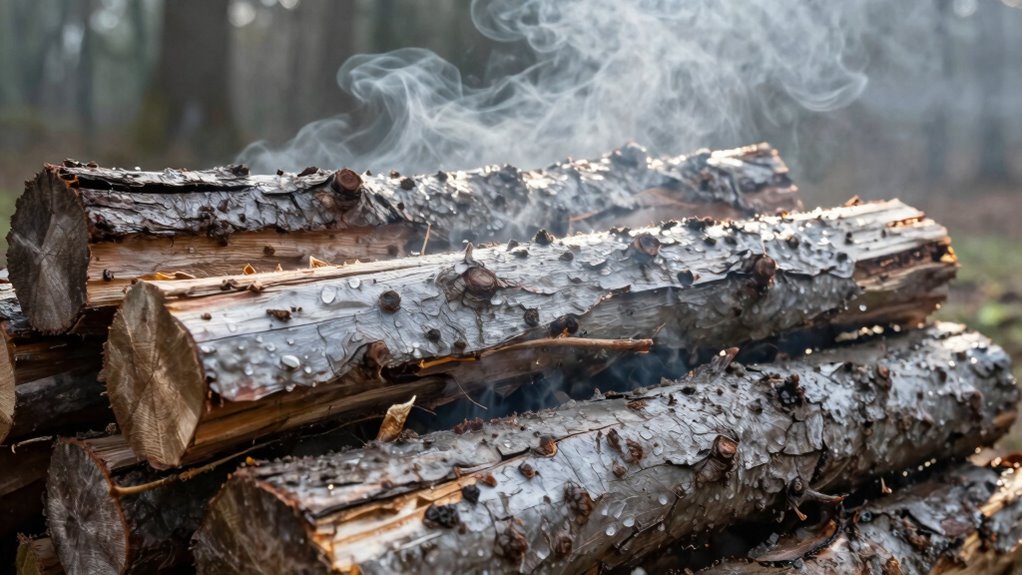
Have you ever noticed your firewood still producing smoke even after it’s been properly seasoned? It’s frustrating, especially when you’ve taken the time to let it dry out. The truth is, seasoned wood isn’t always completely dry, and that’s often the main reason it continues to smoke. Moisture content plays a *vital* role here. Even if your firewood looks dry on the outside, it might still contain enough moisture inside to cause smoke when burned. Wood is naturally porous, and moisture can get trapped within its fibers, especially if it was not dried thoroughly or stored improperly. When you ignite the wood, the remaining moisture heats up and turns to steam. This process delays combustion and leads to incomplete burning, which produces smoke.
Another key factor that influences whether your firewood smokes, even when seasoned, is wood density. Denser woods, like oak or hickory, tend to hold more moisture because of their tightly packed cells. As a result, they require more time to dry out completely. If you’re burning dense wood that hasn’t been adequately seasoned, you’ll likely see more smoke because the moisture inside is slow to evaporate. Conversely, softer woods like pine or cedar usually dry faster and tend to produce less smoke once seasoned properly.
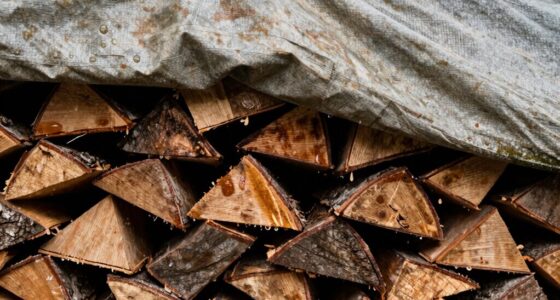
It’s also worth noting that even seasoned wood can produce smoke if it’s not stored correctly. If you keep your firewood in a damp shed or pile it in a way that traps humidity, it can reabsorb moisture from the environment. This increases the moisture content again, leading to smoke when you burn it. Proper stacking in a well-ventilated area allows air to circulate and helps keep moisture levels low, ensuring your wood stays genuinely seasoned. Additionally, air circulation plays a crucial role in maintaining the dryness of your wood.
Furthermore, the way you ignite your fire can influence smoke production. If you start with a slow, steady burn, the moisture has a better chance to evaporate fully, reducing smoke. Rushing to get a fire going with large, unkindled pieces can trap moisture and produce more smoke. Using dry kindling and ensuring your fire is well-ventilated allows for more complete combustion, which minimizes smoke and maximizes heat output.
Frequently Asked Questions
How Can I Tell if My Firewood Is Truly Seasoned?
You can tell if your firewood is truly seasoned by checking its wood scent—should smell earthy and mild, not damp or moldy. Look at the ash color; seasoned wood produces light gray or white ash, unlike the dark ash from unseasoned wood. Also, listen for a hollow sound when you knock on it and verify it feels dry and lightweight. These signs confirm your wood is properly seasoned and ready to burn.
Does the Type of Wood Affect Smoking Behavior?
Yes, the type of wood influences smoking behavior because different tree species have varying wood densities. Denser woods like oak or hickory burn hotter and produce less smoke, while softer woods like pine or cedar tend to smolder and create more smoke. Think of it as nature’s own recipe—selecting the right tree species guarantees a cleaner, more efficient fire. So, choose wisely to keep smoke at bay and your fire burning bright.
Can Improper Stacking Cause Smoke When Burning Seasoned Wood?
Yes, improper stacking can cause smoke even with seasoned wood. When you stack your firewood poorly, it blocks airflow, which is essential for efficient burning. Use proper stacking techniques to optimize airflow, ensuring oxygen reaches the fire and gases burn completely. Avoid tightly packed stacks or overloading your firewood pile, as these hinder combustion and lead to smoking. Proper airflow maximization keeps your fire burning clean and reduces smoke.
What Role Does Moisture Content Play in Wood Smoking?
Oh, the timeless drama of moisture content! When you ignore moisture measurement and rely on sketchy wood drying techniques, you invite smoke like an overenthusiastic chimney. The moisture in your wood should be below 20%, or it’ll smolder and spit. Use a moisture meter and proper drying methods—air-dried, kiln-dried—to guarantee your seasoned wood burns cleanly. Otherwise, your smoky spectacle is just a matter of moisture mismanagement.
Are There Specific Storage Tips to Prevent Smoking With Seasoned Wood?
To prevent smoking with seasoned wood, focus on proper wood storage and make certain good air circulation. Store your firewood in a dry, covered spot off the ground, and avoid stacking it tightly. Leave space between logs to promote airflow, which helps keep moisture out and reduces smoke. Regularly check your wood for dampness, and consider covering it loosely to protect from rain while still allowing air to circulate.
Conclusion
So, even if your firewood is labeled “seasoned,” it might still smoke. Don’t assume it’s bad or unusable — sometimes, it just needs a bit more drying or proper stacking to breathe. Trust me, a little patience and proper preparation make all the difference. If you still face issues, consider testing different wood or adjusting your fire-starting technique. With these tips, you’ll enjoy cleaner, hotter fires in no time!