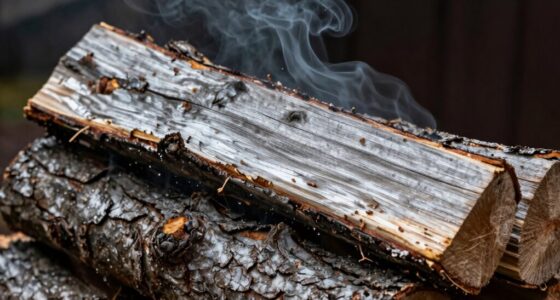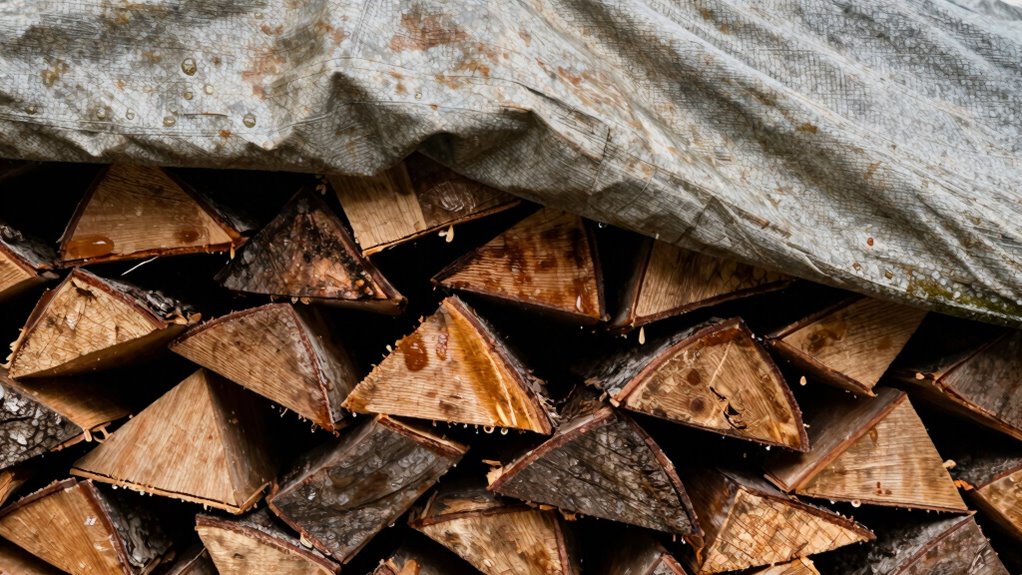

Stop covering firewood completely from top to bottom, as this traps moisture inside the pile. This creates a sealed environment that prevents airflow and leads to condensation, rot, mold, and reduced burn quality. Instead, only cover the top of the stack with a breathable tarp or firewood cover, leaving the sides exposed. Proper covering and stacking improve airflow and keep your wood dry longer. To learn the best ways to store wood, keep exploring these tips.
Key Takeaways
- Fully sealing firewood with plastic or thick covers traps moisture, causing mold and decay.
- Cover only the top of the pile, leaving sides open for airflow and moisture escape.
- Avoid completely enclosing logs; proper ventilation prevents condensation inside the stack.
- Use breathable tarps designed for firewood to protect against rain without sealing in humidity.
- Elevate and loosely stack logs to promote airflow and keep wood dry over time.
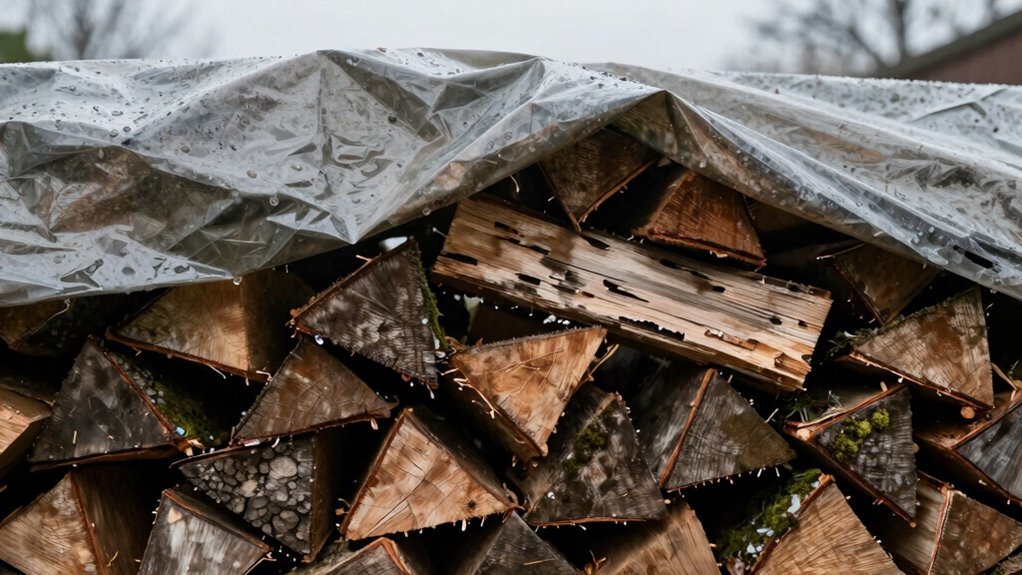
Many people believe covering firewood is necessary to keep it dry, but in reality, the wrong covering can do more harm than good. If you’re storing firewood for the season, the goal is to keep it dry while allowing proper airflow. Covering it improperly can trap moisture buildup, which leads to rot, mold, and reduced burning efficiency. When you think about seasonal storage, you want to protect your wood from rain and snow, but still let it breathe.
Proper firewood storage balances protection from rain with ventilation to prevent rot and mold.
A common mistake is covering firewood completely from top to bottom. This creates a sealed environment where moisture gets trapped inside. As the weather fluctuates, condensation forms on the wood, leading to moisture buildup beneath the cover. This moisture not only makes the wood harder to ignite but also encourages mold growth and decay. Over time, this damage compromises the wood’s quality and reduces its heat output.
To avoid these issues, you should only cover the top of your firewood pile, leaving the sides exposed. This method allows air to circulate around the logs, helping excess moisture escape and preventing moisture buildup inside the stack. When rain or snow hits the uncovered sides, the water runs off and doesn’t seep into the wood. The key is to create a barrier against direct precipitation while maintaining ventilation.
Think of your firewood as a sponge that needs to stay dry but also needs to breathe. Covering it properly during seasonal storage means using a breathable tarp or a specialized firewood cover that allows air flow. Never use plastic sheeting that completely encloses the pile, because it traps humidity and accelerates decay. Instead, opt for a cover that protects from the elements but still permits moisture to escape, especially in humid environments or during wet seasons.
Another tip is to elevate your firewood off the ground using pallets or a raised platform. This prevents ground moisture from wicking into the logs and encourages better airflow beneath the pile. Proper stacking is also vital—stack logs loosely in a crisscross pattern to promote air circulation. When these practices are combined with partial covering, your firewood stays dry, retains its quality, and is ready to burn efficiently when needed.
In short, avoid the temptation to fully cover your firewood. Instead, focus on seasonal storage techniques that balance protection from the weather with ventilation. Doing so prevents moisture buildup, preserves your wood, and ensures it burns hot and clean when you need it most. Proper ventilation is essential to prevent moisture buildup and maintain the quality of your firewood over time.
Frequently Asked Questions
How Long Does It Take for Firewood to Dry Properly?
It typically takes about 6 to 12 months of seasonal drying for firewood to reach ideal moisture content. You should turn and stack your wood properly to promote airflow, helping it dry faster. If the wood’s moisture content drops below 20%, it burns efficiently and safely. Keep in mind, factors like climate and wood type can influence drying time, so check moisture levels regularly to guarantee your firewood is ready.
Is It Better to Cover Firewood During Rain or Dry Conditions?
It’s better to cover your firewood during rain to protect it from excess moisture, but leave it uncovered during dry conditions. Weather considerations matter because excessive covering traps firewood moisture, preventing proper drying. You want your wood to stay dry and well-ventilated, so use a breathable cover if needed. This approach guarantees your firewood burns efficiently and reduces the risk of mold or rot caused by trapped moisture.
What Materials Are Best for Covering Firewood?
Imagine you’re drying your firewood and want it to stay dry. You should use waterproof tarps or breathable covers, which keep rain out while allowing moisture to escape. For example, a high-quality, breathable tarp prevents trapped moisture that can cause mold or rot. These materials protect your firewood during wet weather without trapping excess humidity, ensuring your wood stays dry, burns efficiently, and lasts longer.
Can Covering Firewood Prevent Pests and Critters?
Covering firewood can help with pest prevention and critter control, but only if you do it correctly. Use a breathable cover that allows air circulation, preventing moisture buildup that attracts pests. Avoid sealing the wood completely, as trapped moisture invites critters. Properly covered, your firewood stays dry and less appealing to pests, making it easier to keep critters at bay and maintain safe, pest-free firewood storage.
Should Firewood Be Stored Indoors or Outdoors for Best Drying?
Storing firewood outdoors for drying is your best bet. Think of outdoor drying as giving your wood a sunbath—air circulation and sunlight help moisture evaporate faster. Indoor storage can trap humidity, making your wood damp and prone to mold or pests. Keep your firewood in a well-ventilated, covered outdoor spot, so it stays dry, spark-ready, and ready to warm your home when you need it most.
Conclusion
Don’t let your firewood be like a sponge, soaking up unnecessary moisture. Instead, give it room to breathe and dry out properly. By avoiding the mistake of covering it tightly, you’re letting the air do its job—like a gentle breeze clearing out the dampness. Think of your firewood as a plant needing sunlight and air; with a little space, it’ll be ready to burn bright and hot whenever you need it. Keep it dry, keep it burning.