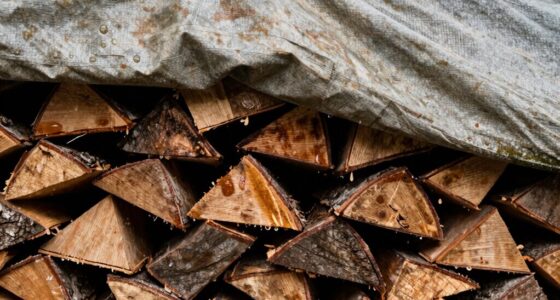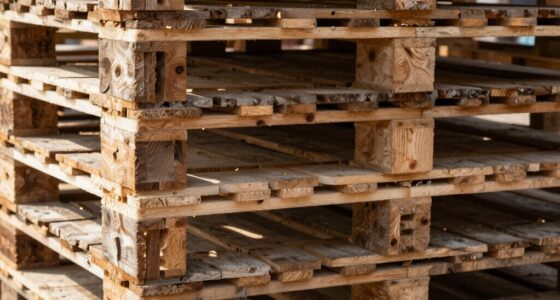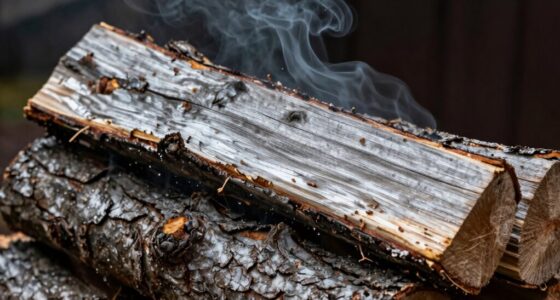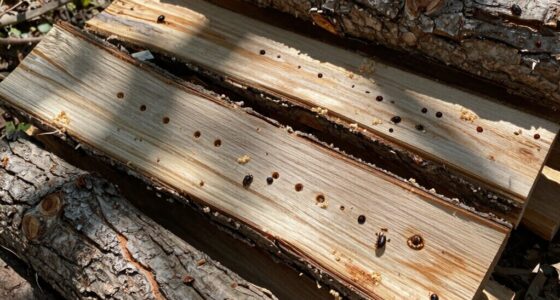

To fix ground contact on your woodpile cheaply, elevate it on pallets, cinder blocks, or scrap wood to keep it off the soil. Guarantee proper ventilation by loosely stacking the wood in a sunny, open area and avoiding direct contact with the ground. Regularly inspect for mold or pests and remove damaged wood immediately. These simple, budget-friendly steps will extend your firewood’s lifespan and prevent costly deterioration—keep going to find out more effective tricks.

Get business pricing on tools and workshop supplies
- Business-only prices and quantity discounts
- Tax-exempt purchasing
- Multiple users, one account, clear invoices
Key Takeaways
- Elevate your firewood using pallets or scrap wood to keep it above ground moisture.
- Stack wood loosely in well-ventilated areas to prevent mold and rot.
- Avoid direct contact with the ground and cover only the top, leaving sides open for airflow.
- Regularly inspect and remove moldy or damaged wood to prevent pest attraction.
- Use inexpensive materials like pallets and proper stacking to protect your woodpile cheaply.
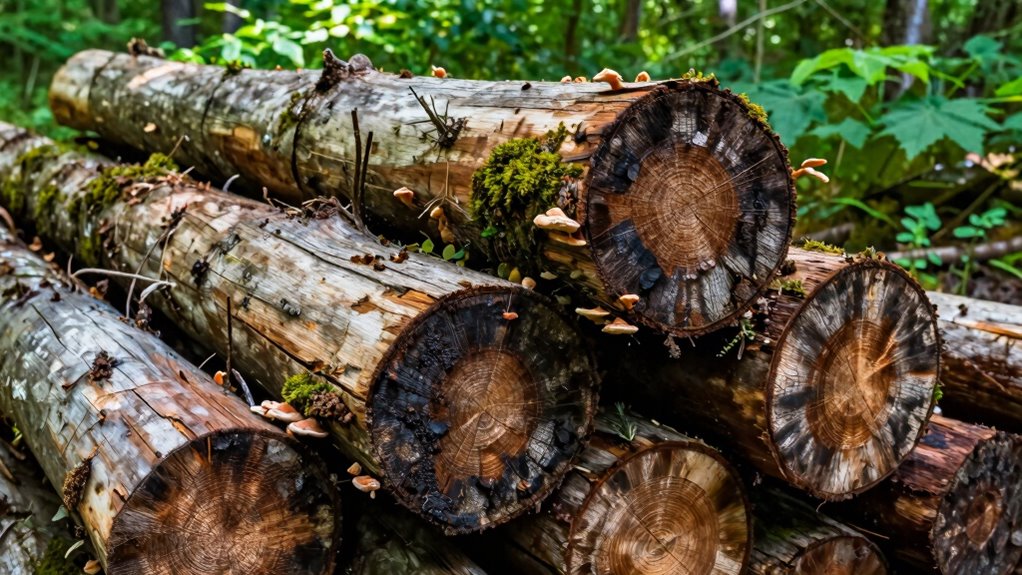
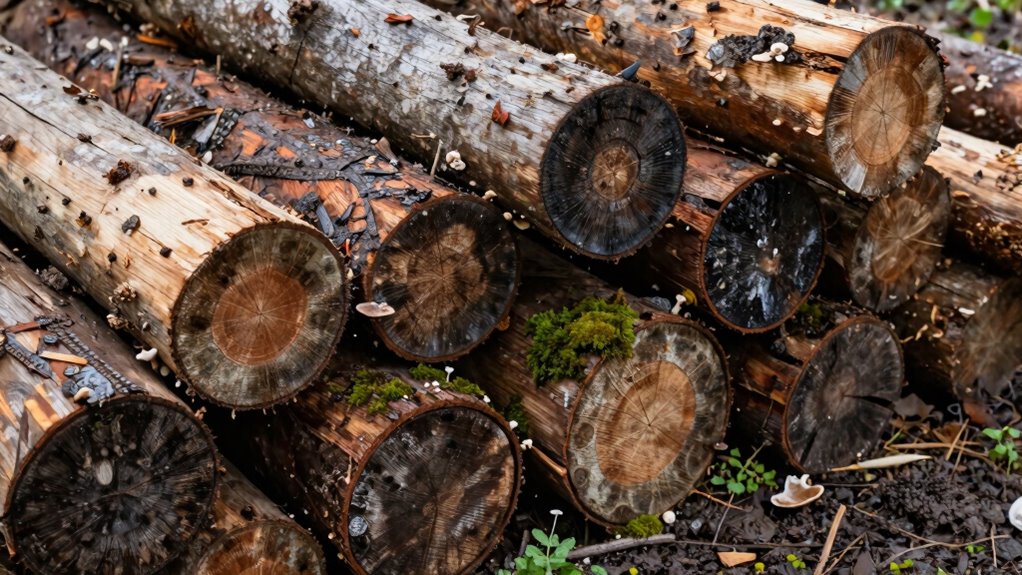
Have you ever noticed your firewood rotting or becoming infested with pests long before you expected? If so, ground contact might be the culprit. When your woodpile sits directly on the ground, it’s exposed to moisture that can seep in from the soil, creating an ideal environment for decay and pests. Over time, this contact accelerates rotting and invites insects like termites, beetles, and carpenter ants to settle in. To keep your firewood dry and pest-free, you need to focus on moisture prevention and pest management strategies that are simple to implement and cost-effective.
Ground contact causes firewood rot and pests; elevate and ventilate to protect your wood.
One of the easiest ways to prevent moisture from damaging your woodpile is to elevate it off the ground. You don’t need fancy equipment—just a few pallets, cinder blocks, or scrap pieces of wood can do the trick. By raising your firewood a few inches, you allow air to circulate underneath, helping it stay dry and reducing the chances of mold or rot. This simple step considerably reduces ground moisture contact, which is the primary cause of deterioration. Plus, it makes pest management easier: pests are less likely to find a moist, ground-level woodpile to infest. Additionally, elevating your woodpile can facilitate airflow and drying, making it less hospitable for pests and decay.
Another key aspect is ensuring proper ventilation. When your firewood is stacked loosely and kept in a well-ventilated area, it dries out faster and stays dry longer. Avoid stacking your wood directly against the ground or in a damp corner, as these conditions trap moisture and create breeding grounds for pests. Instead, place your pile in an open, sunny spot, and keep the top covered with a tarp or a roof to shield it from rain, but allow air to flow around the sides. This balance of moisture prevention and airflow creates an inhospitable environment for pests and decay.
Regularly inspecting your woodpile is an essential part of pest management. Remove any damaged or moldy wood immediately, and toss it away from your main pile. Keeping your wood dry and well-maintained minimizes pest attractions. If you notice signs of pests, like small holes or sawdust, consider treating the area with natural repellents or insecticides designed for pest management. The goal is to make your woodpile less appealing to insects and prevent infestations before they get out of control.
In short, protecting your firewood from ground contact is a straightforward, inexpensive way to extend its lifespan. Elevate your wood, ensure proper airflow, and stay vigilant against pests. These simple steps will save you money, time, and frustration by keeping your wood dry, pest-free, and ready to burn when you need it most.
As an affiliate, we earn on qualifying purchases.
Frequently Asked Questions
How Can I Tell if My Woodpile Has Ground Contact Damage?
You can tell if your woodpile has ground contact damage by inspecting the bottom logs for signs of moisture damage, like mold or rotting. Look closely for insect trails or boreholes, which indicate pest activity. If the wood feels soft or damp at the contact points, it’s a sign that ground contact is harming your wood. Elevate your logs to keep them dry and prevent further damage.
What Are the Signs of Termite or Pest Infestation in Wood?
You’ll notice termite or pest infestations in your wood by spotting wood borer signs, like small exit holes or tunnels, and any mold growth, which indicates moisture issues. If the wood feels soft, crumbly, or has unusual holes, pests are likely active inside. Keep an eye out for frass (fine sawdust) around the logs, as this is a clear sign pests are tunneling within your woodpile.
Can I Salvage Wood That’s Been in Ground Contact?
You can often salvage wood that’s been in ground contact if you act quickly. Start by inspecting for rot, insect damage, or mold, then remove any compromised parts. Use wood treatment products, like preservatives or fungicides, to protect the remaining wood. Salvage techniques include cleaning, drying thoroughly, and applying protective coatings. Keep in mind, if the wood is severely damaged or infested, it’s safer to replace it rather than attempt repairs.
How Often Should I Check My Woodpile for Damage?
You should check your woodpile at least once a season to catch damage early. Regular seasonal maintenance helps you spot rot, insect infestations, or warping. Use proper storage techniques, like elevating the wood on pallets or bricks, to prevent ground contact. This keeps your firewood dry and intact longer. By inspecting frequently, you make certain your wood stays dry and ready, saving you time and money in the long run.
Are There Eco-Friendly Methods to Protect Wood From Ground Contact?
Think of your woodpile like a garden—protecting it naturally keeps it thriving. You can use natural preservatives like neem oil or mineral oil, which are eco-friendly options. Biodegradable barriers, such as untreated wood pallets or straw mats, also prevent ground contact without harming the environment. These methods are affordable and safe, helping your wood stay dry and rot-free while caring for the planet.
Conclusion
If you ignore ground contact, your woodpile becomes a rotting mess, its once-dry warmth turning to damp decay. But with a simple fix—raising it off the ground—you create a barrier against moisture and pests. Imagine your firewood standing tall and proud, untouched by the damp earth below. You don’t have to let rot take over; a small step now keeps your wood dry and ready, saving you money and hassle in the long run.
Halloween Picks
halloween
As an affiliate, we earn on qualifying purchases.