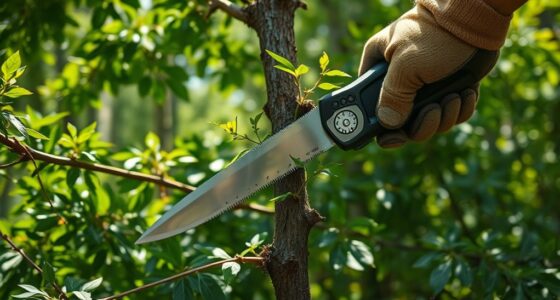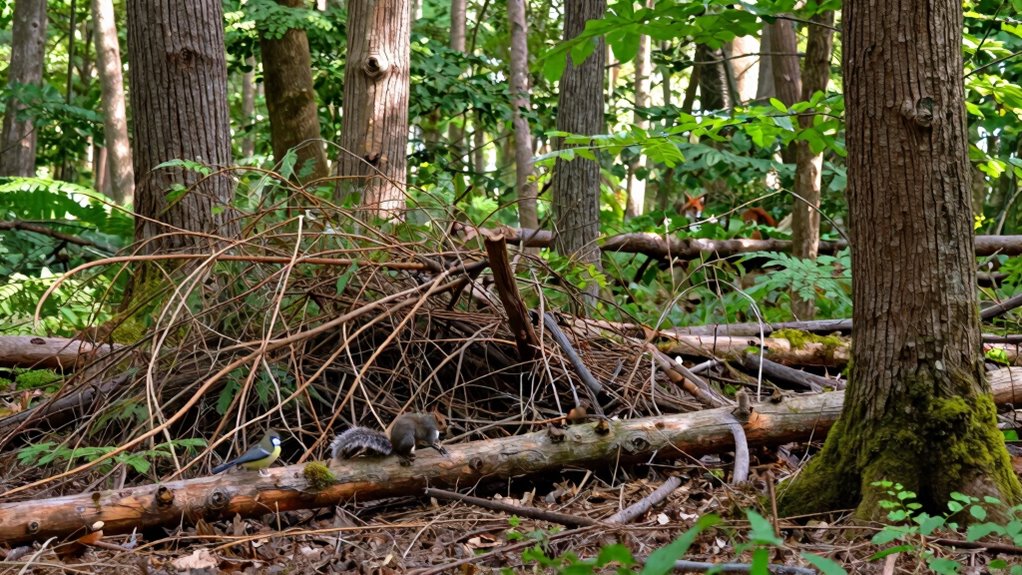

Leaving brush piles intact benefits wildlife much more than burning debris because they provide essential habitats for small mammals, birds, and insects. These piles offer shelter, nesting sites, and foraging opportunities, helping maintain healthy populations and biodiversity. Burning destroys these crucial refuges and can disrupt predator-prey relationships. If you want to learn how these simple choices support a thriving ecosystem, keep exploring the benefits of habitat preservation over burning.
Key Takeaways
- Brush piles provide essential habitats for shelter, nesting, and foraging, supporting wildlife survival and biodiversity.
- Burning debris destroys habitat structures, disrupting food sources and shelter critical for wildlife during breeding seasons.
- Preserving brush piles maintains predator-prey relationships, promoting natural pest control and ecosystem balance.
- Habitat structures from brush piles enhance ecosystem resilience by supporting diverse species and stabilizing populations.
- Land management prioritizing habitat preservation over burning fosters healthier, more sustainable ecosystems for wildlife.

Many landowners and land managers traditionally burn brush piles to reduce wildfire risk, but this practice can sometimes do more harm than good for local wildlife. Instead of clearing away debris entirely, creating brush piles can serve as essential habitats that support the survival of many species. When you leave certain areas undisturbed, you help preserve the natural habitat that animals rely on for shelter, nesting, and foraging. These piles act as refuge spots where small mammals, birds,, and insects can hide from predators and harsh weather, guaranteeing their populations remain stable.
Leaving brush piles intact provides vital shelter and supports local wildlife survival.
Habitat preservation is fundamental, especially as many wildlands face increasing threats from development and climate change. By intentionally leaving some brush in place or adding to existing piles, you create a safe haven that promotes biodiversity. These structures are especially important during breeding seasons when animals need secure spaces to raise their young. For ground-nesting birds and small mammals, brush piles offer protection from predators, giving them a better chance to thrive and reproduce. Recognizing habitat structures as vital components of ecosystems underscores their importance for wildlife health and diversity.
You might think that burning is the simplest way to manage debris, but it can inadvertently remove these essential habitats. Fire, especially when uncontrolled, can devastate local wildlife populations by destroying their shelter and disrupting food sources. Additionally, burning can disturb the delicate balance of predator-prey relationships. Predators such as foxes, owls, and hawks often use these refuge spots to hunt and hide, and removing these cover options leaves prey vulnerable. Conversely, leaving brush piles intact or strategically placed can provide predator protection for vulnerable species, giving them a fighting chance to survive and flourish.
When you choose to preserve or add to brush piles instead of burning, you’re actively supporting the ecosystem’s health. These structures encourage natural predator-prey dynamics, helping control pest populations and maintaining ecological balance. Furthermore, the piles can serve as nesting sites for birds and insects, contributing to pollination and pest control. This approach aligns with conservation goals, emphasizing the importance of coexistence rather than eradication. Additionally, habitat preservation supports the resilience of local ecosystems by maintaining key shelter and nesting sites. Recognizing the ecological benefits of habitat structures highlights how practical conservation efforts can bolster biodiversity and ecosystem stability. Creating these habitats also enhances the overall ecosystem resilience, allowing environments to better adapt to changing conditions and disturbances.
In the end, it’s about making smarter choices that benefit wildlife and the land. Instead of defaulting to burning, consider the long-term advantages of habitat preservation. Your actions can help sustain local species, protect biodiversity, and ensure that predator-prey relationships remain intact. By understanding the role of brush piles in wildlife health, you can make a significant difference in creating resilient, thriving ecosystems.

Evolved Habitats Premium Wildlife Molasses, 1 Gallon – Premium Deer Attractant, Brown
- Premium Wildlife Molasses: Attracts deer, bears, and hogs
- Year-Round Attraction: Long-lasting flavor and aroma
- High Performance Nutrition: Suitable for cold winters
As an affiliate, we earn on qualifying purchases.
As an affiliate, we earn on qualifying purchases.
Frequently Asked Questions
What Types of Wildlife Benefit Most From Brush Piles?
You’ll find that brush piles benefit small mammals, birds, and reptiles the most. These structures enhance habitat diversity, providing shelter and nesting sites. They also offer predator concealment, helping animals stay safe from predators. By creating a brush pile, you support a variety of wildlife, especially species that rely on dense cover for protection and breeding. Your efforts make a meaningful difference in fostering a healthy, diverse ecosystem.
How Long Should a Brush Pile Be Left Undisturbed?
You should leave a brush pile undisturbed for at least 2-3 years, giving wildlife enough time to establish habitats. Notably, mature brush piles can house over 150 species, highlighting their importance. While enhancing garden aesthetics, it’s essential to balance wildlife benefits with fire safety, making sure piles are placed away from structures and kept manageable. Patience ensures a thriving habitat while maintaining safety standards.
Are There Any Risks Associated With Leaving Brush Piles?
Leaving brush piles can pose fire hazards if not managed carefully, especially during dry seasons. They may also attract invasive species, which can threaten native plants and animals. To minimize risks, you should regularly monitor and maintain your piles, avoid building them near structures, and remove any invasive plants. Proper management helps protect your property and local ecosystems while still providing wildlife habitat.
Can Brush Piles Be Used in Urban or Suburban Areas?
Imagine a tiny forest in your backyard—brush piles can fit into urban or suburban landscapes with thoughtful planning. You can incorporate them into your landscaping techniques, creating mini habitats amid concrete jungles. Urban planning that embraces these natural havens benefits local wildlife, offering shelter and food. Just make certain the piles are placed carefully, away from structures, to keep safety in check while nurturing the ecosystem right outside your door.
How Do Brush Piles Compare to Other Wildlife Habitats?
Brush piles offer unique habitat diversity and predator protection, making them more beneficial than some other habitats. They provide shelter for small mammals, birds, and insects, encouraging biodiversity. Unlike open areas, brush piles hide wildlife from predators, increasing survival rates. You can create these piles in your yard to support local ecosystems, offering essential cover and nesting sites that enhance habitat variety and help wildlife thrive.
Conclusion
So, next time you’re tempted to burn that pile of brush, think twice. Instead of destroying potential shelter and food sources, you might just be helping local wildlife thrive quietly nearby. Ironically, what seems like messy clutter could turn out to be nature’s perfect refuge. Sometimes, the best way to clear the land is to leave a little chaos—wildlife will thank you, even if you don’t see it right away.