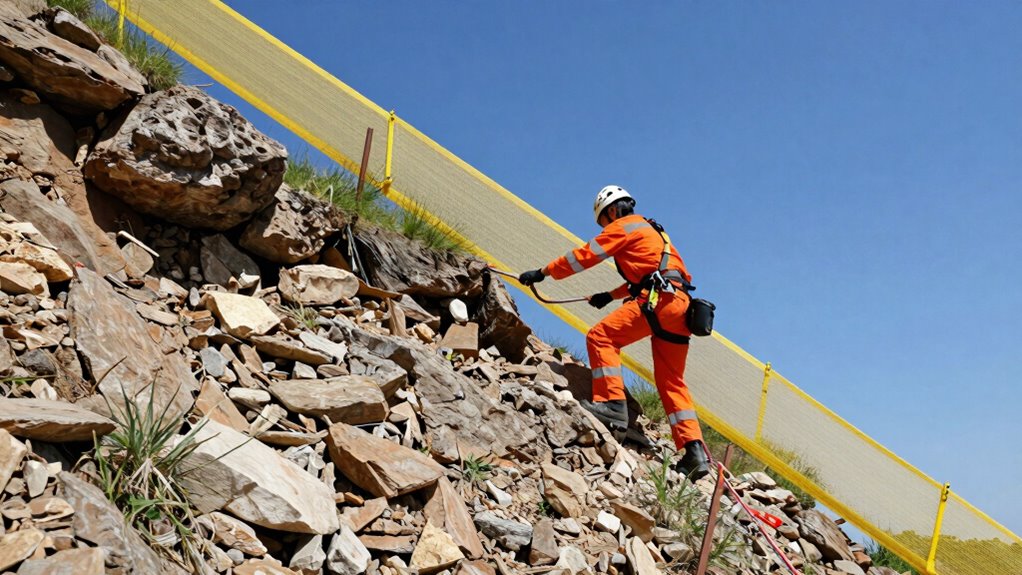

To work safely on slopes and uneven ground, always wear proper PPE that fits well and is in good condition, like helmets, sturdy boots, gloves, and high-visibility vests. Assess hazards such as loose soil, weather, and obstacles before starting, and keep updating your assessment as conditions change. Move carefully, maintain three points of contact, and communicate clearly with your team. Staying alert and prepared helps prevent accidents—continue, and you’ll discover more essential safety tips.

Get business pricing on tools and workshop supplies
- Business-only prices and quantity discounts
- Tax-exempt purchasing
- Multiple users, one account, clear invoices
Key Takeaways
- Always wear properly fitted PPE, including helmets, sturdy boots, gloves, and high-visibility vests.
- Conduct thorough hazard assessments of terrain, weather, and obstacles before starting work.
- Develop and follow a safety plan tailored to terrain, using appropriate tools and safety gear.
- Use stabilizing equipment like harnesses and maintain communication to ensure team safety.
- Move deliberately, maintain three points of contact, and stay alert to changing conditions.
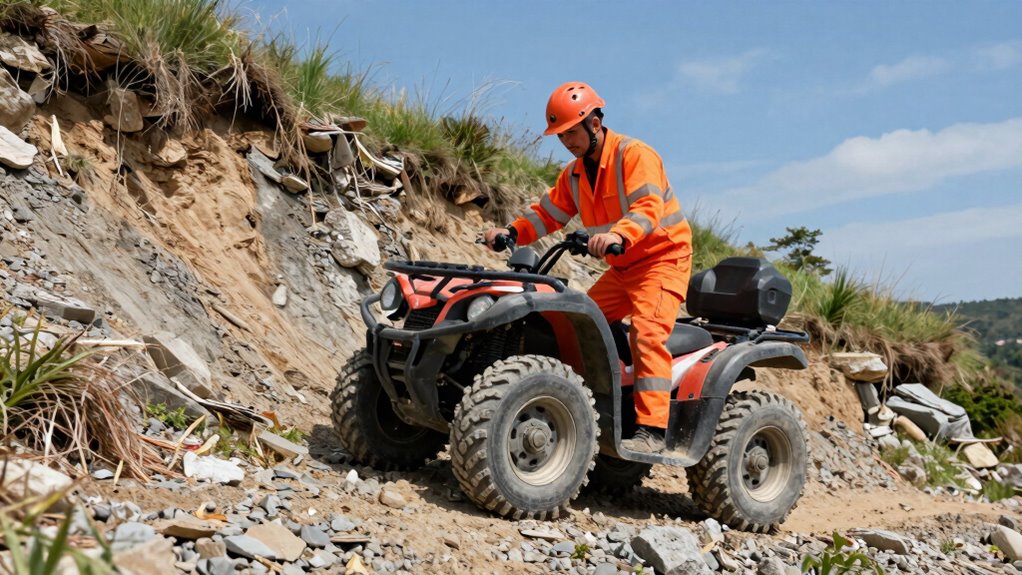
Have you ever wondered how to stay safe while working on slopes and uneven ground? It’s a valid concern, especially since these environments pose unique risks. The key to safety starts with understanding your surroundings and making sure you’re properly equipped. Personal protective equipment, or PPE, plays an essential role in protecting you from potential hazards. Helmets, sturdy boots with good traction, gloves, and high-visibility vests are necessary, but they’re only effective if you use them consistently. Before you begin any task, it’s critical to perform a thorough hazard assessment. This means carefully evaluating the slope’s incline, surface stability, weather conditions, and any nearby obstacles. Recognize areas where the ground might shift or where loose debris could cause slips or falls. By identifying these risks ahead of time, you can plan your approach and choose the right equipment or tools to mitigate them.
Assess slopes carefully and select proper PPE to stay safe on uneven ground.
Once you’ve completed your hazard assessment, you can develop a safe work plan. This involves selecting appropriate PPE based on the specific hazards you’ve identified. For example, if the ground is loose or muddy, you’ll need footwear designed for extra grip. If there’s a risk of falling objects, a hard hat becomes indispensable. Remember, PPE isn’t just about having the gear; it’s about making sure it fits properly and is in good condition. Ill-fitting or damaged equipment won’t provide the protection you need and can even create new hazards. Additionally, understanding ground stability and how it affects your work can help prevent accidents and ensure safety. Conducting a risk assessment before starting work is crucial to adapt your safety measures to changing conditions. Staying informed about hazard mitigation strategies can further enhance your safety practices.
Being aware of environmental factors, such as weather or lighting conditions, can also significantly impact your safety on uneven terrain. In addition to PPE, always consider the terrain’s features. Use tools or equipment designed for uneven ground, such as stabilizing harnesses or ground anchors, especially if you need to work at heights or on steep inclines. Recognizing that terrain assessment is an ongoing process can help you respond proactively to emerging risks and changes in conditions. When moving around, take deliberate, controlled steps, and avoid rushing or making sudden movements. Keep your body centered and maintain three points of contact with the ground or your safety gear whenever possible. This helps prevent slips and falls.
Regularly reassess hazards as work progresses. Conditions can change quickly, especially in outdoor environments. Stay alert and adapt your safety measures accordingly. Communicate clearly with your team about hazards and safety protocols. Remember, working safely on slopes and uneven ground isn’t just about avoiding accidents; it’s about adopting a mindset of vigilance and preparedness. Proper hazard assessment combined with the right personal protective equipment forms the foundation of your safety strategy, allowing you to perform your work effectively and confidently.
safety helmet for construction work
As an affiliate, we earn on qualifying purchases.
As an affiliate, we earn on qualifying purchases.
Frequently Asked Questions
What Are the Most Common Hazards When Working on Slopes?
The most common hazards when working on slopes include terrain instability, which can cause slips, trips, or falls. You need to constantly monitor terrain stability and perform hazard identification to spot loose soil, rocks, or uneven surfaces. Poor footing and unexpected ground shifts can lead to accidents. Always assess the slope, use proper safety gear, and stay alert to changing conditions to minimize risks and work safely.
How Do Weather Conditions Affect Slope Safety?
Weather conditions considerably impact slope safety, as weather-related slip hazards increase during rain, snow, or ice, making surfaces slippery and unstable. Seasonal impact considerations remind you to adjust safety measures accordingly, like adding traction or delaying work during adverse weather. You must stay alert to changing conditions, as wet or icy slopes become more dangerous, and proper precautions help prevent slips, falls, and accidents.
Are There Specific PPE Requirements for Uneven Terrain?
On uneven terrain, you need specific PPE to stay safe. Think of your footwear safety as the sturdy foundation of a house—essential and non-negotiable. Personal protective equipment like helmets, gloves, and high-traction boots protect you from slips and falls, much like armor shields a knight. These essentials guarantee you maintain stability and safeguard against hazards, turning treacherous ground into manageable terrain.
How Often Should Safety Inspections Be Conducted?
You should conduct safety inspections daily before starting work on slopes and uneven ground. Regular checks guarantee equipment maintenance is up to date and identify hazards early. These inspections help you spot potential issues that could compromise safety, allowing you to address them promptly. Incorporate emergency preparedness reviews into your inspections too, so you’re always ready for unexpected incidents, maintaining a safe working environment at all times.
What Training Is Recommended for Working on Slopes?
Think of working on slopes as steering a ship through unpredictable waters. You should undergo specialized training in slope stabilization and terrain assessment, equipping you to recognize risks and stabilize the ground effectively. This training helps you understand soil types, weather impacts, and proper equipment use, ensuring your safety. By mastering these skills, you confidently traverse uneven terrains, much like a seasoned sailor steering smoothly through shifting tides.
Conclusion
Working safely on slopes and uneven ground means staying alert, planning ahead, and choosing the right equipment. It means evaluating risks, wearing proper gear, and following safety guidelines. It means taking your time, knowing your limits, and never rushing the job. By doing these things, you protect yourself, your coworkers, and your project. Stay cautious, stay prepared, and work smart—because safety isn’t just a rule, it’s your responsibility every step of the way.
Fall yard work Picks
leaf blowers
As an affiliate, we earn on qualifying purchases.