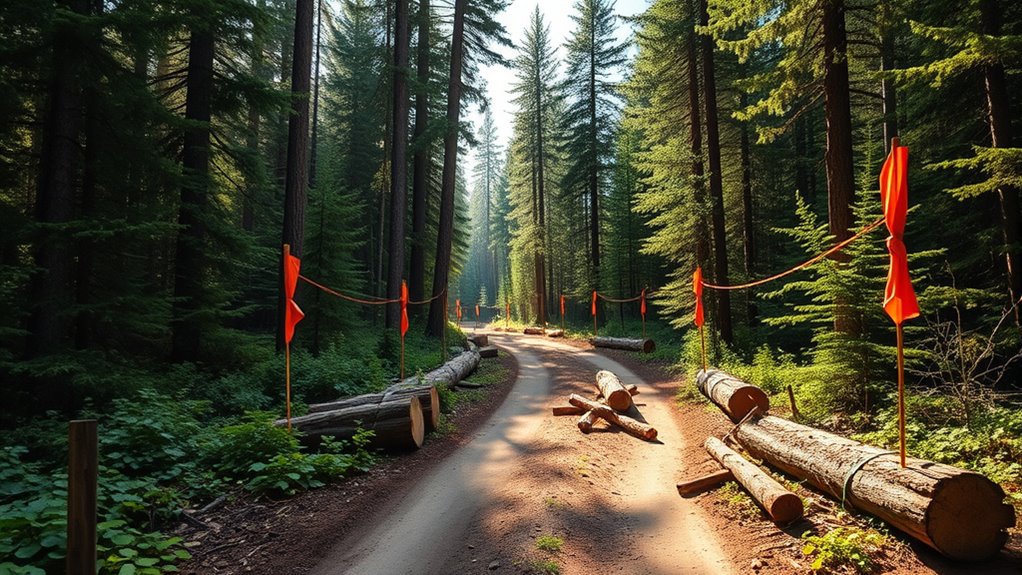

To guarantee safe and efficient skid trails, you should use highly visible markers like bright paint, flags, or signs placed at regular intervals, especially at turns and steep areas. Plan your trail layout to follow natural features, avoid steep slopes, and minimize environmental impact. Mark safety zones with warnings or barriers and consider technology like GPS for accuracy. Continuing past this point will reveal more tips to improve your trail marking and layout process effectively.
Key Takeaways
- Use high-visibility markers like brightly colored paint, flags, or signs at regular intervals along the trail.
- Plan the trail to follow natural features, avoid steep or unstable ground, and minimize environmental impact.
- Mark critical points such as turns, steep sections, and safety zones with additional signs or barriers.
- Utilize GPS technology to ensure precise layout and facilitate progress monitoring and adjustments.
- Conduct trail marking before heavy work begins to enhance clarity, safety, and operational efficiency.
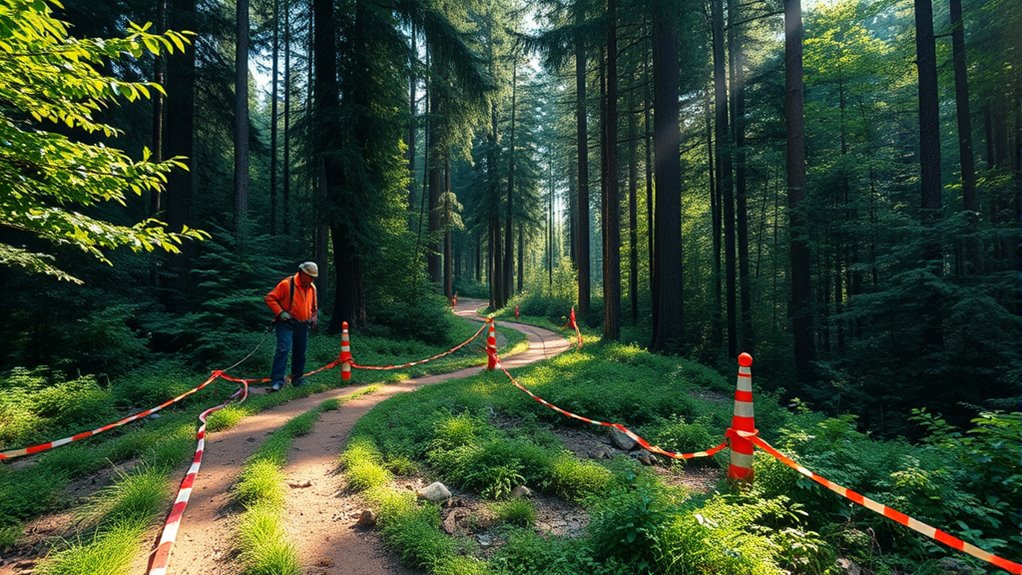
Have you ever wondered how to guarantee skid trails are both efficient and safe? The key lies in careful trail marking and a well-thought-out skid trail layout. When you start planning your skid trail, you need to consider the terrain, the direction of harvest, and safety concerns. Proper trail marking isn’t just about drawing a line; it’s about creating clear indicators that guide machinery and workers, minimizing risks and maximizing productivity. You want the trail markings to stand out, so use highly visible materials like brightly colored paint, flags, or signs. These markers should be placed at regular intervals to ensure the trail is easy to follow and to prevent confusion, especially in dense forest conditions or rugged terrain.
Your skid trail layout should follow a logical pattern that minimizes the amount of extra movement needed for logs. It’s essential to plan routes that avoid steep slopes or unstable ground, which could increase the chance of accidents or equipment damage. A well-designed layout considers the natural contours of the land, aiming to reduce erosion and soil disturbance. You want to create a trail that’s straight enough for efficient operation but flexible enough to adapt to unexpected obstacles like rocks or fallen trees. By doing so, you prevent unnecessary turns or detours that waste time and fuel. When laying out your skid trail, use existing natural features such as ridges or natural corridors to guide your route, keeping the trail as unobtrusive as possible while maintaining safety and efficiency.
During the planning phase, mark your skid trail clearly on the ground or with flags before doing any heavy work. This visual reference helps you and your team understand the intended path and make adjustments if needed. Incorporating technology like GPS mapping can further enhance the accuracy of your layout and help monitor progress throughout the operation. Additionally, incorporate safety zones at critical points, like sharp turns or steep descents, where extra caution is required. These areas can be marked with warning signs or barriers to alert operators. Additionally, ensure your trail layout accounts for environmental impact; avoid sensitive areas and plan for erosion control measures. Proper trail marking combined with an ideal skid trail layout results in smoother operations, fewer accidents, and less environmental disturbance.
Frequently Asked Questions
What Tools Are Best for Marking Skid Trails?
You should use flagging tape and spray paint to mark skid trails effectively. Flagging tape is great for visual cues that are easy to see from a distance, while spray paint provides clear, permanent markings on trees and ground. Together, these tools help you outline safe routes clearly, ensuring workers can easily follow designated paths. Always choose bright, durable colors for maximum visibility and safety.
How Often Should Skid Trails Be Inspected?
Think back to a time when trail maintenance was all about manual effort, like tending to a garden. You should inspect skid trails at least monthly, especially after heavy rain or storms, to prevent erosion and damage. Regular inspections help identify erosion issues early, allowing you to address them promptly and keep the trail sustainable. Consistent monitoring guarantees the skid trail remains safe, functional, and minimizes environmental impact.
What Are Common Mistakes in Trail Layout?
You often make common mistakes in trail layout by not considering trail erosion and wildlife disturbance. For instance, you might choose steep or poorly drained routes that lead to excessive erosion, damaging the trail and nearby environment. Additionally, you may overlook wildlife habitats, causing unnecessary disturbance. To avoid these issues, you should plan routes carefully, avoiding sensitive areas and designing trails that minimize erosion and habitat disruption.
How to Handle Unexpected Obstacles During Marking?
Imagine you’re steering a winding river, and suddenly, a fallen tree blocks your path. You should quickly assess the obstacle, perform obstacle removal if possible, and decide if an alternative routing is needed. Keep safety in mind, communicate with your team, and mark the new trail clearly. Flexibility is key—adapting your plan ensures smooth progress and prevents accidents, much like steering around unexpected rapids to reach your destination safely.
Are There Environmental Regulations for Skid Trail Marking?
Yes, there are environmental regulations for skid trail marking. You should consider wildlife impact and water runoff to minimize ecological disturbance. Use marking methods that reduce habitat disruption and avoid sensitive wildlife areas. Implement erosion control measures to prevent water runoff from contaminating nearby streams. Always follow local regulations and environmental guidelines to protect ecosystems, ensuring your skid trail marking is both safe and environmentally responsible.
Conclusion
By carefully marking and laying out safe skid trails, you protect yourself and your team from accidents. It might seem like a small step, but it can make all the difference in preventing injuries and ensuring everyone gets home safely. Don’t let complacency put lives at risk—your vigilance shows respect for your safety and theirs. Stay diligent, stay safe, and remember that a well-planned trail keeps everyone out of harm’s way.