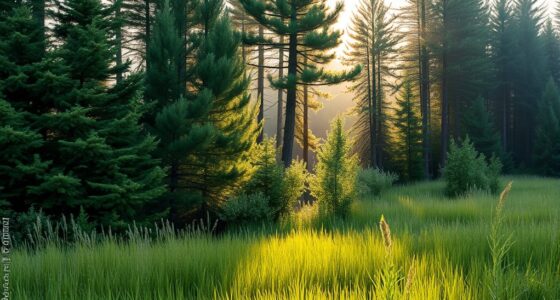
To support biodiversity and ecosystem resilience, it’s important to leave deadwood behind in forests. Deadwood provides essential habitat for insects, fungi, birds, and small mammals, helping them survive and thrive. It also promotes natural regeneration and keeps the forest healthy by recycling nutrients. Instead of removing it, embrace deadwood as a indispensable resource that benefits wildlife and maintains ecological balance. Keep exploring to learn more about how leaving deadwood can make a difference.
Key Takeaways
- Leave deadwood of various sizes and decay stages to support diverse habitat needs.
- Retain standing dead trees and fallen logs as they provide shelter and nesting sites.
- Avoid removing small branches and coarse woody debris critical for fungi and insect communities.
- Incorporate deadwood retention into forest management plans to promote biodiversity.
- Recognize deadwood as a vital resource that enhances ecosystem resilience and long-term forest health.
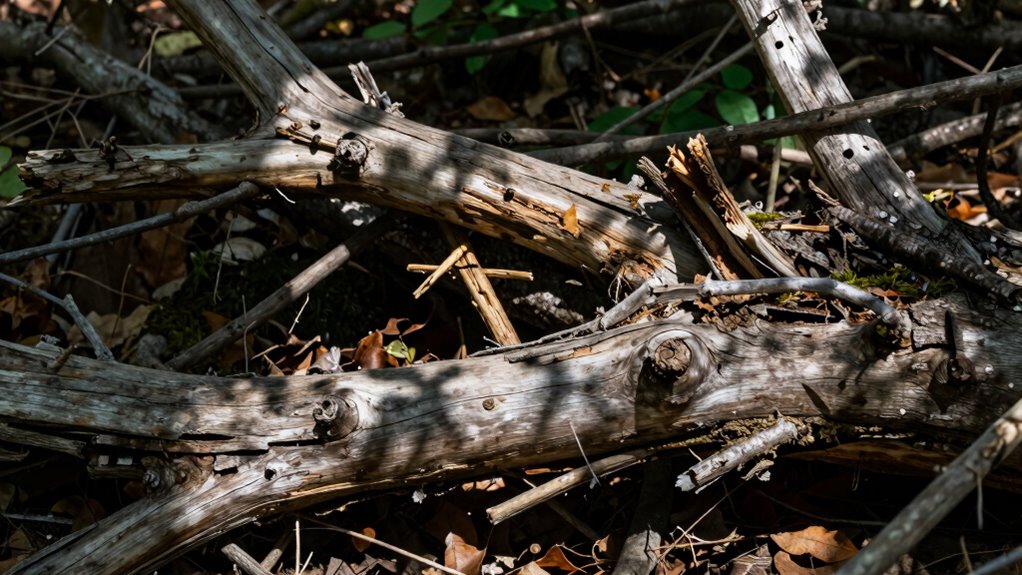
Deadwood plays a crucial role in maintaining healthy habitats for many forest species. When you’re involved in forest management or wildlife conservation, understanding the importance of leaving deadwood behind is essential. Instead of clearing every fallen branch or decayed log, you should recognize that deadwood provides critical resources for countless organisms. It offers shelter, nesting sites, and food for insects, birds, fungi, and small mammals. By preserving these natural features, you help maintain the ecological balance of your forest, ensuring it remains vibrant and resilient.
In your efforts to manage forests sustainably, you might be tempted to remove deadwood to reduce fire risks or maintain aesthetic appeal. However, doing so can inadvertently harm the very ecosystems you’re trying to protect. Deadwood is a cornerstone of biodiversity; it supports decomposers that recycle nutrients back into the soil, fostering healthy plant growth. Many species rely exclusively on deadwood for their habitat needs, and removing it diminishes their survival chances. When you prioritize wildlife conservation, leaving deadwood in place becomes a simple yet powerful strategy. It helps sustain populations of fungi, insects like beetles and termites, and birds that nest in hollow logs or seek insects living within decaying wood.
Leaving deadwood supports biodiversity and vital habitat needs for many forest species.
Moreover, deadwood acts as a natural element of forest management that promotes resilience against pests and diseases. It creates a complex structure within the forest floor, which can slow down the spread of pathogens and prevent monocultures from dominating. By integrating deadwood retention into your management plans, you contribute to a more diverse and stable ecosystem. This approach supports the long-term health of the forest and aligns with conservation goals that aim to preserve native species and natural processes. Deadwood retention is a crucial practice that enhances ecological stability and promotes biodiversity.
When you leave deadwood behind, you also support the larger landscape’s ecological integrity. Deadwood can serve as a seedbed for certain plants and fungi, helping regenerate the forest naturally. It’s a simple step that requires minimal effort but yields significant benefits. As you plan your forestry activities, think about how leaving some deadwood can enhance habitat complexity and contribute to wildlife conservation. It’s about recognizing that what seems like debris is actually a vital resource. Your role isn’t just to manage the forest but to nurture its ecological functions. Embracing deadwood as part of your management strategy ensures that the forest remains a thriving habitat for generations to come.
Frequently Asked Questions
How Does Deadwood Influence Forest Nutrient Cycling?
Deadwood plays a vital role in forest nutrient cycling by undergoing the decay process, which breaks down organic material over time. As it decays, nutrients are released back into the soil, enriching it for plants and microbes. You’ll notice that deadwood acts as a natural nutrient reservoir, supporting forest health. The decay process ensures continuous nutrient availability, making deadwood an indispensable component in maintaining a balanced and thriving forest ecosystem.
Are All Types of Deadwood Beneficial for Habitats?
Not all deadwood benefits habitats equally. Did you know that fungi diversity thrives best in certain types of deadwood, aiding nutrient absorption? You might find that soft, moist logs support more fungi diversity and provide better habitats than dry, decayed branches. While some deadwood offers valuable shelter and nutrients, others may harbor pests or rot issues. So, consider the wood type and condition to maximize habitat benefits for your ecosystem.
What Methods Are Best for Deadwood Removal Without Habitat Loss?
You should prioritize selective timber salvage techniques that remove only necessary deadwood, ensuring habitat preservation. Use careful, targeted removal methods to avoid disturbing the surrounding ecosystem, and leave behind key deadwood that supports biodiversity. Consulting with ecological experts can guide you in balancing timber salvage with habitat needs, preserving essential habitat features while managing deadwood effectively. This approach helps maintain healthy ecosystems without unnecessary habitat loss.
How Long Does Deadwood Typically Remain in a Natural Setting?
Deadwood usually stays in a natural setting for about 10 to 50 years, depending on factors like climate, wood type, and decay stages. You’ll notice it progresses through different decomposition timelines, from fresh to heavily decayed. During this process, it provides essential habitat, so it’s best to leave it undisturbed unless it poses safety concerns. The decay stages reveal how long the deadwood has been part of the ecosystem.
Can Deadwood Help Control Forest Pests Naturally?
Deadwood can indeed help control forest pests naturally by supporting beneficial insects and fungi that prey on pests. You should focus on deadwood cleanup to reduce potential pest habitats while leaving enough to promote natural pest management. By balancing deadwood removal with conservation, you enable a healthy ecosystem that naturally suppresses pest populations, reducing the need for chemical interventions. This approach supports sustainable pest management and maintains forest health.
Conclusion
Just as the ancient forests whisper secrets of resilience and renewal, leaving deadwood behind nurtures the delicate web of life around you. By embracing what seems fallen and lifeless, you honor nature’s quiet wisdom—reminding us that even in death, there’s an essential role to play. So, when you choose to leave deadwood, you’re not just clearing space; you’re inviting a new chapter of growth, echoing the timeless cycle of rebirth that sustains us all.