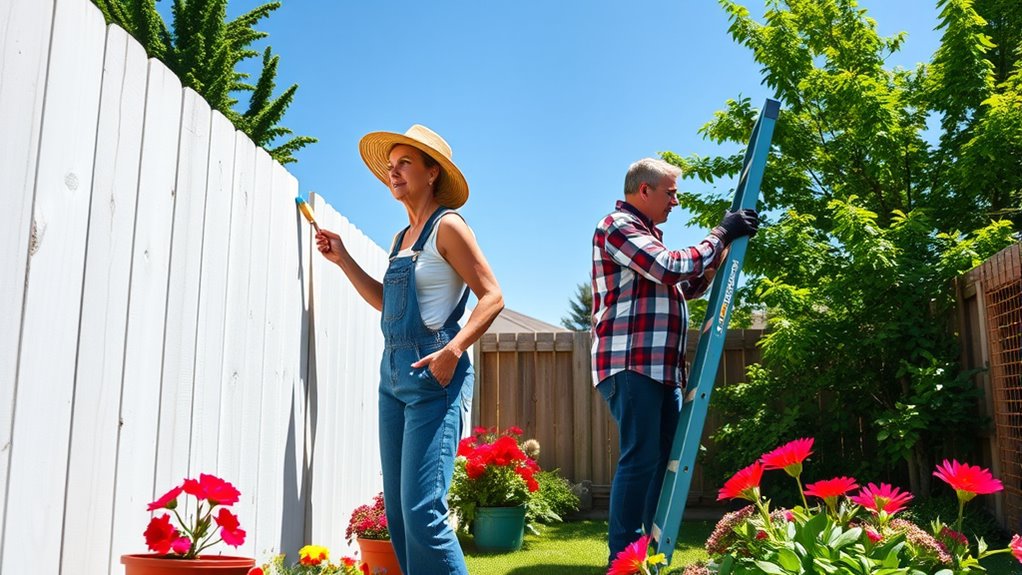

When working with neighbors on shared boundaries, it’s important to start with open, respectful communication. Clearly discuss boundary locations, listen to each other’s concerns, and agree on physical markers like fences or hedges. Keep a record of any agreements and regularly check on the boundary’s condition. Approach the process as a partnership, addressing issues promptly to prevent resentment. Continue exploring these strategies to build a positive, cooperative relationship with your neighbors.
Key Takeaways
- Initiate calm, open conversations early to clarify boundary locations and address concerns respectfully.
- Collaborate on maintaining and repairing physical boundary markers like fences or natural barriers.
- Document boundary agreements and changes to prevent future misunderstandings.
- Approach boundary discussions as a partnership, emphasizing mutual respect and ongoing communication.
- Regularly review and update boundary markers to ensure clarity and prevent conflicts.

Sharing boundaries with neighbors can sometimes lead to misunderstandings or conflicts, but clear communication and mutual respect make the process much smoother. When it comes to boundary maintenance, addressing privacy concerns is often at the heart of many disputes. You might worry about your yard, garden, or personal space being encroached upon, or you may feel that a boundary line isn’t clearly defined, leading to accidental overlaps. Recognizing these concerns early is essential to establishing a cooperative relationship. Instead of assuming intentions, approach your neighbor with an open mind and express your concerns calmly. Clarify where you believe the boundary should be and listen to their perspective. This conversation can prevent conflicts before they escalate and helps both parties understand each other’s expectations.
Maintaining boundaries isn’t just about marking property lines; it’s about respecting each other’s privacy and creating a sense of security. You can work together to identify physical markers such as fences, hedges, or other natural barriers that define your shared space. If existing markers are unclear or damaged, consider jointly investing in new boundary features. Doing so demonstrates your commitment to boundary maintenance and shows that you value your neighbor’s privacy as much as your own. It’s also wise to document boundary agreements in writing, so there’s a clear reference if disagreements arise later. This proactive approach minimizes ambiguity and guarantees everyone’s privacy concerns are acknowledged and addressed.
Communication plays a key role throughout this process. Keep conversations friendly and respectful, even if disagreements surface. If you notice boundary issues, bring them up sooner rather than later to prevent resentment from building. Sometimes, boundary disputes stem from misunderstandings about property lines or misunderstandings about what is acceptable. Clarifying these points can dissolve tensions and foster a cooperative atmosphere. Remember, boundary maintenance isn’t a one-time task; it’s an ongoing effort that requires mutual effort and understanding. Regularly check in with your neighbors, especially after significant changes like planting new trees or installing structures, to make sure boundaries remain clear and respected.
Being aware of your property boundaries and how they are defined can help you better navigate these discussions and ensure that both your needs and your neighbor’s needs are met. Ultimately, working with neighbors on shared boundaries involves balancing your privacy with their rights. By prioritizing open dialogue, respecting each other’s concerns, and actively maintaining boundaries, you can prevent conflicts and build a neighborly relationship based on trust. When both parties approach boundary maintenance as a shared responsibility, it becomes easier to navigate potential issues and enjoy a peaceful, respectful coexistence in your community.
Frequently Asked Questions
How Do I Handle Boundary Disputes Without Escalating Conflicts?
To handle boundary disputes without escalating conflicts, stay calm and communicate openly. Use landscaping tips to improve your yard’s appearance without causing tension, and explore fencing options that clearly define property lines. Respect your neighbor’s perspective, listen actively, and seek compromises. If needed, involve a neutral third party or professional mediator. Remember, patience and understanding go a long way in resolving disagreements peacefully and maintaining good neighborly relations.
What Legal Rights Do I Have Regarding Boundary Disagreements?
Your legal rights regarding boundary disagreements hinge on boundary fencing and property markers. You typically own up to the official boundary line marked by surveys or legal documents, making you responsible for maintaining boundary fencing. If disputes arise, you can seek resolution through local laws or mediation. Remember, ignoring property markers or boundary fencing can lead to costly conflicts—so know your rights and keep the peace.
How Can I Approach Neighbors Who Refuse to Cooperate?
You can start by engaging in neighborly communication; approach them calmly and share your concerns about the boundary. Suggest clear boundary signage to prevent future disputes and show you’re serious about resolving the issue amicably. If they still refuse to cooperate, consider mediating through a community association or seeking legal advice. Staying respectful and constructive encourages cooperation and helps maintain a peaceful neighborhood environment.
Are There Specific Boundary Laws for Urban Versus Rural Areas?
Did you know that boundary laws vary markedly between urban and rural areas? Typically, urban zones have stricter fencing regulations and detailed boundary survey requirements to maintain neighborhood aesthetics, while rural areas often have more flexible rules. You should check local ordinances to understand specific boundary laws for your area, ensuring your fencing complies with regulations and avoids potential disputes. A boundary survey can clarify property lines and help you follow the law properly.
What Mediation Options Are Available for Boundary Disagreements?
You can explore mediation options like hiring a professional mediator or utilizing community dispute resolution services for boundary disagreements. These methods help you and your neighbor work through issues collaboratively, often focusing on boundary markers to clarify property lines. Mediation encourages open communication and mutual understanding, making it easier to find a fair solution without costly legal action. It’s a practical step to resolve disputes calmly and maintain good neighborly relations.
Conclusion
Working with your neighbors on shared boundaries requires communication, respect, and cooperation. By addressing issues openly and maintaining good relationships, you can prevent conflicts and create a harmonious environment. Remember, boundaries are about mutual understanding, not division. So, aren’t strong neighborly ties worth the effort? Building trust today ensures a peaceful, friendly community tomorrow. Embrace collaboration, and watch your neighborhood thrive together.