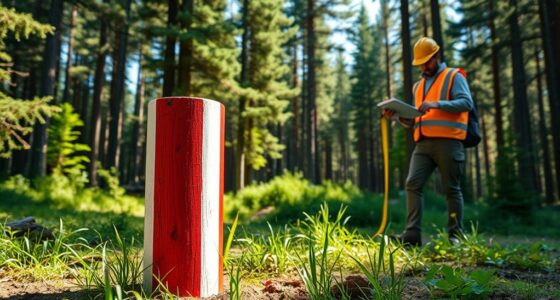
To prevent ruts and erosion on skid trails, plan routes along natural contours and avoid sensitive areas like water bodies and steep slopes. Use existing pathways when possible, and design trails to distribute loads evenly. Regular maintenance, including clearing debris and installing water bars or drainage dips, helps control runoff and stabilize soil. By following these simple steps, you’ll minimize environmental damage while keeping your logging operations efficient—stay tuned to learn more useful strategies.
Key Takeaways
- Design trails along natural contours to reduce soil erosion and prevent water runoff issues.
- Use existing pathways and avoid sensitive areas like water bodies and unstable slopes.
- Regularly inspect and repair washouts, installing drainage features such as water bars and dips.
- Minimize trail length and width to decrease soil disturbance and compacted zones.
- Maintain proper equipment and train crews in environmentally responsible trail management practices.
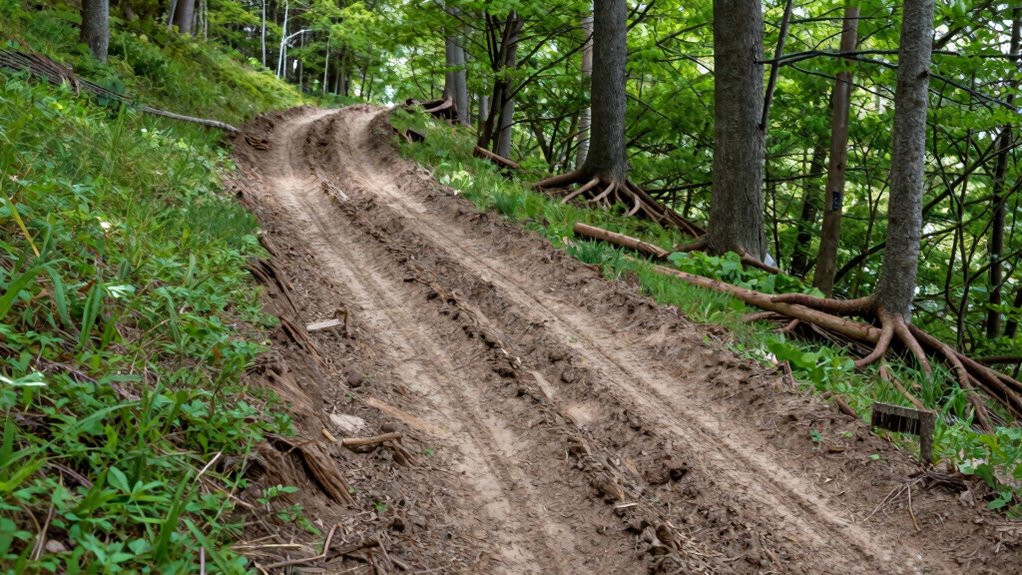
Have you ever wondered how logs are efficiently moved out of a forest? The answer lies in well-designed skid trails, which serve as pathways for logging equipment to transport timber without causing unnecessary damage. Proper planning and management of these trails are essential to minimize environmental impact and ensure the sustainability of forest resources. One critical aspect of maintaining skid trails is equipment maintenance. When your equipment functions smoothly, it reduces the risk of spills, hydraulic leaks, or breakdowns that could lead to soil contamination or unnecessary disturbance to the terrain. Regularly inspecting and servicing your machinery not only boosts productivity but also helps you avoid the environmental pitfalls associated with equipment failure. Keeping machines in top condition means fewer emissions and less fuel consumption, directly reducing your operation’s environmental footprint.
Maintaining equipment ensures smoother operations and minimizes environmental risks in forest logging.
As you develop skid trails, it’s vital to consider their placement carefully. Well-planned trails follow natural contours and avoid sensitive areas, such as water bodies or unstable slopes. This strategic planning helps prevent erosion and sediment runoff, which can degrade water quality downstream. When you use existing pathways or minimize trail length, you also lessen the overall disturbance to the forest floor. Properly designed skid trails distribute loads evenly across the terrain, reducing soil compaction and rutting, which can lead to long-term erosion problems. This approach not only preserves the health of the forest but also makes future logging operations more efficient.
During active logging, maintaining skid trail conditions is crucial. Regularly clearing debris, fixing washouts, and controlling water flow on trails prevents erosion and minimizes environmental impact. Installing water bars or drainage dips can effectively divert runoff, protecting the soil from washing away. These measures, combined with ongoing equipment maintenance, ensure your skid trails remain stable and functional throughout the harvest. Moreover, training your crew on best practices for trail use and maintenance helps reinforce the importance of minimizing environmental harm. When everyone understands how their actions influence the landscape, your operation becomes more sustainable and aligned with environmental stewardship.
In the end, the key to successful skid trail management is balancing operational efficiency with environmental responsibility. Proper equipment maintenance ensures your machinery runs smoothly and reduces potential hazards, while thoughtful trail planning and upkeep limit erosion and soil disturbance. By prioritizing these practices, you’re not just moving logs more effectively—you’re also protecting the forest for future generations. With careful attention to trail design, ongoing maintenance, and equipment care, you can optimize your logging process and reduce the ecological footprint of your operations, making your timber harvesting both productive and environmentally conscious.
Frequently Asked Questions
How Do Weather Conditions Affect Skid Trail Maintenance?
Weather conditions greatly impact skid trail maintenance. Heavy rain increases soil moisture, leading to soil compaction and erosion, so you need to focus on moisture management to prevent ruts. During dry periods, soil becomes loose and more prone to erosion, requiring you to reinforce trail surfaces. By adapting your maintenance practices to weather patterns, you can effectively reduce ruts and erosion, ensuring your skid trail remains stable and sustainable.
What Are the Best Tools for Repairing Skid Trails?
Did you know that proper trail reclamation can reduce erosion by up to 80%? For repairing skid trails, you’ll want a sturdy shovel, rake, and sometimes a lightweight bulldozer or skid steer for larger areas. Use erosion control techniques like installing waterbars and spreading seed to stabilize the soil. These tools and methods help restore the trail, prevent further damage, and guarantee sustainable trail management.
How Often Should Skid Trails Be Inspected for Damage?
You should inspect skid trails at least every few weeks, especially after heavy rain or storms. During these inspections, focus on trail marking and erosion control issues like ruts, gullies, or displaced soil. Regular checks help catch damage early, allowing you to address erosion problems before they worsen. Consistent inspections guarantee your skid trails remain stable, minimize environmental impact, and maintain safe, effective access for future logging or forestry activities.
Can Alternative Trail Designs Reduce Erosion Risks?
Sure, because who wouldn’t want trails that fight erosion like superheroes? By designing alternative trails with vegetation reinforcement and smart drainage solutions, you can markedly cut erosion risks. These design tweaks help water flow away properly and keep soil intact. So, next time you plan a trail, give erosion the boot with clever layouts—your future self will thank you for avoiding muddy messes and maintaining healthier terrain.
What Training Is Recommended for Operators to Prevent Trail Damage?
You should receive training focused on operator safety and proper equipment handling before working on skid trails. This training teaches you how to operate machinery efficiently while minimizing trail damage. It covers safe practices, understanding soil conditions, and how to avoid rutting and erosion. By mastering these skills, you’ll protect the environment and ensure trail longevity, all while maintaining safety standards during your operations.
Conclusion
By following these skid trail tips, you’ll reduce ruts and erosion, protecting the land for future use. Remember, a stitch in time saves nine—taking care now prevents bigger problems later. Stay proactive, keep your trails well-maintained, and respect the environment. With consistent effort, you’ll create sustainable, healthy trails that stand the test of time. After all, an ounce of prevention is worth a pound of cure, so keep your skid trails in top shape.