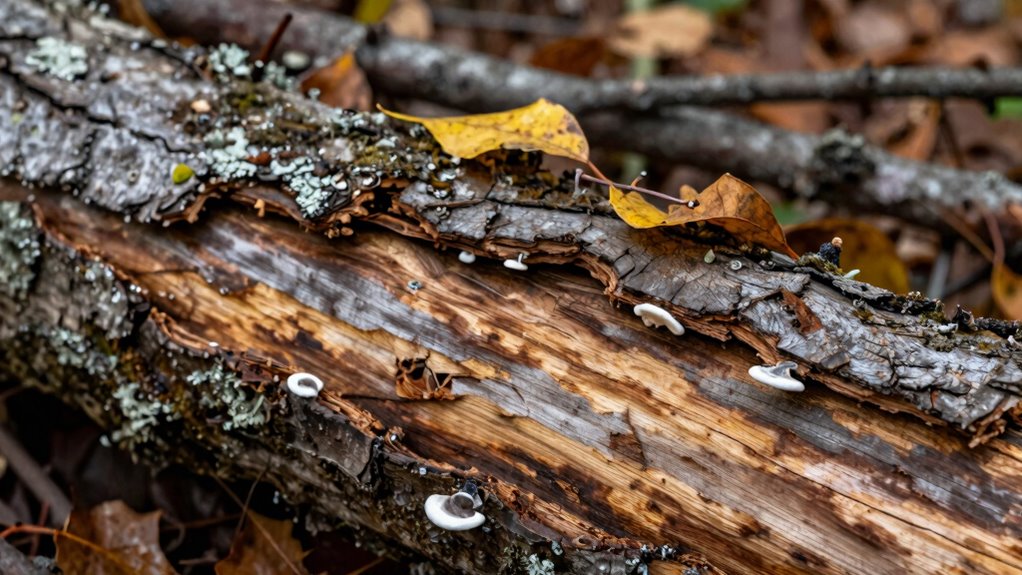

When selecting firewood, look for signs like discolored leaves, dying branches, or patches of dead wood that indicate disease. Check the bark for peeling, cracking, or oozing, which signal health issues. Watch for small holes, sawdust, or honeydew around the tree, revealing pest activity. Notice any fungal spots or decayed areas that suggest poor quality or compromised wood. Recognizing these clues helps guarantee you choose healthy, efficient firewood—keep exploring to learn more.

Get business pricing on tools and workshop supplies
- Business-only prices and quantity discounts
- Tax-exempt purchasing
- Multiple users, one account, clear invoices
Key Takeaways
- Look for discolored, peeling, or cracking bark indicating underlying health issues.
- Identify fungal growth, such as white or black spots, on trunk or branches.
- Detect small holes, sawdust, or honeydew as signs of pest activity.
- Assess wood for decay, rot, or softness to ensure quality firewood.
- Observe overall tree vigor and structural integrity before harvesting.

Have you ever wondered how to tell if a tree is healthy or in trouble? As a firewood cutter, spotting the signs of a struggling tree can save you from wasting effort on wood that’s past its prime. One of the key clues lies in observing disease symptoms. Healthy trees typically have vibrant, uniform foliage and firm, intact bark. If you notice discolored leaves, withering branches, or patches of dead or decaying wood, these are red flags indicating underlying health issues. Fungal growth, such as white or black spots on the trunk or branches, often signals disease presence. Additionally, if the bark is peeling excessively, cracking, or shows signs of oozing sap, it’s a sign that the tree may be battling a serious problem. Recognizing these disease symptoms helps you determine whether the wood is worth harvesting or if the tree is compromised. Being familiar with tree health indicators can further enhance your ability to assess a tree’s condition accurately. Pest indicators are just as vital in evaluating tree health. As you approach a tree, look for signs of pest activity. Small holes in the bark can suggest borers or beetles tunneling inside. Sawdust-like frass around the base or on branches indicates that insects, like wood-boring beetles, are active within the tree. You might also notice sticky residues or honeydew, which are secretions from aphids or scale insects, attracting sooty mold that further weakens the tree. Leaf discoloration, curling, or premature leaf drop can also point to pest infestations. If you spot these pest indicators early, you can avoid harvesting wood from trees that are heavily infested, as their structural integrity is often compromised, making the wood less safe and less efficient for burning. Additionally, understanding pest activity patterns can help you time your harvests more effectively. Monitoring signs of decay can also assist in identifying trees that are no longer suitable for firewood, ensuring you only harvest healthy, quality wood. Paying close attention to decay progression can further prevent you from selecting compromised wood that burns inefficiently or produces excess smoke.
As an affiliate, we earn on qualifying purchases.
Frequently Asked Questions
How Can I Distinguish Between Healthy and Diseased Tree Bark?
To distinguish healthy from diseased tree bark, examine the bark texture and appearance. Healthy bark is usually firm, with consistent color and cracks or scales that are uniform. Diseased bark may appear flaky, discolored, or swollen, and could have oozing sap or unusual growths. Look for areas where the bark is missing or damaged, which can indicate disease or pest issues. Your keen eye helps identify signs of tree health or trouble.
What Signs Indicate a Tree Is Infested With Pests?
You should look for pest identification clues like tiny holes in bark, sawdust-like frass, or sticky sap oozing from the tree. Infestation signs often include wilting leaves, unusual branch dieback, or rapid canopy decline. When investigating, trust your observations and verify if these signs match common pests. Recognizing these early indicators helps you catch infestations quickly, protecting your trees and ensuring healthy firewood for years to come.
Are Leaf Color Changes Reliable Indicators of Tree Health?
Leaf color changes can be a helpful indicator of tree health, but they’re not always reliable on their own. Leaf discoloration may result from nutrient deficiencies, pests, or diseases, so it’s essential to look for other signs like wilting or unusual spots. If you notice persistent color changes, consider testing the soil or consulting an arborist to determine if nutrient deficiencies or other issues are affecting your tree’s health.
How Does Soil Condition Affect Tree Vitality?
Imagine your tree is throwing a party, but the soil is the guest list—if it’s missing vital nutrients and moisture, the party’s a flop. Poor soil conditions strip away essential soil nutrients and reduce moisture levels, leaving your tree starved and parched. This weakens its energy, making it susceptible to disease and pests. To keep your tree thriving, you need healthy soil that’s rich in nutrients and retains adequate moisture.
Can Damaged Roots Be Identified From the Trunk?
Yes, damaged roots can be identified from trunk inspection. Look for signs like cracks, wounds, or swelling on the trunk near the base, which often indicate root issues. If you notice uneven growth or cavities, it may also suggest root damage. By closely examining these trunk features during your inspection, you can assess the health of the roots below and determine if they need attention or further investigation.
Conclusion
Just like a seasoned detective spots clues others miss, you can notice the subtle signs of tree health. I once saw a neighbor’s firewood pile riddled with fungal growth—turns out, that tree was battling unseen pests. Remember, paying attention to these tiny details can prevent bigger problems down the line. Think of yourself as a tree’s health detective; catching issues early keeps your firewood—and your trees—strong and ready for winter’s chill.
Columbus Day / Indigenous Peoples' Day Picks
long weekend sales
As an affiliate, we earn on qualifying purchases.