
TL;DR

Get business pricing on tools and workshop supplies
- Business-only prices and quantity discounts
- Tax-exempt purchasing
- Multiple users, one account, clear invoices
Birdbuddy has launched its Nook smart bird feeder, a smaller, lower-priced model starting at $99, after announcing it at CES 2026 under the name Birdbuddy 2 Mini. It has a 2K HDR camera and a 3.8-cup seed reservoir; solar and larger-perch versions cost more. The company has also launched the $219 Birdbuddy Home.
Birdbuddy has launched the Nook, a compact smart bird feeder that starts at $99 and is designed for smaller spaces and lower budgets. Announced earlier this year at CES 2026 as the Birdbuddy 2 Mini, the Nook pairs a 2K HDR camera with an app that uses AI to identify visiting bird species.
The Nook’s circular camera has a 135-degree field of view and wakes when a bird lands, according to Birdbuddy’s product details. It can record in landscape or portrait orientation, giving users a choice of formats for photos and videos. The feeder has a 3.8-cup seed reservoir, which may call for more frequent refills when visits are common.
Birdbuddy is also selling two higher-priced Nook configurations. The Nook Solar costs $159 and adds a solar panel to the roof; the $199 Nook Extended Edition adds a larger perch. The company’s product information does not state how much either option changes day-to-day performance under particular conditions.
The larger Birdbuddy Home costs $219. It uses the same 2K HDR camera and field of view as the Nook, but has a six-cup seed reservoir, two solar panels on top and a built-in perch extender. Birdbuddy also lists dual-band Wi-Fi and an upgraded microphone intended to help the app identify species from birdsong. The company says the solar panels can help keep the battery charged when the feeder is installed in a sufficiently sunny spot.
A Lower-Cost Route to Bird Cameras
The Nook gives shoppers a $99 entry point to Birdbuddy’s camera-equipped feeders, below the $219 price of the Home model. That may make the company’s app-based bird identification and visit recordings more accessible to people with less room, a smaller budget or no need for a larger feeder.
The product line also makes the trade-offs visible before purchase: the base Nook has a smaller seed capacity, while buyers pay more for solar charging or a larger perch. The Home’s larger reservoir and included solar panels offer a different setup, though its panels still depend on suitable sunlight. Birdbuddy has not provided comparative tests or usage data showing how the models perform across different gardens and conditions.
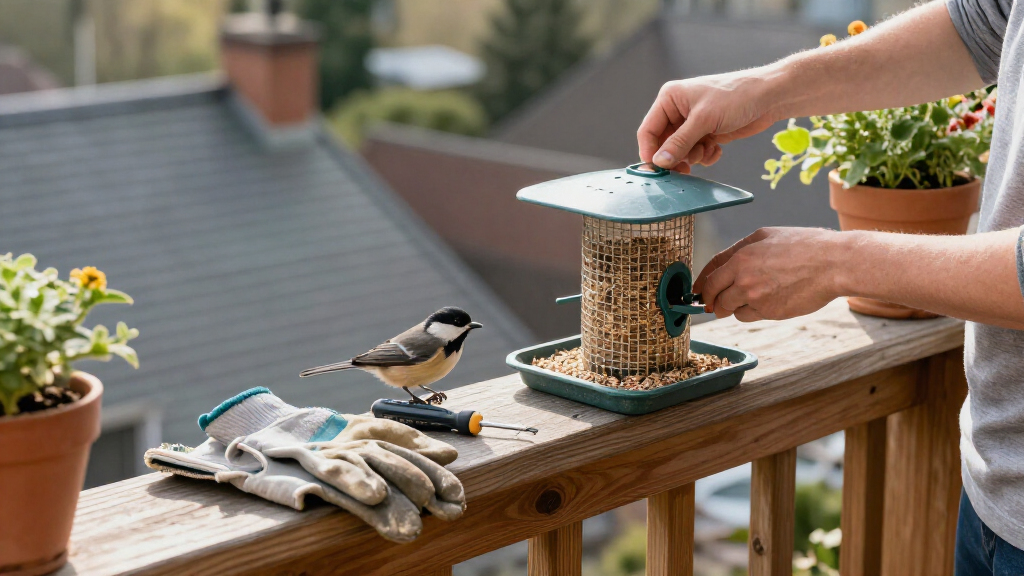
Birdbuddy Nook smart bird feeder with camera
As an affiliate, we earn on qualifying purchases.
As an affiliate, we earn on qualifying purchases.
From CES Names to Store Models
Birdbuddy introduced the two feeders at CES 2026 earlier this year. The smaller Birdbuddy 2 Mini is now the Nook, while the flagship Birdbuddy 2 has been renamed the Home. The launch therefore brings previously announced products to sale under updated names, rather than introducing an entirely new pair of devices.
Both models are available through Birdbuddy’s online store. The original report says some configurations are expected at other retailers later this month, but does not specify which versions or name the retailers. The Nook and Home share the same camera specifications, while the Home adds capacity and other features aimed at a larger installation.
““most accessible smart bird feeder yet.””
— Birdbuddy
Performance Depends on Placement
Birdbuddy’s launch details do not provide battery-life figures, charging estimates or camera-recording limits. Actual solar charging will depend on where a feeder is placed and how much sun reaches its panels; the company’s material does not quantify those conditions. It is also unclear how often the Nook’s 3.8-cup reservoir would need refilling for different levels of bird activity.
The reported retailer availability is described only as coming later in the month, without a specific date or list of participating stores. No independent performance results are included in the source material, so claims about species identification and birdsong recognition are product descriptions rather than independently verified test findings.
Retail Availability and Field Use
Birdbuddy’s next stated distribution step is to make some configurations available through other retailers later this month; the company has not identified the versions or a firm date in the reported information. For now, shoppers can order the Nook and Home through Birdbuddy’s online store.
Further practical details are likely to depend on use after launch, including how reliably the cameras capture visits, how accurately the app identifies species and how well solar charging works at different locations. Birdbuddy has not announced a specific date for additional updates or testing data.
Key Questions
How much does the Birdbuddy Nook cost?
The standard Nook starts at $99. The Nook Solar costs $159, and the Nook Extended Edition costs $199.
What is the difference between the Nook and the Home?
The Nook is smaller and has a 3.8-cup reservoir. The $219 Home has a six-cup reservoir, two roof-mounted solar panels, a built-in perch extender, dual-band Wi-Fi and an upgraded microphone, according to Birdbuddy’s product details.
What camera does the Nook use?
The Nook has a circular 2K HDR camera with a 135-degree field of view. It can record in landscape or portrait orientation and is designed to wake when a bird lands.
Where can customers buy the feeders?
Both models are available through Birdbuddy’s online store. The original report says some configurations are expected at other retailers later this month, but does not specify which ones.
Source: rss
Fall Picks
fall essentials
As an affiliate, we earn on qualifying purchases.