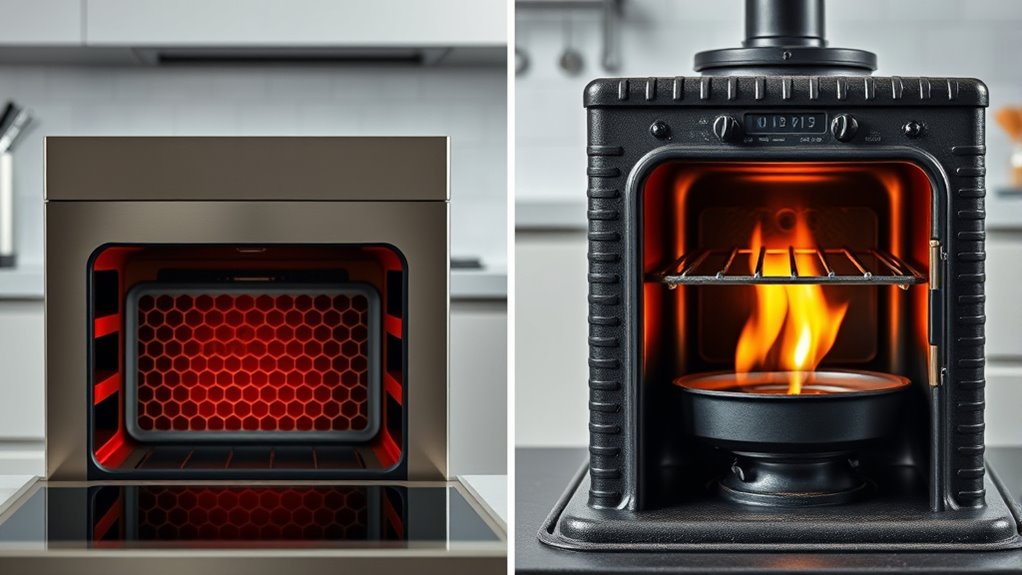

Catalytic stoves use a special catalyst to burn gases more completely, making them highly efficient and eco-friendly, but they require regular maintenance and catalyst replacement. Non-catalytic stoves rely on high temperatures and airflow, offering simpler operation with slightly lower efficiency and potentially more emissions. Your choice depends on whether you prefer a low-maintenance option or want maximum fuel savings. To understand which type suits your lifestyle best, explore the details behind how they work.

Get business pricing on tools and workshop supplies
- Business-only prices and quantity discounts
- Tax-exempt purchasing
- Multiple users, one account, clear invoices
Key Takeaways
- Catalytic stoves use a ceramic or metal catalyst to facilitate complete combustion, increasing efficiency and reducing emissions.
- Non-catalytic stoves rely on high temperatures and airflow without a catalyst, often requiring more airflow for combustion.
- Catalytic models typically offer higher efficiency and cleaner burning but need regular maintenance and catalyst replacement.
- Non-catalytic stoves are simpler to operate and maintain, with straightforward cleaning but may be slightly less efficient.
- Both types generate reliable heat, but their working mechanisms influence efficiency, maintenance, and environmental impact.
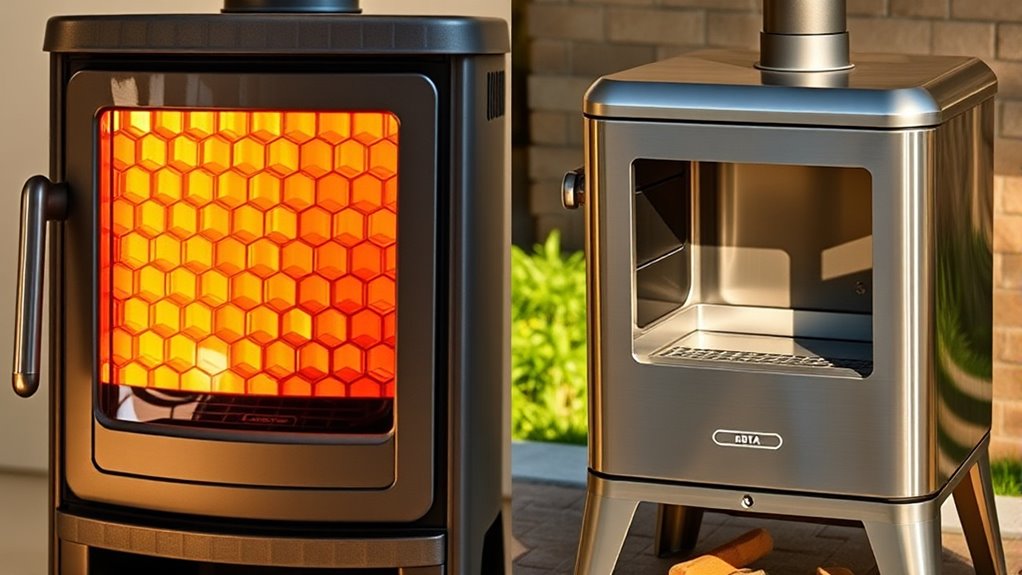
When choosing a stove for your home, understanding the differences between catalytic and non-catalytic models can help you make an informed decision. One of the key factors to contemplate is how efficiently each type converts fuel into heat, which directly impacts your energy bills and environmental footprint. In terms of efficiency comparison, catalytic stoves tend to be more efficient because they use a catalyst—usually made of ceramic or metal—to facilitate a chemical reaction that burns the smoke and gases more completely. This means you get more heat from less fuel, making them cost-effective over time. Non-catalytic stoves, on the other hand, rely solely on high temperatures and good airflow to burn fuel. They may have a slightly lower overall efficiency because some gases escape unburned, but modern designs have improved their performance, making them a solid choice for those prioritizing simplicity and cost.
Catalytic stoves are more efficient, using a catalyst to burn gases fully and save fuel over time.
Maintenance considerations also differ profoundly between these two stove types. Catalytic models require more attentive upkeep to keep the catalyst functioning properly. Over time, the catalyst can become clogged or coated with creosote, reducing efficiency and increasing emissions. Regular inspections and periodic cleaning are necessary to ensure the catalyst remains effective. You’ll need to replace the catalyst eventually, which can add to your maintenance costs. Non-catalytic stoves are generally easier to maintain because they don’t contain moving parts or catalysts that need replacement. You’ll still need to clean the firebox, chimney, and ash pan regularly, but the process is straightforward and less costly overall.
Additionally, catalytic stoves often have a longer lifespan if properly maintained, as the catalyst helps keep the combustion process cleaner. However, neglecting maintenance can lead to decreased performance or damage, which might require costly repairs or replacements. Non-catalytic models, while simpler to care for, may not last as long if not properly cleaned, and their efficiency can drop if soot or creosote buildup hampers airflow.
Ultimately, your choice depends on your priorities. If you want a stove that’s highly efficient and willing to commit to regular maintenance, a catalytic model might suit you best. If you prefer a more straightforward, low-maintenance option that still provides reliable heat, a non-catalytic stove could be the way to go. Both types have their strengths, but understanding how they compare in efficiency and maintenance helps you pick the right fit for your home and lifestyle.
catalytic stove replacement catalyst
As an affiliate, we earn on qualifying purchases.
As an affiliate, we earn on qualifying purchases.
Frequently Asked Questions
Do Catalytic Stoves Produce More Emissions Than Non-Catalytic Stoves?
No, catalytic stoves don’t necessarily produce more emissions than non-catalytic stoves. In fact, they often meet stricter emission standards because the catalyst helps burn off pollutants more efficiently. However, if the catalyst’s lifespan is compromised or it’s poorly maintained, emissions can increase. Regular maintenance guarantees your catalytic stove operates cleanly and complies with emission standards, keeping emissions low and performance high.
Can Non-Catalytic Stoves Operate Efficiently Without a Catalyst?
Like a ship without a compass, a non-catalytic stove can operate efficiently, but only within its limitations. Without a catalyst, catalytic efficiency drops, and emissions may increase. Non-catalytic stoves rely on preheated air and combustion control, but they face non-catalytic limitations that can hinder performance and cleanliness. While they work, their efficiency isn’t as refined, making them less effective for environmentally conscious heating.
Which Stove Type Is Better for Outdoor Camping?
For outdoor camping, a non-catalytic stove is your best choice because it offers portable options and high fuel efficiency. You’ll find it easier to use and maintain, making it ideal for quick setups and frequent use. Plus, its simplicity means less hassle in the wilderness. While catalytic stoves are more efficient long-term, non-catalytic models give you reliable performance and convenience, perfect for camping trips where portability matters most.
How Often Do Catalytic Converters Need Replacement?
You typically need to check your catalytic converter’s condition during regular maintenance, which is usually every 1 to 2 years. The replacement schedule depends on usage and maintenance frequency; most last around 5 years, but heavy use or neglect can shorten their lifespan. Keep an eye out for reduced efficiency or strange odors, and consult your stove’s manual for specific guidance on when to replace your catalytic converter.
Are Non-Catalytic Stoves More Affordable to Maintain?
Yes, non-catalytic stoves are generally more affordable to maintain. Their lower maintenance costs come from simpler designs and fewer parts that need regular replacement, unlike catalytic stoves that require catalyst replacements over time. When comparing costs, non-catalytic models usually have a lower overall cost comparison for upkeep. If budget is a concern, opting for a non-catalytic stove can save you money in the long run.
Conclusion
Now that you understand the differences, imagine yourself cozying up by the fire, knowing whether your stove uses a catalytic converter or not. Some worry about maintenance, but both types create warm, inviting spaces. Think of a catalytic stove as a skilled chef, transforming fuel into heat smoothly, while a non-catalytic one is like a steady artist, burning consistently. Either way, you get a reliable, comforting fire—so choose what makes you feel safest and most comfortable.
Fall yard work Picks
leaf blowers
As an affiliate, we earn on qualifying purchases.