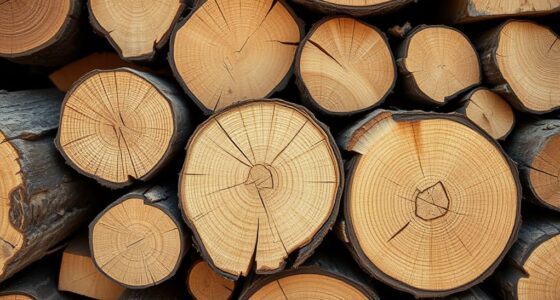
For ideal stove efficiency, aim for firewood that’s around 16 to 18 inches long with split logs measuring 3 to 6 inches in diameter. Make sure your wood is well-seasoned, with a moisture content of about 20% or less, for cleaner, more efficient burning. Properly sized and dried wood burns hotter, produces less creosote, and helps your stove operate smoothly. Keep exploring to discover more tips for maximizing your firewood’s performance.
Key Takeaways
- Use firewood around 16 to 18 inches in length for best stove operation.
- Split logs into 3 to 6 inches diameter for even burning and faster drying.
- Properly seasoned wood (around 20% moisture) burns more efficiently and reduces creosote buildup.
- Cutting and splitting wood increases surface area, speeding up drying and improving combustion.
- Store firewood in a dry, ventilated area off the ground to maintain low moisture and ensure optimal burning.

Have you ever wondered what the ideal size for firewood should be? When it comes to burning wood efficiently, size plays a vital role. The right-sized logs not only help your stove operate smoothly but also guarantee you get maximum heat output with minimal smoke and creosote buildup. One important factor to consider is moisture content, which directly impacts how the wood burns and how much heat it produces. Freshly cut wood, often called green wood, contains high moisture levels, making it difficult to ignite and causing inefficient combustion. That’s why wood seasoning is necessary. Properly seasoned firewood has a moisture content of around 20% or less, which means it’s been dried out sufficiently to burn cleanly and efficiently.
When selecting firewood size, it’s best to cut logs to manageable pieces that facilitate thorough drying and easy handling. Typically, logs around 16 to 18 inches long are ideal for most residential stoves and fireplaces. These dimensions allow you to stack the wood properly, promoting good airflow and faster seasoning. Smaller pieces, like split logs measuring 3 to 6 inches in diameter, are easier to ignite and tend to burn more evenly. They also allow the fire to reach the higher temperatures necessary for complete combustion, reducing smoke and creosote buildup in your chimney. Larger logs, while they can store more energy, often take longer to dry and may not burn as efficiently if not properly seasoned.
Cutting wood to an appropriate size also helps with wood seasoning. Smaller logs and split pieces dry out faster because of their increased surface area. When you cut your firewood to the right size, you promote better airflow around each piece and facilitate faster moisture evaporation. It’s recommended to split larger logs into smaller chunks once they’re cut to size, as this accelerates drying and ensures the wood reaches the ideal moisture content. Proper wood storage in a dry, ventilated area further enhances drying efficiency. Keep in mind that stacking your firewood off the ground and in a sunny, well-ventilated area will further speed up seasoning. Properly sized and seasoned firewood burns hotter, produces less creosote, and minimizes the buildup of residue in your stove or chimney.

Smoak Firewood’s 16inch Length Premium USDA Certified Kiln Dried Cooking Wood & Firewood Logs – Used for Grills, Smokers, Pizza ovens, stoves, firepits or fireplaces (Maple – 60-70lbs 16inch Wood)
- Length: 16-inch maple firewood logs
- Weight: 60-70 pounds per box
- Certification: USDA certified kiln dried
As an affiliate, we earn on qualifying purchases.
As an affiliate, we earn on qualifying purchases.
Frequently Asked Questions
How Does Wood Moisture Content Affect Optimal Size?
You should cut wood with higher moisture content into smaller pieces because wetter wood burns less efficiently and produces more smoke. Smaller sizes help the moisture evaporate faster, improving wood burning efficiency. When the moisture content is low, you can use larger pieces without sacrificing performance. Always aim for seasoned firewood with low moisture content to maximize stove efficiency and ensure a cleaner, more efficient burn.
What Types of Wood Are Best for Specific Stove Sizes?
If you want maximum efficiency, seasoned hardwoods like oak or maple are your best bet for most stove sizes, especially larger ones. They burn longer and produce more heat, making them ideal. Softwoods like pine are better suited for smaller stoves or quick fires. Always choose wood based on your stove’s size and your heating needs, but never underestimate the power of properly seasoned hardwood for consistent, reliable warmth.
Can Improper Wood Size Cause Stove Damage?
Yes, improper firewood size can cause stove damage. Using wood that’s too large or too small can lead to inefficient burning, creosote buildup, and even damage to your stove’s components. To prevent this, make certain your firewood is well-seasoned, properly sized, and follow safety precautions during handling. Properly sized and seasoned firewood promotes safe, efficient burning and helps maintain your stove’s longevity.
How Do I Measure Wood Length Accurately?
You measure wood length accurately by using measurement tools like a tape measure or a ruler. Stick to standard wood length standards, typically 16 inches or 18 inches, depending on your stove’s specifications. Place the wood on a flat surface and measure from end to end, guaranteeing the measurement aligns with your stove’s requirements. Proper measurement helps prevent damage and ensures efficient burning.
Does Wood Size Impact Emissions and Air Quality?
Imagine you’re burning wood in your stove, and larger logs produce more emissions because they burn less efficiently. Yes, wood size impacts emissions and air quality; bigger logs can lead to more smoke and pollutants. Smaller, well-seasoned pieces burn cleaner, aiding emission reduction and improving air quality. So, by choosing the right size, you help reduce harmful air pollutants and contribute to a healthier environment.
Conclusion
Choosing the right firewood size is like tuning a beautiful instrument—you’ll find harmony in every crackle and glow. When you select logs that fit just right, your stove breathes easier, dancing with warmth and efficiency. Smaller pieces ignite faster, while larger ones burn steady and strong. So, chop wisely, and let your firewood’s rhythm fill your home with cozy, radiant music—your stove’s perfect tune for a warm, inviting night.