
To prevent stove rust during the off-season, thoroughly clean and dry all surfaces to eliminate moisture. Use moisture absorbers like silica gel packs inside compartments and cover the stove with breathable covers, avoiding plastic ones that trap humidity. Regularly inspect for rust spots and address any early signs promptly. Keep the storage area dry and well-ventilated. If you want to discover more tips to keep your stove in top shape, keep exploring.

Get business pricing on tools and workshop supplies
- Business-only prices and quantity discounts
- Tax-exempt purchasing
- Multiple users, one account, clear invoices
Key Takeaways
- Thoroughly clean and dry the stove before storage to prevent moisture buildup.
- Use breathable covers and moisture absorbers like silica gel packs to reduce humidity exposure.
- Regularly inspect for rust or damage during the off-season and address issues promptly.
- Store the stove in a dry, well-ventilated area to minimize exposure to humidity.
- Apply a thin layer of stove-safe protectant or lubricant on metal parts before long-term storage.

When you’re not using your stove during the off-season, it’s essential to take steps to prevent rust from forming. The longer your stove sits unused, the higher the chance that moisture will build up, leading to rust and corrosion. To keep your appliance in top shape, start with thorough stove cleaning. Remove any spills, grease, or food residues that could trap moisture. Use a gentle, non-abrasive cleaner to wipe down all surfaces, including burners, grates, and control knobs. Dry everything completely before putting the stove away. Moisture is a primary culprit in rust formation, so eliminating any dampness during cleaning is crucial.
Thoroughly clean and dry your stove before storing to prevent rust during the off-season.
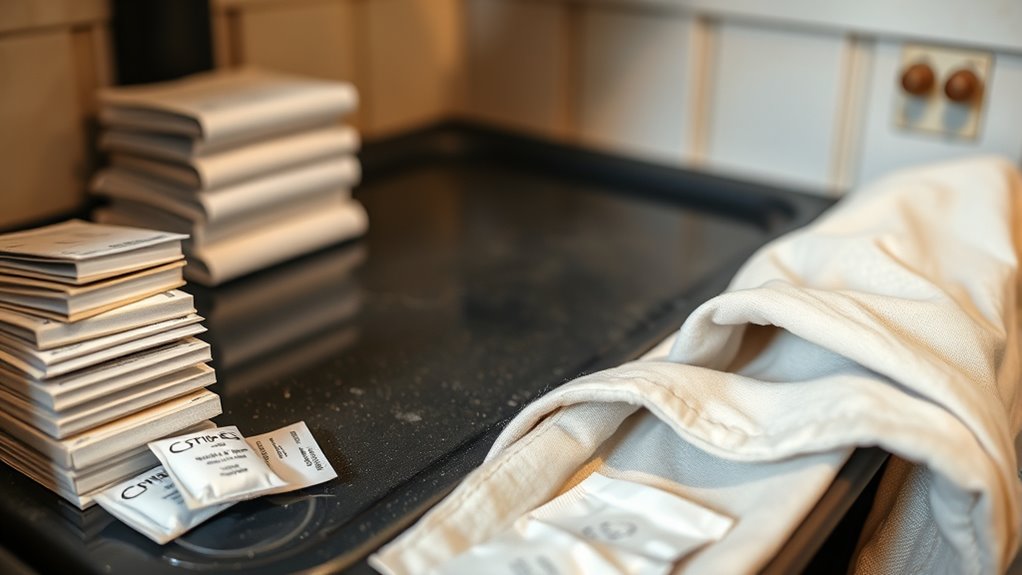
Next, focus on rust prevention by protecting your stove from humidity during the off-season. If your kitchen is prone to high humidity, consider using silica gel packs or moisture absorbers inside the stove compartment or nearby cabinets. These help reduce moisture levels and create an inhospitable environment for rust. Cover your stove with a breathable, stove-specific cover or a clean cloth that allows air circulation but keeps dust and moisture out. Avoid using plastic covers that trap moisture underneath, as they can promote rust instead of preventing it.
Another vital step is to inspect the stove for any signs of existing rust or damage. If you notice rust spots, address them promptly. Light rust can often be removed with a mixture of baking soda and water or a rust remover suitable for appliances. After removing rust, apply a thin layer of stove-safe protectant or lubricant to metal parts. This creates a barrier against moisture and further rust development. Regularly check your stove during the off-season to catch any early signs of rust or moisture buildup.
It’s also a good idea to keep your kitchen environment dry. Run a dehumidifier if necessary, especially in damp climates, to prevent excess moisture in the air. Additionally, proper ventilation helps reduce humidity and protects your stove from rust formation. When you’re ready to use your stove again, give it a quick clean and inspect for any rust or damage before firing it up. Proper stove cleaning and rust prevention during the off-season extend the lifespan of your appliance and keep it looking and functioning like new. Taking these simple precautions now saves you time and money later, ensuring your stove remains in excellent condition no matter how long it sits unused.
As an affiliate, we earn on qualifying purchases.
Frequently Asked Questions
Can Using a Cover Completely Prevent Stove Rust?
Using a stove cover can greatly help with rust prevention, but it may not completely prevent rust on its own. A good stove cover shields your appliance from moisture and dust, which are key factors in rust formation. However, for best results, you should also keep the stove dry and clean, especially during the off-season. Combining these practices ensures your stove stays rust-free longer and maintains its appearance.
What Household Items Can I Use to Treat Rust?
You can treat rust on your stove using household items like cleaning agents and rust converters. Start by cleaning the rusted area with a mixture of baking soda and water or vinegar, which act as natural cleaning agents. For stubborn rust, apply a commercial rust converter, following the instructions carefully. This transforms rust into a stable compound, preventing further corrosion and restoring your stove’s appearance.
How Often Should I Inspect My Stove During Off-Season?
You should inspect your stove at least once a month during the off-season to guarantee proper stove maintenance. Regular inspection frequency helps you catch rust or damage early, preventing costly repairs. During each check, look for signs of rust, corrosion, or other issues. This proactive approach keeps your stove in good condition, avoiding rust buildup and ensuring it’s ready for use when the season changes.
Is It Safe to Store the Stove Outdoors?
Storing your stove outdoors is like inviting trouble—it’s not safe due to outdoor storage concerns. Rain, humidity, and temperature fluctuations create rust prevention challenges that can turn your stove into a corroded relic. If you must store it outside, make certain it’s covered, protected from the elements, and well-ventilated. Ideally, keep it indoors or in a shed to prevent rust and extend its lifespan.
Are There Eco-Friendly Rust Prevention Options Available?
Yes, eco-friendly rust prevention options are available. You can use eco-friendly coatings that form a protective barrier without harming the environment. Biodegradable rust inhibitors are also effective; they naturally break down over time, preventing rust without toxic chemicals. These options help keep your stove protected during the off-season while reducing your ecological footprint. Just make certain you follow the product instructions for the best results and safe application.
Conclusion
By taking these simple off-season steps, you can keep your stove looking great and functioning smoothly. Regular cleaning, proper storage, and moisture control are key to preventing rust. Remember, an ounce of prevention is worth a pound of cure—it’s worth investing a little effort now to avoid costly repairs later. Stay proactive, and your stove will serve you well for years to come, shining bright when you need it most.
Fall yard work Picks
leaf blowers
As an affiliate, we earn on qualifying purchases.