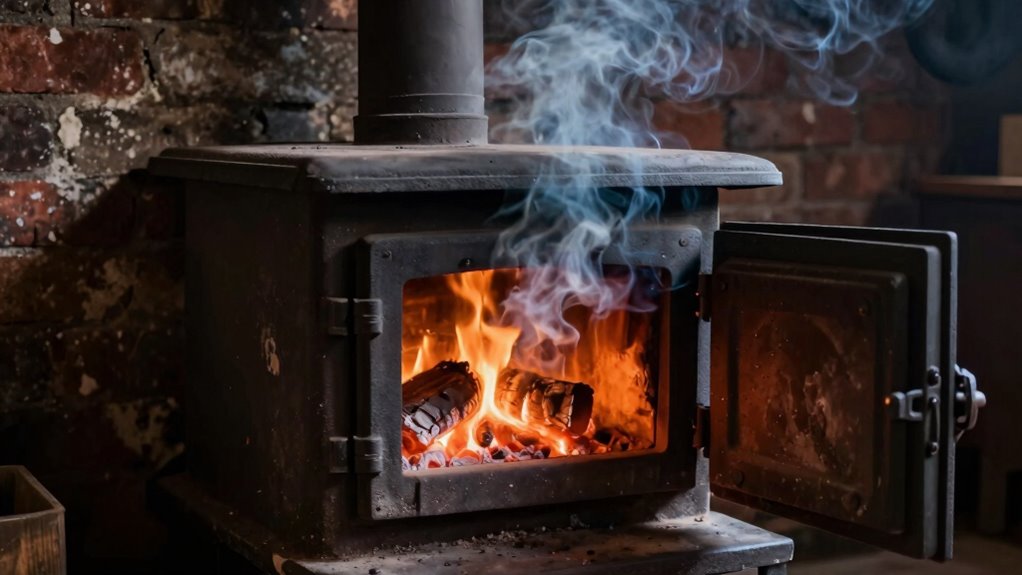

If your wood stove smokes when you open the door, you’ll want to check your chimney for blockages or creosote buildup that can hinder airflow. Make sure the chimney is the correct height and has a cap to improve draft and prevent downdrafts. Adjust the stove’s air controls to create a strong, steady draft, and place the stove away from drafts or open windows. Proper maintenance and placement can solve the problem—keep exploring these solutions to get your stove working smoothly.
Key Takeaways
- Ensure the chimney is clear of creosote buildup and debris to improve draft and prevent smoke escape.
- Properly position the stove away from drafts, open windows, or gaps that disrupt airflow.
- Adjust the stove’s air intake controls to establish a strong, steady draft before opening the door.
- Install a draft inducer or small fan to boost airflow if natural draft is weak or inconsistent.
- Regularly maintain and heighten the chimney, adding caps if necessary, to enhance overall draft performance.

Are you struggling with a weak or inconsistent draft in your wood stove? If so, you’re likely frustrated when you open the door and see smoke billowing out instead of staying contained inside. This issue often comes down to airflow problems and inadequate draft prevention. Fortunately, there are some straightforward steps you can take to enhance airflow and establish a reliable draft, making your stove safer and more efficient.
First, check the chimney or flue system. A blocked or partially clogged chimney considerably hampers airflow, causing smoke to escape when you open the door. Clear out any creosote buildup or debris that might be obstructing the passage. Regular cleaning not only improves airflow but also prevents dangerous chimney fires. Ensure the chimney has enough height above the roofline—an insufficient height can cause inadequate draft. Increasing chimney height or adding a chimney cap with a spark guard can boost draft performance and reduce downdrafts that push smoke back into your stove.
Check and clean your chimney regularly to improve airflow and prevent smoke spills.
Next, consider the position of your stove relative to windows, doors, or vents. Draft prevention relies on proper air circulation; if your stove is in a drafty area or near open windows, it may disrupt the airflow needed for proper combustion. Positioning your stove away from draft sources or sealing gaps around doors and windows helps maintain consistent airflow, making the draft more predictable and reducing smoke spillage when you open the door.
Adjusting the air intake controls on your stove can also improve airflow. Most wood stoves have dampers or vents that regulate the amount of air entering the combustion chamber. By fine-tuning these controls, you can establish a strong, steady draft that pulls smoke upward and out through the chimney. Remember, a good draft prevents smoke from spilling into the room when the door opens, so don’t hesitate to experiment with different settings to find the ideal airflow balance.
Additionally, installing a draft inducer or a small fan can help create a more consistent draft in cases where natural airflow isn’t enough. These devices actively draw air through the chimney, improving airflow and preventing smoke from escaping when you open the door. It’s a practical solution if your chimney is long or if external conditions, like wind or temperature differences, interfere with natural draft.
Frequently Asked Questions
Can a Damaged Door Seal Cause Smoking When Opening the Stove?
Yes, a damaged door seal can cause smoking when you open the stove. When the door seal is compromised, draft leaks allow excess smoke to escape, especially during door opening. You should inspect the door seal for tears or gaps and replace it if needed. Properly sealing the door prevents draft leaks, ensuring smoke stays inside the stove and improves overall efficiency and safety.
How Does Outdoor Wind Influence My Wood Stove’s Draft?
Outdoor wind can profoundly impact your wood stove’s draft regulation, causing fluctuations that lead to smoking when you open the door. Strong gusts can disrupt the airflow, pulling smoke into your home instead of exhausting it outside. To minimize this, consider installing a chimney cap or draft guard, which helps shield the stove from wind effects and stabilizes the draft, ensuring safer, cleaner operation.
Are There Specific Tools Needed to Fix Stove Draft Issues?
You’ll need some basic tools and inspection skills to fix stove draft issues. Grab a chimney brush, a screwdriver, and a flashlight to inspect for leaks or blockages. Sealant and replacement parts, like gaskets or vents, are essential for sealing drafts. Think of it as giving your stove a spa day—only instead of a massage, you’re ensuring it breathes easy and stays cozy without smoky surprises.
Can Installing a Stove Fan Improve Draft Control?
Installing a stove fan can help improve draft control by increasing airflow around your wood stove. This promotes better combustion and reduces smoky openings, especially when you open the door. A stove fan distributes heat more evenly and encourages proper draft flow, preventing smoke from escaping into your room. Make sure to choose a fan compatible with your stove and install it correctly for ideal draft control and safety.
Is It Safe to Use Chemical Additives to Reduce Smoke?
Are chemical additives safe to reduce smoke? While they might seem like a quick fix, relying on chemical additives can compromise stove safety. These products may produce harmful fumes or interfere with proper combustion, increasing the risk of carbon monoxide buildup. Instead, focus on proper wood stacking and regular chimney maintenance to control smoke naturally. Always prioritize stove safety and consult manufacturer guidelines before using any additives.
Conclusion
Now that you’ve fixed that stubborn draft, your wood stove will breathe like a dragon waking from slumber. No more smoky sneezes or endless cloud curtains—just pure, fiery comfort filling your home. It’s like turning a tiny spark into a roaring blaze, transforming your space into a cozy fortress. So go ahead, enjoy the crackle and glow without fighting the smoke—because a perfect draft means perfect warmth, every single time.