
To keep your hydraulic system safe and reliable, inspect hoses regularly based on their environment and material. Check weekly for cracks, bulges, leaks, or damage, especially in high-stress areas. Replace hoses promptly if you notice signs of deterioration to prevent failures and costly downtime. Following manufacturer recommendations and adjusting inspection schedules accordingly helps maintain peak performance. Continue exploring these best practices to ensure your equipment stays in top condition and avoid critical hazards.

Get business pricing on tools and workshop supplies
- Business-only prices and quantity discounts
- Tax-exempt purchasing
- Multiple users, one account, clear invoices
Key Takeaways
- Conduct visual inspections weekly or monthly, depending on hose material and environmental exposure.
- Look for cracks, bulges, leaks, abrasions, or damaged fittings during inspections.
- Replace hoses immediately if signs of deterioration, damage, or leaks are detected.
- Follow manufacturer guidelines and consider operating conditions to determine specific inspection intervals.
- Regular, proactive inspections help prevent failures, reduce downtime, and ensure system safety.
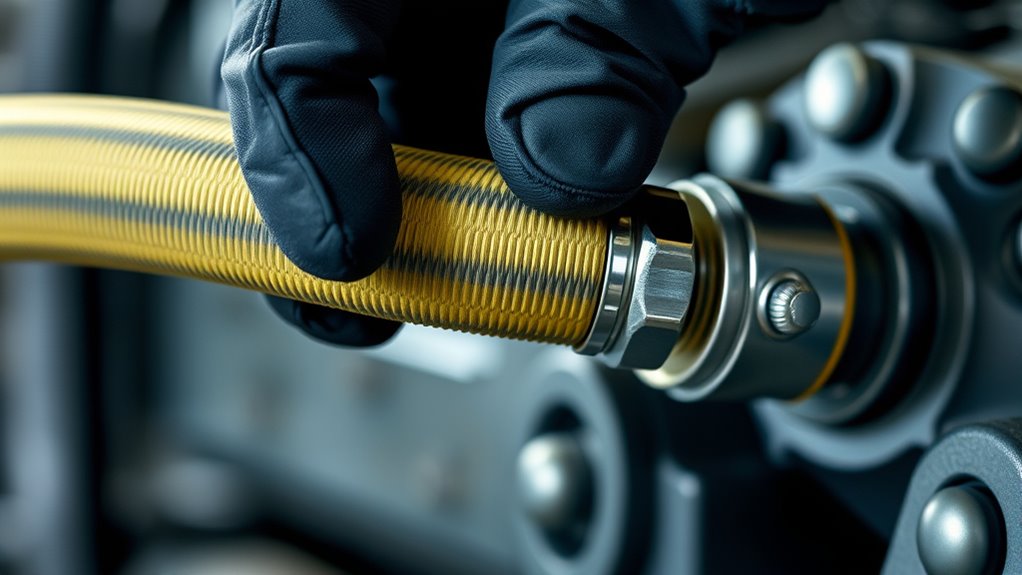
Regularly inspecting your hydraulic hoses is vital to prevent equipment failure and guarantee safe operation. One of the most important aspects of this inspection involves understanding the hose material. Different hose materials, such as rubber, thermoplastics, or composites, each have unique properties and vulnerabilities. Rubber hoses, for example, are flexible and durable but can become brittle over time due to exposure to heat, ozone, or chemicals. Thermoplastic hoses offer excellent resistance to abrasion and are lightweight, yet they may degrade faster if subjected to UV rays or harsh environments. Knowing the specific material of your hoses helps you identify the signs of wear and determine appropriate inspection intervals.
Understanding hose material helps identify wear and plan inspections effectively.
Understanding system security assessments can also help you recognize potential vulnerabilities that could compromise hydraulic system integrity if left unmonitored. The inspection frequency depends heavily on the hose material, as different materials age and degrade at different rates. For instance, rubber hoses in outdoor or high-temperature settings might require more frequent checks—possibly weekly or bi-weekly—while hoses in controlled environments could be inspected monthly. Regardless of the environment, you should always adhere to the manufacturer’s recommendations, which are tailored to the hose’s construction and intended use. By maintaining a consistent inspection schedule based on the hose material, you reduce the risk of unexpected failures that can lead to costly repairs or safety hazards.
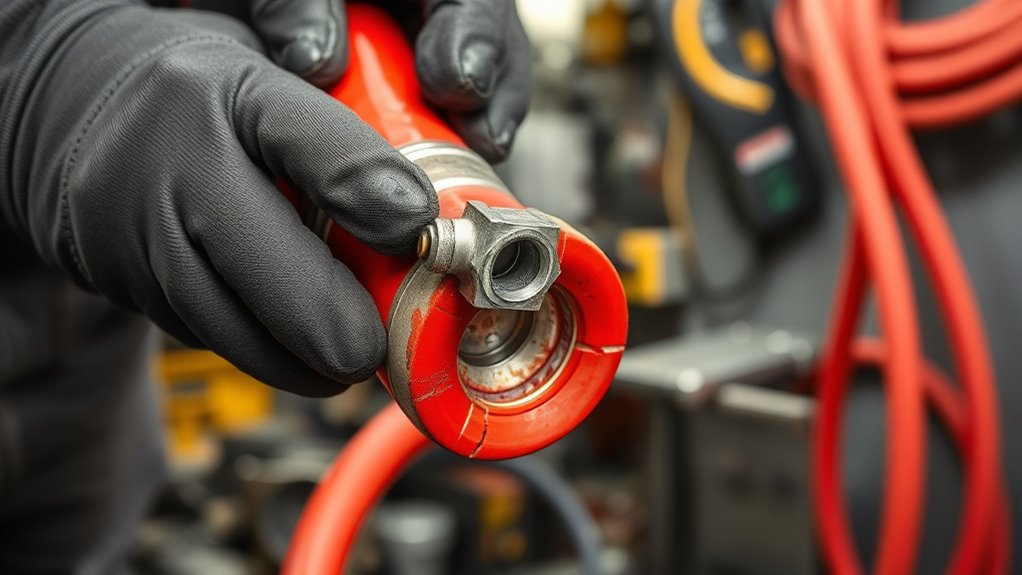
During each inspection, you should look for common signs of deterioration such as cracks, bulges, or abrasions. Pay special attention to areas where the hose bends, as these are more prone to stress and fatigue. Also, check for signs of leaks or fluid seepage, which could indicate internal damage or weakened reinforcement. If you notice any of these issues, it’s vital to replace the hose promptly to prevent failure during operation. Additionally, examine the fittings and connections, ensuring they are tight and free of corrosion or damage. Damaged or loose fittings can cause leaks or reduce pressure, compromising system performance.
It’s not just about spotting visible damage; understanding the hose’s history and environment plays a role in your inspection routine. Regularly inspecting your hoses, considering the hose material, and adjusting the inspection frequency accordingly, helps you catch problems early. This proactive approach minimizes downtime, extends the lifespan of your equipment, and keeps your worksite safe. Remember, neglecting these inspections can lead to sudden failures that are not only costly but also dangerous. By staying vigilant and following a disciplined inspection schedule, you guarantee your hydraulic system remains reliable and safe for everyday use.
As an affiliate, we earn on qualifying purchases.
Frequently Asked Questions
How Often Should Hydraulic Hoses Be Inspected for Optimal Safety?
You should inspect hydraulic hoses regularly, ideally every 3 to 6 months, to make certain of safety. Check the hose material for signs of wear, cracking, or abrasion, and verify that the pressure ratings still match your system’s requirements. If you notice any damage, leaks, or deterioration, replace the hose immediately. Regular inspections help prevent failures, maintaining your equipment’s safety and efficiency.
What Are the Signs of Internal Hose Damage Not Visible Externally?
When it comes to internal hose damage, don’t wait for visible clues—sometimes, the damage runs deep. Look out for burst signs like inconsistent pressure or sudden drops in hydraulic performance. Internal wear can cause the hose to weaken without obvious external damage, so listen for unusual noises or vibrations. Remember, a hose can be a ticking time bomb; regular inspections catch issues before they become costly.
Can Hydraulic Hoses Be Repaired or Should They Always Be Replaced?
You should generally opt for hose replacement rather than repair, as hydraulic hoses are critical for safety and performance. While some minor hose repair might be possible, it’s often unreliable and can lead to failure. If you notice internal damage or suspect issues, replacing the hose guarantees safety and prevents costly downtime. Always prioritize hose replacement over repair to maintain system integrity and avoid potential hazards.
How Does Temperature Affect the Lifespan of Hydraulic Hoses?
You should know that high temperatures can cut a hydraulic hose’s lifespan by up to 50%. Heat deterioration accelerates material degradation, weakening the hose’s structure and making it more prone to failure. When exposed to excessive heat, the rubber or synthetic materials lose elasticity and become brittle. To prevent unexpected breakdowns, regularly monitor hose temperatures and guarantee proper insulation, especially in hot environments, to extend your hydraulic system’s durability.
Are There Specific Tools Recommended for Hydraulic Hose Inspection?
You should use inspection tools like flashlight, mirror, and leak detection spray to thoroughly check hydraulic hoses. Safety equipment such as gloves and eye protection is essential during inspection. These tools help you spot cracks, leaks, or abrasions early, preventing failures. Regularly using proper inspection tools and safety gear guarantees you identify issues promptly, maintaining safe operation and extending hose lifespan. Always follow manufacturer guidelines for specific inspection procedures.
Conclusion
Regularly inspecting your hydraulic hoses can prevent costly failures and downtime. Did you know that over 50% of hydraulic system failures are caused by hose leaks or ruptures? By staying vigilant and replacing hoses at the right time, you can avoid unexpected breakdowns and extend your equipment’s lifespan. Don’t wait for visible damage—routine inspections are your best defense for safe, efficient operation. Stay proactive, and keep your hydraulic system running smoothly.
Fall yard work Picks
leaf blowers
As an affiliate, we earn on qualifying purchases.