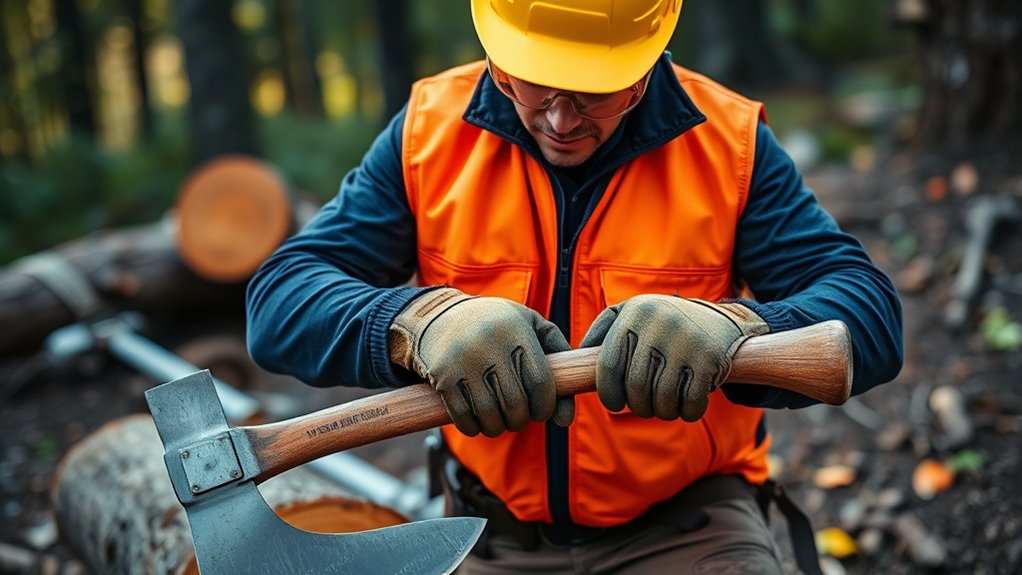

When splitting, you should wear a safety helmet with a secure chin strap to protect your head from falling debris and impacts. Always use heavy-duty gloves with reinforced palms and fingers to guard against cuts, vibrations, and hand injuries, ensuring a good fit for control. Additionally, check your gloves and helmet regularly and replace any damaged gear. Proper PPE is essential for safety, and you’ll find detailed tips if you explore further.
Key Takeaways
- Wear a properly fitted helmet with a secure chin strap to protect against falling debris and impacts during splitting tasks.
- Use heavy-duty gloves with reinforced palms and fingers to prevent cuts, abrasions, and vibrations, ensuring good grip and dexterity.
- Regularly inspect PPE for cracks, tears, or damage, and replace any compromised gear immediately to maintain safety effectiveness.
- Prioritize PPE that absorbs impact energy and dampens vibrations to reduce hand fatigue and injury risk.
- Follow safety protocols by never cutting corners on PPE to ensure comprehensive protection and a safer work environment.
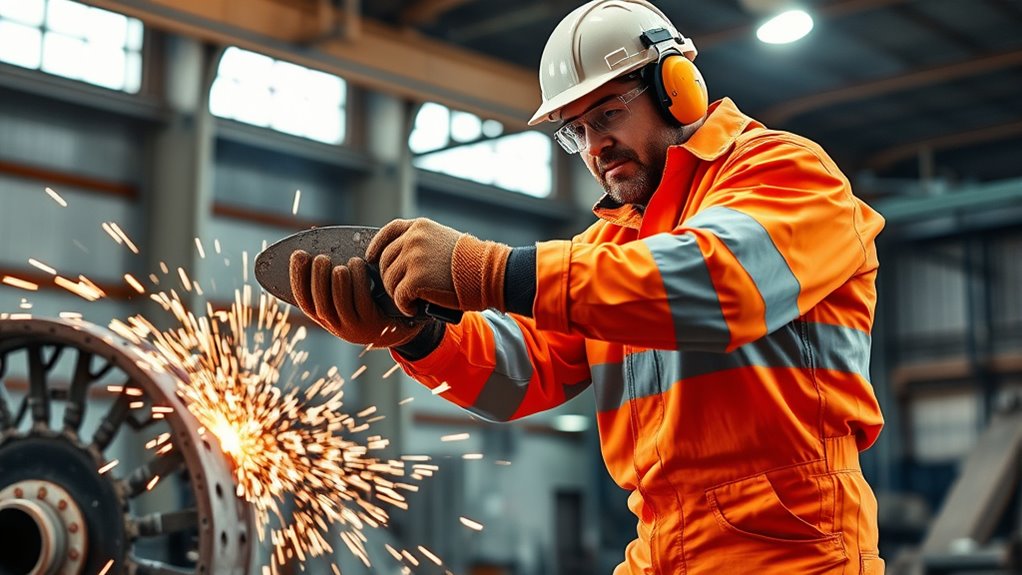
Splitting tasks, whether in construction, manufacturing, or demolition, can pose substantial safety risks. When you’re handling a jackhammer, sledgehammer, or any heavy tool, the potential for accidents increases dramatically. That’s why proper personal protective equipment (PPE) is essential to keep you safe and minimize injuries. One of the most vital pieces of PPE is your helmet. Helmet safety isn’t just about wearing a hard hat; it’s about ensuring it fits correctly and provides adequate impact resistance. A well-fitting helmet protects your head from falling debris, accidental bumps, or sudden impacts that can occur during splitting activities. Make sure your helmet has a secure chin strap, and replace it immediately if it shows signs of cracks or damage. Remember, a helmet isn’t effective if it doesn’t stay in place or if it’s not rated to absorb the energy from impacts typical in splitting tasks.
Equally important is glove selection. Your gloves serve as a barrier against cuts, abrasions, and vibrations from heavy tools. When choosing gloves, opt for ones that offer a good grip and flexibility while still providing impact resistance. Leather gloves are often recommended for their durability and protection, but there are specialized gloves with reinforced palms and fingers designed for heavy-duty splitting work. These help prevent blisters, calluses, and injuries caused by handling rough materials or operating vibrating equipment. Additionally, gloves that offer vibration dampening can considerably reduce hand fatigue and the risk of conditions like hand-arm vibration syndrome, especially when you’re working with tools that generate continuous vibrations. It’s essential to select gloves that fit snugly without restricting movement or circulation so that you can maintain control over your tools. Being aware of the importance of credit card security can also help in understanding how to protect your data while working on digital documentation or online safety practices in your job.
Wearing the right PPE, including a helmet that meets safety standards and gloves tailored for heavy-duty work, doesn’t just prevent injuries—it boosts your confidence and efficiency. You’ll be more focused on your task, knowing your head and hands are protected from common hazards associated with splitting tasks. Never cut corners on PPE, because the consequences of neglecting these safety measures can be severe. Regularly inspect your protective gear before use, ensuring that helmets are free of cracks and straps are secure, and that gloves remain intact without tears. When you prioritize proper helmet safety and glove selection, you’re actively reducing the risk of serious injuries and creating a safer working environment for yourself and your colleagues.
Frequently Asked Questions
How Do I Choose the Right PPE for Different Splitting Materials?
To choose the right PPE for different splitting materials, you need to consider the splitting techniques you’ll use and the material properties. For tougher materials, wear heavy-duty gloves, eye protection, and hearing protection. For softer or brittle materials, lightweight gloves and face shields may suffice. Always assess the specific material’s hardness, brittleness, and potential hazards to select PPE that offers effective protection while allowing safe handling.
Are There Eco-Friendly PPE Options Available for Splitting Tasks?
Yes, eco-friendly PPE options are available for splitting tasks. You can choose biodegradable gloves that break down naturally, reducing environmental impact, and opt for recycled safety gear made from sustainable materials. By selecting these environmentally conscious choices, you protect yourself, protect the planet, and promote sustainability. Embrace biodegradable gloves, recycled safety gear, and eco-conscious PPE to guarantee your safety and the health of our environment.
How Often Should PPE Be Inspected and Replaced?
You should inspect your PPE regularly, ideally before each use, following your inspection schedule. Look for damage, wear, or deterioration that could compromise safety. Replace PPE promptly if it shows signs of damage or per your replacement guidelines, which vary depending on the equipment. Keeping to a strict inspection schedule and replacement guidelines guarantees your safety gear remains effective, reducing risk during splitting tasks.
Can PPE Be Reused After Splinter Exposure or Damage?
Yes, you can reuse PPE after splinter exposure or damage if you properly clean and inspect it. You should thoroughly clean the PPE according to the manufacturer’s instructions, checking for any signs of deterioration or damage. If the PPE shows signs of wear or cannot be effectively cleaned, dispose of it safely. Always follow PPE disposal guidelines to prevent contamination and ensure safety for future use.
What Are the Legal PPE Requirements for Splitting in Workplaces?
Did you know over 70% of workplace injuries could be prevented with proper PPE? Legally, you must follow workplace regulations that require you to wear appropriate PPE, like gloves, eye protection, and masks, during splitting tasks. Ensuring legal compliance helps protect you from injury and liability. Always verify your company’s PPE policies align with OSHA standards to stay safe and compliant on the job.
Conclusion
Now that you know what PPE to wear for splitting, you’re almost ready to tackle the job safely. But remember, the right gear is just the start—there’s always more to contemplate to stay protected. Are you prepared for the unexpected? Stay alert, double-check your equipment, and never underestimate the importance of proper PPE. Your safety could depend on it. So, are you ready to face the challenge head-on? The next step might surprise you.