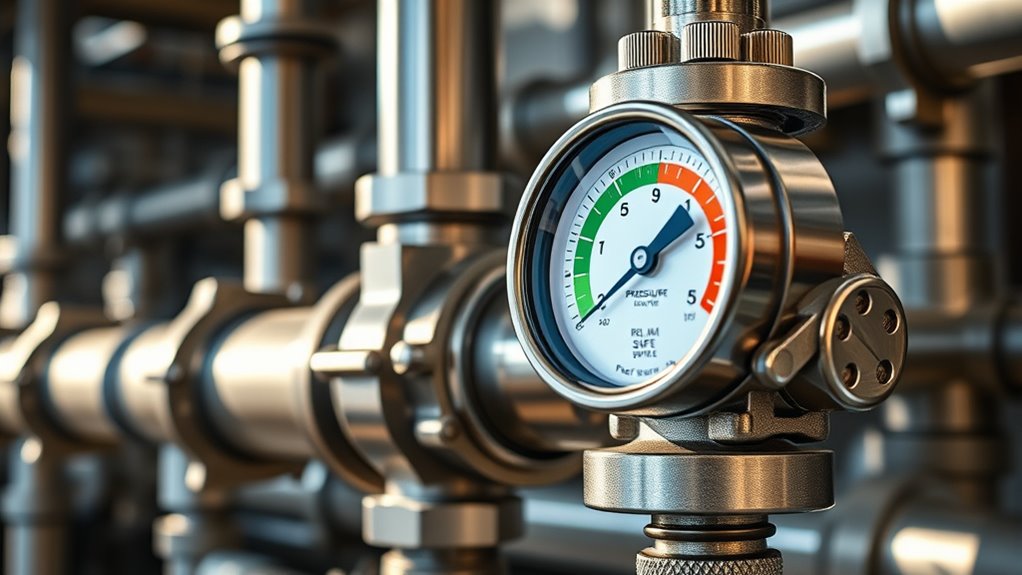

Understanding relief valves and safe pressures is key to preventing accidents and equipment damage. Relief valves are safety devices that open when pressure exceeds their set point, releasing excess pressure to protect your system. Proper calibration and sizing guarantee they work effectively, releasing pressure quickly without unnecessary leaks. If the valves are properly set and maintained, they act as reliable safeguards. Keep exploring to discover how to optimize their performance and ensure your system’s safety.
Key Takeaways
- Relief valves are safety devices that open at set pressures to prevent over-pressurization and system failure.
- Proper pressure settings ensure relief valves open at safe, predetermined limits, protecting equipment and personnel.
- Correct valve sizing guarantees quick pressure relief without unnecessary releases or system stress.
- Regular calibration and maintenance of relief valves maintain accurate pressure settings and system safety.
- Understanding the relationship between pressure settings and valve sizing optimizes system safety and operational efficiency.
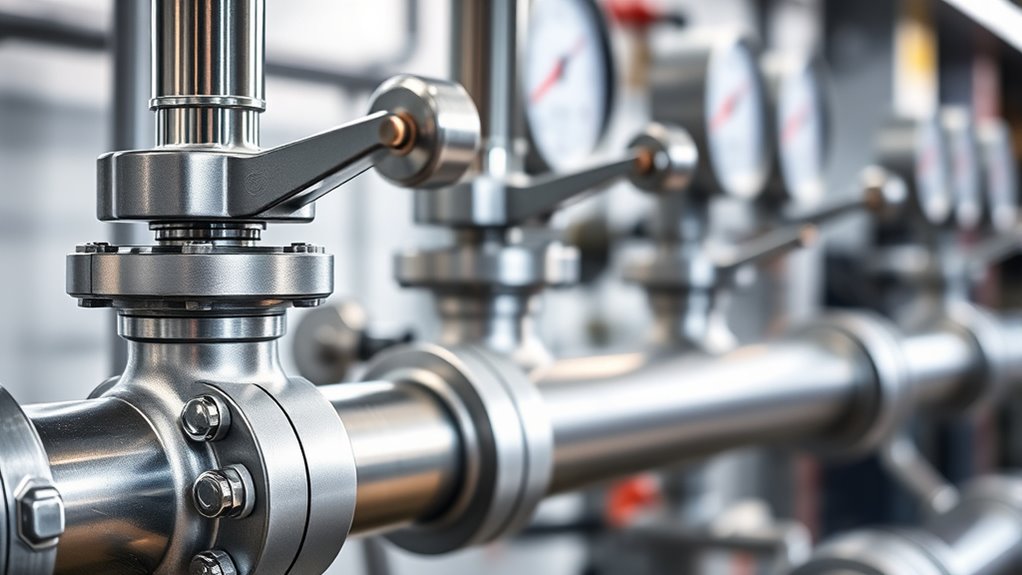
Have you ever wondered how systems prevent dangerous pressure buildup? It all comes down to relief valves and how they’re carefully designed to maintain safe operating conditions. One of the key aspects is setting the correct pressure settings. These settings determine at what pressure the relief valve will open to release excess pressure, preventing system failure or explosions. If the pressure setting is too high, the system risks over-pressurization, which can cause damage or hazardous leaks. Conversely, setting it too low might lead to unnecessary releases, disrupting operations and wasting resources. That’s why precise adjustment of pressure settings is essential. Engineers analyze the maximum allowable working pressure of the system and calibrate relief valves accordingly, ensuring they activate only when truly necessary.
Relief valves prevent pressure buildup by carefully setting activation points, ensuring system safety and efficiency.
Alongside pressure settings, valve sizing plays a critical role in system safety. Valve sizing involves selecting a relief valve with the appropriate flow capacity to handle potential pressure surges. If the valve is too small, it won’t be able to vent excess pressure quickly enough, risking dangerous pressure buildup. On the other hand, an oversized valve may cause unnecessary releases, leading to inefficiencies and increased wear. Proper valve sizing is based on detailed calculations that consider the maximum flow rate, pressure differential, and the properties of the fluid involved. When these factors are correctly evaluated, the relief valve can respond swiftly and effectively, maintaining system integrity without unnecessary interruptions.
You need to understand that both pressure settings and valve sizing are interconnected. When designing or maintaining a system, you have to balance these elements to guarantee safety while optimizing performance. Regular inspections and adjustments are essential because system conditions can change over time, affecting the ideal pressure settings and flow capacities. Using industry standards and manufacturer guidelines helps guarantee that relief valves operate within safe and reliable parameters. Proper installation is equally important—incorrect placement or improper connection can compromise performance, even if the valve itself is correctly sized and set.
In essence, the combination of correctly calibrated pressure settings and appropriately sized valves creates a dependable safeguard against over-pressurization. You can think of relief valves as the system’s safety net, catching excess pressure before it causes harm. By paying close attention to these factors and maintaining them properly, you prevent accidents, protect equipment, and ensure smooth operation. It is also important to consider system pressure analysis for optimal safety and performance. Ultimately, understanding how pressure settings and valve sizing work together helps you create safer, more efficient systems that can handle unexpected pressure fluctuations effortlessly.

Zunate 4Pcs Adjustable Tire Deflator Kit, Aluminum Alloy Pressure Relief Valves with Arrow Storage Case and PSI Calibration for Off Road Adventures
Time Saving Technology: Our desert tire deflation valve features an automatic deflation indicator installed on each tire stem,…
As an affiliate, we earn on qualifying purchases.
As an affiliate, we earn on qualifying purchases.
Frequently Asked Questions
How Often Should Relief Valves Be Inspected and Maintained?
You should inspect relief valves at least annually, but some systems require more frequent checks depending on usage and manufacturer recommendations. Regular maintenance procedures include testing the valve’s responsiveness, cleaning, and replacing worn parts to guarantee safety. Always follow your facility’s inspection frequency guidelines and maintenance procedures to prevent failures. Consistent inspections help you catch issues early, maintaining proper pressure levels and avoiding costly accidents or system downtime.
Can Relief Valves Be Reused After Activation?
Think of relief valves like safety nets; once they catch a fall, you can’t reuse them without inspection. After activation, relief valves typically need testing to ensure proper function, as material fatigue or corrosion may compromise safety. Valve testing confirms material compatibility and reliability before reusing. If they pass inspection, they can often be reused, but always follow manufacturer guidelines and safety standards to prevent failures.
What Are Common Causes of Relief Valve Failure?
Relief valve failure often happens due to corrosion, improper material selection, or debris buildup. You can prevent corrosion by applying proper corrosion prevention techniques and choosing materials suited for your system’s environment. Regular maintenance and inspections help identify early signs of damage. If you overlook these factors, the valve might stick or fail to open when needed, risking system safety. Proper care ensures reliable performance and safety.
How Do Environmental Conditions Affect Relief Valve Performance?
Environmental impacts substantially influence relief valve performance. Harsh conditions like humidity, temperature fluctuations, and corrosive elements can cause corrosion, compromising valve integrity. You should prioritize corrosion resistance in valve materials and regularly inspect for environmental damage. By understanding these impacts, you guarantee your relief valves operate effectively, preventing failures. Protect your equipment by choosing environmentally resistant valves and maintaining them diligently, so they reliably release pressure when needed.
Are There Different Types of Relief Valves for Specific Industries?
Yes, there are different types of relief valves tailored to specific industries. You need to take into account industry-specific standards and valve material selection to guarantee safety and efficiency. For example, chemical industries often use corrosion-resistant materials, while power plants might require high-pressure relief valves. Choosing the right valve type and materials helps you meet regulatory requirements and ensures ideal performance under the unique conditions your industry faces.

Merrill MFG PRVNL75 No Lead Brass Pressure Relief Valve 75 PSI, 3/4"
Pressure relief valves are for protection against excessive pressure
As an affiliate, we earn on qualifying purchases.
As an affiliate, we earn on qualifying purchases.
Conclusion
Now that you understand relief valves and safe pressures, you’re better equipped to keep systems safe and efficient. Remember, knowing how to prevent issues before they happen is the key to avoiding trouble down the road. Don’t wait until the cow’s out of the barn—stay proactive and keep your equipment in top shape. With the right knowledge, you can steer clear of potential hazards and ensure everything runs smoothly.

Merrill MFG PRVNL75100 3/4" Lead-Free Brass Pressure Relief Valve, 100 PSI Cold Water Safety Valve for Well Tank, Pump & Plumbing Systems, 3/4" NPT No-Lead Water System Protection Valve
Pressure relief valves are for protection against excessive pressure
As an affiliate, we earn on qualifying purchases.
As an affiliate, we earn on qualifying purchases.

The Original Hydraulic Quick Coupling Pressure Decompression Relief Release Tool 1/2" Ag/Pioneer/Poppet Size fits models of Kubota, John Deere, Other Compact Tractors
The Original Tractor Relief Tool! PLEASE VERIFY YOUR COUPLING SIZE AND STYLE BEFORE ORDERING! Relieves pressure in hydraulic…
As an affiliate, we earn on qualifying purchases.
As an affiliate, we earn on qualifying purchases.