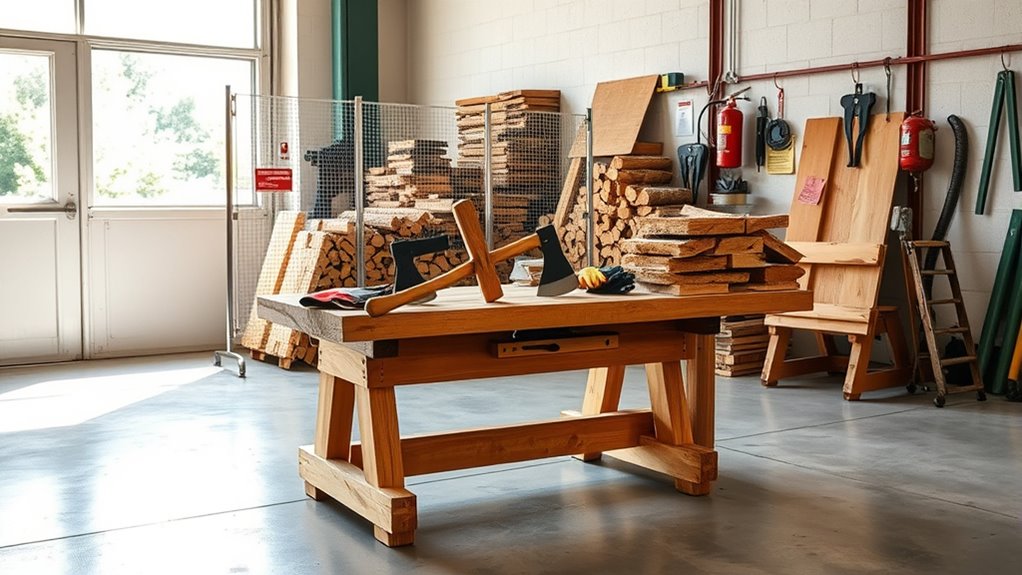

To set up a safe splitting work area, first clear the space of debris, tools, and tripping hazards, ensuring a neat, obstacle-free zone. Establish clear boundaries with tapes or cones to keep others at a safe distance and use sturdy, stable surfaces like a chopping block or stump. Wear safety gear like goggles, gloves, and steel-toed boots to protect yourself. Proper positioning and controlled swings help prevent accidents. Continuing will guide you through creating an ideal, injury-free workspace for splitting logs.
Key Takeaways
- Choose a flat, obstacle-free space away from pathways and bystanders.
- Clear debris, tools, and tripping hazards from the work area before starting.
- Use barriers or tape to establish a safe perimeter around the splitting zone.
- Set up a stable, sturdy surface like a chopping block or solid stump for logs.
- Ensure proper lighting and organize tools for easy access and safety during work.

Creating a safe splitting work area is essential to prevent accidents and guarantee efficiency. When you’re about to handle logs or firewood, safety should be your top priority. Start by ensuring you wear the right protective gear, such as safety goggles, gloves, and steel-toed boots. Protective gear shields you from flying debris, splinters, and accidental hits, reducing the risk of injury. It’s equally important to set up a designated workspace that’s free from obstacles and trip hazards. Clear the area of debris, tools, or anything that could cause you to stumble or lose balance during splitting. A clean, organized space allows you to work more efficiently and minimizes distractions or unexpected accidents. Proper planning of your workspace can also improve your overall safety and productivity.
Creating a safe workspace prevents accidents and boosts efficiency during firewood splitting.
Using proper tools is crucial when establishing a safe splitting environment. Invest in a quality splitting axe or maul that suits your strength and the size of the logs you’re working with. Dull blades require more force and are more likely to slip, so keep your tools sharp and in good condition. Before starting, inspect your tools for any damage, such as cracks or loose handles, and replace or repair them as needed. A sturdy, well-maintained tool not only makes your work easier but also enhances safety. Make sure your splitting surface is stable and level—using a dedicated chopping block or a solid stump can prevent the axe from bouncing or slipping unexpectedly. Additionally, ensuring your tools are appropriate for your experience level can greatly reduce the risk of accidents.
Position yourself correctly before striking. Stand with your feet shoulder-width apart, maintaining a balanced stance that allows you to control the swing. Keep your hands firmly grasped on the handle, and aim carefully at the log’s center to avoid glancing blows that could cause the axe to ricochet. Never rush your swings; patience and focus are essential for safety. Also, consider setting a barrier or marking the boundary of your work area with tape or cones to alert others nearby. This creates a clear separation between your workspace and any foot traffic, reducing the chance of accidental injuries to bystanders.
Finally, always plan your work session. Take breaks to avoid fatigue, which can impair judgment and coordination. Stay alert, avoid distractions like phones, and never work when you’re tired or under the influence of substances. By combining proper protective gear, sharp and well-maintained tools, and a well-organized workspace, you establish a safe environment for splitting. This approach not only protects you from injury but also ensures that your work progresses smoothly and efficiently, making the task safer and more enjoyable. Remember that safety precautions are essential for a successful and injury-free project.
Frequently Asked Questions
What Safety Gear Is Essential for Splitting Wood Safely?
You need essential safety gear like protective eyewear to shield your eyes from flying chips and debris, and hearing protection to guard against loud noise from splitting. Wearing gloves can protect your hands, and sturdy boots will keep your feet safe from falling logs. Always use a helmet if there’s a risk of overhead hazards. Prioritizing these safety items helps prevent injuries and makes splitting wood safer and more efficient.
How Do I Choose the Best Location for a Splitting Area?
You should choose a flat, stable splitting surface like a sturdy, level log or a dedicated splitting block. Investigate splitting surface selection by ensuring it’s free from nearby hazards such as loose branches, uneven ground, or obstacles. Make sure to position your area away from high-traffic zones, structures, or anything that could cause injury if a piece of wood or debris flies. Always prioritize safety and awareness of your surroundings.
What Should I Do if a Tool Breaks During Splitting?
If a tool breaks during splitting, stop work immediately and assess the damage. Follow your emergency procedures, which might include wearing protective gear and keeping a safe distance. For tool repair, make certain the tool is unplugged or powered off before attempting to fix it. If you’re unsure about repairing it safely, contact a professional or replace the tool to prevent accidents. Always prioritize safety during tool repair and emergency procedures.
How Can I Prevent Wood From Rolling or Shifting Unexpectedly?
To prevent wood from rolling or shifting unexpectedly, focus on wood stabilization by securely positioning your logs and using wedges or chocks. Always make sure your equipment is properly anchored to a stable surface to prevent movement during splitting. Keep your work area clear of debris, and maintain a firm grip on tools. These precautions help maintain control, reduce accidents, and promote a safer splitting environment.
Are There Environmental Considerations When Setting up a Splitting Zone?
When setting up your splitting zone, consider environmental factors like wildlife habitat and soil erosion. You should choose a location away from sensitive habitats to avoid disturbing wildlife. Use gravel or mulch to minimize soil erosion and protect plants nearby. Avoid disturbing natural waterways or drainage areas, and make certain your work area doesn’t damage roots or underground habitats. Being environmentally mindful helps preserve local ecosystems while keeping your workspace safe.
Conclusion
By following these safety tips, you guarantee your splitting work area remains secure and accident-free. Creating a designated, clear space not only protects you but also makes your work more efficient and enjoyable. Remember, staying alert and prepared turns a potentially dangerous task into a safe, satisfying experience. Trust that a well-organized work area supports your confidence and skill, making each split safer—and maybe even a little more enjoyable—every time you step into it.