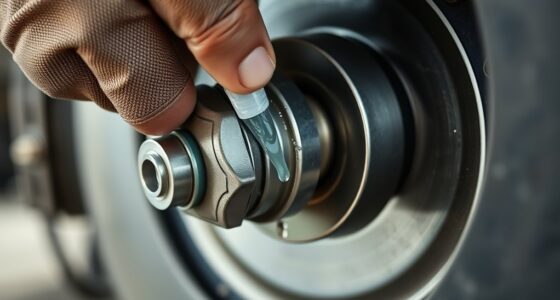

To winterize your log splitter, start by inspecting and cleaning all parts, replacing damaged hoses or seals, and applying a rust inhibitor to metal surfaces. Drain fluids like hydraulic oil and gasoline in a well-ventilated area, then store the equipment in a sheltered, dry location. Lubricate moving parts and ensure proper fluid levels. Following these steps helps prevent corrosion and damage—continue to explore the full guide for detailed methods to safeguard your splitter throughout winter.
Key Takeaways
- Clean and inspect the splitter, replacing worn parts and removing dirt or debris to prevent corrosion.
- Drain hydraulic fluid and fuel, then store fluids safely according to environmental regulations.
- Lubricate all moving parts and check for leaks to ensure smooth operation during storage.
- Store the splitter in a dry, sheltered location on a level surface, covering it to protect from the elements.
- Disconnect power sources, secure the equipment, and perform safety checks before long-term winter storage.
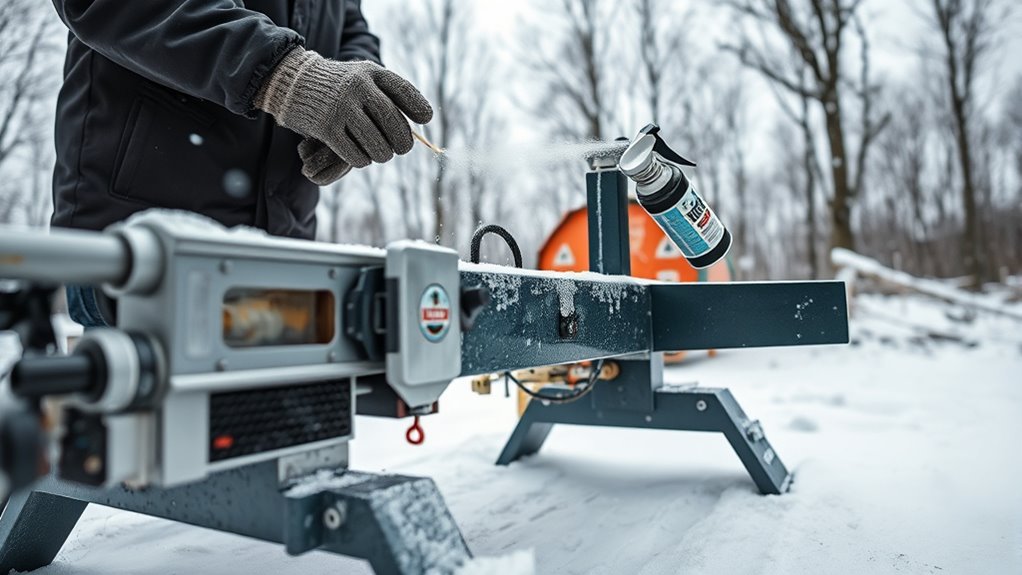
As winter approaches, preparing your log splitter for the cold months ahead is essential. Properly winterizing your equipment ensures it remains in good condition, ready to use when spring arrives. One of the most important steps is to perform maintenance tips that prevent rust, freezing issues, and mechanical failures. Start by inspecting all parts for wear or damage, replacing any worn-out hydraulic hoses or seals. Clean the entire machine thoroughly, removing dirt, sap, and debris that can trap moisture and cause corrosion. Applying a light coat of oil or a rust inhibitor on metal surfaces adds an extra layer of protection against moisture during storage. Additionally, storing your log splitter in a sheltered location helps prolong its lifespan and prevents unnecessary exposure to the elements.
Safety precautions are equally critical during this process. Before starting any maintenance, disconnect the log splitter from its power source—whether it’s electric or gas-powered—and ensure the engine is cool. Wear protective gloves and eye gear to shield yourself from sharp edges, grease, or chemicals. When draining fluids like hydraulic oil or gasoline, do so in a well-ventilated area, away from open flames or sparks. Properly dispose of used fluids according to local regulations to prevent environmental contamination. Be cautious when handling fuel or oil, as these substances are flammable and can cause health issues if mishandled.
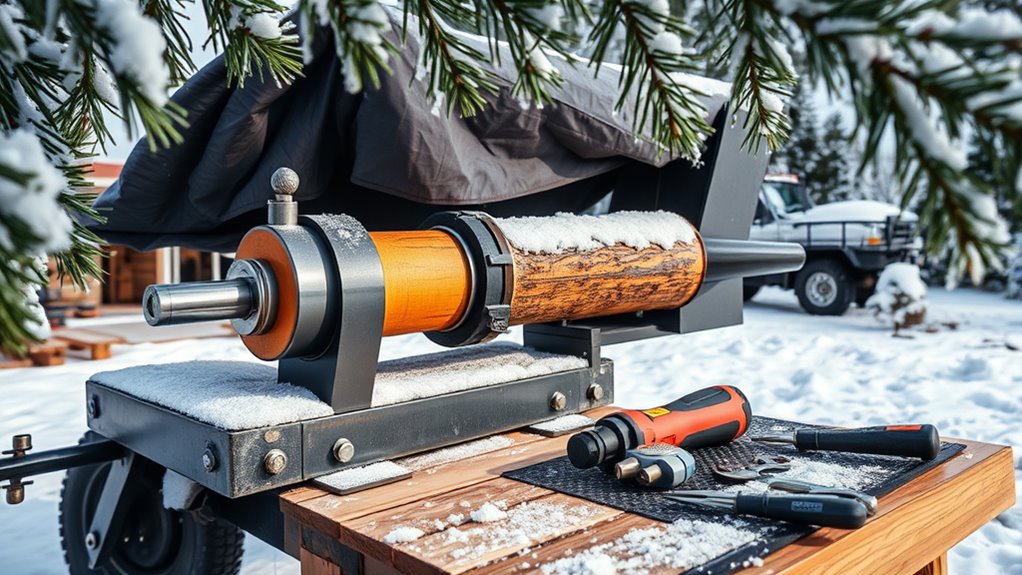
Another key safety tip is to stabilize the log splitter on a flat, level surface before performing any maintenance or storage procedures. This prevents accidental tipping or movement that could cause injury. Use wheel chocks or blocks if your model has wheels, and ensure all moving parts are secured or disengaged. If you plan to store the splitter outdoors, shield it from the elements by covering it with a weatherproof tarp, but leave access to drain plugs or vents to prevent moisture buildup. For indoor storage, choose a dry, well-ventilated space away from sources of heat or ignition. Maintaining proper fluid levels and checking for leaks before storage ensures optimal performance when needed again.
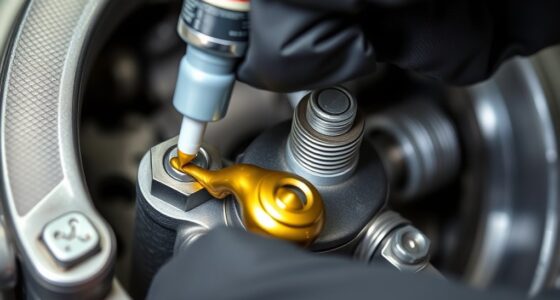
In addition to cleaning and inspecting, consider lubricating all moving parts according to the manufacturer’s specifications. Proper lubrication reduces corrosion and ensures smooth operation when you’re ready to use it again. Check the hydraulic pressure and top off or replace hydraulic fluid if necessary. Doing these maintenance tips now prevents costly repairs later and extends the lifespan of your log splitter. Remember, taking safety precautions seriously during each step not only protects you but also guarantees your equipment remains in top condition throughout the winter months. By following these guidelines, you’ll ensure your log splitter stays protected and ready for use when spring arrives.
Frequently Asked Questions
Can I Winterize My Log Splitter if I Haven’t Used It All Season?
Yes, you can winterize your log splitter even if you haven’t used it all season. Start with proper storage preparation by cleaning and inspecting the equipment for any damage. Perform essential equipment maintenance, such as draining fuel and lubricating moving parts. This helps prevent rust and corrosion. Winterizing guarantees your log splitter stays in good condition, ready for use when you need it again. Proper care extends its lifespan and maintains ideal performance.
What Specific Antifreeze Is Safe for Log Splitter Components?
You should use a high-quality, automotive-grade antifreeze that’s compatible with your log splitter’s components. Check the antifreeze’s label for compatibility with the materials in your machine, ensuring chemical safety and antifreeze compatibility. Avoid using household or automotive antifreezes not specified for equipment, as they may damage seals or corrosion-resistant parts. Always follow the manufacturer’s recommendations for the best protection against freezing and corrosion during winter.
How Often Should I Inspect My Log Splitter During Winter Storage?
Did you know that regular inspections can extend your log splitter’s lifespan by up to 30%? During winter storage, you should examine your log splitter at least once a month. Follow a proper maintenance schedule and storage tips to prevent rust and damage. Check hydraulic fluid levels, look for leaks, and ensure moving parts are well-lubricated. Staying attentive now saves you time and money when spring arrives.
Is It Necessary to Drain All Hydraulic Fluid for Winter Storage?
You don’t need to drain all hydraulic fluid for winter storage, but it’s crucial to check its condition. If the fluid is dirty or old, consider replacing it to prevent freezing or damage during cold months. Keep the hydraulic fluid at the proper level and store your log splitter in a cool, dry place. Proper maintenance ensures your equipment stays in good shape and ready for use when spring arrives.
Can I Leave Residual Moisture in the Fuel Tank Over Winter?
Leaving residual moisture in the fuel tank over winter is like trusting a wizard with a broken spell—dangerous. You shouldn’t, as it risks fuel degradation and corrosion. Use fuel stabilization additives to prevent moisture buildup and keep your fuel fresh. Properly draining or stabilizing your fuel guarantees moisture prevention, extends engine life, and keeps your log splitter ready for work when spring arrives. Remember, a little preventative care goes a long way.
Conclusion
By winterizing your log splitter, you’re safeguarding your trusty tool against the harshest elements, ensuring it stays in top shape for countless seasons. With just a little effort, you’ll prevent rust and damage—saving you from a potential repair nightmare that’s bigger than Mount Everest itself. So, take these steps seriously; your log splitter will thank you with many more years of reliable service, proving that proper winter care is the secret weapon for any wood-splitting champion.