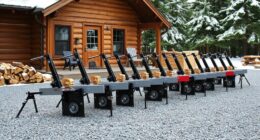
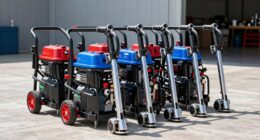
To keep your towable splitter running smoothly and safely, regularly check tire pressure with a reliable gauge and inflate or release air as needed to meet the manufacturer’s recommendations. Inspect wheels for damage like cracks or bent rims, and verify proper alignment to prevent uneven wear. Keep the wheels clean and free of debris. Consistent maintenance of tires and wheels boosts performance, safety, and longevity—stay tuned to learn more about proper inspection techniques.
Key Takeaways
- Regularly check tire pressure and inflate to manufacturer’s recommended levels for safety and durability.
- Inspect wheels for damage such as cracks, bends, or cuts before each use.
- Ensure proper wheel alignment to promote even tire wear and optimal handling.
- Keep wheels clean and free of debris to prevent unnecessary wear and rotation issues.
- Perform routine maintenance including pressure checks, alignment reviews, and damage inspections to ensure safety and performance.
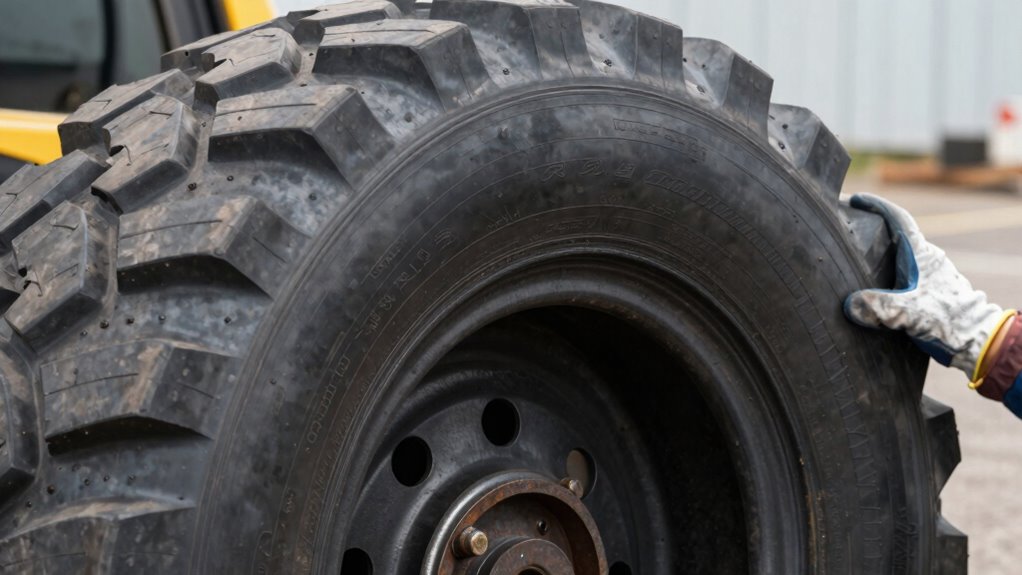
Regularly inspecting the tires and wheels of your towable splitter is essential for safe and efficient operation. Proper tire pressure maintenance is a key part of this process. When your tires are inflated correctly, you reduce the risk of blowouts, uneven wear, and poor fuel efficiency. Check the tire pressure before each use using a reliable gauge, and compare the reading to the manufacturer’s recommended pressure, often found on a sticker on the machine or in the user manual. If your tires are underinflated, add air until they reach the proper level; if overinflated, release some air gradually. Maintaining ideal tire pressure not only extends the life of your tires but also ensures smoother operation, making your work safer and more productive.
Along with tire pressure maintenance, paying attention to wheel alignment procedures is equally important. Misaligned wheels can cause uneven tire wear, vibrations while operating, and decreased stability, which can compromise safety. The wheel alignment process involves checking whether your wheels are properly aligned with each other and with the machine’s frame. To perform this, visually inspect the tires for uneven wear patterns, which often indicate misalignment. For a more precise assessment, you may need to use a wheel alignment tool or consult a service professional. Correcting wheel alignment involves adjusting the position of the wheels, often through specific bolts or adjustment mechanisms on the axle or suspension components. Proper alignment ensures that the tires roll straight and evenly, which improves traction, handling, and overall performance of your towable splitter.
Regular maintenance also involves inspecting the wheels for damage, such as cracks, cuts, or bent rims, which can compromise safety. If you notice any defects, replacing damaged wheels is crucial before operating the equipment again. Keeping the wheels clean and free of debris, mud, or ice helps prevent unnecessary wear and tear, maintaining smooth rotation and proper contact with the ground. Remember, neglecting tire and wheel upkeep can lead to costly repairs, increased downtime, and, most importantly, safety risks during operation. Developing a routine that includes checking tire pressure, reviewing wheel alignment, and inspecting for damages will help you keep your towable splitter in top condition. It’s a small investment of time that delivers significant benefits in performance, safety, and longevity.
Frequently Asked Questions
How Often Should I Replace the Tires on My Towable Splitter?
You should replace the tires on your towable splitter when they show signs of significant wear, cracks, or damage, typically every 3 to 5 years. Regularly perform tire rotations and check wheel alignment to extend their lifespan. If you notice uneven wear or vibrations, it’s time for new tires. Proper maintenance ensures safety and peak performance, so stay proactive with inspections and replace tires when necessary.
What Signs Indicate Wheel Bearing Failure?
Imagine your wheel whispering warnings; bearing noise and wheel wobble are signs of failure. If you hear grinding or humming sounds, it’s like your splitter’s heartbeat faltering. Wobbly wheels signal that the bearings are loose or damaged, risking a breakdown. Pay attention to these clues, and don’t ignore the signs. Regularly inspecting for bearing noise and wheel wobble keeps your equipment running smoothly and prevents costly repairs.
Can I Upgrade to Heavier-Duty Wheels for Better Durability?
Yes, you can upgrade to heavier-duty wheels for better durability. Focus on choosing wheels with a stronger wheel material, like steel, instead of lighter options like aluminum. Also, consider increasing the wheel size to handle more weight and rougher terrain better. Just make certain the new wheels are compatible with your splitter’s axle and frame. Upgrading these components can considerably improve your splitter’s longevity and performance during demanding tasks.
How Do I Properly Store Tires to Prevent Damage?
Think of your tires as a cherished book collection—you want to keep them in pristine condition. Store them in a cool, dry place, away from sunlight, and avoid stacking them for long periods. During seasonal storage, rotate your tires to prevent uneven wear. This way, you preserve their integrity and extend their lifespan, just like protecting your favorite stories for years to come.
Are There Specific Tire Pressure Recommendations for Different Terrains?
Yes, terrain-specific tire pressure is vital for peak performance. For off-road traction considerations, you should lower your tire pressure to increase grip and stability on uneven surfaces. On paved roads, maintain higher pressure for smoother handling and efficiency. Always check your tire manufacturer’s recommendations and adjust based on terrain. Proper tire pressure ensures safety, enhances traction, and prevents damage, especially when steering through varied terrains with towable splitters.
Conclusion
Regularly checking your tires and wheels keeps your towable splitter running smoothly. For example, imagine hitting a job site only to find a flat tire because of overlooked maintenance. By doing quick inspections before each use, you can catch issues early and avoid delays. Staying proactive not only extends your equipment’s life but also guarantees your safety. So, make tire and wheel checks part of your routine—you’ll save time, money, and headaches down the road.