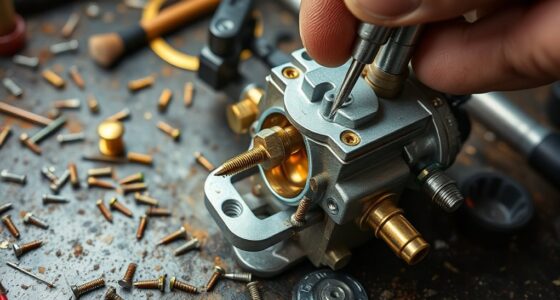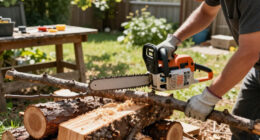

To diagnose slow log splitter cycle times, start by checking the hydraulic fluid level and quality—low or contaminated fluid can cause delays. Inspect hoses and fittings for leaks or blockages, and ensure the pump and motor operate correctly without signs of wear. Verify that valves function smoothly and mechanical parts are aligned and free of damage. Proper maintenance, lubrication, and removing obstructions often fix the issue. Keep exploring to discover detailed tips for speeding up your splitter.

Get business pricing on tools and workshop supplies
- Business-only prices and quantity discounts
- Tax-exempt purchasing
- Multiple users, one account, clear invoices
Key Takeaways
- Check hydraulic fluid levels and viscosity for contamination or degradation affecting flow and pressure.
- Inspect hydraulic hoses and fittings for leaks, cracks, or blockages restricting fluid movement.
- Ensure hydraulic filter is clean and not clogged, allowing proper fluid flow to components.
- Verify hydraulic pump and control valves operate correctly without signs of cavitation or sluggish response.
- Examine mechanical components like cylinders, pistons, and linkages for misalignment, wear, or obstructions.
hydraulic log splitter hydraulic fluid
As an affiliate, we earn on qualifying purchases.
As an affiliate, we earn on qualifying purchases.
Checking Hydraulic Fluid Levels and Quality
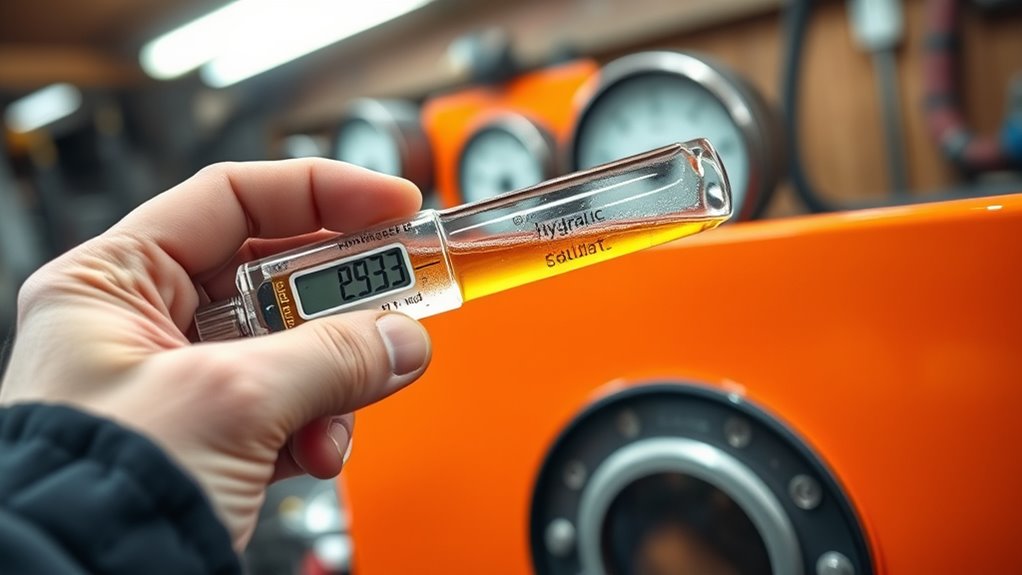
Have you checked the hydraulic fluid levels and quality recently? Low or dirty hydraulic fluid can considerably slow down your log splitter’s cycle times. Start by inspecting the fluid level; if it’s below the recommended mark, top it off with the correct type of hydraulic fluid. Next, evaluate the fluid’s viscosity—if it’s too thin or thick, it indicates contamination or degradation. Hydraulic fluid contamination, like dirt or water, can impair system performance, causing sluggish operation. Use a clean dipstick or sight glass to check for discoloration or particles. If the fluid appears dirty or has an inconsistent viscosity, drain and replace it. Proper hydraulic fluid levels and quality are essential for ideal flow and pressure, directly impacting your splitter’s efficiency. Regular maintenance helps ensure optimal operation and prevents performance issues.
Inspecting Hydraulic Hoses and Connections
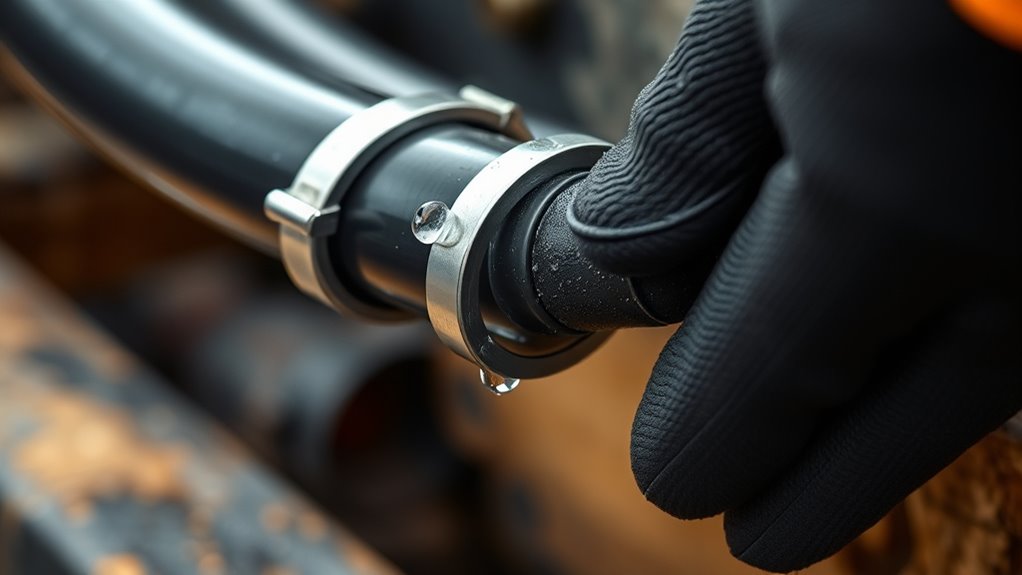
Start by examining your hydraulic hoses for any signs of wear, such as cracks, bulges, or leaks, which can restrict flow. Next, confirm all connections are tight and secure to prevent pressure loss. Finally, look closely for leaks at fittings or along hoses, as even small drips can impact cycle times. Additionally, checking the dog names used for your equipment can ensure proper identification and maintenance.
Hydraulic Hose Wear Signs
Hydraulic hoses are vital components that can reveal underlying issues when they show signs of wear. Recognizing hydraulic hose wear signs helps prevent unexpected breakdowns and costly repairs. Look for cracks, bulges, or abrasions on the hose surface, which indicate deterioration. Swollen or soft areas can signal internal damage, risking hydraulic fluid leaks. You might also notice fluid leaks or visible wear near fittings and connections. When you spot these signs, it’s time for hydraulic hose replacement to maintain system efficiency. Addressing wear early prevents pressure drops and cycle delays. Regular inspections save you from downtime and costly repairs, ensuring your log splitter runs smoothly. Stay vigilant, and don’t ignore these subtle but essential indicators of hydraulic hose health. Monitoring electric power generation components can also help optimize your equipment’s performance.
Checking Connection Tightness
Ensuring all hydraulic hoses and connections are properly tightened is essential for ideal log splitter performance. Loose fittings can cause pressure drops, reducing cycle speed and fuel efficiency. Regularly inspect each connection, tightening fittings as needed with the correct tools. Properly secured hoses prevent air leaks that can slow operation and increase fuel consumption. Operator training plays a crucial role in this process—knowing how to identify loose or damaged connections helps maintain optimal performance. Tight connections ensure consistent hydraulic flow, which improves cycle times and reduces unnecessary fuel use. Additionally, hydraulic system maintenance is vital to prevent unexpected failures and keep the log splitter operating at peak efficiency. Remember, skipping inspections can lead to inefficiencies and potential damage. Make checking connection tightness part of your routine maintenance, and your log splitter will operate more smoothly, efficiently, and reliably.
Inspecting for Leaks
Inspecting for leaks is a crucial step in maintaining your log splitter’s efficiency. Hydraulic fluid leaks or hose wear can lead to slow cycle times and potential damage. Regularly examine hoses and connections for signs of fluid seepage, especially around fittings and bends. Look for wet spots, stains, or slick areas that indicate leaks. Damaged or worn hoses can develop cracks or bulges, increasing the risk of hydraulic failures. Address leaks promptly to prevent loss of pressure and ensure ideal operation. Proper inspection techniques can help identify issues early and prevent costly repairs.
Examining the Hydraulic Pump and Motor

Start by checking the pump’s performance indicators, like flow rate and pressure, to see if it’s operating correctly. Then, test the motor’s functionality to ensure it’s providing consistent power without unusual noises or overheating. Finally, verify that the hydraulic fluid is clean and at the proper level, as poor fluid quality can hinder pump and motor performance. Additionally, inspecting AI vulnerabilities in the control systems can help identify potential issues affecting overall operation.
Pump Performance Indicators
The hydraulic pump and motor are critical components that directly influence the log splitter’s cycle times. Monitoring pump performance indicators helps identify issues early. Check hydraulic fluid viscosity; if it’s too thick or thin, it hampers pump efficiency. Listen for unusual pump noise levels, which can signal internal wear or cavitation. Consistent, smooth operation suggests good pump health, while irregular sounds or vibrations indicate problems. Additionally, observe for pressure drops under load—if pressure isn’t maintained, the pump may be failing. Regularly inspecting these indicators guarantees your pump functions at its best, preventing slow cycle times and reducing downtime. Relationships between component performance and overall efficiency are vital to understand for optimal maintenance.
Motor Functionality Checks
To guarantee your hydraulic pump and motor are functioning properly, you need to perform regular checks on their operation. Start by listening for unusual noises or vibrations, which can indicate issues with the hydraulic cylinder or control valves. Next, observe the motor’s response when activated—slow or inconsistent movement signals potential problems. Inspect the motor’s connections and look for leaks or overheating. Use a pressure gauge to verify adequate pressure levels. Keep in mind that faulty control valves can restrict flow, causing sluggish cycle times. Additionally, reviewing your Personal Finance Management strategies can help ensure you have the necessary funds for necessary repairs and maintenance.
Hydraulic Fluid Condition
Regularly inspecting the hydraulic fluid condition helps guarantee your pump and motor operate smoothly. Check the oil temperature regularly, as overheating can indicate issues with fluid viscosity or pump load. Ensure the hydraulic filter is clean; a clogged filter restricts flow and causes stress on components. Look for signs of contaminated fluid, such as discoloration or debris, which can impair performance. Maintaining proper fluid levels and condition prevents unnecessary wear and reduces cycle times. Utilizing professional mechanic shops for fuel injection cleaning can also help ensure your entire system functions optimally.
Analyzing the Valve System and Controls
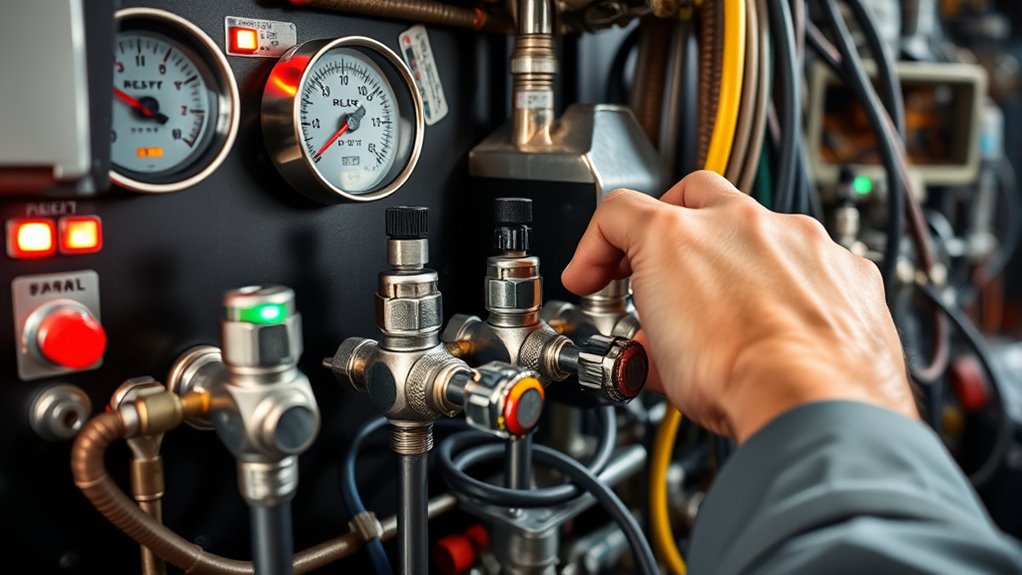
When diagnosing slow cycle times in a log splitter, examining the valve system and controls is essential, as they directly regulate hydraulic flow and pressure. First, check the hydraulic fluid viscosity; if the fluid is too thick, it can hinder valve operation and slow down the cycle. Ensure the valve adjustment is correct, as improper settings can restrict flow or cause delays. Inspect for any dirt or debris that may obstruct valve movement. Confirm that control levers respond smoothly and activate the valves properly. Tight or loose fittings can also impact valve performance. Additionally, verify that the hydraulic fluid viscosity is appropriate for optimal operation, as it affects flow and valve responsiveness. By verifying these aspects, you can identify whether issues stem from improper valve adjustments or fluid conditions, helping you improve cycle times effectively.
Assessing Mechanical Components and Wear

Mechanical components such as the ram, piston, and cylinder are critical to guarantee a smooth and efficient cycle. Over time, wear or damage can cause slow cycle times or uneven operation. You should inspect the hydraulic filter regularly, as a clogged filter can restrict flow and increase wear. Check the pressure relief valve for proper operation; if it’s stuck or improperly set, it can lead to inconsistent pressure and sluggish movement. Look for signs of scoring or pitting on the piston and cylinder walls, which indicate wear. Ensure all mechanical linkages are tight and free of corrosion. Regularly monitoring these components helps identify early signs of wear, preventing more significant issues that could slow down the log splitter’s cycle and reduce its lifespan.
Verifying Proper Lubrication and Maintenance

Proper lubrication and maintenance are essential to keeping the log splitter operating smoothly and preventing slow cycle times. Regularly follow lubrication best practices, ensuring all moving parts are properly greased or oiled at recommended intervals. Create a maintenance schedule to track tasks like changing hydraulic fluid, inspecting hoses, and cleaning filters. This proactive approach minimizes wear and prevents costly repairs. Use the table below to understand the importance of each task:
| Task | Frequency | Purpose |
|---|---|---|
| Lubricating pivot points | Every 8-10 hours | Reduce friction, wear |
| Hydraulic fluid check | Weekly | Maintain smooth operation |
| Inspecting hoses | Monthly | Prevent leaks and blockages |
Consistently following these practices guarantees your splitter stays in top condition, avoiding slow cycle times caused by neglect.
Evaluating the Log Splitter’s Alignment and Assembly
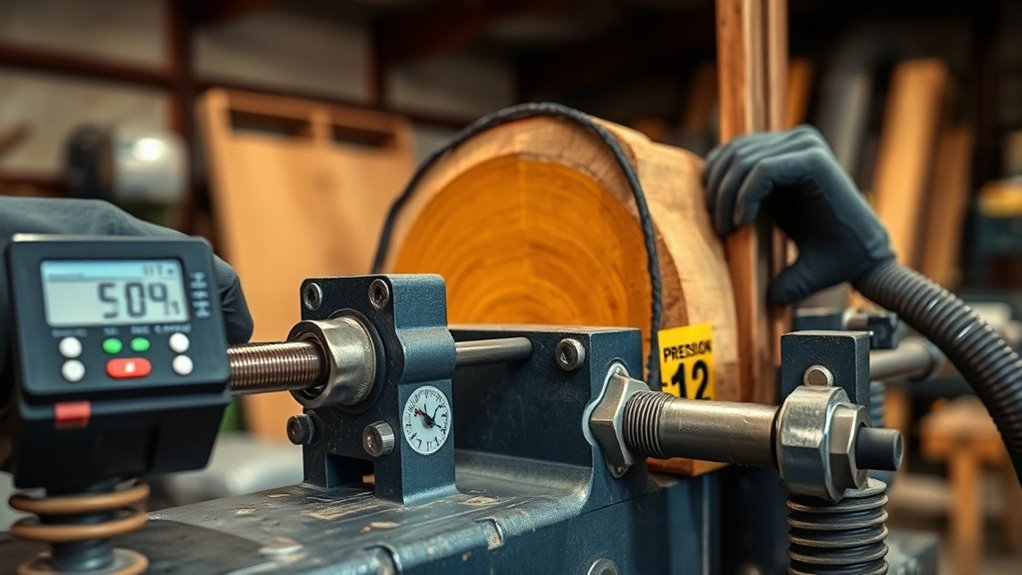
Ensuring your log splitter’s alignment and assembly are correct is essential for peak performance. Misalignment or assembly errors can cause uneven cycles and slow down splitting times. Start by inspecting the cylinder and wedge alignment, ensuring they are perfectly straight and parallel. Check for any signs of misaligned components that might lead to alignment issues. Verify that all bolts and fittings are tight, preventing movement that could affect operation. Proper assembly involves confirming that all parts are installed according to manufacturer specifications.
- Confirm the hydraulic cylinder is straight and aligned
- Tighten all bolts and fittings securely
- Inspect for signs of wear or damage in mounting points
- Reassemble following manufacturer guidelines precisely
Identifying Potential Blockages or Obstructions
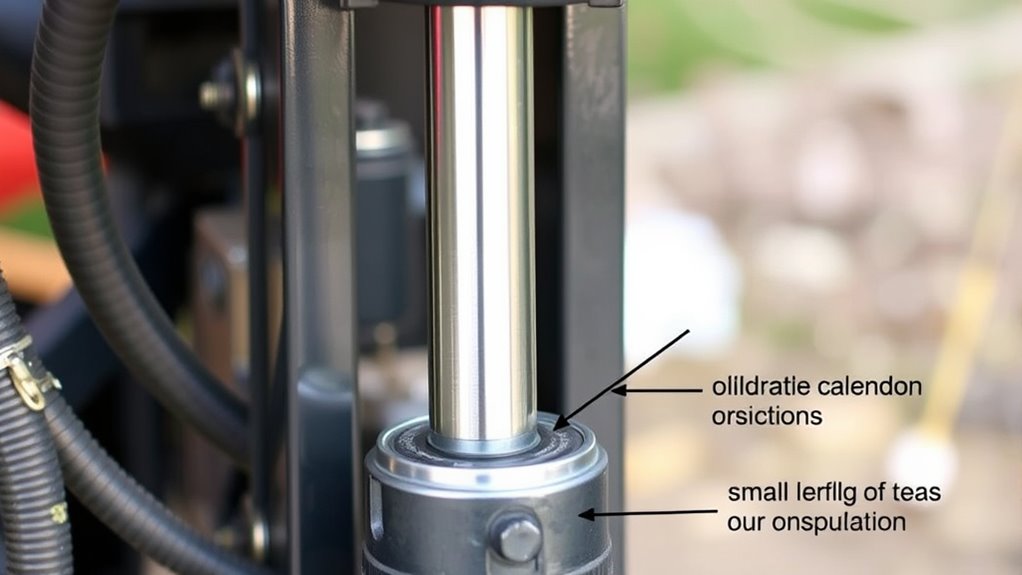
Blockages or obstructions within the log splitter can markedly slow down cycle times if not identified and cleared promptly. Inspect the internal system carefully for debris, dirt, or lodged wood pieces that may hinder movement. Common blockages include jammed logs or fragments stuck in the hydraulic pathways, which restrict fluid flow and reduce efficiency. User errors, such as improper log placement or overloading, can also contribute to obstructions that impede operation. Always shut down the machine before inspecting internal components to prevent injury. Clear any visible obstructions and ensure all parts move freely. Regularly maintaining the internal system and avoiding user errors can help prevent blockages, guaranteeing smoother, faster cycle times and prolonging your log splitter’s lifespan.
Monitoring Operating Conditions and Usage Patterns
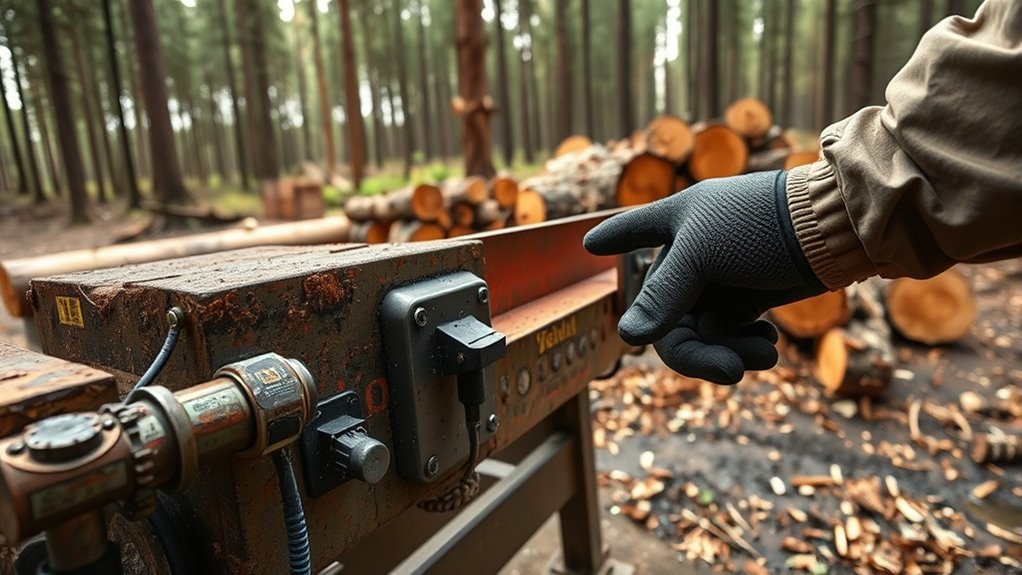
Monitoring the operating conditions and usage patterns of your log splitter helps you detect issues that can lead to slow cycle times. By paying attention to how often and how you operate the splitter, you can identify early signs of wear or misuse. Proper operator training ensures you use safety precautions and avoid damaging the equipment. Tracking cycle times and log sizes helps optimize performance and prevent overloads. Regularly inspecting hydraulic fluid levels and pressure can spot problems before they cause delays.
- Consistent operator training reduces errors and extends equipment life
- Observing usage patterns highlights when maintenance is needed
- Following safety precautions prevents accidents and equipment damage
- Monitoring cycle times helps identify inefficient practices early
Frequently Asked Questions
What Are the Common Signs of Slow Cycle Times in Log Splitters?
If your log splitter takes longer than usual to complete a cycle, you might notice it struggling to split logs efficiently. Common signs include sluggish operation, excessive effort, or inconsistent splitting. These issues often stem from problems with hydraulic fluid, such as contamination or low levels, or wear and tear on components. Regular maintenance helps prevent slow cycle times, ensuring your splitter runs smoothly and efficiently.
How Does Temperature Affect Hydraulic System Performance?
Imagine your hydraulic system as a delicate dance, where temperature sets the rhythm. When it’s too cold, hydraulic fluid viscosity increases, making the system sluggish, like dancers stuck in slow motion. Conversely, high ambient temperatures decrease viscosity, risking leaks and overheating. To keep your log splitter performing smoothly, monitor temperature changes and maintain proper hydraulic fluid viscosity, ensuring your system stays responsive, regardless of the environment.
Can Environmental Factors Impact the Log Splitter’S Cycle Efficiency?
Environmental factors do impact your log splitter’s cycle efficiency. High ambient temperatures can cause hydraulic fluid to thin, reducing pressure and slowing operation, while cold temperatures make the fluid thicker, increasing resistance. Moisture accumulation in the hydraulic system can lead to corrosion and inefficiency. Keep the splitter in a controlled environment or perform regular maintenance to minimize these effects, ensuring smooth and efficient cycle times.
What Safety Precautions Should Be Taken During Troubleshooting?
Think of troubleshooting as defusing a bomb—you need to stay safe. Always wear protective gear like gloves and eye protection to prevent injuries. Before you start, make certain you know how to perform an emergency shutdown, so you can quickly turn off the machine if something goes wrong. These precautions protect you from unexpected hazards, helping you work safely and confidently while diagnosing issues with your log splitter.
How Often Should Hydraulic System Components Be Inspected?
You should inspect your hydraulic system components regularly, following the recommended inspection intervals. During each inspection, check hydraulic fluid levels and look for leaks or contamination. Inspect hoses, fittings, and cylinders for wear or damage. Maintaining proper inspection intervals helps prevent failures and ensures smooth operation. Always refer to the manufacturer’s guidelines for specific inspection schedules, and perform thorough checks to keep your log splitter functioning efficiently and safely.
Conclusion
So, after all that troubleshooting, you’d think fixing a slow log splitter would be straightforward. But nope, sometimes it’s just your hydraulic fluid’s fault—or maybe a tiny clog hiding in the system. Irony is, the simplest fix often turns out to be the hardest to spot. Next time your splitter drags its feet, remember, the solution might be hiding in plain sight—just like that elusive, slow-moving log itself.
Columbus Day / Indigenous Peoples' Day Picks
long weekend sales
As an affiliate, we earn on qualifying purchases.