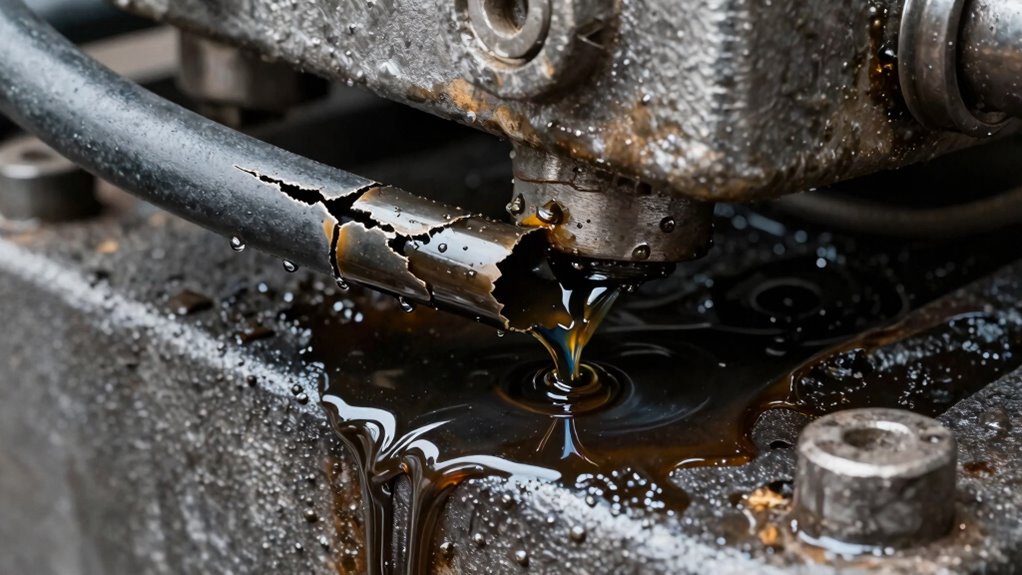

When you notice hydraulic oil leaks, quick detection is key to preventing damage and downtime. Start by visually inspecting connection points, hoses, and seals for visible signs of leaks or oily residue. Use dye tracers or ultrasonic leak detectors to pinpoint hidden or small leaks quickly. Regular maintenance and proper tools can save you time and effort. Keep going to discover proven methods that make identifying leaks faster and easier.
Key Takeaways
- Use ultrasonic leak detectors to quickly identify the precise location of hidden or small leaks.
- Apply dye tracers to visually pinpoint leak sources during inspection.
- Regularly inspect connection points, seals, and hoses for signs of leaks or damage.
- Conduct oil analysis to detect contamination that may indicate leak points.
- Implement routine maintenance and leak detection tools to prevent leaks and ensure swift repair.
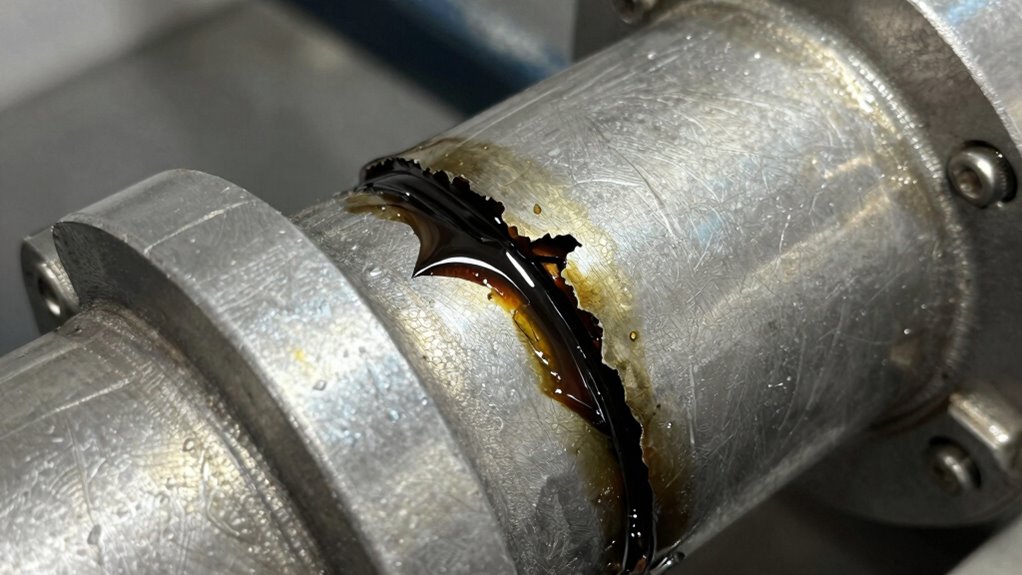
Hydraulic oil leaks can cause serious problems if left unchecked, affecting equipment performance and safety. When you notice a leak, it’s essential to act quickly to minimize damage and prevent costly downtime. The first step is effective leak detection. You need to identify exactly where the oil is escaping to avoid further contamination and ensure your machinery operates smoothly. Often, leaks occur at connection points, seals, or hoses, but they can be tricky to spot if the leak is small or hidden behind equipment. Using visual inspections, combined with leak detection tools such as dye tracers or ultrasonic leak detectors, can help you pinpoint the source fast. These methods are reliable because they allow you to detect even minor leaks that could otherwise go unnoticed until they become major issues. Incorporating leak detection tools into your routine maintenance enhances the accuracy and speed of identifying leaks early on.
Once you’ve identified the leak source, you must understand how oil contamination can worsen the problem. Oil contamination happens when dirt, debris, or water enters the hydraulic system through the leak. Contaminated oil not only reduces the efficiency of your hydraulic components but also accelerates wear and tear, leading to costly repairs or replacements. It’s critical to clean or replace contaminated oil promptly and address the leak to prevent further contamination. Regularly checking your hydraulic system for signs of dirt buildup or discoloration in the oil helps you stay ahead of potential problems. Remember, oil that’s contaminated can obscure the leak, making it harder to detect at first glance. That’s why combining leak detection with oil analysis is a smart move; it provides a detailed picture of your system’s health.
If you ignore the leak, the consequences can be severe. Hydraulic oil leaks often lead to increased energy consumption, as your pump works harder to compensate for the loss of hydraulic fluid. Additionally, leaks can cause environmental hazards, especially if the oil contaminates soil or water sources, and pose safety risks to operators. To prevent these issues, you should regularly inspect your hydraulic systems and maintain proper seal integrity. Addressing leaks early reduces the risk of oil contamination spreading and keeps your equipment running efficiently. Remember, swift detection and repair are essential. Keep tools handy for leak detection, and educate your team about the importance of early intervention. Doing so not only extends the lifespan of your hydraulic components but also maximizes safety and operational reliability.
Frequently Asked Questions
How Often Should Hydraulic Oil Leaks Be Inspected?
You should inspect hydraulic oil leaks regularly, ideally every week or after heavy use, to guarantee early detection. Use effective leak detection methods like visual checks, pressure tests, and dye tracing. Consistent inspection frequency helps you catch leaks early, preventing costly damage and downtime. By staying vigilant and performing thorough inspections, you keep your hydraulic system running smoothly and extend its lifespan.
What Safety Precautions Are Necessary During Leak Repair?
In the blink of an eye, safety’s your top priority when repairing hydraulic oil leaks. You must wear personal protective equipment like gloves, goggles, and coveralls to prevent skin contact and eye injury. Make certain spill containment measures are in place to prevent environmental hazards. Turn off machinery before starting, and work in well-ventilated areas. These precautions keep you safe and prevent further leaks or accidents.
Can Hydraulic Oil Leaks Cause Environmental Harm?
Hydraulic oil leaks can cause significant environmental harm, impacting local ecosystems and wildlife protection. When you have a leak, it can contaminate soil and water, harming plants and animals. To minimize this environmental impact, you should act quickly to contain and clean up the spill, use proper containment measures, and prevent oil from reaching streams or groundwater. Protecting wildlife and the environment is essential during leak repairs.
Are There Eco-Friendly Alternatives to Traditional Hydraulic Oil?
In the age of the Internet, you can find eco-friendly fluids that serve as biodegradable alternatives to traditional hydraulic oil. These options reduce environmental impact and are safe for ecosystems. You should look for biodegradable alternatives made from renewable resources, which break down naturally without harming wildlife. Switching to eco-friendly fluids not only helps protect the environment but also guarantees your equipment runs smoothly with less risk of leaks or spills.
How Long Does It Typically Take to Fix a Hydraulic Oil Leak?
It usually takes anywhere from a few hours to a day to fix a hydraulic oil leak, depending on the severity and location. During leak detection, you identify the source quickly, which helps streamline the repair timeline. If the leak is minor, you might complete repairs faster. However, for more complex issues, plan for a longer repair process to make certain all damaged components are properly fixed and tested.
Conclusion
When you spot a hydraulic oil leak, don’t waste time—the faster you find the source, the less damage you’ll face. Use your keen eye, listen for unusual sounds, and act swiftly like a seasoned mechanic from the age of steam engines. Remember, a small leak today can turn into a costly catastrophe tomorrow. Stay vigilant, keep your tools handy, and you’ll keep your equipment running smooth as a well-oiled locomotive.