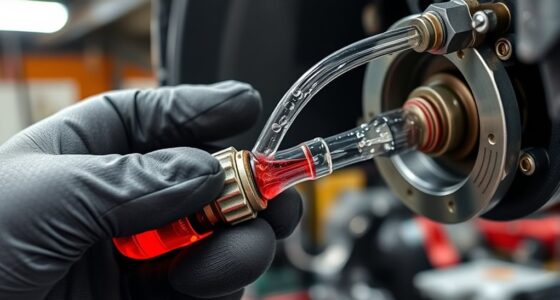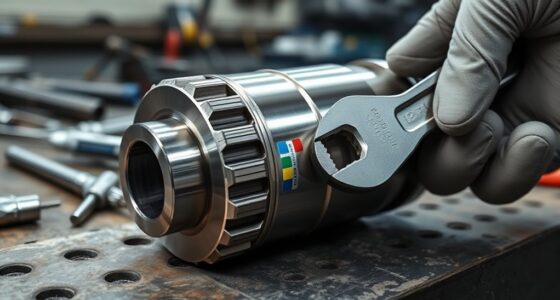
If your hydraulic ram jerks mid-stroke, it’s likely caused by poor maintenance, contaminated fluid, or inconsistent pressure. Make certain to check for leaks, secure fittings, and clean your filters regularly. Fluid quality is vital—use clean, high-quality hydraulic oil, and replace it if contaminated. Also, verify system calibration and alignment to guarantee smooth operation. For more detailed tips on diagnosing and fixing these issues, keep exploring to improve your system’s performance.

Get business pricing on tools and workshop supplies
- Business-only prices and quantity discounts
- Tax-exempt purchasing
- Multiple users, one account, clear invoices
Key Takeaways
- Check and maintain hydraulic fluid quality to prevent contamination and ensure smooth operation.
- Inspect and tighten all hydraulic connections to eliminate leaks and insecure fittings.
- Regularly service the pump to maintain consistent pressure and flow.
- Verify cylinder alignment and calibrate pressure settings to prevent uneven strokes.
- Perform routine system checks and early troubleshooting to identify and resolve issues promptly.
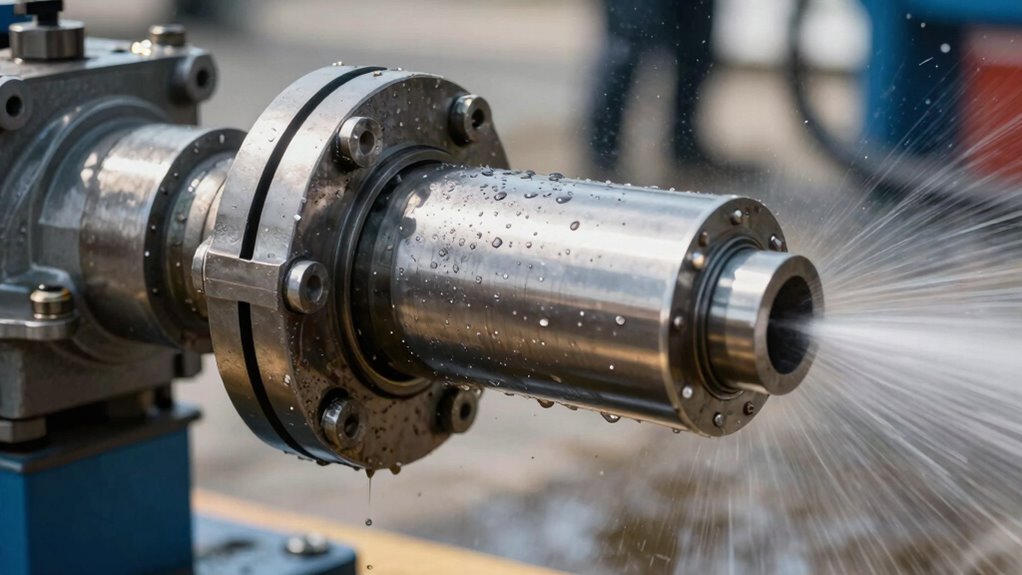
Have you ever noticed your hydraulic ram jerking or stuttering in the middle of its stroke? This sudden movement can be frustrating, especially when you’re trying to get precise work done. Often, this issue points to problems within the hydraulic system, and understanding the cause can help you address it effectively. One common culprit is inadequate pump maintenance. If your pump isn’t regularly checked and serviced, debris and wear can accumulate, leading to inconsistent pressure and flow. Over time, this can cause the ram to jerk as it struggles to maintain steady movement. Guaranteeing proper pump maintenance involves inspecting for leaks, replacing worn seals, and cleaning filters. These simple steps can markedly reduce the chances of jerking and improve the overall performance of your hydraulic system. Additionally, hydraulic system efficiency can be significantly impacted by these maintenance practices, highlighting their importance. Regularly monitoring system performance and troubleshooting early signs of trouble can further help prevent mid-stroke jerking. Addressing issues promptly with system diagnostics can also help maintain smooth operation. In some cases, inadequate system pressure regulation can also contribute to irregular movements, making proper calibration essential. Moreover, ensuring that all hydraulic connections are secure and free of leaks is crucial for consistent operation.
Regular pump maintenance reduces hydraulic ram jerking and improves system performance.
Another key factor behind mid-stroke jerking is fluid contamination. When the hydraulic fluid becomes contaminated—whether with dirt, metal particles, or water—it compromises the system’s efficiency. Contaminated fluid can cause the valves and other internal components to stick or malfunction, resulting in irregular movements like jerking. To prevent this, you should regularly check and change your hydraulic fluid according to the manufacturer’s recommendations. Using high-quality, clean fluid ensures that the system operates smoothly and minimizes the risk of fluid-related issues. Additionally, installing proper filtration systems can catch contaminants before they reach sensitive components, further protecting your hydraulic ram from unpredictable behavior.
Beyond fluid contamination and pump maintenance, it’s important to contemplate other factors such as hydraulic cylinder alignment and pressure settings. Misalignment can cause uneven wear and extra stress on components, which may contribute to jerking. Similarly, incorrect pressure settings can lead to inconsistent movement, especially mid-stroke. Regularly inspecting and calibrating your hydraulic system can help catch these issues early, preventing jerking from becoming a recurring problem. Recognizing the signs of system imbalance and addressing them promptly can save you significant troubleshooting time later. Failure to keep the system properly calibrated can also result in unnecessary wear and irregular movements.
Ultimately, addressing hydraulic ram jerking requires a combination of proper pump maintenance, vigilant fluid management, and routine system checks. Keep your hydraulic fluid clean and well-maintained, and never neglect regular inspections. When you stay on top of these maintenance practices, you’ll reduce the likelihood of fluid contamination causing irregular movements, and your hydraulic ram will operate more smoothly and reliably. If jerking persists despite these efforts, it might be time to consult a professional for a more detailed diagnosis. Taking proactive steps now can save you time and money down the line, ensuring your hydraulic system remains efficient and trouble-free.
As an affiliate, we earn on qualifying purchases.
Frequently Asked Questions
Can Hydraulic Ram Jerking Damage the Entire System?
Yes, hydraulic ram jerking can damage the entire system. When jerking occurs, it causes sudden pressure fluctuations that stress hydraulic fluid components and disrupt system calibration. Over time, this can lead to leaks, worn seals, or even system failure. To prevent damage, you should regularly check hydraulic fluid levels, guarantee proper system calibration, and address jerking issues promptly, maintaining smooth operation and extending system lifespan.
How Often Should I Inspect My Hydraulic Ram?
You should inspect your hydraulic ram regularly, ideally following your maintenance schedule, which often recommends monthly or quarterly checks. Use proper inspection techniques like visual assessments for leaks, corrosion, or unusual wear, and perform operational tests to detect jerking or inconsistencies. Regular inspections help catch issues early, preventing damage and ensuring peak performance, especially if you notice mid-stroke jerking or other irregularities.
Are There Specific Brands More Prone to Jerking?
Did you know that about 15% of hydraulic ram issues stem from brand reliability? Some manufacturers with lower reputations tend to produce models more prone to jerking during operation. You should focus on trusted brands known for quality and durability, as their reputation often correlates with fewer mid-stroke jerks. Always check manufacturer reviews and guarantee you select a model with a solid reputation to minimize performance issues.
Does Water Quality Affect Hydraulic Ram Performance?
Yes, water quality impacts hydraulic ram performance. Poor water quality, especially without proper water filtration, can lead to mineral buildup inside the system. This buildup causes components to stick or jerk mid-stroke. Regularly filtering your water helps prevent mineral deposits, ensuring smoother operation. Maintaining clean, filtered water keeps your hydraulic ram functioning efficiently and minimizes jerking, especially during mid-stroke, extending the lifespan of your system.
Can Temperature Changes Cause Mid-Stroke Jerking?
Did you know that temperature fluctuations can impact hydraulic efficiency profoundly? Yes, sudden temperature changes can cause mid-stroke jerking in your hydraulic ram. When water heats or cools, it alters the water’s viscosity, affecting flow and pressure. These shifts can lead to inconsistent operation, making jerks more likely. To minimize this, keep your system insulated and monitor temperature regularly, ensuring smoother, more reliable performance.
Conclusion
Now that you know the common causes behind your hydraulic ram jerking mid-stroke, you’re better equipped to troubleshoot and restore smooth operation. Think of your hydraulic system as a finely tuned orchestra—when one instrument falters, the harmony suffers. Regular maintenance, proper fluid levels, and addressing issues promptly will keep your system running seamlessly. With attention and care, you’ll prevent future hiccups, ensuring your hydraulic ram performs like a well-oiled machine, steady and reliable.
Fall yard work Picks
leaf blowers
As an affiliate, we earn on qualifying purchases.