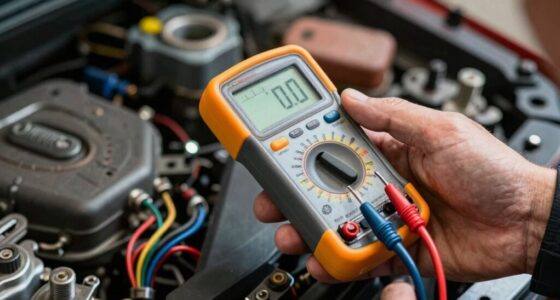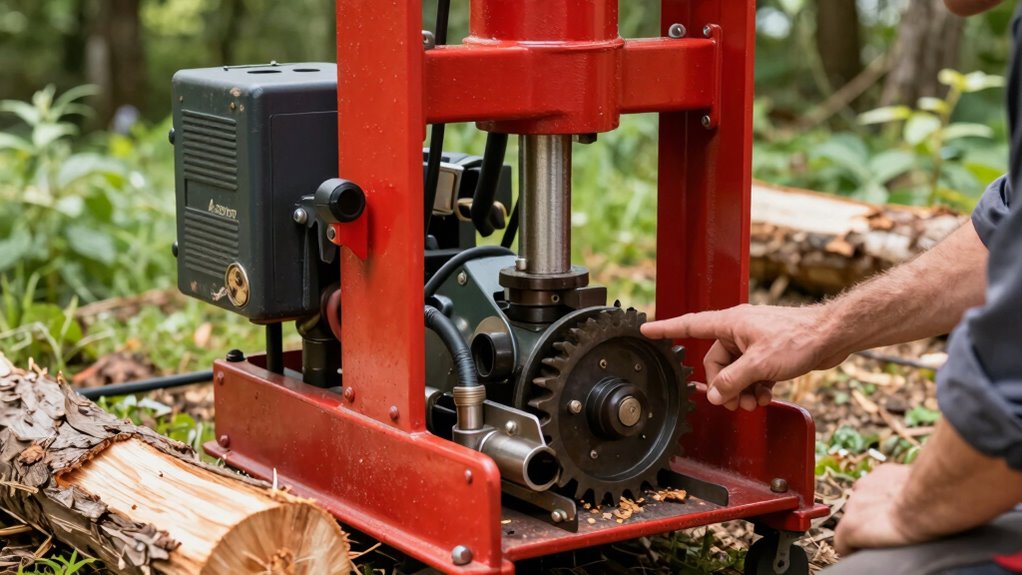

If your log splitter won’t start, start by checking the hydraulic fluid level and quality, as low or dirty fluid can cause issues. Next, inspect the engine components like the air filter, spark plug, and engine oil to confirm they’re clean and properly maintained. Then, verify the fuel system is fresh and unobstructed, and make sure safety switches and control systems are engaged correctly. Finally, test the battery and electrical connections. Continuing will help you pinpoint the exact cause.

Get business pricing on tools and workshop supplies
- Business-only prices and quantity discounts
- Tax-exempt purchasing
- Multiple users, one account, clear invoices
Key Takeaways
- Check hydraulic fluid level and condition to ensure proper system pressure and operation.
- Inspect the engine’s air filter, spark plug, and oil level for maintenance issues.
- Verify the fuel system is fresh, unobstructed, and fuel valve is open.
- Confirm safety switches and interlocks are correctly engaged and functioning.
- Test the battery, connections, and starter for electrical faults or weak charge.
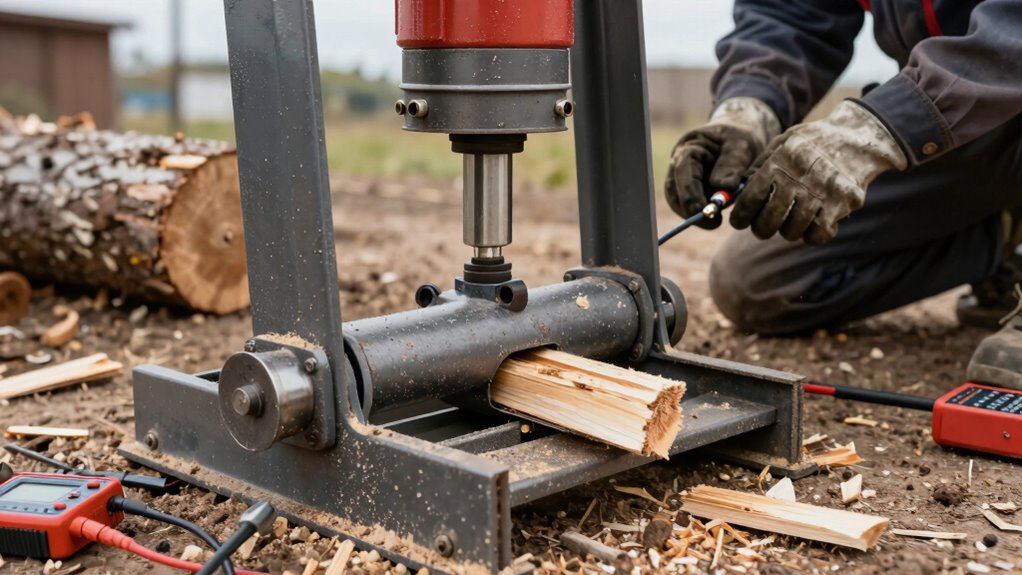
If your log splitter won’t start, it can be frustrating, but often the issue is something you can troubleshoot and fix yourself. One of the most common causes is related to engine maintenance or hydraulic fluid problems. Start by inspecting the hydraulic fluid level because low or contaminated fluid can prevent the system from functioning properly, which might make it seem like the engine isn’t starting at all. Ensure the hydraulic fluid is at the recommended level and that it’s clean. If it’s dirty or old, replacing it can restore proper flow and pressure, helping the splitter operate smoothly.
Next, check the engine itself. Look for obvious signs of trouble, like a dirty air filter, which can choke the engine and prevent it from firing up. Replace or clean the air filter as needed. Ensure the spark plug is in good condition, properly gapped, and free of carbon buildup. A worn or fouled spark plug can cause starting issues, so replace it if necessary. Also, verify that the engine oil is at the proper level; low or dirty oil can cause the engine to struggle or fail to start altogether.
If the engine seems fine but the splitter still won’t start, examine the fuel system. Old or stale fuel can cause starting problems, so drain the tank and refill with fresh gasoline. Check the fuel lines for cracks or blockages, as these can restrict fuel flow. Make sure the fuel valve is turned on and functioning correctly.
Another step involves inspecting the safety features. Many log splitters have safety switches or interlock systems that prevent starting if certain conditions aren’t met. Confirm that all safety switches are engaged correctly and that there are no obstructions or issues with the control buttons. Sometimes, a simple reset or adjustment of these safety features can get your splitter running again.
Finally, verify that the starter mechanism is working properly. Check the battery (if applicable) to ensure it’s charged and connections are tight. If you hear clicking but the engine doesn’t turn over, the starter motor or solenoid might be faulty. In such cases, replacing these parts may be necessary. Additionally, understanding how modern safety features function can help prevent starting issues and ensure safe operation.
As an affiliate, we earn on qualifying purchases.
Frequently Asked Questions
How Often Should I Perform Maintenance on My Log Splitter?
You should perform maintenance on your log splitter at least once a year or after every 50 hours of use. Follow a proper maintenance schedule to keep it running smoothly. Regular lubrication tips, like greasing moving parts and checking hydraulic fluid levels, help prevent issues. Always inspect hoses and fittings, and clean the splitter after use. Staying consistent with these practices guarantees your log splitter remains dependable and safe to operate.
What Safety Precautions Should I Follow When Troubleshooting?
Think of troubleshooting as maneuvering a minefield—you need to proceed carefully. Always wear safety gear like gloves and goggles, and disconnect the power before inspecting parts. Follow a thorough troubleshooting checklist to avoid surprises. Stay alert, avoid rushing, and never bypass safety features. These precautions keep you safe while you diagnose your log splitter, ensuring you don’t accidentally trigger a hazard or cause damage during the process.
Can a Faulty Fuel System Prevent the Splitter From Starting?
Yes, a faulty fuel system can prevent your splitter from starting. If there are carburetor issues or blockages in the fuel flow, the engine won’t get the proper fuel it needs to run. Check for clogged fuel filters, stale fuel, or leaks in the fuel lines. Ensuring your fuel system is clean and functioning properly can often resolve starting problems caused by fuel delivery issues.
What Tools Are Recommended for Diagnosing Electrical Issues?
Think of diagnosing electrical issues as unraveling a tangled web. You should use electrical testers and circuit analyzers to pinpoint problems accurately. Electrical testers help you check for continuity and voltage, while circuit analyzers identify faults within the wiring and connections. These tools act as your guiding compass through the electrical maze, ensuring you can locate issues swiftly and restore your log splitter’s power without unnecessary guesswork.
How Long Does a Typical Repair Process Take?
A typical repair process usually takes about 1 to 3 hours, depending on the issue. If you’re troubleshooting a log splitter that won’t start, you’ll want to check the fuel filter and spark plug first. Replacing a clogged fuel filter or a worn spark plug can often resolve the problem quickly. Make sure you have the right tools ready so you can complete these tasks efficiently.
Conclusion
When your log splitter refuses to budge, think of it like a stubborn mule—sometimes all it needs is a gentle nudge or a fresh perspective. By following these simple steps, you’re the detective unraveling the mystery behind its silence. Remember, patience is your best tool, and with a little troubleshooting, you’ll have it roaring back to life faster than you can say “split logs.” Keep at it, and soon your splitter will be chugging along like a well-oiled machine.
Fall yard work Picks
leaf blowers
As an affiliate, we earn on qualifying purchases.