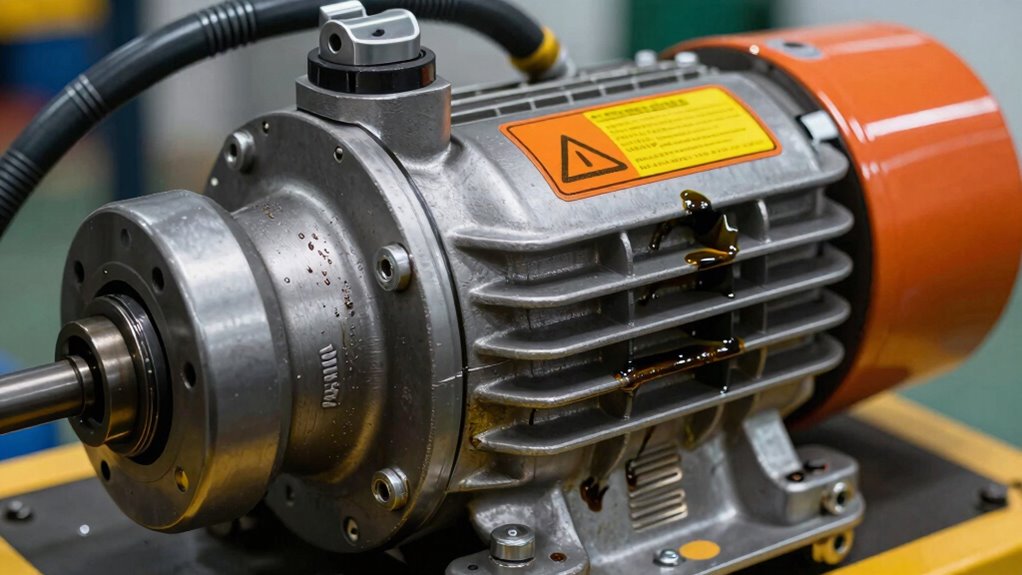
A whining sound from your hydraulic pump usually means there’s an issue like seal wear, fluid contamination, or internal component problems. It can signal that seals are degrading, causing cavitation, or that dirty fluid is increasing friction. These problems impact performance and can lead to more serious damage if ignored. To keep your equipment running smoothly, it’s important to understand what causes this noise and how to address it, which you’ll discover as you explore further.
Key Takeaways
- Persistent whining often indicates seal wear or internal component failure within the pump.
- It may signal fluid contamination, increasing friction and causing abnormal noise.
- Whining combined with decreased system performance suggests seal deterioration or cavitation.
- Excessive noise can result from worn bearings or misalignment in the hydraulic system.
- Early detection of whining helps prevent costly damage and extends pump lifespan.
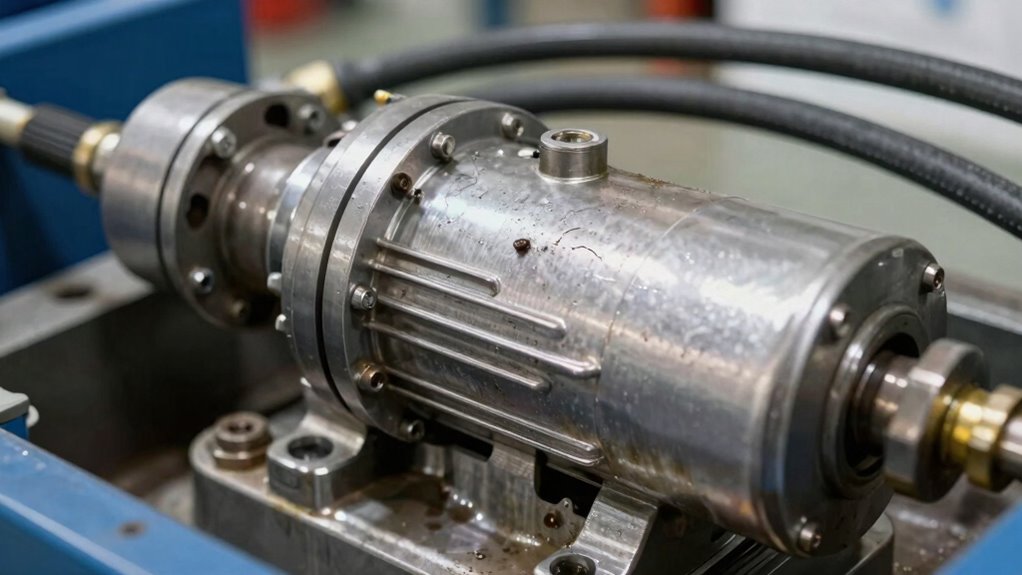
Hydraulic pump noise can be be more than just a minor annoyance; it often signals underlying issues that need attention. If you notice a persistent whining sound when operating your hydraulic system, it’s a sign that something isn’t right. This noise isn’t just a nuisance—it can indicate problems like seal wear, fluid contamination, or other internal failures that could lead to more severe damage if left unaddressed. Recognizing the cause early can save you time and money in repairs and help keep your equipment running smoothly.
One common reason for a whining hydraulic pump is seal wear. Over time, the seals inside the pump can degrade due to continuous use, pressure fluctuations, or exposure to harsh operating conditions. When seals wear out, they may fail to maintain proper sealing, allowing air or contaminants to enter the system. This infiltration can cause cavitation, which results in the pump making a high-pitched whining noise. Seal wear not only affects the noise level but can also lead to reduced efficiency and increased wear on other components. If you notice the whining coinciding with decreased power or irregular operation, it’s likely that worn seals are the culprit.
Fluid contamination is another major factor behind a whining hydraulic pump. Dirty or degraded hydraulic fluid can cause the pump to work harder than it should, generating excessive noise. Contaminants like dirt, metal particles, or water particles interfere with the smooth movement of internal components, leading to increased friction and abnormal sounds. When fluid contamination occurs, the pump’s internal clearances become compromised, and the system may produce a persistent whining or high-pitched noise. Regular fluid checks and changes are vital to prevent contamination-related issues, especially if you see signs of increased noise alongside filter clogging or fluid discoloration. Additionally, monitoring hydraulic fluid quality is essential for early detection of potential problems. Implementing proper filtration and fluid maintenance practices can significantly reduce the likelihood of noise caused by contamination. Moreover, understanding hydraulic system components and their proper functioning can aid in diagnosing and preventing these issues more effectively. Ensuring proper system alignment and checking for worn bearings can further help in reducing abnormal noises and prolonging pump life. Routine inspections and preventative maintenance can also help catch issues before they become costly repairs.

XBVV 420 Pcs Hydraulic O-Ring Kit for ORS/ORFS Flat Face Fittings 9 Size Buna-N 70A O-Ring Seal Kit with Pick for Hydraulic Fittings,SAE J1453 Fittings,Hydraulic Pumping,Size 1/4″-2″
- Multiple Sizes Included: 420pcs in 9 sizes with removal pick
- High-Quality Material: Made from durable NBR rubber
- Wide Compatibility: Suitable for hydraulic fittings and more
As an affiliate, we earn on qualifying purchases.
As an affiliate, we earn on qualifying purchases.
Frequently Asked Questions
How Can I Differentiate Between Whining Noise and Normal Pump Operation?
You can tell the whining noise isn’t normal by listening for a high-pitched sound that persists during pump operation. If you notice the noise gets louder or changes with hydraulic fluid temperature or pressure, that’s a red flag. It often indicates worn pump bearings or low hydraulic fluid levels. Regularly check fluid levels and inspect bearings to prevent damage and guarantee your pump runs smoothly without unnecessary noise.
What Safety Precautions Should I Take When Inspecting a Whining Hydraulic Pump?
When inspecting a whining hydraulic pump, you should wear gloves and eye protection to prevent contact with hydraulic fluid, which can be hazardous. Turn off the system before inspection, and check the pump lubrication to guarantee proper fluid levels and condition. Be cautious of hot surfaces and moving parts, and avoid creating leaks or discharges. Proper safety measures help prevent injuries and protect the hydraulic system during inspection.
Are There Specific Tools Needed to Diagnose Hydraulic Pump Noise Issues?
To diagnose hydraulic pump noise issues, you’ll need a stethoscope or mechanic’s probe to pinpoint the sound source. Check for fluid contamination, which can cause noise, and inspect seals for wear, as worn seals can lead to cavitation and whining. A pressure gauge helps verify proper system pressure. These tools help identify whether fluid contamination or seal wear is causing the whining, guiding effective repairs.
How Often Should Hydraulic Pumps Be Serviced to Prevent Whining Sounds?
Think of your hydraulic pump as a finely tuned orchestra—neglect it, and discord follows. You should service your pump every 1,000 to 2,000 hours of operation to prevent whining sounds. Regular checks on lubrication requirements and seal integrity keep everything running smoothly. Ignoring these can lead to noise and damage, so stay proactive. Consistent maintenance guarantees your pump stays harmonious and efficient, avoiding costly repairs down the line.
Can Operating Conditions Influence the Likelihood of a Whining Hydraulic Pump?
Yes, operating conditions can influence the likelihood of a whining hydraulic pump. Poor pump lubrication or low-quality hydraulic fluid can cause increased friction and noise, making the pump more prone to whining sounds. Heavy workloads, high operating temperatures, or contaminated fluid strain the pump, leading to issues. Regularly checking and maintaining proper pump lubrication and hydraulic fluid quality help prevent these problems and keep your hydraulic system running smoothly.
Conclusion
If your hydraulic pump keeps whining, it’s a sign something’s off. Ignoring the noise can lead to bigger, more costly problems down the line. Regular maintenance and prompt inspections can catch issues early, saving you time and money. So, next time you hear that persistent sound, ask yourself—are you willing to risk a sudden breakdown? Staying proactive guarantees your hydraulic system stays smooth and quiet. Don’t let a simple whine turn into a costly repair.