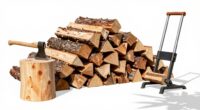
Manual log splitters solve two very different problems: turning split firewood into kindling safely, and breaking down full rounds without a powered machine. After comparing all 12 options in this lineup, the Kindling Cracker Original stands out as the best overall pick because its ring-and-wedge design removes the exposed blade swing that makes axe work risky, and it has a longer proven track record than any lookalike here. If you need to split actual logs rather than kindling, the Sun Joe LJ10M is the hydraulic upgrade worth paying for, while the KABIN Kindle Quick is the smart buy for occasional users on a tighter budget. The core tradeoff in this category is simple: cheap wedge-style tools handle small wood brilliantly but stop at about 6 inches, and 10-to-12-ton hydraulic units split serious rounds but cost several times more and demand storage space. I also found big differences in build quality between cast-iron and stamped-steel models that spec sheets hide well. Keep reading for the full breakdown of which splitter fits your wood pile, your budget, and your tolerance for physical effort.
Complete the kit


Key Takeaways
- The category splits cleanly into two camps: wedge-style kindling splitters that handle wood up to about 6.5 inches, and 10-to-12-ton hydraulic machines built for full rounds. Buying the wrong camp is the most common and most expensive mistake.
- The Kindling Cracker Original earned the top spot on safety design and proven durability rather than raw specs — its enclosed ring removes the blade-swing risk that every axe and slide-hammer alternative still carries.
- Hydraulic picks like the Sun Joe LJ10M and Garvee 12 Ton split seasoned hardwood rounds up to roughly 18 inches, but they cost three to five times more than kindling tools and need garage space and occasional seal care.
- Among budget cast-iron wedge splitters under $50, the real differences were heft, opening diameter, and weld quality — not splitting ability, which was nearly identical across the group.
- Slide-hammer and inertial designs like the AMSXNOO traded splitting force for portability, making them credible camping companions but poor choices for anyone processing a winter’s worth of hardwood.


| manual log splitter | Operation | Material |
|---|---|---|
| Speed Force Firewood Kindling | Hammer-struck wedge, no axe required | Nodular cast iron |
| Manual Log Splitter | Slide hammer (inertia-driven) | Carbon steel |
| KABIN Kindle Quick Log Splitte | — | Cast steel |
| AMSXNOO Manual Wood Splitter | Inertia slide hammer, gravity-assisted | — |
| 12 Ton Hydraulic Log Splitter | Manual hydraulic, two-speed | — |
| 12 Ton Hydraulic Log Splitter | Manual hydraulic, two-speed | — |
| Kindling Cracker Original Fire | Fixed wedge, mallet-struck | Single-piece cast iron |
| Firewood Kindling Splitter | — | Reinforced cast iron |
| Sun Joe LJ10M Cordless Hydraul | — | — |
| Kindling Splitter | Mallet-struck wedge | Cast iron |
| Garvee 12 Ton Hydraulic Log Sp | Manual hydraulic, two-speed | — |
| KABIN Kindle Quick Compact Log | Manual wedge, maul-driven | Cast steel |
More Details on Our Top Picks
Speed Force Firewood Kindling Log Wood Splitter – No Axe, 3 Inch Orange with Safety Cover
The cheapest way into safe kindling splitting here, and I mean that as a compliment. The Speed Force is a 3.3-pound nodular cast iron wedge you fix to a stump, then tap wood through with an ordinary hammer — no axe swing involved. Against the KABIN Kindle Quick, it gives up a lot: the mouth accepts logs only up to 3 inches across, where the KABIN swallows long, thick rounds. This is strictly a kindling tool, not a firewood processor. What it offers instead is price and packability — it disappears into a camping bin in a way the 12-pound KABIN never will. I see it as the right call for occasional fire-pit owners who split a handful of pieces per session. Anyone splitting weekly, or starting from full rounds, should step up to something bigger.
Pros:- Genuine nodular cast iron build that shrugs off years of hammer strikes
- Cheapest safe entry point in the lineup
- At 3.3 lbs it’s light enough to toss in a camping bin
- Included safety cover protects the edge in storage and transport
Cons:- Hard 3-inch log diameter limit — kindling pieces only, no real rounds
- Useless without a stump or solid anchor point to mount it on
- Every split requires a separate hammer in your other hand
Best for: Fire-pit and camping households that split a few kindling pieces at a time and want the cheapest safe option that packs away easily
Not ideal for: Anyone starting from full firewood rounds — the 3-inch ceiling means it only handles pre-cut, kindling-sized pieces
- Material:Nodular cast iron
- Splitting capacity:Logs up to 3 inches in diameter
- Dimensions:3 x 2.5 x 7 inches
- Weight:3.3 lbs
- Operation:Hammer-struck wedge, no axe required
- Mounting:Stump or anchor required
- Color:Orange
- Extras:Safety cover included
Our verdict“Buy it if you want the cheapest safe way to make kindling and already own a hammer and a stump.”
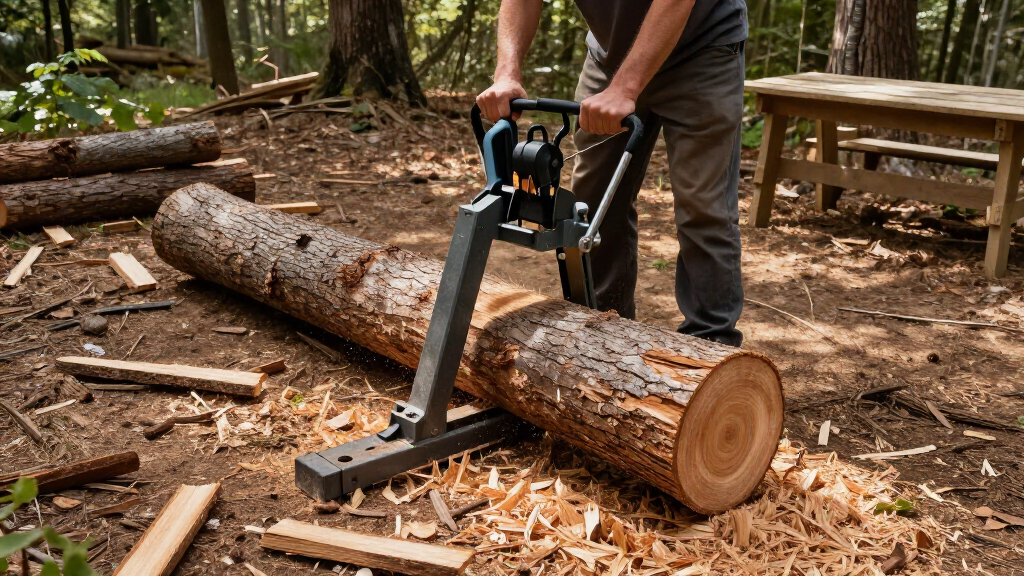
Manual Log Splitter, Slide Hammer Kindling Splitter for Firewood
Most first-time buyers are really shopping for forgiveness, and this slide-hammer design delivers it. Instead of swinging a blade, you lift the hammer sleeve and let gravity drive the split — the motion is contained, so a mistimed strike can’t glance toward your shin. The broad, stable base keeps the log upright without a stump, which is where the Speed Force asks more of you in the form of mounting hardware and a solid anchor. Compared with the AMSXNOO inertial splitter, this model trades blade hardness for stability: the AMSXNOO bites into dense hardwood better, but its tall pole rewards practiced aim. I’d call this the calmest learning curve in the lineup. The tradeoff is ceiling — small logs and kindling only, and every split still costs you a full manual lift.
Pros:- Slide-hammer action keeps the splitting motion contained and predictable
- Broad base stands on its own — no stump or anchor needed
- Carbon steel build with a weather-resistant coating
- Comfort-grip handle softens repeated lifting
Cons:- Caps out at small logs and kindling-sized pieces
- Each split is a full manual lift, which gets tiring across a session
- Struggles with dense hardwood species
Best for: First-time splitters and users wary of swinging tools who want a contained motion and a base that works without any mounting
Not ideal for: Buyers processing dense hardwood or full-size rounds — the capacity limit and repeated lifting will frustrate them fast
- Material:Carbon steel
- Operation:Slide hammer (inertia-driven)
- Handle:Comfort grip
- Base:Broad, stable freestanding base
- Finish:Weather-resistant coating
- Color:Safety yellow
- Use:Indoor and outdoor kindling prep
Our verdict“The calmest first splitter a nervous beginner can buy, as long as their ambitions stop at kindling.”
KABIN Kindle Quick Log Splitter – Manual Steel Wedge for Firewood
This is the design I’d hand to most people without knowing anything else about them. The Kindle Quick’s cast steel ring and wide mouth accept long, knotty, thick pieces that stop the Speed Force cold, and the X-style base with bolt holes stays planted under hammer blows once anchored. Against the 12 Ton Hydraulic splitter, it loses on raw force but wins on rhythm — no pumping, no setup, just split after split at whatever pace your hammer arm keeps. It’s also the simpler machine: nothing hydraulic to leak, nothing to maintain beyond keeping the edge clean. Real drawbacks exist. At 12 pounds it’s not something you casually toss in a trunk, and very large rounds still demand several firm strikes. For typical fireplace and fire-pit wood, though, nothing else here balances capacity, speed, and simplicity this well.
Pros:- Wide mouth takes long, thick pieces that smaller wedges reject
- Cast steel body with no moving parts to break or service
- X-style base bolts down for rock-solid stability under hammer strikes
- Fast working rhythm once anchored — no setup between splits
Cons:- 12 pounds makes it awkward to carry or pack for trips
- Big, knotty rounds still take several hard strikes to get through
- Works best with a permanent or semi-permanent mounting spot
Best for: Regular fireplace and fire-pit burners who want one anchored tool that handles kindling and mid-size pieces with zero moving parts
Not ideal for: Car campers and anyone without a stump or anchor point — at 12 pounds with a bolt-down base, portability is not its strength
- Material:Cast steel
- Weight:12 lbs
- Base:X-style with bolt holes for anchoring
- Design:Wide-mouth wedge, no moving parts or blades
- Finish:Weather-resistant coating
- Intended use:Firewood and kindling, including long and thick pieces
- Color:Black
Our verdict“The one manual splitter most households should buy first — capacity, speed, and simplicity held in balance.”
AMSXNOO Manual Wood Splitter, Inertial Log Splitter, Kindling Splitter (Small)
Two slide-hammer splitters made this list, and they solve different problems. Where the yellow slide-hammer model puts its money into a planted base for newcomers, the AMSXNOO puts its money into the cut: a 45 manganese steel tip that holds an edge against oak and hickory instead of dulling or deforming the way softer wedges can. The two size options matter more than they sound — matching pole length to your height keeps the hammer stroke vertical, which is what makes the inertia mechanism feel easy rather than awkward. Versus the KABIN Kindle Quick, it handles denser species but demands better accuracy, since you’re striking a freestanding log with no ring to catch it. I’d skip it for daily, high-volume work; the mechanism and your shoulders will both feel that pace. For hardwood burners working through armloads of tough kindling, it’s the sharper tool.
Pros:- Manganese steel tip stays sharp against dense hardwood
- Two sizes match different log diameters and user heights
- Inertia slide hammer removes the axe swing entirely
- Non-slip rubber grips keep hands planted during the stroke
Cons:- Freestanding striking demands better aim than ring-style wedges
- Not suited to large rounds or constant heavy-duty sessions
- The 96–99 cm pole is awkward to store and transport
Best for: Hardwood burners and campers splitting dense species like oak or hickory into kindling, especially taller users who benefit from the large size
Not ideal for: High-volume daily splitting — the repeated hammer lifts get strenuous and the design isn’t built for constant heavy-duty use
- Blade material:45 manganese steel
- Operation:Inertia slide hammer, gravity-assisted
- Small size:96 cm length, 16 cm tip
- Large size:99 cm length, 20.5 cm tip
- Handle spacing:34 cm (small) / 37 cm (large)
- Handles:Non-slip rubber grips
- Use case:Household, camping, and outdoor kindling
Our verdict“The pick for dense hardwood kindling, provided your aim and your shoulders are up to repeated strikes.”
12 Ton Hydraulic Log Splitter Wood Cutter, Manual with Steel Beam & Wheels
Everything else on this list is a kindling tool wearing a log splitter’s name; this is the actual log splitter. Twelve tons of hydraulic force pushes through rounds up to 18.7 inches long and 8 inches thick — wood the KABIN Kindle Quick can only nibble at with repeated hammer strikes. The two-speed pump is the spec that matters day to day: a fast ram closes the gap quickly, then you drop into the power stroke for the split itself, so your effort goes where the resistance is. Built-in wheels and 37-inch handles soften the reality that this is a hefty piece of laser-cut steel. Against the wedge-style options here, it’s slower per piece and claims real storage space. But if you’re processing genuine rounds for a wood stove rather than shaving kindling for a fire pit, nothing else manual in this lineup comes close.
Pros:- 12 tons of force handles true firewood rounds, not just kindling
- Two-speed operation keeps effort proportional to resistance
- Wheels and 37-inch handles make a heavy tool manageable on rough ground
- Runs with zero fuel, cords, fumes, or noise
Cons:- Slow cycle time per split compared with swinging a hammer wedge
- Demands real storage space and muscle to move despite the wheels
- Serious overkill — in cost and size — for kindling-only households
Best for: Wood-stove owners processing real rounds up to 8 inches across who want hydraulic force without gas, cords, or engine noise
Not ideal for: Kindling-only users and anyone short on storage — it’s slow per split, bulky to store, and total overkill for fire-pit wood
- Splitting force:12 tons
- Max log length:18.7 inches
- Max log diameter:8 inches
- Handle length:37 inches
- Operation:Manual hydraulic, two-speed
- Construction:Laser-cut steel beam
- Portability:Built-in wheels
- Power source:None — no gas or electricity required
Our verdict“The only tool here that genuinely replaces a powered splitter for real firewood rounds.”
12 Ton Hydraulic Log Splitter Wood Cutter, Manual with Steel Beam & Wheels
This splitter takes the top slot because 12 tons of force is the most muscle available here without a gas engine, and that headroom matters the moment you hit knotty, stringy rounds that stall smaller machines. Compared with the Sun Joe LJ10M, you get two more tons of force, a touch more log length at 18.7 inches, and a two-speed pump that moves the ram quickly through easy wood before dropping into a low gear for the stubborn stuff. The 37-inch handles deliver real leverage, and the wheels save your back when moving it across a yard. The tradeoffs are honest ones: it’s slower per split than tapping rounds through the Kindling Cracker for kindling duty, pumping through a full cord is a workout, and the heavier steel beam makes it less pleasant to load into a vehicle than the 10-ton Sun Joe.
Pros:- 12-ton force handles knotty hardwood that stalls 10-ton rivals
- Two-speed pump speeds through easy splits and adds grunt on tough ones
- 37-inch handles provide real leverage with less strain
- Built-in wheels make repositioning around the yard manageable
Cons:- Slower per split than swinging a mallet at a wedge splitter
- Heavier steel beam is awkward to load into a vehicle
- Pumping through a full cord is genuine physical work
Best for: Homeowners heating with wood who split full cords of mixed hardwood each season
Not ideal for: Occasional campers or kindling-only users — the weight and pumping effort are overkill beside a mallet-struck wedge
- Splitting Force:12 tons
- Max Log Length:18.7 inches
- Max Log Diameter:8 inches
- Handle Length:37 inches
- Operation:Manual hydraulic, two-speed
- Construction:Laser-cut steel
- Portability:Built-in wheels
- Fuel or Cords:None required
Our verdict“The right buy for anyone splitting serious firewood volume by hand — accept the workout, get the most force available without a motor.”
Kindling Cracker Original Firewood Kindling Splitter, 6.5-inch Opening
The Kindling Cracker Original is the one I’d hand to someone who has never split wood in their life. There’s no swinging blade — you set a round inside the ring, tap it with a mallet, and the fixed wedge does the work, which removes the injury risk that makes axes intimidating. Its single-piece Australian cast iron build feels like an heirloom next to the thinner castings on budget wedges like the Heavy Duty Cast Iron splitter further down this list. The limits are real, though: the 6.5-inch opening only accepts small rounds, so this makes kindling, not firewood, and unlike the 12-ton hydraulic it can’t touch anything with serious diameter. You also supply your own mallet. For campfire prep and wood-stove kindling, safety and simplicity win; for processing logs, look at the hydraulics.
Pros:- Fixed wedge design removes the axe swing entirely
- Single-piece Australian cast iron is built to outlast its owner
- Simple enough for supervised kids and first-time users
- Works indoors or out in any weather
Cons:- 6.5-inch opening limits it to kindling-sized rounds
- Mallet sold separately
- Priced above functionally similar cast iron wedges
Best for: Families and first-time splitters who want kid-safe kindling prep by the fire pit or wood stove
Not ideal for: Anyone processing rounds over 6.5 inches across — this makes kindling only, never full-size firewood
- Opening:6.5 inches
- Material:Single-piece cast iron
- Origin:Made in Australia
- Operation:Fixed wedge, mallet-struck
- Temperature Range:-94°F to 70°C
- Use:Indoor and outdoor
- Maintenance:No blades to sharpen
Our verdict“The safest, most proven kindling maker here — buy it if small splits near kids and pets are the whole job.”
Firewood Kindling Splitter, Manual Log Splitter, Cast Iron Wedge
This cast iron wedge follows the Kindling Cracker playbook — log in, mallet strike, no axe swing — but undercuts it on price while adding an X-shaped base with four mounting holes, so you can bolt it to a stump or deck and work one-handed. Against the Sun Joe LJ10M it’s plainly outgunned on capacity, but for turning already-cut firewood into stove-ready pieces it asks far less money and zero upkeep beyond a wipe-down. The lifetime warranty is a genuine differentiator at this price. Where it gives ground to the pricier Kindling Cracker Original is finish quality and track record; unbranded castings vary, and there’s no mallet in the box. Capacity also stops at small-to-medium rounds, so anyone starting from whole logs needs a hydraulic option instead of this.
Pros:- X-base with four mounting holes allows one-handed, bolted-down use
- Lifetime warranty at a budget price
- Rust-resistant coating holds up to outdoor storage
- Cheapest route to safe, swing-free splitting in this lineup
Cons:- Unbranded casting quality is less consistent than the Kindling Cracker
- No mallet included
- Small-to-medium rounds only
Best for: Budget-conscious buyers who already own a mallet and want a bolted-down kindling station
Not ideal for: Buyers who want brand-name backing and refined castings — the unbranded build varies more than the Kindling Cracker
- Material:Reinforced cast iron
- Construction:Single-piece
- Base:X-shaped with four mounting holes
- Finish:Rust-resistant eco coating
- Warranty:Lifetime
- Log Size:Small to medium rounds
- Extras:Mallet not included
Our verdict“The smart budget pick if you want wedge-splitter safety with a mountable base and don’t need a name on the casting.”
Sun Joe LJ10M Cordless Hydraulic Steel Log Splitter, 10 Ton Capacity
The Sun Joe LJ10M is the pick for buyers who want hydraulic force without gambling on a no-name listing. Its 10 tons of pressure covers the same 18-inch, 8-inch-diameter firewood class as the 12-ton splitter above, and what you surrender in peak force you gain back in established brand support, replacement parts, and a slightly lighter frame that’s easier to wheel around a property. In practice, straight-grained oak, maple, and pine split without drama; only twisted or green knots expose the two-ton gap. The real compromises: every split still comes from your arms, so cycle fatigue sets in during big sessions, and the 18-inch log ceiling means cutting rounds to length first. Against the cast iron wedges it handles far larger wood, but costs more and demands real storage space.
Pros:- 10 tons covers standard 18-inch firewood with authority
- Established brand with real warranty and parts support
- Rear wheels and lighter frame ease moves around the property
- Steel frame survives seasons of outdoor use
Cons:- Two tons less force than the 12-ton pick shows on knotty rounds
- Arm-powered pumping fatigues during long sessions
- 8-inch diameter cap forces pre-cutting larger logs
Best for: Weekend firewood cutters who value warranty support and parts availability over peak tonnage
Not ideal for: High-volume splitters tackling green, knotty hardwood — the 10-ton ceiling and arm-powered pumping will slow them down
- Splitting Force:10 tons
- Max Log Length:18 inches
- Max Log Width:8 inches
- Power Source:Manual hydraulic
- Construction:Steel frame
- Portability:Rear wheels
- Brand:Sun Joe
Our verdict“Choose this over the 12-ton if brand support and easier wheeling matter more than the last two tons of force.”
Kindling Splitter, Heavy Duty Cast Iron Manual Wood Splitter for Firewood
At 7.3 pounds, this heavy duty cast iron splitter is the one I’d throw in a truck for a camping weekend. It’s genuinely packable in a way the 12-ton hydraulic and even the Sun Joe never will be, and the 9.8-inch height gives the wedge enough travel to pop small rounds cleanly. Compared with the Kindling Cracker Original, you lose the ring’s full enclosure and some casting refinement, but you gain a lighter, cheaper tool that still keeps hands away from any swinging edge. The drawbacks follow from the size: the 6.1-inch blade width caps you at small logs only, the light base can skate on hard strikes unless you steady or mount it, and there’s no mallet included. For RV trips and fire pits it’s a natural fit; for stocking a winter woodpile, it’s the wrong tool entirely.
Pros:- 7.3-pound body packs easily for camping and RV trips
- 9.8-inch wedge height splits small rounds in one or two taps
- Rust-resistant cast iron survives outdoor life
- Keeps hands clear of any swinging blade
Cons:- 6.1-inch blade caps log size firmly
- Light base can shift under hard strikes unless steadied
- No mallet or mounting hardware included
Best for: Campers, RV owners, and fire-pit users who need a packable splitter for small rounds
Not ideal for: Anyone stocking a winter woodpile — the 6.1-inch blade and light base aren’t built for volume
- Material:Cast iron
- Blade Width:6.1 inches
- Height:9.8 inches
- Weight:7.3 pounds
- Dimensions:6.1 x 9.8 x 8.3 inches
- Finish:Rust-resistant
- Operation:Mallet-struck wedge
Our verdict“A camping and fire-pit companion, not a woodpile tool — buy it for portability, skip it for volume.”
Garvee 12 Ton Hydraulic Log Splitter
If your goal is splitting actual firewood rounds rather than just kindling, this is where I’d point you in a manual roundup. The Garvee 12 Ton uses a hydraulic ram with two-speed operation, so the handles move fast under no load and shift into a slower, high-force stroke when the wedge bites. That matters because it cuts the number of pumps per log without demanding more arm strength. Compared with the KABIN Kindle Quick Compact, which tops out at kindling-sized work, the Garvee handles rounds up to 8 inches across, and its 12 tons of force edges out the 10-ton Sun Joe LJ10M on stubborn, knotty wood. The tradeoff is bulk and effort: this is a heavy steel unit, and big hardwood rounds still mean real pumping. The built-in wheels soften that, but storage space is a genuine requirement.
Pros:- 12-ton hydraulic force handles dense hardwood rounds that defeat wedge-style splitters
- Two-speed pump reduces the pumping effort per log
- Built-in wheels make a heavy steel unit manageable to move
- 37-inch handles give good leverage without straining your back
Cons:- Slow cycle time versus powered splitters — splitting a full cord by hand is an afternoon of work
- Caps out at 18.7-inch logs, so oversized rounds need pre-cutting with a saw
- Heavy and bulky to store compared with any wedge-style kindling splitter
Best for: Homeowners who burn full-size firewood and want hydraulic force without buying a gas or electric splitter
Not ideal for: Apartment wood-stove users or anyone only making kindling — a compact wedge splitter like the KABIN Kindle Quick Compact is cheaper, lighter, and faster for that job
- Splitting Force:12 tons
- Max Log Length:18.7 inches
- Max Log Diameter:8 inches
- Handle Length:37 inches
- Construction:Full steel
- Operation:Manual hydraulic, two-speed
- Portability:Built-in wheels
Our verdict“The right pick for anyone who wants to split real firewood rounds by hand and is willing to trade speed and storage space for serious hydraulic force.”
KABIN Kindle Quick Compact Log Splitter – Manual Steel Wedge for Firewood
Within this lineup, the KABIN Kindle Quick Compact fills the opposite niche from the Garvee 12 Ton: it isn’t trying to split rounds at all. It’s a cast steel wedge you set a log onto and strike with a maul, which means no swinging blade near your hands — a real safety argument over using a hatchet, and the reason I’d recommend it to beginners over slide-hammer designs like the Manual Slide Hammer Kindling Splitter. The wide mouth and slanted teeth grip wood better than flat-top wedge designs, and at 5.5 pounds with a carry handle it’s the easiest product here to toss in a camping bin. The tradeoffs are honest ones: you supply all the force with a hammer, it only works on small to medium pieces, and the bolt holes exist because it performs best mounted to a stump or deck, which limits spontaneity.
Pros:- No swinging blade, making it the safest manual splitting method in the roundup
- Cast steel build shrugs off repeated maul strikes
- Light enough at 5.5 pounds to pack for camping trips
- Slanted teeth and wide mouth hold logs steadier than basic wedge designs
Cons:- Every split requires hammer strikes — tiring for large batches
- Limited to small and medium logs; full-size rounds are out of scope
- Performs best bolted to a stable surface, so freestanding use is compromised
Best for: Campers, fire-pit owners, and beginners who mainly need kindling and want the safest possible manual method
Not ideal for: Anyone processing full rounds of firewood — the Garvee 12 Ton or a 10-ton hydraulic unit will do in minutes what this cannot do at all
- Weight:5.5 pounds
- Material:Cast steel
- Base:X-style with bolt holes for mounting
- Color:Black
- Design:Wide mouth, tall base, slanted teeth
- Portability:Integrated carrying handle
- Operation:Manual wedge, maul-driven
Our verdict“The smart buy for kindling-focused users who value safety and portability over raw splitting capacity.”
How We Picked
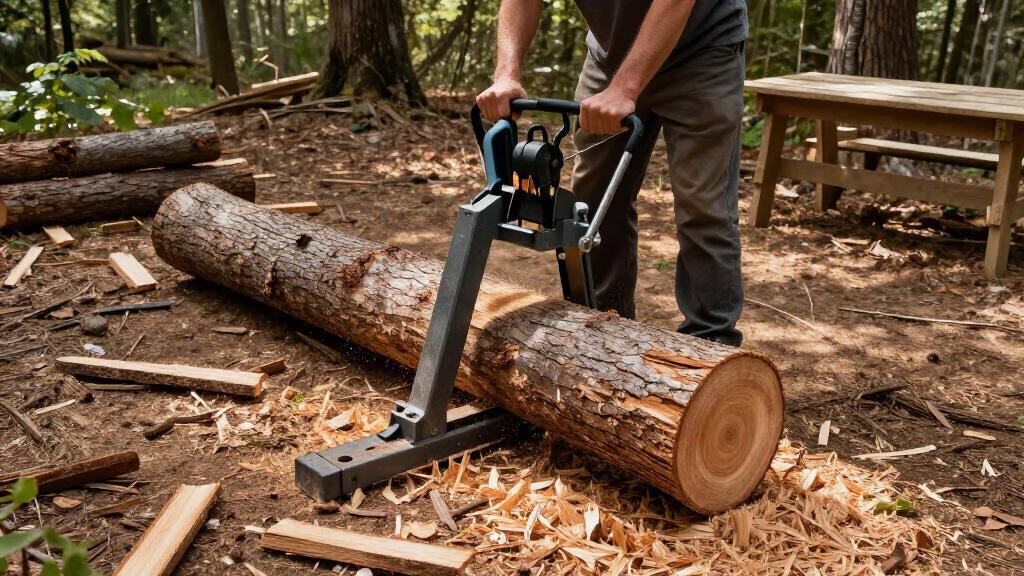
I ranked these 12 manual log splitters on the factors that actually change a buyer’s day: splitting mechanism and force, maximum log size, safety design, build materials, ease of setup, and price-to-performance ratio. Because kindling tools and hydraulic splitters serve different jobs, I judged each product against its direct rivals first — wedge splitters against wedge splitters, ton-rated hydraulics against other hydraulics — then ranked the overall list by how well each tool performs its intended role per dollar spent.
Safety carried real weight in the ordering. Designs that keep hands away from the cutting edge, like the ring-style Kindling Cracker and the KABIN units, scored higher than free-swing options with similar splitting power. Build quality broke the ties: heavy cast iron with clean welds outranked thin stamped steel, and hydraulic models were penalized for vague tonnage claims or missing specs like stroke length. The result is a list where the top spots go to tools that are safer, better documented, and more durable — not simply the strongest or the cheapest.
| manual log splitter | Material |
|---|---|
| Speed Force Firewood Kindling | Nodular cast iron |
| Manual Log Splitter | Carbon steel |
| KABIN Kindle Quick Log Splitte | Cast steel |
| AMSXNOO Manual Wood Splitter | — |
| 12 Ton Hydraulic Log Splitter | — |
| 12 Ton Hydraulic Log Splitter | — |
| Kindling Cracker Original Fire | Single-piece cast iron |
| Firewood Kindling Splitter | Reinforced cast iron |
| Sun Joe LJ10M Cordless Hydraul | — |
| Kindling Splitter | Cast iron |
| Garvee 12 Ton Hydraulic Log Sp | — |
| KABIN Kindle Quick Compact Log | Cast steel |
Factors to Consider When Choosing Manual Log Splitters
The product reviews above tell you which splitters earned their spots. This guide explains the wider decisions that shape which one belongs in your shed — the differences between mechanisms, the wood you’re actually splitting, and the price thresholds where paying more stops buying you anything useful.
Match the Mechanism to the Job
Manual splitters come in three mechanical flavors, and picking the wrong one is the mistake most buyers make. Fixed-wedge kindling splitters hold a blade stationary while you strike the log with a mallet — they excel at making kindling from already-split firewood and are the safest entry point. Slide-hammer and inertial splitters drive a wedge into the wood using a weighted sliding shaft; they need no mallet and pack small, but they demand more technique and deliver less force. Hydraulic hand splitters use pump levers to generate 10 to 12 tons of pressure, enough for full rounds of seasoned oak or maple. The tradeoff is speed and effort: a hydraulic cycle takes longer per log than a mallet strike, and the machines weigh 60 pounds or more. If your goal is kindling for a wood stove, a hydraulic unit is overkill. If your goal is processing unsplit rounds, a wedge splitter will simply fail.
Log Diameter and Wood Species Matter More Than Tonnage
Specs like 10 tons or 12 tons sound decisive, but the numbers that gate your purchase are opening diameter and maximum log length. A kindling splitter with a 6.5-inch ring physically cannot accept a 10-inch round, no matter how hard you swing. Hydraulic models in this lineup top out around 18 inches of log length, which covers standard stove-cut firewood but not oversized rounds. Wood species changes the math too: straight-grained softwood like pine pops apart with modest force, while knotty, seasoned hardwood resists even 12 tons if the grain twists. Green wood splits more easily along the grain but is useless for kindling until it dries. Measure the largest wood you realistically expect to split, then buy one size up — buyers who size to their average log end up stuck on the biggest one in the pile.
Safety Design Is the Real Differentiator
Every manual splitter in this roundup is marketed as a safer alternative to an axe, but the claim holds up unevenly. Ring-and-wedge designs, like the Kindling Cracker, enclose the striking zone so the mallet and blade can never meet a hand — this is the gold standard for households with teenagers or first-time users. Open wedge designs with safety covers, like the Speed Force, reduce exposure but leave more to user technique. Slide-hammer models keep the blade pointed away from your hands entirely, though the momentum of a weighted shaft introduces its own learning curve. Hydraulic splitters are mechanically the safest because both hands stay on the pump levers, yet their pinch points and heavy frames demand respect. The common buyer mistake is assuming all manual splitters are equally safe and choosing on price alone; the safety gap between a covered ring design and a bare wedge is wider than any price gap in this category.
Build Materials Tell You How Long It Will Last
Cast iron and thick welded steel dominate this category, and the difference shows up in years, not months. Solid cast-iron wedge splitters shrug off thousands of mallet strikes without deforming, while cheaper stamped or thin-plate steel versions can bend at the weld points under repeated heavy use. For hydraulic models, the weak points are the seals, pump, and beam welds — a full-steel beam is a meaningful spec, because flex in the frame robs splitting force and accelerates wear. Rust is the quiet killer for everything here: splitters live in sheds and wood piles, so a quality powder-coat or painted finish is not cosmetic. Weight is also a proxy for durability in this category. A kindling splitter that feels reassuringly heavy in the listing photos usually is, and the featherweight imitations usually bend.
Portability, Mounting, and Storage Realities
Where and how you use a splitter changes which design fits. Fixed-wedge splitters work best mounted to a stump, deck post, or purpose-built base; a wobbly splitter is both slower and less safe, so factor in whether you have a solid mounting point. Slide-hammer models need no mounting at all, which is why they’re the natural pick for campsites and cabins. Hydraulic units with built-in wheels, like the Garvee and the 12-ton models here, move around a yard fine but still need level ground and roughly two square feet of storage year-round. Buyers often overlook the working position: kindling splitters put the work at stump height, while hydraulics operate low to the ground, which matters if kneeling is a problem. Think through the full routine — carrying the wood to the splitter, operating it, stacking the result — before fixating on the tool itself.
Where Your Money Actually Goes
Price tiers in this category map cleanly to capability. Under about $50, you get cast-iron wedge splitters that do one job — kindling — extremely well, and the honest answer is that the cheapest decent one performs nearly as well as the priciest. The mid-range, roughly $50 to $100, buys better-known designs with refined geometry, safety covers, and finish quality, which is where most buyers should land. Above $150, you’re paying for hydraulic force, and the jump is justified only if you genuinely split full rounds; no amount of money makes a wedge splitter handle an 18-inch log. The waste case to avoid is buying a hydraulic machine for occasional kindling duty — it will sit unused while a $40 wedge does the job daily. Spend to match your biggest regular task, not your imagined worst case, and put any leftover budget toward a good mallet and a mounting base.
Frequently Asked Questions
Are manual log splitters actually worth it compared to just using an axe?
For kindling, yes, almost without exception. A fixed-wedge kindling splitter removes the two biggest axe risks — the missed swing and the glancing blade — because the cutting edge stays stationary and a mallet provides the force. It’s also faster for repetitive small work, since you’re not resetting a chopping stance between pieces. For full-sized rounds, the answer depends on volume: an axe or maul is cheaper and keeps you fit, but a 10-to-12-ton hydraulic splitter handles knotty hardwood that defeats most swingers, and it does so with far less strain on your back and shoulders. The buyers who regret manual splitters are usually those who bought a kindling tool expecting it to split logs. Match the tool to the wood size and the upgrade pays for itself in saved frustration within a single season.
Can a manual log splitter handle full hardwood rounds, or only kindling?
Only the hydraulic models in this lineup can handle full rounds, and even they have limits. The Sun Joe LJ10M, the Garvee, and the 12-ton units generate enough pressure for seasoned hardwood up to roughly 18 inches long, which covers standard firewood cutting. Wedge-style and slide-hammer splitters are kindling tools by design — their openings max out around 6 to 6.5 inches, and no amount of mallet force changes that physical ceiling. The nuance is grain: straight-grained oak or ash splits willingly under hydraulic pressure, while a twisted, knotty round can stall a 12-ton machine and would defeat any manual wedge. If your wood pile arrives as unsplit rounds, budget for a hydraulic model. If it arrives as split firewood that needs breaking down for starting fires, a kindling splitter is the right tool and the hydraulic is wasted money.
How many tons of splitting force do I actually need?
If you’re buying a hydraulic manual splitter, 10 tons covers most household firewood, including seasoned oak, maple, and birch cut to standard lengths. The jump to 12 tons, as on the Garvee and the two 12-ton beam models here, buys headroom for knotty or larger rounds rather than a fundamentally different capability — expect it to matter on maybe one log in ten. Below the hydraulic tier, tonnage is irrelevant because kindling splitters don’t work by tonnage; a mallet strike concentrates force at the wedge edge, and that’s plenty for small, dry wood. The mistake is shopping tonnage as a headline spec when log length capacity and beam construction limit you first. A well-built 10-ton unit with an 18-inch stroke outperforms a flimsy 12-ton unit on real wood piles. Buy for the size and species you split most, and let tonnage be the tiebreaker, not the decider.
What is the safest manual log splitter for a beginner or a family?
The safest design in this roundup is the ring-and-wedge style, led by the Kindling Cracker Original. The log sits inside a steel ring and the mallet strikes only its top surface, so hands never enter the blade zone and the split pieces stay contained instead of flying. The KABIN Kindle Quick follows the same principle at a lower price, and the Speed Force adds a safety cover over its wedge for a similar effect. Slide-hammer models are mechanically safe in a different way — the wedge points away from your body — but the swinging weighted shaft demands more coordination, so I’d steer true beginners toward a ring design. Hydraulic splitters keep both hands on pump levers, which is inherently safe, though their weight and pinch points make them a poor fit for younger helpers. For a household where teenagers or first-timers will split kindling, a ring-style wedge splitter is the choice I’d make without hesitation.
Do manual hydraulic log splitters need maintenance, and what kind?
Yes, though the workload is modest. The hydraulic ram and seals are the service points: check the fluid level periodically, watch for weeping around the ram, and store the unit dry so moisture doesn’t pit the piston rod — a pitted rod shreds seals within a season. Pivot points and pump linkages benefit from occasional oil, and the wedge and beam welds deserve a visual once-over each season for cracks or bends. Wedge-style kindling splitters need almost nothing beyond keeping rust at bay with a light coat of oil or a dry storage spot, plus touching up the wedge edge if mallet strikes mushroom it over years of use. The failure pattern to avoid is leaving a hydraulic splitter outside under a tarp; trapped condensation does more damage than actual use. Treat the hydraulic models like a small piece of farm equipment and the cast-iron wedges like a hammer, and both will outlast their price tags comfortably.
Conclusion
The right manual log splitter depends on which job you’re actually solving. For most buyers, the Kindling Cracker Original is the best overall choice: the safest design in the lineup, a proven track record, and a price that undercuts overthinking. If you’re watching your budget, the KABIN Kindle Quick delivers the same enclosed-wedge safety concept for less, and the plain cast-iron wedge splitters under $50 split kindling nearly as well as anything here. Beginners and families should start with a ring-style or covered-wedge design — safety geometry matters more than any other spec at the entry level. If your pile is full rounds rather than split firewood, step up to hydraulics: the Sun Joe LJ10M is the best premium pick for its brand backing and 10-ton capability, while the Garvee 12 Ton suits high-volume users who want two-speed pumping and wheels for moving between wood stacks. And if portability tops your list for camping or cabin trips, a slide-hammer or inertial splitter like the AMSXNOO is the only style that travels well. Decide by log size first, safety second, and price last, and any pick from this list will serve you for years.