

For most woodworking shops, I’d start with the JET JWDP-10 as the best overall choice, while the WEN DP1062V stands out for variable-speed control and the WEN DP1263V for a larger work area. The right benchtop drill press depends less on headline horsepower than on the size of your projects, the accuracy you need, and how often you change bit speeds. A 10-inch model often balances capacity and bench space, while 12-inch presses suit wider workpieces and compact 8-inch models fit small shops or light-duty tasks. Laser guides and variable speed can help, but they do not replace a stable table, careful setup, and suitable bits. Read on for the full comparison and guidance on which tradeoffs matter for your woodworking.

Get business pricing on tools and workshop supplies
- Business-only prices and quantity discounts
- Tax-exempt purchasing
- Multiple users, one account, clear invoices
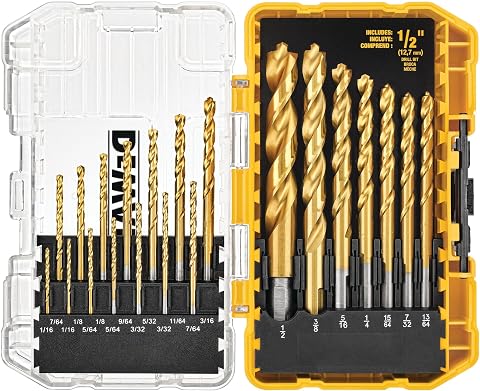
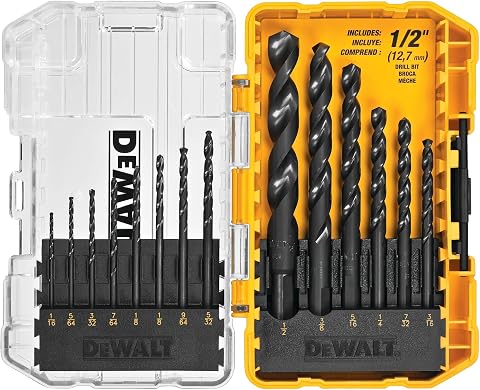
Complete the kit

Key Takeaways
- Ten-inch models form the strongest middle ground: They offer more working room than the 8-inch presses without asking buyers to accommodate a larger 12-inch footprint.
- Variable speed is most useful for mixed projects: The WEN DP1062V, WEN DP1263V, JET JWDP-12, and variable-speed VEVOR models suit woodworkers who change bit sizes and materials often.
- Capacity matters more than a laser for wide panels: A 12-inch press can reach farther across a workpiece than a 10-inch model, while a laser mainly helps position the drilling point.
- Compact presses trade reach for a smaller shop footprint: The MXBAOHENG and 8-inch models fit light-duty work and tight benches, but are less suited to large furniture parts.
- The top picks separate by control and scale: JET’s 10-inch model is the balanced choice, WEN’s variable-speed presses broaden speed control, and the larger 12-inch options favor reach over compactness.
| VEVOR 10-Inch Benchtop Drill Press with Variable Speed, Laser Guide, and Tilting Worktable |  | Best for Adjustable-Speed Versatility | Swing: 10 in | Motor power: 0.8 hp (600 W) | Speed range: 530–3140 rpm | VIEW LATEST PRICE | See Our Full Breakdown |
| JET JWDP-10 10-Inch Benchtop Drill Press |  | Best for a Compact, Moveable Shop Setup | Swing: 10 in | Motor power: 1/3 HP | Speed range: 630–3300 RPM | VIEW LATEST PRICE | See Our Full Breakdown |
| MXBAOHENG Mini Benchtop Drill Press with Work Light |  | Best for Miniature and Detail Work | Motor power: 120 W | Number of speeds: 7 | Maximum rotational speed: 3000 rpm | VIEW LATEST PRICE | See Our Full Breakdown |
| ExploreHorizon 8″ Benchtop Drill Press with Laser and LED Light |  | Best Compact Pick for Small Shops | Swing: 8 in | Chuck capacity: 1/2 in | Speed range: 620–3100 RPM | VIEW LATEST PRICE | See Our Full Breakdown |
| VEVOR 12-Inch Benchtop Drill Press, 1 HP, Variable Speed |  | Best for Larger, More Demanding Bench Work | Swing: 12 in | Motor power: 1 HP | Speed range: 530–3140 rpm | VIEW LATEST PRICE | See Our Full Breakdown |
| VEVOR 10-Inch Benchtop Drill Press, 3.2 Amp | 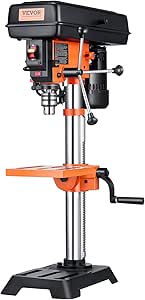 | Best Value for Basic Woodworking | Swing: 10 inches | Motor: 3.2 A | Power: 120 V corded electric | VIEW LATEST PRICE | See Our Full Breakdown |
| WEN DP1050 10-Inch Benchtop Drill Press |  | Best for Guided Setup | Swing: 10 inches | Motor: 6.2 A induction motor | Power: 120 V corded electric | VIEW LATEST PRICE | See Our Full Breakdown |
| WEN DP1062V 10-Inch Variable-Speed Benchtop Drill Press with Laser |  | Best 10-Inch Variable-Speed Pick | Swing: 10 inches | Motor: 6.2 A induction motor | Power: 120 V corded electric | VIEW LATEST PRICE | See Our Full Breakdown |
| WEN DP1263V 12-Inch Benchtop Drill Press, 6.2-Amp Variable Speed |  | Best for Larger Woodworking Projects | Swing: 12 inches | Motor: 6.2 A induction motor | Power: 120 V corded electric | VIEW LATEST PRICE | See Our Full Breakdown |
| JET JWDP-12 12-Inch Variable-Speed Benchtop Drill Press |  | Best Premium for a Dedicated Woodworking Bench | Swing: 12 inches | Motor: 1/2 HP, 5 A | Power: 115 V | VIEW LATEST PRICE | See Our Full Breakdown |
| SKIL 6.2 Amp 10-Inch 5-Speed Benchtop Drill Press with Laser Alignment and Work Light (DP9505-00) |  | Best for Guided, Well-Lit Drilling | Motor: 6.2 A induction motor | Power: 120 V corded electric | Speed settings: 5 | VIEW LATEST PRICE | See Our Full Breakdown |
| 8-Inch Benchtop Drill Press, 5-Speed |  | Best for Stable, Angled Bench Work | Motor: 2.5 A | Power: 120 V corded electric | Swing: 8 in | VIEW LATEST PRICE | See Our Full Breakdown |
| VEVOR 8-Inch Benchtop Drill Press, 2.5 A |  | Best Compact Press with Work Light | Motor: 2.5 A induction motor | Power: 110 V corded electric | Speed settings: 5 | VIEW LATEST PRICE | See Our Full Breakdown |
| WEN 2.3-Amp 8-Inch 5-Speed Cast Iron Benchtop Drill Press (4206T) |  | Best Value for Straightforward Bench Drilling | Motor: 2.3 A induction motor | Power: 120 V AC | Swing: 8 in | VIEW LATEST PRICE | See Our Full Breakdown |
| benchtop drill presses for woodworking | Swing | Speed range | Weight | Motor |
|---|---|---|---|---|
| VEVOR 10-Inch Benchtop Drill P | 10 in | 530–3140 rpm | 56.4 lb | — |
| JET JWDP-10 10-Inch Benchtop D | 10 in | 630–3300 RPM | 48.5 lb | — |
| MXBAOHENG Mini Benchtop Drill | — | — | — | — |
| ExploreHorizon 8" Benchtop Dri | 8 in | 620–3100 RPM | 25.9 lb | — |
| VEVOR 12-Inch Benchtop Drill P | 12 in | 530–3140 rpm | 84.3 lb | — |
| VEVOR 10-Inch Benchtop Drill P | 10 inches | — | 41.9 lb | 3.2 A |
| WEN DP1050 10-Inch Benchtop Dr | 10 inches | — | — | 6.2 A induction motor |
| WEN DP1062V 10-Inch Variable-S | 10 inches | 530–3,100 RPM | 57 lb (also listed as 29.94 kg) | 6.2 A induction motor |
| WEN DP1263V 12-Inch Benchtop D | 12 inches | 580–3,100 RPM | 85 lb | 6.2 A induction motor |
| JET JWDP-12 12-Inch Variable-S | 12 inches | 530–3,100 RPM | 85 lb | 1/2 HP, 5 A |
| SKIL 6.2 Amp 10-Inch 5-Speed B | — | 610–2,800 RPM | — | 6.2 A induction motor |
| 8-Inch Benchtop Drill Press | 8 in | 650–3,100 RPM | 34.2 lb | 2.5 A |
| VEVOR 8-Inch Benchtop Drill Pr | — | 750–3,200 RPM | — | 2.5 A induction motor |
| WEN 2.3-Amp 8-Inch 5-Speed Cas | 8 in | — | — | 2.3 A induction motor |
More Details on Our Top Picks
VEVOR 10-Inch Benchtop Drill Press with Variable Speed, Laser Guide, and Tilting Worktable
For woodworkers who switch between drilling small pilot holes and larger openings, the VEVOR 1016BVS offers a broad 530–3140 RPM range and a digital speed readout, so speed selection is visible rather than a guess. Its 45-degree table tilt in either direction also makes angled work more flexible than the fixed-table setups found on some compact presses. Compared with the JET JWDP-10, this model has a more adjustable speed range, while the JET weighs less and lists five set speeds. The laser and work light help with alignment and visibility, but they do not make up for the stated 0.5-inch wood drilling capacity. At 56.4 pounds, it is also a machine to position on a sturdy bench and leave there, not move around casually.
Pros:- Variable speed from 530 to 3140 RPM with a digital readout
- Worktable tilts up to 45 degrees in either direction
- Laser guide and LED light assist with layout and visibility
- 10-inch swing suits a range of typical benchtop woodworking tasks
Cons:- Listed wood drilling capacity is limited to 0.5 inch
- At 56.4 pounds, it is not especially convenient to reposition
- Its 0.8 HP rating and listed capacity may not suit demanding, large-diameter drilling
Best for: Woodworkers who want digital variable-speed control and a tilting table for varied small-to-medium bench projects.
Not ideal for: Buyers who routinely drill holes larger than 0.5 inch in wood or need a lightweight press they can frequently move.
- Swing:10 in
- Motor power:0.8 hp (600 W)
- Speed range:530–3140 rpm
- Maximum chuck size:0.5 in
- Wood drilling capacity:0.5 in
- Worktable tilt:45° left or right
- Voltage:110 V
- Weight:56.4 lb
Our verdict“Choose the VEVOR 1016BVS if you value a broad, readable speed range and two-way table tilt more than portability or larger stated drilling capacity.”
JET JWDP-10 10-Inch Benchtop Drill Press
The JET JWDP-10 makes the most sense for a small woodworking shop where the drill press may need to share bench space. At 48.5 pounds, it is lighter than the VEVOR 1016BVS and considerably lighter than the 12-inch VEVOR 1216BVS, while still offering a 10-inch swing and a table that tilts 45 degrees both ways. Its five speeds are straightforward, but they offer less fine adjustment than the VEVOR 1016BVS’s continuously variable range and digital readout. A laser guide and LED light support basic alignment, though they do not increase the machine’s stated 0.5-inch metal capacity or 1/2-inch chuck limit. The five-year warranty is a useful differentiator for buyers prioritizing manufacturer coverage, but woodworkers who want rapid speed changes may prefer a variable-speed model.
Pros:- Lighter than the VEVOR 10-inch variable-speed model
- Five speeds cover a range of common drilling tasks
- Table tilts up to 45 degrees for angled holes
- Includes a laser guide, LED light, and five-year warranty
Cons:- Five preset speeds offer less adjustment than variable-speed alternatives
- Chuck capacity is limited to 1/2 inch
- Listed metal drilling capacity is 0.5 inch
Best for: Hobby woodworkers with limited bench space who want a 10-inch press they can reposition and who are comfortable choosing among five preset speeds.
Not ideal for: Woodworkers who frequently change materials and bit sizes and want continuous speed adjustment, or those needing capacity beyond a 1/2-inch chuck.
- Swing:10 in
- Motor power:1/3 HP
- Speed range:630–3300 RPM
- Number of speeds:5
- Chuck capacity:1/16–1/2 in
- Table tilt:±45°
- Weight:48.5 lb
- Warranty:5 years
Our verdict“Pick the JET JWDP-10 for a lighter 10-inch press with useful angle adjustment and warranty coverage, but choose the VEVOR 1016BVS if variable-speed control matters more.”
MXBAOHENG Mini Benchtop Drill Press with Work Light
The MXBAOHENG CLA-218 is a specialist tool for small parts, not a scaled-down substitute for a conventional woodworking press. Its 1.3-inch drilling stroke, 6 mm drilling capacity, and included vise suit modelmaking, small jigs, circuit boards, resin, and other pieces where controlled placement matters more than reach. Seven speed settings and a depth control give it more task-specific adjustment than the JET JWDP-10’s five speeds, but the JET’s 10-inch swing and 1/2-inch chuck make it far more appropriate for ordinary furniture and cabinet work. A work light and belt guard add practical support at this scale. The listing gives conflicting voltage information and does not provide a consistent power detail, so I would verify the supply requirements before buying.
Pros:- Seven speed settings for small-part drilling tasks
- Depth control helps repeat shallow holes
- Included vise clamps small workpieces
- Work light and belt guard support controlled operation
Cons:- Stated drilling capacity is only 6 mm, with a 1.3-inch stroke
- Small chuck range limits the bit sizes it can accept
- Listing conflicts on voltage and does not give consistent power details
Best for: Modelmakers and woodworkers drilling small, securely clamped parts such as miniature components, small jigs, and thin stock.
Not ideal for: Furniture and cabinet woodworkers who need to drill larger holes, reach across broad workpieces, or use standard 1/2-inch-shank bits.
- Motor power:120 W
- Number of speeds:7
- Maximum rotational speed:3000 rpm
- Chuck clamping range:1–6 mm
- Drilling stroke:3.5 cm (1.3 in)
- Drilling capacity:6 mm in wood and metal
- Vise clamping range:1–55 mm
- Voltage listed:Conflicting details: 12–24 V in description; 110 V in product information
Our verdict“Choose the MXBAOHENG for miniature, clamped work where its small scale is an advantage, not as your main press for general woodworking.”
ExploreHorizon 8″ Benchtop Drill Press with Laser and LED Light
With an 8-inch swing and a listed weight of 25.9 pounds, the ExploreHorizon is the space-conscious choice here for a small shop or occasional woodworking bench. Its five speeds span 620–3100 RPM, and the tilting table handles angled holes without requiring a larger press like the VEVOR 1216BVS. The laser and 1 W LED light make workpiece positioning easier to see, but they do not change the reach limit: larger panels and wide stock can be awkward to position under an 8-inch-swing machine. Compared with the MXBAOHENG mini press, this is better suited to conventional small woodworking jobs and a 1/2-inch chuck, while the MXBAOHENG is more specialized for tiny parts and shallow drilling. The ExploreHorizon offers less speed flexibility than the VEVOR 10-inch variable-speed model.
Pros:- Compact 8-inch swing takes less room than larger presses
- Five speeds span 620–3100 RPM
- Table tilts up to 45 degrees for angled drilling
- Laser and 1 W LED light support alignment and visibility
Cons:- 8-inch swing restricts access across wider workpieces
- Five speeds provide less fine control than the VEVOR 1016BVS
- At 25.9 pounds, it still needs a secure bench setup rather than being a pocket-sized tool
Best for: Woodworkers in compact workshops who mainly drill small-to-medium parts and want a tilting table, laser, and work light.
Not ideal for: Anyone regularly drilling across wide workpieces or seeking the larger reach and variable-speed control of a 10- or 12-inch press.
- Swing:8 in
- Chuck capacity:1/2 in
- Speed range:620–3100 RPM
- Number of speeds:5
- Motor amperage:2.5 A
- Worktable tilt:0–45°
- Weight:25.9 lb
- Voltage:110–120 V
Our verdict“Choose the ExploreHorizon when bench space and angled drilling matter more than the wider reach of a 10- or 12-inch press.”
VEVOR 12-Inch Benchtop Drill Press, 1 HP, Variable Speed
The VEVOR 1216BVS is the capacity-focused pick in this group: its 12-inch swing and 1 HP motor make it better suited to larger workpieces and more demanding drilling than the 10-inch VEVOR 1016BVS. The speed range remains broad at 530–3140 RPM, with a digital readout, laser, and LED light helping with setup. Its table tilts 45 degrees in either direction, so the extra size does not rule out angled work. The tradeoff is substantial: at 84.3 pounds, this is a press to place on a sturdy bench and keep there, not a portable option like the JET JWDP-10. The listed 0.6-inch wood capacity is only modestly above the 10-inch VEVOR’s 0.5-inch figure, so buyers should weigh the extra reach and motor power against the footprint and weight.
Pros:- 12-inch swing provides more reach than the 10-inch presses here
- 1 HP motor is the strongest listed among these five options
- Digital readout and variable speed cover 530–3140 RPM
- Table tilts 45 degrees in either direction, with laser and LED lighting
Cons:- At 84.3 pounds, it is difficult to reposition
- Requires a sturdy bench and more workspace than compact alternatives
- Listed wood drilling capacity is 0.6 inch despite the larger size
Best for: Woodworkers who regularly handle larger bench projects and want 12-inch swing, a 1 HP motor, and digital variable-speed control.
Not ideal for: Small-shop users who need to move their press often, have a limited bench, or expect a much larger stated drilling capacity than 0.6 inch.
- Swing:12 in
- Motor power:1 HP
- Speed range:530–3140 rpm
- Maximum chuck size:0.6 in
- Wood drilling capacity:0.6 in
- Worktable tilt:45° left or right
- Voltage:110 V
- Weight:84.3 lb
Our verdict“Choose the VEVOR 1216BVS if extra reach and a stronger motor justify its weight and footprint; otherwise, the 10-inch VEVOR is easier to accommodate.”
VEVOR 10-Inch Benchtop Drill Press, 3.2 Amp
The VEVOR DP1006L suits a small woodworking shop that needs straightforward drilling without paying for guidance features or variable speed. Its five belt-selected speeds cover a range of common tasks, and the table tilts up to 45° for angled holes. Compared with the WEN DP1050, it has a less powerful listed motor and omits the laser, work light, and depth stop, so setup relies more on careful marking and measurement. The listed wood drilling capacity is only 1/2 inch, which sets a clear limit for larger bits. There is also a spec conflict: the speed list reaches 3,100 RPM, while the maximum-speed field says 2,800 RPM. I’d choose it for basic shop work, not when precise speed information or deeper capacity is a priority.
Pros:- Five selectable speeds support different drilling tasks.
- Worktable tilts from 0° to 45° for angled work.
- Includes chuck, chuck key, feed handles, and assembly hardware.
- Listed for drilling both wood and metal.
Cons:- The listed maximum speed conflicts with the highest speed in the speed settings.
- Stated drilling capacity is limited to 1/2 inch in wood and metal.
- No laser, work light, or adjustable depth stop is listed.
Best for: Woodworkers setting up a basic bench station for occasional holes up to 1/2 inch who want a tilting table and multiple belt speeds.
Not ideal for: Buyers who need a reliable stated maximum RPM, built-in alignment aids, or capacity beyond 1/2-inch holes.
- Swing:10 inches
- Motor:3.2 A
- Power:120 V corded electric
- Speed settings:5; listed settings are 650, 1,050, 1,800, 2,350, and 3,100 RPM
- Maximum speed:2,800 RPM listed
- Maximum chuck size:1/2 inch
- Wood drilling capacity:1/2 inch
- Worktable tilt:0° to 45°
- Weight:41.9 lb
Our verdict“Choose the VEVOR DP1006L for uncomplicated woodworking on a budget, but pick the WEN DP1050 if built-in guidance and a stronger listed motor matter more.”
WEN DP1050 10-Inch Benchtop Drill Press
The WEN DP1050 is a sensible fit for woodworkers who value clear setup aids more than on-the-fly speed changes. Its laser guide, LED work light, and adjustable depth stop help with positioning and repeatable holes, while the 6.2-amp induction motor gives it a stronger listed electrical rating than the VEVOR DP1006L. The tradeoff is that this is a five-speed belt-drive press: changing speeds means repositioning the belt, unlike the variable-speed WEN DP1062V. Its 2-inch spindle travel also limits how deep a hole can be drilled in one pass. The table bevels 45° in either direction, making it useful for angled joinery, but buyers who frequently change materials or need deeper drilling should look at the DP1062V or larger WEN DP1263V instead.
Pros:- Laser guide and LED work light support more accurate positioning.
- Adjustable depth stop helps repeat hole depths.
- Table bevels 45° left and right.
- 6.2-amp induction motor and five speed choices.
Cons:- Changing speeds requires repositioning the belt.
- Two-inch spindle travel limits drilling depth per operation.
- The 10-inch swing offers less reach than the WEN DP1263V and JET JWDP-12.
Best for: Beginning and intermediate woodworkers who want a 10-inch press with built-in alignment, lighting, and repeatable depth control.
Not ideal for: Woodworkers who frequently switch materials and want to change speed without moving a belt, or who need more than 2 inches of spindle travel.
- Swing:10 inches
- Motor:6.2 A induction motor
- Power:120 V corded electric
- Speeds:630, 1,100, 1,800, 2,450, or 3,300 RPM
- Spindle travel:2 inches
- Chuck capacity:1/2 inch
- Worktable:7.5 x 6.5 inches; bevels 45° left and right
- Height:28.75 inches
- Warranty:Two years
Our verdict“Pick the DP1050 if guided setup and depth control matter more than quick speed adjustment or extra spindle travel.”
WEN DP1062V 10-Inch Variable-Speed Benchtop Drill Press with Laser
The WEN DP1062V makes the most sense for a woodworker who changes bit sizes or materials often and wants to set speed without swapping belts. Its 530–3,100 RPM variable-speed range and digital readout make adjustment more direct than on the five-speed WEN DP1050. The 6.2-amp induction motor, laser, depth stop, and beveling cast-iron table give it a useful mix of control and convenience for a 10-inch press. Its limits are still those of a compact model: 2 inches of spindle travel and a 1/2-inch chuck cap restrict larger or deeper work, while the WEN DP1263V offers a 12-inch swing and 5/8-inch capacity. I’d favor this model for flexible general shop drilling, not oversized furniture parts.
Pros:- Variable speed from 530 to 3,100 RPM with a digital readout.
- Laser guide and adjustable depth stop aid placement and repeatability.
- Cast-iron table bevels 45° left and right.
- 6.2-amp induction motor and two-year warranty.
Cons:- Two-inch spindle travel limits depth in a single operation.
- Maximum chuck and stated drilling capacity are 1/2 inch.
- Corded operation requires a nearby power outlet.
Best for: Woodworkers who want a compact 10-inch press and regularly adjust speed for different bits, woods, or materials.
Not ideal for: Buyers drilling deep holes or using bits larger than 1/2 inch, or those who need the extra reach and capacity of a 12-inch machine.
- Swing:10 inches
- Motor:6.2 A induction motor
- Power:120 V corded electric
- Speed range:530–3,100 RPM
- Spindle travel:2 inches
- Maximum chuck size:1/2 inch
- Worktable:8 x 7.5 inches; bevels 45° left and right
- Weight:57 lb (also listed as 29.94 kg)
- Warranty:Two years
Our verdict“Choose the DP1062V over the DP1050 if convenient speed adjustment is a priority, but move up to the DP1263V for greater reach and bit capacity.”
WEN DP1263V 12-Inch Benchtop Drill Press, 6.2-Amp Variable Speed
For woodworking that regularly involves wider stock or larger bits, the WEN DP1263V offers a meaningful step up from the 10-inch DP1062V. Its 12-inch swing, 3-1/8-inch spindle travel, and 5/8-inch chuck give it more reach and hole capacity, while mechanical variable speed and a digital readout let the operator tune the spindle without relying on a small set of fixed speeds. The larger 9-1/2-inch square table, laser, LED light, and roller extension also suit longer or awkward workpieces. That added capacity comes with a substantial footprint and 85-pound weight, making it less convenient to move than either 10-inch WEN. I’d choose it for a dedicated woodworking bench; for lighter, compact work, the DP1062V is easier to accommodate.
Pros:- 12-inch swing and 3-1/8-inch spindle travel provide more reach and depth than the 10-inch WEN models.
- 5/8-inch chuck and stated drilling capacity accommodate larger bits.
- Variable speed has a digital readout.
- Includes laser, LED work light, depth stop, and roller extension.
Cons:- At 85 pounds, it is difficult to reposition without help.
- Its larger dimensions require more bench space than the DP1062V.
- Corded operation ties it to a power outlet.
Best for: Woodworkers with a fixed shop bench who drill larger holes or work with wider stock and want more reach than a 10-inch press provides.
Not ideal for: Small-shop users who need to move their press often, or woodworkers whose projects stay within a 1/2-inch bit capacity.
- Swing:12 inches
- Motor:6.2 A induction motor
- Power:120 V corded electric
- Speed range:580–3,100 RPM
- Spindle travel:3-1/8 inches
- Maximum chuck size:5/8 inch
- Worktable:9-1/2 x 9-1/2 inches; bevels 45° left and right
- Dimensions:16.8 x 13.5 x 36.6 inches
- Weight:85 lb
Our verdict“Choose the DP1263V for a stationary woodworking setup that benefits from its larger swing and 5/8-inch capacity; choose the DP1062V for a smaller footprint.”
JET JWDP-12 12-Inch Variable-Speed Benchtop Drill Press
The JET JWDP-12 is the premium-oriented choice here for woodworkers who want a larger press with speed adjustment while the motor runs. Its 530–3,100 RPM mechanical variable-speed drive and digital display offer a different workflow from the five-speed WEN DP1050, where speed changes require belt repositioning. The 12-inch swing, 3-1/8-inch spindle travel, 5/8-inch chuck, tilting cast-iron table, laser crosshair, LED light, and depth stop equip it for varied furniture and joinery work. Compared with the WEN DP1263V, its listed reach and chuck capacity are similar, so the choice rests more on the JET’s stated drive features and warranty than on a capacity advantage. The tradeoff is setup: this 85-pound machine needs bench mounting, and lifting its head during assembly may take two people.
Pros:- Mechanical variable speed can be adjusted while the motor runs.
- Digital display shows spindle speed.
- 12-inch swing, 3-1/8-inch spindle travel, and 5/8-inch chuck.
- Tilting cast-iron table, laser crosshair, LED work light, and depth stop.
Cons:- Must be bolted to a bench or stand.
- At 85 pounds, head installation may require a second person.
- Mounting bolts and drill bits are not included.
Best for: Woodworkers building a permanent bench station who want variable speed while running, a digital display, and 12-inch-class capacity.
Not ideal for: Anyone who needs a portable press, lacks a sturdy mounting surface, or expects an easy solo assembly.
- Swing:12 inches
- Motor:1/2 HP, 5 A
- Power:115 V
- Speed range:530–3,100 RPM
- Spindle travel:3-1/8 inches
- Chuck capacity:5/8 inch
- Table:9-1/2 x 9-1/2 inches; tilts 45° left and right
- Weight:85 lb
- Warranty:Five years; two years for commercial or industrial use
Our verdict“Pick the JWDP-12 for a fixed shop where running speed adjustment and its stated five-year warranty matter; compare it with the WEN DP1263V if similar capacity is your main concern.”
SKIL 6.2 Amp 10-Inch 5-Speed Benchtop Drill Press with Laser Alignment and Work Light (DP9505-00)
The SKIL DP9505-00 is the most feature-led choice in this group for woodworkers who want help placing and controlling holes. Its laser alignment, LED work light, and adjustable depth stop support repeatable work, while the table tilts up to 45 degrees in either direction for angled drilling. Compared with the smaller WEN 4206T, its 10-inch size and 6.2-amp motor make it the more substantial option for a general-purpose bench setup. The tradeoff is that the listed wood drilling capacity is only 0.5 inch, so the larger format should not be mistaken for a heavy-duty boring machine. Five speeds from 610 to 2,800 RPM offer useful range, though fewer settings than some five-speed alternatives reach at their upper end. It also needs a nearby outlet.
Pros:- Laser alignment helps place holes accurately before drilling.
- LED work light improves visibility around the bit and workpiece.
- Tilting table and adjustable depth stop support angled and repeatable holes.
- 6.2-amp motor and 10-inch format provide more scale than the 8-inch presses here.
Cons:- Listed wood drilling capacity is limited to 0.5 inch despite the 10-inch size.
- Corded operation requires a nearby 120 V outlet.
- Five speed settings offer less fine control than a variable-speed press.
Best for: Woodworkers who want laser-assisted positioning, work lighting, and a larger benchtop format for routine drilling and angled holes.
Not ideal for: Buyers who regularly bore holes larger than 0.5 inch in wood or need a cordless machine.
- Motor:6.2 A induction motor
- Power:120 V corded electric
- Speed settings:5
- Speed range:610–2,800 RPM
- Maximum chuck size:0.5 in
- Wood drilling capacity:0.5 in
- Work surface tilt:0–45° left and right
- Dimensions:24.02 × 15.16 × 12.4 in
- Warranty:3-year limited
Our verdict“Choose the SKIL if guided positioning and a 10-inch benchtop format matter more to you than drilling holes larger than 0.5 inch.”
8-Inch Benchtop Drill Press, 5-Speed
This 8-inch cast-iron press suits a small shop where a steady base and angled drilling matter more than a larger swing. Its 34.2-pound weight and cast-iron construction are intended to help limit vibration, while 50 mm of spindle travel provides more reach than a shallow-travel compact press. The table tilts up to 45 degrees, giving it a useful woodworking role for brackets, jigs, and sloped workpieces. Compared with the WEN 4206T, it has a slightly higher listed motor amperage and a wider speed range at the top end, but both remain 8-inch, five-speed machines rather than choices for oversized stock. The modest 2.5-amp motor and small table are limits for demanding or bulky work. Its corded design also ties it to a power outlet.
Pros:- Cast-iron construction and 34.2-pound weight are suited to a steady bench setup.
- Worktable tilts up to 45 degrees for angled drilling.
- 50 mm spindle travel supports deeper drilling than a short-travel machine.
- Five speeds span 650–3,100 RPM for varied materials and bit sizes.
Cons:- The 8-inch swing limits clearance for larger workpieces.
- The 2.5-amp motor is a modest choice for demanding drilling.
- Corded operation requires access to a 120 V outlet.
Best for: Home woodworkers who want a relatively heavy 8-inch press for small parts, angled holes, and routine bench projects.
Not ideal for: Woodworkers handling wide stock or large-diameter boring who need more swing, table area, or motor capacity.
- Motor:2.5 A
- Power:120 V corded electric
- Swing:8 in
- Speed settings:5
- Speed range:650–3,100 RPM
- Spindle travel:50 mm
- Worktable dimensions:170 × 165 mm
- Worktable tilt:0–45°
- Weight:34.2 lb
Our verdict“Pick this press for steady, small-scale woodworking with angled-hole flexibility, but look to a larger model for wide stock.”
VEVOR 8-Inch Benchtop Drill Press, 2.5 A
The VEVOR DP8 is a compact option for woodworkers who value visibility and controlled depth on a small bench. Its LED work light, adjustable depth stop, and 2-inch spindle travel cover practical shop needs without moving up to a larger 10-inch press like the SKIL DP9505-00. The table tilts up to 45 degrees, and five belt-adjusted speeds range from 750 to 3,200 RPM. That upper speed suits smaller bits and finer work, but changing speeds means opening the belt system and repositioning it rather than dialing in a setting. Its listed maximum drilling diameter is just 0.5 inch, which restricts larger Forstner-bit work. The 2.5-amp motor is aimed at lighter tasks, so this makes more sense for modest projects than sustained, demanding drilling.
Pros:- LED work light helps illuminate the drilling area.
- Two-inch spindle travel and adjustable depth stop support controlled drilling.
- Tilting worktable accommodates angled holes.
- Five speeds reach 3,200 RPM for smaller bits and finer work.
Cons:- Maximum listed drilling diameter is 0.5 inch.
- Speed changes require manual belt adjustment.
- The 2.5-amp motor is better suited to lighter work than demanding sessions.
Best for: Woodworkers with limited bench space who want an 8-inch press with a work light, depth control, and angled-table capability.
Not ideal for: Users who frequently drill holes larger than 0.5 inch or want quick speed changes without adjusting belts.
- Motor:2.5 A induction motor
- Power:110 V corded electric
- Speed settings:5
- Speed range:750–3,200 RPM
- Maximum chuck size:0.5 in
- Maximum drilling diameter:0.5 in
- Spindle travel:2 in
- Worktable tilt:0–45°
- Maximum power:276 W
Our verdict“Choose the VEVOR DP8 for compact woodworking tasks where a work light and depth control matter more than large-hole capacity or fast speed changes.”
WEN 2.3-Amp 8-Inch 5-Speed Cast Iron Benchtop Drill Press (4206T)
The WEN 4206T keeps its appeal focused: a cast-iron 8-inch press with five fixed speeds, two inches of spindle travel, and a beveling table. Its locking depth stop is useful for repeating hole depths across a batch, and the keyed chuck accepts bits up to 1/2 inch. Compared with the VEVOR DP8, it has a slightly lower motor rating and lacks a listed work light, but its specified speed steps and onboard chuck-key storage make the setup details clear and practical. Like the other 8-inch presses here, its swing limits the size of stock it can handle comfortably. Speed changes require belt repositioning, so it is less convenient when switching often between bit sizes or materials. This is a straightforward woodworking choice, not a feature-rich or large-capacity machine.
Pros:- Cast-iron construction provides a substantial base for bench work.
- Locking depth stop helps repeat hole depths across multiple pieces.
- Table bevels up to 45 degrees in either direction.
- Keyed chuck accepts bits up to 1/2 inch, with onboard chuck-key storage.
Cons:- Changing among the five speeds requires repositioning the belt.
- Two-inch spindle travel limits the depth of a single drilling movement.
- No work light is listed, unlike the VEVOR DP8.
Best for: Woodworkers seeking a basic cast-iron bench press for repeatable small holes, common bit sizes, and occasional angled drilling.
Not ideal for: Buyers who want a work light, quick speed adjustment, or capacity for wide boards and larger holes.
- Motor:2.3 A induction motor
- Power:120 V AC
- Swing:8 in
- Speed settings:5: 750, 1,100, 1,500, 2,100, or 3,200 RPM
- Spindle travel:2 in
- Chuck:1/2-inch keyed chuck, JT33 spindle taper
- Worktable:6.5 × 6.5 in; bevels 45° left or right
- Base dimensions:7 × 11 in
- Warranty:2 years
Our verdict“Choose the WEN 4206T for simple, repeatable woodworking holes on a compact bench if belt-based speed changes and an unlit work area suit your setup.”

How We Picked
I compared these 14 benchtop drill presses for woodworking by the jobs they can reasonably support: drilling repeatable holes in boards and joinery parts, handling different bit sizes, fitting on a typical shop bench, and providing a useful range of table and speed adjustments. I gave weight to usable capacity, speed control, table stability and tilt, construction, and practical setup features such as lights or laser alignment. Those extras count as conveniences, not substitutes for accurate layout and a securely clamped workpiece.
The ranking favors presses that balance woodworking capacity and control without making the buyer accept an outsized footprint or a narrow use case. Ten-inch models rise when they offer a compelling mix of reach and usability; 12-inch presses rank higher for buyers who regularly drill wider stock, but their size makes them less suitable as general picks. Compact 8-inch machines remain worthwhile for small parts and limited benches, though their reduced reach restricts larger projects. I also distinguish variable-speed models from fixed-speed options: the former are more adaptable, while the latter can be a sensible fit when the work is predictable.
Factors to Consider When Choosing Benchtop Drill Presses For Woodworking
Choosing a woodworking drill press starts with the parts you plan to drill and the space you can give the machine. I’d work through these factors before treating power, lasers, or accessory features as deciding points.
Match Throat Depth to Your Workpieces
The inch size in a drill press name generally indicates its swing, which relates to how far the machine can reach from the column toward the center of a workpiece. A 12-inch model can place holes farther from an edge than a 10-inch press, which matters for wide panels, cabinet doors, and larger furniture parts. That reach does not make the machine better for every task: many woodworking holes sit near edges or on small components, where a 10-inch press may be plenty. Measure the widest piece you expect to drill and check the actual throat capacity in the product specifications. A common mistake is buying extra capacity that consumes bench space but rarely gets used. If large parts are occasional, a hand drill or a drilling jig may be a more practical way to handle them.
Choose Speed Control for the Bits You Use
Variable speed lets you adjust the spindle to suit different bit diameters and materials without being limited to a small set of presets. That flexibility is useful for a woodworker moving between small twist bits, larger bits, and hole-making accessories. Fixed-speed presses can work well when your routine uses a limited range of bits, but changing speed may require more steps or leave you with fewer choices. Check how the speed is adjusted and whether the manufacturer provides a useful speed range, rather than assuming the word variable tells the whole story. Very large bits call for more caution and a slower setup than small pilot holes. Match speed to the bit maker’s guidance and secure the workpiece before drilling.
Treat Table Size and Adjustment as Part of Accuracy
A table should support the work without forcing you to balance a board near its edge. For woodworking, a table that tilts and locks securely can help with angled holes, though it may require careful setup to return to square. A larger table can improve support for furniture parts, but extensions or auxiliary fences may still be needed for long boards. Check whether the table can be raised and lowered smoothly and whether the locking hardware holds it firmly. Buyers sometimes focus on the spindle and overlook the table, then find that their stock shifts during setup. A sacrificial board, clamps, and a stop block often improve repeatability more than an added alignment light.
Separate Alignment Aids From Real Setup Accuracy
Lasers and work lights can make it easier to see a marked drilling point, especially in a dim shop or when placing a series of holes. They do not confirm that the bit is square to the table, nor do they prevent a board from moving. A laser may need adjustment, and its line can be difficult to read on some finishes or under bright lighting. For accurate woodworking, pair any built-in guide with a square, test cuts, and a reliable method for holding the work. If you routinely drill repeated holes, a fence or drilling jig may deliver more consistent positioning than relying on a laser alone. Consider these features helpful conveniences, not primary reasons to choose a press.
Balance Machine Size, Support, and Bench Space
A drill press needs a stable mounting surface, enough overhead clearance, and room to move workpieces around the table. A larger 12-inch model offers more reach, but it can be harder to fit into a small shop and may need a sturdier bench. An 8-inch press saves space and can suit small components, yet its limited capacity can become frustrating as projects grow. Include the machine’s base and column in your space check, and leave room for long boards to extend safely. Do not assume a heavier or larger press automatically produces better results if the bench itself flexes. The best size is the one your shop can support and your projects can use.
Know When Paying More Adds Useful Control
Extra spending makes sense when it buys a feature you will use often, such as broader speed adjustment, more reach, or a table arrangement that fits your work. It is harder to justify paying for convenience features if your main need is a simple press for occasional pilot holes. Also account for accessories and setup: clamps, a sacrificial table insert, and suitable bits may be more useful than an added light or laser. Ask whether the press can handle your largest regular bit and stock size without operating at the edge of its capacity. For mixed woodworking, speed flexibility can reduce compromises; for repeatable work at a familiar speed, a simpler fixed-speed machine may be enough. Choose around recurring tasks, not a speculative project list.
Frequently Asked Questions
Is a 10-inch drill press enough for most woodworking?
For many home woodworking projects, a 10-inch press provides a practical balance between reach and bench space. It can handle common joinery holes, hardware installation, and drilling smaller furniture parts, though the usable reach depends on the machine’s actual specifications. If you often drill near the center of wide panels, a 12-inch model may save repositioning or make the task possible. If most of your parts are small, an 8-inch press could cover your needs with less space. Measure your widest regular workpiece before choosing by size label alone.
Should I choose variable speed or a fixed-speed drill press?
Variable speed is a strong fit if you regularly switch between small bits, large bits, and different materials, because it gives you more control over the spindle speed. Fixed-speed models can be a sound choice for predictable work where the available settings suit your usual bits. Check the adjustment method and stated speed range; the feature name alone does not show how convenient or useful the control will be. Whichever type you choose, follow the bit maker’s speed guidance and avoid forcing a bit through the wood. For a mixed-use shop, I’d generally favor variable speed, while a focused setup may not need it.
Can a built-in laser replace careful layout for woodworking holes?
No. A laser can help center the drill over a pencil mark, but it cannot confirm that the spindle is square to the table or that the workpiece is held securely. Its alignment may need checking, and the beam can be hard to see on some surfaces. For repeatable holes, a fence, stop block, or drilling jig often provides better control over position. Use the laser as a setup aid, then verify the result with a test hole when accuracy matters. Clamping the stock remains important even when the alignment looks right.
Is an 8-inch benchtop drill press too small for furniture work?
Not necessarily, but it limits the size and position of the work you can drill. An 8-inch model can be suitable for small components, hardware holes, and light shop tasks, particularly when bench space is scarce. It may become restrictive when drilling far from the edge of a wide board or working with larger furniture parts. Consider the press’s actual throat depth and table support rather than relying only on the model name. If furniture work is a regular part of your plans, a 10-inch press is often a more flexible starting point.
What should I prioritize for accurate repeat drilling: power, laser, or table setup?
For repeat drilling in wood, stable workholding and a well-set table usually matter more than a laser or a headline power figure. A fence and stop block help keep hole locations consistent, while clamps reduce movement during drilling. Table alignment matters when holes must be square to the face or edge of a part. Power becomes more relevant when the work involves larger bits or sustained drilling, but it does not correct poor setup. Start with the size of your bits and workpieces, then choose a press and accessories that support them.
Conclusion
For a balanced woodworking setup, I’d choose the JET JWDP-10 as the best overall pick. Buyers who want a more accessible variable-speed option should compare the WEN DP1062V and the VEVOR 10-inch variable-speed model; the WEN DP1050 is a straightforward candidate for beginners who prefer a simpler 10-inch format. For a larger reach and more ambitious furniture parts, look at the WEN DP1263V or JET JWDP-12, with the latter serving as the premium-oriented choice in this lineup. If bench space and small workpieces drive the decision, the WEN 4206T or another 8-inch model is the compact route. My final choice would come down to the widest stock you drill regularly and whether variable-speed control earns its place in your workflow.