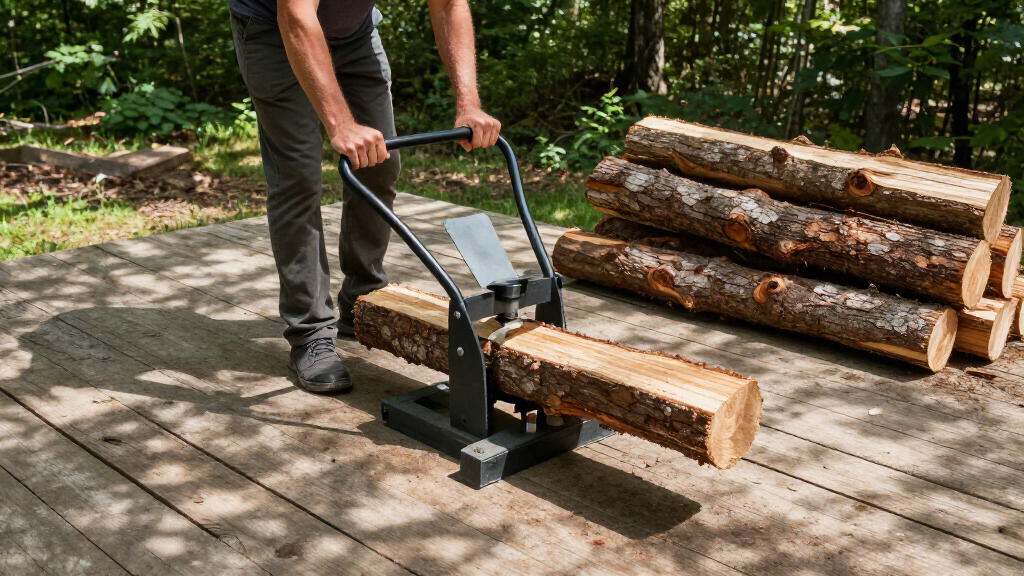
The right hydraulic log splitter for wood comes down to tonnage, power source, and how much wood you actually split each season. For most buyers, the BILT HARD 27-Ton Towable Gas Splitter earns the top spot because its 209cc engine, 2-stage pump, and horizontal/vertical operation handle everything from kindling rounds to gnarly crotch wood. If your needs are lighter, the BILT HARD 6.5-Ton Electric keeps things quiet and affordable, while the 35-Ton with hydraulic log lift is the serious homestead option for full-cord volumes. The main tradeoff in this category is straightforward: gas models split faster and harder but cost more and demand maintenance, while manual and electric units are cheaper and quieter but struggle past 16-inch knotty hardwood. Read on for the full breakdown.

Get business pricing on tools and workshop supplies
- Business-only prices and quantity discounts
- Tax-exempt purchasing
- Multiple users, one account, clear invoices
Complete the kit


Key Takeaways
- Tonnage ratings cluster into three practical bands: 12-ton and under for softwood and casual use, 20–28 ton for serious home firewood, and 33–35 ton for commercial or all-hardwood workloads — the BILT HARD 27-Ton won overall because it sits at the sweet spot of the middle band.
- The 12-ton manual category (TrailBlaze, Torin, GarveeTech) is crowded and nearly interchangeable; the real differences came down to beam length, wheel design, and price, not splitting power.
- BILT HARD dominates the electric segment with three models (6.5, 6.5 with stand, and 14-ton), and the 14-ton with 15 Amp pump is the only electric here that credibly handles dense hardwood rounds.
- Hydraulic log lifts only appear on the 35-ton model — a feature that matters far more than most buyers expect once rounds exceed 24 inches in diameter, and a hidden reason to pay up for premium.
- Horizontal/vertical convertibility (BILT HARD 27-Ton and the 28-ton Full Boar) is the single most underused feature among buyers who split oversized logs that are too heavy to lift onto a beam.
| SuperHandy 20 Ton Portable Log Splitter with 7HP Gas Engine |  | Best Gas Splitter for Small Properties | Engine: 7HP gas engine | Splitting Capacity: 20 inches long, 16 inches diameter | Cycle Time: 5-7.5 seconds | VIEW LATEST PRICE | See Our Full Breakdown |
| 12 Ton Manual Log Splitter, Hydraulic Wood Splitter, Portable with Wheels |  | Best Manual Splitter for Two-Handed Leverage | Splitting Power: 12 tons | Max Log Length: 18.7 inches | Max Log Diameter: 8 inches | VIEW LATEST PRICE | See Our Full Breakdown |
| 28 Ton Log Splitter with 212cc Full Boar Engine |  | Best Heavy-Duty Value | Engine: 212cc Full Boar OHV | Splitting Force: 28 tons | Cycle Time: 10.9 seconds | VIEW LATEST PRICE | See Our Full Breakdown |
| TrailBlaze 12 Ton Manual Hydraulic Log Splitter |  | Best Compact No-Fuel Option | Hydraulic Pressure: 12 tons | Log Capacity: 18.7 inches long, 8 inches thick | Operation: Manual, two-speed | VIEW LATEST PRICE | See Our Full Breakdown |
| BILT HARD 27-Ton Towable Gas Powered Log Splitter, Horizontal & Vertical Wood Splitter with 209cc OHV Engine & 2-Stage Pump |  | Best Overall for Serious Firewood | Splitting Force: 27 tons | Engine: 209cc OHV | Hydraulic System: 2-stage pump, 6-gallon reservoir, 11 GPM | VIEW LATEST PRICE | See Our Full Breakdown |
| 35 Ton 306cc Gas Log Splitter with 4-Way & 6-Way Wedges and Hydraulic Log Lift |  | Best for Heavy-Duty Homesteads | Splitting Power: 35 tons | Engine: 306cc gas engine | Beam Design: BOX beam | VIEW LATEST PRICE | See Our Full Breakdown |
| Torin Hydraulic Log Splitter 12 Ton, Manual Wood Splitter with Steel Beam |  | Best Manual Splitter for the Price | Capacity: 12 Ton | Max Log Length: 17.7 inches | Max Log Diameter: 7.9 inches | VIEW LATEST PRICE | See Our Full Breakdown |
| 7-Ton Electric Log Splitter with Upgraded Foot Pedal and Bonus 4-Way Cross Wedge |  | Best Electric Pick for Kindling | Power: 3HP electric motor | Splitting Force: 7 tons (28MPa / 4000+ PSI) | Splitting Length: 22 inches | VIEW LATEST PRICE | See Our Full Breakdown |
| BILT HARD Log Splitter 6.5 Ton, Electric Powered Wood Splitter with Hydraulic Ram |  | Best Value Electric Splitter | Splitting Force: 6.5 tons | Motor Power: 15 Amp electric | Max Log Diameter: 9.8 inches | VIEW LATEST PRICE | See Our Full Breakdown |
| GarveeTech 12 T Hydraulic Log Splitter Wood Cutter, Manual Log Splitter with Horizontal Steel Beam & Built-In Wheel |  | Best Manual for Ease of Use | Splitting Force: 12 tons | Max Log Length: 18.7 inches | Max Log Diameter: 8 inches | VIEW LATEST PRICE | See Our Full Breakdown |
| BILT HARD 14 Ton Electric Log Splitter with 15 Amp Hydraulic Pump |  | Best Electric Workhorse | Splitting Force: 14 tons | Motor: 15 Amp, 1800W | Log Capacity: 20 in. long, 16 in. diameter | VIEW LATEST PRICE | See Our Full Breakdown |
| BILT HARD 6.5 Ton Electric Log Splitter with Stand |  | Best for Casual Firewood Duty | Splitting Force: 6.5 tons | Max Log Diameter: 9.8 inches | Max Log Length: 20.5 inches | VIEW LATEST PRICE | See Our Full Breakdown |
| 33 Ton Log Splitter with 223cc Full Boar Engine |  | Best for Heavy-Demand Homesteads | Engine: 223cc Full Boar OHV | Splitting Force: 33 tons | Cycle Time: 14.3 seconds | VIEW LATEST PRICE | See Our Full Breakdown |
| Sun Joe Cordless Manual Hydraulic Log Splitter, 10 Ton Capacity, LJ10M |  | Best No-Power Option | Capacity: 10 tons | Max Log Length: 18 inches | Max Log Width: 8 inches | VIEW LATEST PRICE | See Our Full Breakdown |
| hydraulic log splitters for wood | Max Log Length | Splitting Force |
|---|---|---|
| SuperHandy 20 Ton Portable Log | — | — |
| 12 Ton Manual Log Splitter | 18.7 inches | — |
| 28 Ton Log Splitter with 212cc | 24 inches | 28 tons |
| TrailBlaze 12 Ton Manual Hydra | — | — |
| BILT HARD 27-Ton Towable Gas P | 24 inches | 27 tons |
| 35 Ton 306cc Gas Log Splitter | — | — |
| Torin Hydraulic Log Splitter 1 | 17.7 inches | — |
| 7-Ton Electric Log Splitter wi | — | 7 tons (28MPa / 4000+ PSI) |
| BILT HARD Log Splitter 6.5 Ton | 20.5 inches | 6.5 tons |
| GarveeTech 12 T Hydraulic Log | 18.7 inches | 12 tons |
| BILT HARD 14 Ton Electric Log | — | 14 tons |
| BILT HARD 6.5 Ton Electric Log | 20.5 inches | 6.5 tons |
| 33 Ton Log Splitter with 223cc | — | 33 tons |
| Sun Joe Cordless Manual Hydrau | 18 inches | — |
More Details on Our Top Picks
SuperHandy 20 Ton Portable Log Splitter with 7HP Gas Engine
Most gas splitters in this class force a choice between real splitting force and portability, but this SuperHandy splits the difference well. At 130 pounds, it’s roughly 300 pounds lighter than the 28 Ton Full Boar splitter, yet still delivers enough force to handle seasoned hardwood most homeowners will face. The 5-7.5 second cycle time is genuinely quick for the price bracket and keeps productivity high when you’re working through a cord of wood. The two-stage Bucher gear pump is the same technology used on bigger towable units, just scaled down. The tradeoffs are real, though: it’s horizontal-only, so those massive rounds too heavy to lift onto the beam are off the menu — the BILT HARD 27-Ton’s vertical mode handles those better. And like any gas machine, it stays outdoors with regular engine maintenance on the to-do list.
Pros:- 20-ton force punches well above its 130-pound weight class
- Fast 5-7.5 second cycle time rivals larger machines
- 2-stage Bucher gear pump for efficient hydraulic performance
- Light enough to roll across a yard without a hitch
Cons:- Horizontal-only operation limits you to logs you can lift onto the beam
- No hydraulic fluid included, so it’s not ready to run out of the box
Best for: Suburban homeowners with 1-5 acres who heat with wood and need gas power without a towable machine
Not ideal for: Anyone splitting oversized rounds over 16 inches in diameter, or those who want to work inside a garage — gas exhaust rules that out
- Engine:7HP gas engine
- Splitting Capacity:20 inches long, 16 inches diameter
- Cycle Time:5-7.5 seconds
- Weight:130 lbs
- Hydraulic Pump:2-stage Bucher gear pump
- Transport Wheels:10 inches
Our verdict“This pick makes the most sense for property owners who want serious gas-powered force in a package one person can still move alone.”
12 Ton Manual Log Splitter, Hydraulic Wood Splitter, Portable with Wheels
Compared with the TrailBlaze 12 Ton, this manual splitter stands out for its extended 37-inch handles, which translate directly into more leverage per stroke — meaning less total effort to walk a tough knotty round through the wedge. The dual-speed hydraulics let you move the ram quickly through easy splits and gear down when you hit resistance, a feature the similarly-priced Sun Joe LJ10M doesn’t offer. It matches the TrailBlaze on capacity at 18.7 inches long and 8 inches thick, so the choice between them comes down to ergonomics versus footprint. The obvious ceiling: 8 inches of diameter is fine for campfire and occasional fireplace duty, but anyone heating a home through winter will exhaust this machine’s limits quickly. Manual operation also means every split costs you calories.
Pros:- 37-inch extended handles reduce physical strain per stroke
- Dual-speed operation matches ram speed to log resistance
- Fast automatic ram return keeps cycles efficient
- No fuel, fumes, or engine maintenance ever
Cons:- Capped at 8-inch diameter logs, excluding much of a typical hardwood pile
- Every split requires physical effort — fatigue builds over long sessions
Best for: Campers, cabin owners, and occasional firewood users who want quiet, fuel-free splitting with good leverage
Not ideal for: Primary heat households processing multiple cords a season — the 8-inch diameter cap and manual effort become bottlenecks fast
- Splitting Power:12 tons
- Max Log Length:18.7 inches
- Max Log Diameter:8 inches
- Handle Length:37 inches
- Construction:Heavy-duty steel
- Mobility:Built-in wheels
Our verdict“This model is better suited to light-duty, quiet splitting where leverage and simplicity matter more than raw throughput.”
28 Ton Log Splitter with 212cc Full Boar Engine
This is where splitting gets serious. The 28-ton force rating sits just below the 33 Ton Full Boar and 35 Ton machines elsewhere in this roundup, but at a meaningfully lower price — making it the value sweet spot for serious firewood volume. The H-beam construction is the same chassis philosophy used on professional units, resisting the twisting forces that eventually bend cheaper I-beam frames. Compared with the SuperHandy 20 Ton, you gain 8 tons of force, a 24-inch log capacity versus 20, and 16-inch towable tires with a 2-inch hitch — turning it into a genuine worksite tool you can drag between properties. The catch is mass: at 431 pounds, repositioning it without a vehicle is a two-person job, and it lacks the vertical splitting mode that the BILT HARD 27-Ton offers for those back-breaking huge rounds. Pull-start only, too.
Pros:- 28-ton force handles gnarly, knotted hardwood rounds
- H-beam frame resists torsion far better than budget I-beams
- Towable with 2-inch hitch and 16-inch tires
- Mounted hydraulic oil filter extends pump life
Cons:- Horizontal-only — no vertical mode for oversized rounds you can’t lift
- 431 pounds means setup and repositioning usually needs two people or a vehicle
Best for: Firewood sellers and rural homeowners processing several cords yearly who need towable capacity without paying 33-35 ton prices
Not ideal for: Suburban users with a shed and a small yard — the 89.5-inch length and 431-pound weight make storage and maneuvering a real problem
- Engine:212cc Full Boar OHV
- Splitting Force:28 tons
- Cycle Time:10.9 seconds
- Max Log Length:24 inches
- Stroke Length:22.75 inches
- Tow Hitch:2-inch ball hitch, 16-inch tires
- Weight:431 lbs
Our verdict“This option stands out as the smart middle of the heavy-duty range: near-commercial force and towability without the top-tier price.”
TrailBlaze 12 Ton Manual Hydraulic Log Splitter
If the 12 Ton Manual Splitter with extended handles is built around leverage, the TrailBlaze is built around compactness. At under 10 inches wide and 97 pounds, it stores upright in a garage corner or slides into a truck bed alongside your camping gear — something no gas machine in this roundup can claim. It matches the other 12-ton manuals on capacity (18.7 by 8 inches), and the spring-loaded ram return saves your arms between splits. The two-speed operation is standard for the category, though the shorter handle means more effort per stroke than the 37-inch version. The real appeal is what’s absent: no gas, no fumes, no engine servicing, no noise. You trade throughput for independence — no fuel runs, no winter carburetor issues, no nothing. Just steel and hydraulics.
Pros:- Slim 7-inch profile stores where nothing else in this roundup fits
- Spring-loaded ram return cuts fatigue between splits
- Zero fuel, noise, or emissions — usable anywhere including indoors
- Two-speed hydraulics adapt to easy or stubborn logs
Cons:- 97 pounds is still awkward to load solo despite the wheels
- Shorter handles demand more effort than the 37-inch manual alternative
Best for: Van-lifers, campers, and small-shed owners who split modest amounts of wood and prize storage-friendly, zero-maintenance gear
Not ideal for: Anyone with a real woodstove habit — the 8-inch diameter cap and manual cycle pace will slow you down well before the pile is done
- Hydraulic Pressure:12 tons
- Log Capacity:18.7 inches long, 8 inches thick
- Operation:Manual, two-speed
- Material:Heavy-duty steel
- Weight:97.4 lbs
- Features:Built-in wheels, spring-loaded return, ergonomic handle
Our verdict“This pick makes the most sense for occasional splitters whose top priority is a machine that disappears into storage until it’s needed.”
BILT HARD 27-Ton Towable Gas Powered Log Splitter, Horizontal & Vertical Wood Splitter with 209cc OHV Engine & 2-Stage Pump
The feature that separates this BILT HARD from the 28 Ton Full Boar isn’t the one-ton force difference — it’s the horizontal and vertical operation. Flipping the beam to vertical mode means the monster rounds that would break your back lifting onto any horizontal-only machine simply get rolled into place and split where they sit. For anyone who buys unsplit cordwood or fells big oaks, that alone justifies the pick. The 6-gallon reservoir and 11 GPM two-stage pump deliver quick cycles without the overheating that plagues smaller tanks on long workdays, and the DOT-approved tires rated for 45 MPH towing with safety chains make it road-legit in a way most splitters aren’t. Tradeoffs: it’s the heaviest machine here at 494 pounds, needs a tractor or truck for any real repositioning, and like the Full Boar, it demands fuel, oil changes, and winterization.
Pros:- Vertical mode eliminates lifting heavy rounds onto the beam
- 11 GPM pump with 6-gallon reservoir sustains all-day sessions
- DOT-approved 45 MPH tow rating with safety chains for real road use
- 27 tons of force handles knotted hardwood
Cons:- 494 pounds makes solo setup and positioning difficult
- Full gas-engine ownership costs: fuel, oil changes, off-season storage prep
Best for: Homesteaders and frequent firewood processors who handle large-diameter rounds and need to tow the splitter between sites
Not ideal for: Casual users splitting a few face cords a year — this much machine, weight, and maintenance cost is wasted on light duty
- Splitting Force:27 tons
- Engine:209cc OHV
- Hydraulic System:2-stage pump, 6-gallon reservoir, 11 GPM
- Max Log Length:24 inches
- Operation Modes:Horizontal & Vertical
- Towing:2-inch ball hitch, safety chains, 45 MPH rated
- Tire Size:16 inches, DOT-approved
Our verdict“This model is better suited than any horizontal-only machine here for people who split big wood often and want one purchase that covers every scenario.”
35 Ton 306cc Gas Log Splitter with 4-Way & 6-Way Wedges and Hydraulic Log Lift
This splitter is the most serious machine in the lineup, and it earns its place by solving a problem the smaller options can’t touch: processing large-diameter hardwood at volume. The 35-ton rating puts it well above the 28 Ton Full Boar model, and the multi-way wedges mean one cycle can produce four or six pieces instead of two — a real time-saver if you heat with wood all winter. The 700-lb hydraulic log lift is the standout feature; compared with the BILT HARD 27-Ton, which leaves you muscling big rounds onto the beam yourself, this dramatically reduces back strain.
The tradeoff is weight and commitment. This is not a machine you wheel around a suburban yard, and gas engines demand fuel, oil changes, and winter storage care. For small logs it’s simply overkill.
Pros:- 35-ton force handles knotty hardwood and oversized rounds
- Hydraulic log lift eliminates lifting logs up to 700 lbs by hand
- 2-, 4-, and 6-way wedges quadruple throughput on straight-grained wood
- BOX beam construction resists flexing under full load
Cons:- Very heavy and awkward to reposition without a tow vehicle
- Gas engine requires ongoing fuel, oil, and seasonal maintenance
Best for: Rural homeowners and small firewood operations splitting several cords of large hardwood per year
Not ideal for: Suburban users with occasional splitting needs — the size, noise, and engine maintenance outweigh the power
- Splitting Power:35 tons
- Engine:306cc gas engine
- Beam Design:BOX beam
- Blade Options:2-way, 4-way, 6-way
- Hydraulic Wedge Adjustment:3.55 inches range
- Hydraulic Log Lift Capacity:700 lbs
Our verdict“If you split multiple cords of big hardwood annually, this workhorse pays for itself in saved weekends — everyone else should downsize.”
Torin Hydraulic Log Splitter 12 Ton, Manual Wood Splitter with Steel Beam
Among the manual options here — the GarveeTech 12 T, the TrailBlaze, and the Sun Joe 10 Ton — the Torin stands out for pairing a genuine 12-ton rating with a no-frills full steel beam at a budget-friendly price. It splits logs up to 17.7 inches long, which covers standard stove-length firewood, and the spring-loaded return ram shortens the work cycle so you’re not cranking back to start each time. Because it runs on arm power, there’s no fuel, no cords, and no fumes, making it a realistic choice for shed or garage use where the BILT HARD electric models would need circuit access.
Be realistic about the physics, though: a manual jack still demands real effort, and anything past 7.9 inches in diameter or heavily knotted will fight you. Compared with the GarveeTech, you give up the two-speed handle but often save money.
Pros:- 12-ton capacity is plenty for typical stove-length logs
- No gas, electricity, or fumes — safe for indoor and enclosed use
- Wheels make repositioning around the yard manageable
- Full steel beam construction is simple and durable
Cons:- Physically demanding for extended sessions
- Capped at 7.9-inch diameter logs
Best for: Budget-minded homeowners with modest annual firewood needs who want a fuel-free splitter for the garage
Not ideal for: Anyone processing more than a face cord a year or dealing with large, knotty rounds — manual effort adds up fast
- Capacity:12 Ton
- Max Log Length:17.7 inches
- Max Log Diameter:7.9 inches
- Handle Length:37 inches
- Material:Full steel beam
- Return System:Spring-loaded ram return
Our verdict“The most sensible entry point into hydraulic splitting if your volume is low and your budget is tighter than your back is willing to admit.”
7-Ton Electric Log Splitter with Upgraded Foot Pedal and Bonus 4-Way Cross Wedge
This model differentiates itself from the BILT HARD 6.5 Ton in two ways that matter in practice: a 22-inch splitting bed (versus 20.5) and the bundled 4-way cross wedge, which turns it into a kindling machine — one pass yields four sticks instead of two. The foot pedal is a genuinely useful ergonomic touch, letting you brace logs with both hands while operating the ram, something the BILT HARD’s two-hand button layout doesn’t allow. The 3HP motor pushes pressure to 4000+ PSI, so it punches above its class on stubborn softwood rounds.
Two cautions temper the recommendation. At 95 pounds, moving it solo is awkward, and reported durability concerns mean this is a weekend-duty tool, not a workhorse. If longevity is your priority, the BILT HARD’s reputation is safer, even at slightly lower capacity.
Pros:- Bonus 4-way wedge produces kindling in a single cycle
- Foot pedal allows two-handed log control for safer operation
- 22-inch bed handles longer rounds than most compact electrics
- 3HP motor delivers 4000+ PSI for tough knots
Cons:- 95-lb weight makes solo transport awkward
- Reported durability issues suggest light-duty lifespan
Best for: Suburban homeowners and cabin owners who burn modest amounts and want fast kindling production without fumes
Not ideal for: High-volume splitters or anyone cutting large-diameter hardwood — the 22-inch length cap and durability reports argue against heavy use
- Power:3HP electric motor
- Splitting Force:7 tons (28MPa / 4000+ PSI)
- Splitting Length:22 inches
- Cycle Time:18 seconds
- Control:Foot pedal operation
- Weight:95 lbs
- Dimensions:32 x 15 x 21 inches
Our verdict“The right electric choice if kindling speed and hands-free control matter more than long-term ruggedness.”
BILT HARD Log Splitter 6.5 Ton, Electric Powered Wood Splitter with Hydraulic Ram
This is the safest bet in the budget electric class because BILT HARD has a track record here — the same brand’s 14-ton and 27-ton models appear elsewhere in this roundup, and that consistency shows in the details: two-hand safety controls that keep fingers away from the ram, a hydraulic ram rather than a screw or gear drive, and transport wheels that actually roll. Compared with the 7-ton foot-pedal model, you sacrifice the 4-way wedge and the longer bed, but you gain a more proven platform at a lower price point. The fume-free, quiet operation means you can split in a garage or covered porch year-round.
Two things to weigh: 9.8 inches of diameter headroom rules out big rounds, and the 90-day warranty is short by any standard — register it and test it hard early.
Pros:- Trusted brand with a full lineup of larger models behind it
- Two-hand controls keep operation safely predictable
- Quiet, fume-free electric power suits enclosed spaces
- 5.7-inch transport wheels ease repositioning
Cons:- 9.8-inch diameter limit excludes many hardwood rounds
- Only a 90-day warranty
Best for: First-time electric splitter buyers with modest needs who want a proven brand at the lowest sensible price
Not ideal for: Buyers with large-diameter logs or those wanting long warranty protection for seasonal storage risk
- Splitting Force:6.5 tons
- Motor Power:15 Amp electric
- Max Log Diameter:9.8 inches
- Max Log Length:20.5 inches
- Cycle Time:18 seconds
- Wheels:5.7-inch transport wheels
Our verdict“The dependable default choice in compact electric splitters — buy it for proven safety and value, not for capacity.”
GarveeTech 12 T Hydraulic Log Splitter Wood Cutter, Manual Log Splitter with Horizontal Steel Beam & Built-In Wheel
Where the Torin manual splitter is the plain-workhorse choice, the GarveeTech pushes user comfort to the front. Its two-speed operation means the ram moves fast for the easy part of the stroke and shifts to a powerful slow gear for the final split — you finish tough logs with less total cranking than a single-speed jack demands. The slightly longer 18.7-inch bed edges out the Torin’s 17.7, and the built-in wheel plus long handles make dragging it across uneven ground genuinely manageable, something the lighter Sun Joe 10-ton struggles with. Like all manual units here, it runs on zero fuel and zero cords.
The honest tradeoff: physics still applies, and an 8-inch diameter cap on paper shrinks fast when you hit a crotch or knot. For serious volume, a powered model like the BILT HARD 14 Ton electric is the smarter spend.
Pros:- Two-speed ram reduces total cranking effort on hard logs
- Built-in wheel handles uneven terrain better than most manuals
- Laser-cut steel frame feels rigid under load
- No fuel, cords, or maintenance requirements
Cons:- Physically tiring during long sessions
- 8-inch diameter limit frustrates on large or knotty rounds
Best for: Physically able users who split occasionally and value low effort, quiet operation, and easy repositioning over raw throughput
Not ideal for: Users with limited upper-body strength or anyone splitting more than a cord a season — manual strokes add up
- Splitting Force:12 tons
- Max Log Length:18.7 inches
- Max Log Diameter:8 inches
- Handle Length:37 inches
- Operation:Two-speed manual
- Construction:Laser-cut steel beam
- Transport:Built-in wheel
Our verdict“The most comfortable manual splitter in this lineup — pick it over single-speed rivals if you’ll be cranking for hours, not minutes.”
BILT HARD 14 Ton Electric Log Splitter with 15 Amp Hydraulic Pump
For homeowners who want serious hydraulic muscle without gas fumes, this 14-ton unit hits a sweet spot most electric splitters miss. Compared with its smaller sibling, the BILT HARD 6.5 Ton with Stand, it more than doubles the splitting force, which means gnarly oak and hickory rounds that would stall a compact unit get pushed through on the first try. The 20-inch log capacity is generous for an electric model, so you are not pre-cutting everything down to stove-length stubs. What you give up is convenience: at 133 pounds, moving it around the yard is a two-person job despite the wheels, and assembly is on you. Still, running on a standard 120V outlet means no fuel, no engine maintenance, and quiet operation the neighbors will not complain about.
Pros:- 14-ton force handles hardwood most electric splitters cannot
- 20-inch log capacity reduces pre-cutting work
- Runs on standard 120V household power
- Two-hand operation and overload protection add safety
Cons:- 133-pound weight makes solo transport difficult
- Assembly required out of the box
- Tied to a 120V outlet, limiting where you can work
Best for: Suburban homeowners with access to hardwood who want gas-splitter performance on household power
Not ideal for: Anyone without help moving heavy equipment — at 133 pounds, repositioning it solo is a real struggle
- Splitting Force:14 tons
- Motor:15 Amp, 1800W
- Log Capacity:20 in. long, 16 in. diameter
- Hydraulic Pump:2-stage
- Hydraulic Oil Reservoir:1.45 gallons
- Power Supply:120V household outlet
- Weight:133.3 pounds
Our verdict“If you split a few cords of hardwood a year and refuse to deal with a gas engine, this is the electric splitter to beat.”
BILT HARD 6.5 Ton Electric Log Splitter with Stand
Not everyone needs to split tree trunks. This 6.5-ton model is built for the weekend fireplace crowd — think seasoned split-able wood under 10 inches across — and its raised stand means you work at waist height instead of hunching over a beam like you would with the manual Sun Joe LJ10M. Compared with the BILT HARD 14 Ton, it trades raw force for portability and quiet operation, a fair swap if your woodpile is mostly pine, birch, or already-quartered rounds. The 20.5-inch length capacity is surprisingly generous for this class. The catch: it wants a 40-amp circuit to perform at its best, which many older garages simply do not have, and anything over 9.8 inches in diameter will test its limits.
Pros:- Elevated stand eliminates back-breaking floor-level work
- Quiet electric operation suitable for residential areas
- Lighter and easier to reposition than larger electric models
- Two-hand safety controls keep fingers clear
Cons:- Needs a 40-amp circuit for best performance
- 9.8-inch diameter limit rules out bigger rounds
- Underpowered for dense, knotty hardwood
Best for: Casual burners with a fireplace or fire pit who split a face cord or two of softwood per season
Not ideal for: Anyone processing large-diameter hardwood rounds — the 9.8-inch diameter ceiling is a hard limit
- Splitting Force:6.5 tons
- Max Log Diameter:9.8 inches
- Max Log Length:20.5 inches
- Motor:15 Amp
- Voltage:120V
- Stand Height:33 inches
- Wheels:5.7-inch transport wheels
Our verdict“A sensible, back-friendly pick for light seasonal splitting — just check your circuit breaker before ordering.”
33 Ton Log Splitter with 223cc Full Boar Engine
When the woodpile measures in full cords, electric convenience stops mattering. This gas-powered 33-ton machine exists for people who split serious volume, and the numbers back it up: a 14.3-second cycle time with auto-return means you feed rounds almost continuously, while the 33 tons of force laughs at twisted elm and green oak. Next to the BILT HARD 27-Ton Towable, it brings more force and a faster cycle, though the 27-ton wins on flexibility with its horizontal/vertical operation for logs too heavy to lift. The H-beam construction and in-reservoir oil filter signal a machine built to survive seasons of abuse. Realistically, this is overkill — and oversized — for a suburban backyard, and it cannot ship to California buyers.
Pros:- 33-ton force splits green and knotty hardwood reliably
- 14.3-second cycle time keeps throughput high
- Auto-return valve with adjustable detent reduces lever work
- Heavy-duty H-beam frame built for long-term durability
Cons:- Large footprint demands serious storage space
- Not available in all 50 states
- Gas engine brings noise, fumes, and regular maintenance
Best for: Rural property owners and homesteaders splitting several cords of hardwood annually
Not ideal for: Suburban users with small storage space or occasional splitting needs — it is expensive, loud, and large
- Engine:223cc Full Boar OHV
- Splitting Force:33 tons
- Cycle Time:14.3 seconds
- Control Valve:Auto return with adjustable detent
- Frame:Heavy-duty H-beam
- Hydraulic Oil Filter:Mounted inside reservoir
Our verdict“If you heat with wood and split in bulk, this machine earns its keep — everyone else is paying for capability they will never use.”
Sun Joe Cordless Manual Hydraulic Log Splitter, 10 Ton Capacity, LJ10M
The Sun Joe LJ10M answers a specific question: what if you have no outlet, no gas, and no desire to swing a maul? Its 10-ton hydraulic ram is driven entirely by a two-speed hand pump, which puts it ahead of pure muscle tools like a splitting axe while costing far less than the SuperHandy 20 Ton gas splitter. Compared with the Torin 12 Ton manual splitter, the Sun Joe is lighter and more affordable, though it gives up some diameter capacity with an 8-inch width limit. Because there is no motor at all, it works anywhere — deep in the woods, at a campsite, off-grid — and needs zero maintenance beyond occasional fluid checks. The tradeoff is obvious: every log costs you pump strokes, and on a big pile that adds up to a genuine workout.
Pros:- Works anywhere with no electricity or fuel required
- Two-speed pump speeds up the ram stroke
- Steel construction with rear wheels for transport
- No engine maintenance, ever
Cons:- Physical effort required for every single split
- 8-inch width and 18-inch length limits exclude larger rounds
- Slow compared with powered splitters
Best for: Off-grid users, campers, and small-lot homeowners who split modest amounts of seasoned wood and have no power access
Not ideal for: Anyone processing more than a face cord per season or splitting wide green logs — the manual pumping becomes exhausting
- Capacity:10 tons
- Max Log Length:18 inches
- Max Log Width:8 inches
- Power Source:Manual hydraulic
- Construction:Steel
- Features:2-speed pump, rear wheels, log cradle
Our verdict“A smart, affordable choice for occasional off-grid splitting — just do not expect it to replace a powered unit for real volume.”

How We Picked
I evaluated each splitter against four buyer-relevant criteria. Splitting performance came first: tonnage matters, but cycle time, ram travel, and whether a two-stage pump is used determine how a machine actually feels after an hour of work. Usability was second — beam height, log capacity, vertical operation, and hydraulic lifts separate machines that are pleasant to run from machines that wear you out. Build quality and durability covered engine brand, steel beam construction, wedge design, and the availability of multi-way wedges that boost throughput. Finally, value weighed price against realistic workload: a $2,500 35-ton machine is poor value for someone splitting two face cords a year, and a 10-ton manual unit is false economy for anyone heating with wood full-time.
The ranking follows use case rather than raw power. The BILT HARD 27-Ton leads because it balances performance, towability, and price for the largest group of buyers. High-tonnage gas models rank next for homestead-scale work, electric units fill the value and convenience tier, and manual hydraulic splitters round out the list for budget and occasional users. Within each tier, I favored models that offered a genuine differentiator — a two-stage pump, a log lift, or a stand — over near-identical competitors.
Factors to Consider When Choosing Hydraulic Log Splitters For Wood
Choosing between hydraulic log splitters for wood is mostly a math problem: how many cords you split per year, how hard your wood is, and how much you are willing to spend upfront versus in sweat. These five factors matter more than any single spec sheet line.Match Tonnage to Your Wood, Not Your Ambitions
The most common mistake I see is buying tonnage based on optimism rather than the actual wood pile. A 12-ton machine splits straight-grained softwood and small rounds all day, but green oak, elm, or anything with crotches and knots will stall it completely — and stalled rams are how people end up reselling nearly new splitters. As a rule, 20 tons covers seasoned hardwood for a typical household, 27–28 tons gives you headroom for green or knotty wood, and 33+ tons is for full-cord homestead volumes or splitting for multiple households. Overspending on tonnage costs money and adds engine maintenance; underspending costs you an entire season of frustration. Also remember that tonnage ratings are not standardized across brands — a no-name 20-ton may perform closer to a name-brand 15-ton. Buy from brands with published cycle times and real user feedback on hardwood.
Power Source: Gas, Electric, or Manual Hydraulic
Gas splitters are the only choice for off-grid use and high volume, but they demand oil changes, fuel stabilizer, and winter storage discipline. Electric splitters are the hidden value pick for suburban users: they run on a standard outlet, make a fraction of the noise, need essentially zero maintenance, and can legally run in areas with noise ordinances. Their limitation is tonnage — most cap out around 6.5 to 14 tons, which defines what wood you can feed them. Manual hydraulic units, like the foot-pedal and two-hand pump models in this lineup, cost the least and store anywhere, but they trade engine power for your own effort and are best reserved for kindling, small-diameter rounds, and occasional use. The mistake to avoid is buying manual because it is cheap when your actual workload demands gas.
Cycle Time and Two-Stage Pumps Determine Real Throughput
Tonnage gets all the marketing attention, but cycle time — how long the ram takes to extend and retract — decides how many cords you can split in a weekend. A splitter with a 12-second cycle splits nearly twice the wood per hour as one rated at 22 seconds, even at identical tonnage. Two-stage pumps are the key feature here: they move the ram quickly under low resistance and only shift to high pressure when the wood fights back, which is why gas models with two-stage pumps feel dramatically faster. When comparing listings, look for cycle time in the specs and be suspicious of any gas splitter that does not publish it. Also check ram travel distance, since a short stroke means repositioning logs constantly on long rounds.
Horizontal vs. Vertical Operation and Log Lifts
If every round you split fits in one hand, orientation does not matter. But once you are dealing with 24-inch-plus diameter rounds, lifting them onto a horizontal beam becomes the hardest part of the job — and the most dangerous for your back. Vertical-capable splitters let you roll a big round onto the ground and bring the ram down to it, which is why the convertible models in this lineup earn their price premium. Hydraulic log lifts go one step further, cradle the round, and raise it for you; they only appear on top-tier machines but are worth serious consideration for anyone with consistent oversized wood. The common buyer error is testing a splitter only with easy rounds at the store, then discovering at home that beam height is the daily bottleneck.
Transport, Storage, and the Towability Question
Think about where the splitter will live and where the wood will be. Towable models with trailer hitches and road-rated tires let you move the machine to the woodpile rather than hauling logs to the machine, which is a genuine workflow upgrade for rural properties. But towable gas splitters are heavy, take up garage or shed space, and some are not street-legal without lights and registration depending on your state. Electric and manual units win on storage — the smaller ones tuck into a corner or hang on a wall — and their wheels are meant for rolling across a yard, not down a road. Before buying, measure your storage space and check whether the model you want includes a hitch, fenders, and lighting, because adding these after the fact is never cheap.
Frequently Asked Questions
Is a 12-ton splitter enough for hardwood like oak and maple?
For seasoned, straight-grained hardwood under about 14 inches in diameter, a 12-ton unit will usually get the job done — the manual and small electric models in this lineup are designed for exactly that. The trouble starts with green wood, knots, crotches, or rounds over 16 inches, where 12 tons stalls or takes multiple strikes from multiple angles. If a meaningful share of your woodpile is dense hardwood, I would move up to at least a 20-ton gas machine like the SuperHandy, and ideally the 27–28 ton tier. A good approach is to size your splitter to your hardest ten percent of rounds, not your average round, because those are the ones that ruin an afternoon.
Electric vs. gas log splitter: which costs less over time?
Electric splitters win on running cost almost every time — they consume pennies of electricity per hour and require no oil, filters, spark plugs, or fuel stabilizer, which is why the budget BILT HARD electrics are such strong value picks. Gas machines carry $50–$100 per year in routine maintenance even when nothing breaks, plus the hidden cost of carburetor trouble after poor off-season storage. However, if a gas splitter’s extra tonnage means you split wood once instead of renting or buying twice, the math can flip. My rule of thumb: if an electric model in the 6.5–14 ton range covers your wood type, go electric and pocket the difference; if you need 20+ tons, gas is your only realistic option and the maintenance is just part of the price.
Are manual hydraulic log splitters actually worth buying?
They are worth it for a narrow but real use case: occasional splitting of small-diameter, dry softwood, kindling production, and campfire quantities. The foot-pedal and two-hand pump models from TrailBlaze, Torin, and GarveeTech cost a fraction of powered units, need no fuel or outlet, and store in a closet. What they are not is a money-saving substitute for a powered splitter — pumping a manual unit through a cord of hardwood is genuinely exhausting, and the 10–12 ton ratings apply to ideal wood conditions. If you heat your home with wood in any serious way, a manual splitter will end up unused within a season. Buy one as a supplement or a starter tool, not as your primary machine.
What tonnage do I need to split green (unseasoned) wood?
Green wood can require 30–50% more force than the same wood seasoned, because trapped moisture keeps the fibers flexible and resistant to the wedge. For green hardwood, I recommend 27 tons as the realistic floor, which is why the BILT HARD 27-Ton and the 28-ton Full Boar sit so high in this roundup. The 33–35 ton tier exists specifically for people who split freshly fallen oak, elm, or twisted maple in volume, and the hydraulic log lift on the 35-ton model addresses the fact that green rounds are also far heavier. One practical alternative: if your timeline allows, let green rounds dry for six months before splitting — you may then get away with a smaller, cheaper machine.
How important is a two-stage hydraulic pump?
On a gas splitter, a two-stage pump is one of the biggest differentiators between a pleasant machine and a frustrating one. It moves the ram at high speed under light load, then automatically shifts to high pressure, low speed only when the wood resists — the net effect is cycle times that can be twice as fast on easy splits while preserving full tonnage on hard ones. This is a stated feature on the BILT HARD 27-Ton and a large part of why it ranks above comparable single-pump machines. Single-stage pumps are cheaper but spend their whole cycle at splitting speed, wasting time on the extension and retraction. If you are comparing two gas splitters at similar tonnage and price, the two-stage pump model is almost always the better buy.
Conclusion
For most buyers, the decision comes down to workload, and this lineup maps cleanly onto buyer types. The BILT HARD 27-Ton is my best overall pick — its two-stage pump, horizontal/vertical beam, and 209cc engine cover the widest range of wood and property sizes. For best value, the BILT HARD 6.5-Ton Electric delivers quiet, maintenance-free splitting at a price that undercuts every powered alternative, with the 14-ton version as the value upgrade for hardwood owners. The 35-Ton with hydraulic log lift is the premium choice for homesteaders splitting full cords of dense green wood, and the 33-Ton Full Boar is the runner-up if a log lift is not in the budget. Beginners should start with the 7-Ton Electric with foot pedal — it teaches the workflow safely and cheaply. For specific needs: occasional campfire splitters get the Sun Joe 10-Ton manual, apartment-to-cabin users get the Torin or TrailBlaze, and anyone who needs to tow the machine to the woodpile should look at the towable BILT HARD or 28-Ton Full Boar. Whatever you choose, size for your hardest rounds, not your easiest, and you will not regret the purchase.
Fall yard work Picks
leaf blowers
As an affiliate, we earn on qualifying purchases.